Kirjojen hintavertailu. Mukana 12 595 353 kirjaa ja 12 kauppaa.
Kirjailija
Aude Henin
Kirjat ja teokset yhdessä paikassa: 4 kirjaa, julkaisuja vuosilta 2008-2011, suosituimpien joukossa Living with Bipolar Disorder. Vertaile teosten hintoja ja tarkista saatavuus suomalaisista kirjakaupoista.
Drawing on research documenting the strength of combining drug treatments with behavioral interventions for fighting bipolar disorder, Living with Bipolar Disorder takes a skill-based approach to managing the ups and downs commonly experienced with the disorder. With this book, readers can learn how to better recognize mood shifts before they happen, minimize their impact, and move on with their lives. Written by the authors of Managing Bipolar Disorder: A Cognitive Behavioral Treatment Program, this helpful guide teaches individuals with bipolar disorder how to take charge of their illness and get the most out of professional treatment. The authors stress the importance of an active partnership in treatment, while providing information and strategies to help patients and their families enhance their independence and their management of bipolar disorder. In addition to the strategies directed to individuals suffering from bipolar disorder, this book also provides information and instructions for friends and family members so they'll have the tools to help their loved ones. Family members will learn how to recognize potential problems, provide encouragement, practice new coping skills, and understand what the patient is going through. The book also provides worksheets and forms to help the patient reinforce skills and practices learned in therapy. It includes information about the details of living with bipolar disorder, gives advice on the best ways to avoid relapses, and teaches how to anticipate problems. Here then is a wealth of information on bipolar disorder partnered with effective strategies to reduce the likelihood of episodes of depression or mania and maximize the enjoyment of life.
Intended for use in conjunction with formal cognitive-behavioural therapy (CBT), this Workbook provides patients and their families with a wealth of information on bipolar disorder, as well as strategies for reducing the likelihood of episodes of depression or mania. In addition to educational materials that define the disorder and show the effectiveness of CBT, it includes exercises that patients can use to reinforce what they learn in their therapy sessions. It also provides information on adhering to medications, as well as forms for charting stress and strategies for managing mood. Divided into four phases like its corresponding Therapist Guide, this Workbook teaches patients the skills they need to effectively manage bipolar disorder and reduce the risk of relapse.
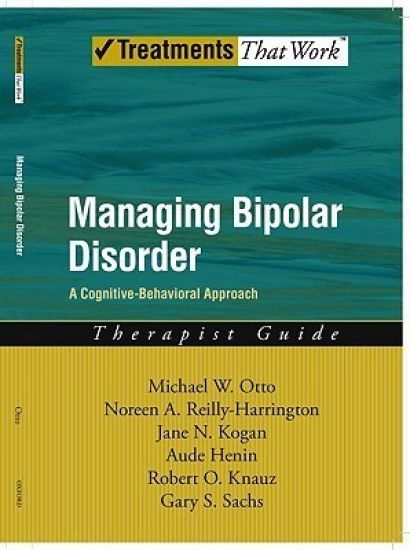
This Therapist Guide outlines a 30-session cognitive-behavioural treatment for bipolar depression. It provides session-by-session instructions for helping clients decrease and prevent relapse. Bipolar disorder is extremely hard to manage and this program will help clients better prepare themselves for dealing with problems and high-risk situations. Treatment is comprised of four stages: a depression-focused phase (9 sessions), a treatment-contract phase, (4-sessions), a problem-list phase (13 sessions), and a well-being phase (4 sessions). This treatment also includes a component for families to help them understand the disorder and work together with both the therapist and the patient to get the best results from treatment.
Recent years have brought a striking increase in the number of psychosocial treatment studies of bipolar disorder and cognitive-behavioural approaches have been prominent among these studies with clear evidence that interest in this approach is rising among experts in bipolar disorder. Studies of CBT treatment of bipolar disorder have shown dramatic effects with relapse rates significantly lower (44% vs. 75%) than with comparison treatments. This book is a self-directed, relapse prevention for individuals living with bipolar disorder. It uses the collaborative care model to allow individuals living with bipolar disorder to take control of their wellness. It provides self-directed questionnaires and monitoring forms to reinforce skills and practices learned in therapy, gives information about the details of living with bipolar forms disorder, advice for best practices to avoid relapses, and teaches how to anticipate problems. Collaborative care is a way for patients and their family or friends to work together with clinicians to get the best results from treatment. Living with bipolar disorder requires the help and support of a network of people who are able to recognise potential problems, provide encouragement, practice new coping skills, and understand the disorder. This workbook provides information and instructions for friends and family so they feel equipped to participate in the therapeutic process. Emphasis is placed on defining the disorder and identifying areas where the patient is most at risk for relapse.