Kirjojen hintavertailu. Mukana 12 390 323 kirjaa ja 12 kauppaa.

Kirjailija

August-Wilhelm Scheer

Kirjat ja teokset yhdessä paikassa: 36 kirjaa, julkaisuja vuosilta 1969-2025, suosituimpien joukossa ARIS — Vom Geschäftsprozess zum Anwendungssystem. Vertaile teosten hintoja ja tarkista saatavuus suomalaisista kirjakaupoista.

36 kirjaa

Kirjojen julkaisuhaarukka 1969-2025.

ARIS — Modellierungsmethoden, Metamodelle, Anwendungen

ARIS — Modellierungsmethoden, Metamodelle, Anwendungen

August-Wilhelm Scheer

Springer-Verlag Berlin and Heidelberg GmbH Co. K
2014
nidottu
Die "Architektur integrierter Informationssysteme" ARIS hat sich zur Optimierung von Geschäftsprozessen und zur Einführung von Anwendungssystemen auch international durchgesetzt. In diesem Buch werden die ARIS-Methoden zur Modellierung und informationstechnischen Realisierung von Geschäftsprozessen mittels der Unified Modeling Language (UML) detailliert beschrieben. Das resultierende Informationsmodell ist Grundlage eines systematischen und rationellen Methodeneinsatzes bei der Entwicklung von Anwendungssystemen. Der Einsatz der ARIS-Methoden wird an praxisrelevanten Fragestellungen veranschaulicht, z.B. Wissensmanagement, Umsetzung von Workflow-Systemen oder Einführung von Standardsoftware, speziell SAP R/3.
ARIS — Vom Geschäftsprozess zum Anwendungssystem

ARIS — Vom Geschäftsprozess zum Anwendungssystem

August-Wilhelm Scheer

Springer-Verlag Berlin and Heidelberg GmbH Co. K
2012
nidottu
Die "Architektur integrierter Informationssystme" ARIS hat sich zur Optimierung von Geschäftsprozessen und zur Einführung von Anwendungssystemen auch international durchgesetzt. In diesem Buch wird der Ansatz um die Beschreibung von Leistungsflüssen und die Einordnung moderner Softwarekonzepte erweitert. Auch die Anbindung der Geschäftsprozessorganisation an die strategische Unternehmensplanung wird stärker betont. Das ARIS-Konzept zeigt einen geschlossenen Weg von der organisatorischen Gestaltung von Geschäftsprozessen bis zur informationstechnischen Umsetzung. Es vermittelt somit zwischen den Verständniswelten der Betriebswirtschaftslehre und der Informationstechnik. Praktische Beispiele von Standardsoftware, insbesondere SAP R/3, veranschaulichen die Ausführungen.
ARIS — Vom Geschäftsprozess zum Anwendungssystem

ARIS — Vom Geschäftsprozess zum Anwendungssystem

August-Wilhelm Scheer

Springer-Verlag Berlin and Heidelberg GmbH Co. KG
2002
sidottu
Die "Architektur integrierter Informationssystme" ARIS hat sich zur Optimierung von Geschäftsprozessen und zur Einführung von Anwendungssystemen auch international durchgesetzt. In diesem Buch wird der Ansatz um die Beschreibung von Leistungsflüssen und die Einordnung moderner Softwarekonzepte erweitert. Auch die Anbindung der Geschäftsprozessorganisation an die strategische Unternehmensplanung wird stärker betont. Das ARIS-Konzept zeigt einen geschlossenen Weg von der organisatorischen Gestaltung von Geschäftsprozessen bis zur informationstechnischen Umsetzung. Es vermittelt somit zwischen den Verständniswelten der Betriebswirtschaftslehre und der Informationstechnik. Praktische Beispiele von Standardsoftware, insbesondere SAP R/3, veranschaulichen die Ausführungen.
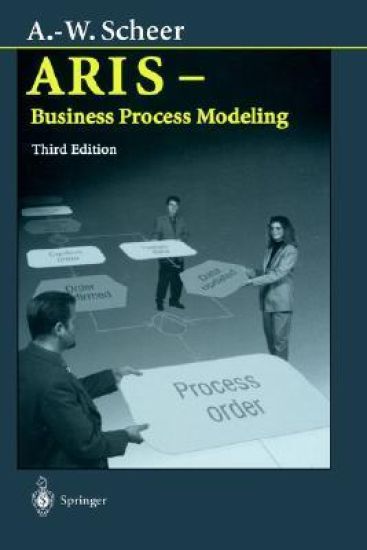
ARIS — Business Process Modeling

ARIS — Business Process Modeling

August-Wilhelm Scheer

Springer-Verlag Berlin and Heidelberg GmbH Co. K
2000
sidottu
ARIS (Architecture of Integrated Information Systems) is a unique and internationally renowned method for optimizing business processes and implementing application systems.This book describes in detail how ARIS methods model and realize business processes by means of UML (Unified Modeling Language), leading to an information model that is the keystone for a systematic and intelligent method of developing application systems.Multiple real-world examples - including knowledge management, implementation of workflow systems and standard software solutions (SAP R/3 in particular) - address the deployment of ARIS methods.
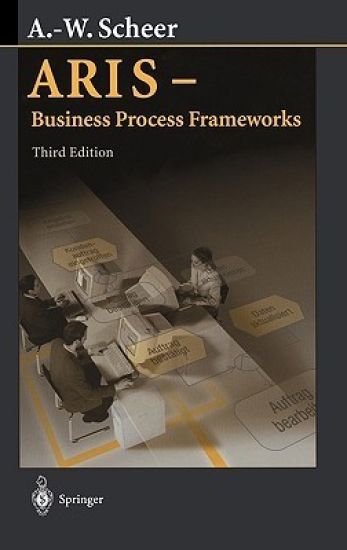
ARIS - Business Process Frameworks

ARIS - Business Process Frameworks

August-Wilhelm Scheer

Springer-Verlag Berlin and Heidelberg GmbH Co. K
1999
sidottu
ARIS (Architecture of Integrated Information Systems) is a unique and internationally renowned method for optimizing business processes and implementing application systems. This book enhances the proven ARIS concept by describing product flows and explaining how to classify modern software concepts. The importance of the link between business process organization and strategic management is stressed. Bridging the gap between the different approaches in business theory and information technology, the ARIS concept provides a full-circle approach - from the organizational design of business processes to IT implementation. Featuring SAP R/3 as well, real-world examples of various standard software solutions illustrate these concepts.
The Composable Enterprise: Agile, Flexible, Innovative

The Composable Enterprise: Agile, Flexible, Innovative

August-Wilhelm Scheer

Springer Fachmedien Wiesbaden
2024
nidottu
The benefits of digitalisation do not lie in the use of new technologies for existing processes, but in organisational changes and new business models. The book highlights the composable enterprise as the guiding principle for successful digital transformation and associated cost reductions and revenue increases. What does it mean? A composable enterprise is organised in a decentralised process-oriented way. This allows the enterprise to react quickly to new situations, develop or change processes and business models. The information systems are based on platform architectures. A paradigm shift to monolithic applications.Sector concepts for industry, consulting and universities show how organisation and application architectures interlock in the composable enterprise.The reader receives inspiration, a foundation and a compass for the digital transformation of a company to the composable enterprise.
Composable Enterprise: agil, flexibel, innovativ

Composable Enterprise: agil, flexibel, innovativ

August-Wilhelm Scheer

Springer Fachmedien Wiesbaden
2024
sidottu
Der Nutzen der Digitalisierung liegt nicht im Einsatz neuer Technologien für bestehende Prozesse, sondern in organisatorischen Änderungen und neuen Geschäftsmodellen. Das Buch stellt das Composable Enterprise als Leitbild für eine erfolgreiche digitale Transformation und damit verbundene Kostenreduktionen und Umsatzsteigerungen heraus. Was bedeutet das? Ein Composable Enterprise ist dezentral prozessorientiert organisiert. Dadurch kann das Unternehmen schnell auf neue Situationen reagieren, Prozesse und Geschäftsmodelle entwickeln oder verändern. Die Informationssysteme basieren auf Plattformarchitekturen. Ein Paradigmenwechsel zu monolithischen Anwendungen.Branchenkonzepte für Industrie, Consulting und Hochschulen zeigen, wie Organisation und Anwendungsarchitekturen im Composable Enterprise ineinandergreifen.Der Leser erhält Inspiration, Fundament und einen Kompass für die digitale Transformation eines Unternehmens zum Composable Enterprise.
The Composable Enterprise: Agile, Flexible, Innovative

The Composable Enterprise: Agile, Flexible, Innovative

August-Wilhelm Scheer

Springer Fachmedien Wiesbaden
2023
sidottu
The benefits of digitalisation do not lie in the use of new technologies for existing processes, but in organisational changes and new business models. The book highlights the composable enterprise as the guiding principle for successful digital transformation and associated cost reductions and revenue increases. What does it mean? A composable enterprise is organised in a decentralised process-oriented way. This allows the enterprise to react quickly to new situations, develop or change processes and business models. The information systems are based on platform architectures. A paradigm shift to monolithic applications.Sector concepts for industry, consulting and universities show how organisation and application architectures interlock in the composable enterprise.The reader receives inspiration, a foundation and a compass for the digital transformation of a company to the composable enterprise.
The Art of Timing

The Art of Timing

August-Wilhelm Scheer

Springer
2023
nidottu
If each of us on this Earth has 24 hours every day, how do some achieve so much, while others can hardly get by? Is there a way to manage time much more efficiently without losing sight of the good things in life? In this book, August-Wilhelm Scheer, a scientist, entrepreneur, political advisor and passionate jazz saxophonist, presents a definitive guide to time management based on his own experience. The reader is introduced to bold start-ups, exciting corporate takeovers and sales, and the demands on politicians in this regard. In addition to insider tips on the start-up ecosystem, the book offers a wealth of advice on how to manage time effectively. August-Wilhelm Scheer is one of the most influential scientists and entrepreneurs in German information technology. The ARIS method for process management, which he developed, is used in virtually many DAX companies and internationally. He heads a group of nine companies including Scheer GmbH, imc AG and Scheer PAS GmbH, as well as the non-profit August-Wilhelm Scheer Research Institute.
The Art of Timing

The Art of Timing

August-Wilhelm Scheer

Springer
2022
sidottu
If each of us on this Earth has 24 hours every day, how do some achieve so much, while others can hardly get by? Is there a way to manage time much more efficiently without losing sight of the good things in life? In this book, August-Wilhelm Scheer, a scientist, entrepreneur, political advisor and passionate jazz saxophonist, presents a definitive guide to time management based on his own experience. The reader is introduced to bold start-ups, exciting corporate takeovers and sales, and the demands on politicians in this regard. In addition to insider tips on the start-up ecosystem, the book offers a wealth of advice on how to manage time effectively. August-Wilhelm Scheer is one of the most influential scientists and entrepreneurs in German information technology. The ARIS method for process management, which he developed, is used in virtually many DAX companies and internationally. He heads a group of nine companies including Scheer GmbH, imc AG and Scheer PAS GmbH, as well as the non-profit August-Wilhelm Scheer Research Institute.
Timing – zum effektiven Umgang mit der Zeit
In diesem Buch schildert Prof. Dr. August-Wilhelm Scheer seine spannenden Erkenntnisse im Umgang mit der Zeit.Als Wissenschaftler, Unternehmer, Politikberater und leidenschaftlicher Jazz-Saxophonist hat er erlebt, wie wichtig gutes Zeitmanagement für den Erfolg ist. Eine Gelegenheit beim Schopf zu fassen, erfordert blitzschnelles Abwägen von Risiken und Chancen, und als Jazz-Musiker ist das richtige Timing die Basis für kreative Improvisation.Beispiele des guten, zufälligen oder auch falschen Timings werden durch konkrete Erlebnisse des Autors greifbar. Der Leser fiebert mit bei mutigen Gründungen, spannenden Unternehmenskäufen und -verkäufen sowie diesbezüglichen Forderungen an die Politik. Neben Insiderwissen im Bereich der Gründungsszene bietet das Buch viele Ratschläge für den effektiven Umgang mit der Zeit.
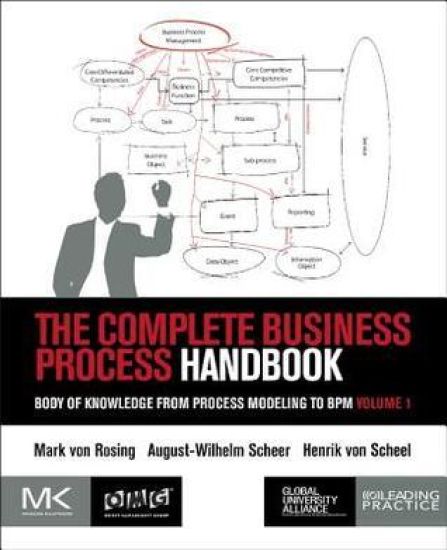
The Complete Business Process Handbook

The Complete Business Process Handbook

Mark von Rosing; Henrik von Scheel; August-Wilhelm Scheer

Morgan Kaufmann Publishers In
2014
nidottu
The Complete Business Process Handbook is the most comprehensive body of knowledge on business processes with revealing new research. Written as a practical guide for Executives, Practitioners, Managers and Students by the authorities that have shaped the way we think and work with process today. It stands out as a masterpiece, being part of the BPM bachelor and master degree curriculum at universities around the world, with revealing academic research and insight from the leaders in the market. This book provides everything you need to know about the processes and frameworks, methods, and approaches to implement BPM. Through real-world examples, best practices, LEADing practices and advice from experts, readers will understand how BPM works and how to best use it to their advantage. Cases from industry leaders and innovators show how early adopters of LEADing Practices improved their businesses by using BPM technology and methodology. As the first of three volumes, this book represents the most comprehensive body of knowledge published on business process. Following closely behind, the second volume uniquely bridges theory with how BPM is applied today with the most extensive information on extended BPM. The third volume will explore award winning real-life examples of leading business process practices and how it can be replaced to your advantage.
Unternehmen gründen ist nicht schwer ?

Unternehmen gründen ist nicht schwer ?

August-Wilhelm Scheer

Springer-Verlag Berlin and Heidelberg GmbH Co. K
2012
nidottu
Unternehmensgründungen sind "in". Mit dem erfolgreichen Aufbau eines Unternehmens sind aber neben vielen Erfolgserlebnissen auch große Anstrengungen und Probleme verbunden. Die hohen Anforderungen an physische und psychische Stabilität der Unternehmensgründer in der New Economy werden erst in den kritischen Wachstumsphasen der Unternehmen deutlich. Der Autor, erfolgreicher Wissenschaftler, Unternehmensgründer und politischer Berater, fasst seine Erfahrungen zu spannenden Erzählungen und "Lebensregeln" zusammen. Die erfolgreiche Gründung der IDS Scheer AG, sowie die Entwicklung über 20 weiterer Spin-off-Unternehmen seines Instituts für Wirtschaftsinformatik an der Universität Saarbrücken bilden den Hintergrund seiner Ausführungen. Das Buch wendet sich an Unternehmensgründer, Studenten, Wissenschaftler und Politiker. Die offene Schilderung der Gründungs- und Wachstumsphasen seiner Unternehmen lassen den Leser an dem Abenteuer des "Unternehmertums" teilhaben. Unternehmertum fordert er auch von den Professoren in der universitären Forschung und Lehre. Zur Verbesserung der Rahmenbedingungen für Unternehmensgründungen macht er kritische Anmerkungen und konstruktive Vorschläge zur deutschen Innovationspolitik. Er gibt Einblicke in das Lebensgefühl der Menschen in der New Economy, in der PC nicht nur für "Personal Computer", sondern auch für das Kultessen Pizza und Cola während der Nachtarbeit am Computer steht. Interessenten der High-Tech Welt lernen Interna kennen, die hinter den glitzernden Fassaden üblicherweise verborgen bleiben.
E-Government

E-Government

August-Wilhelm Scheer; Helmut Kruppke; Ralf Heib

Springer-Verlag Berlin and Heidelberg GmbH Co. K
2012
nidottu
Kann man mit E-Government die Verwaltung optimieren? Eine empirische Studie zur Prozessorientierung von E-Government-Initiativen auf Bundes- und Landesebene steht im Mittelpunkt des Buches. Sie zeigt, dass der Nutzen von E-Government-Losungen entscheidend davon abhangt, inwiefern die bestehenden Verwaltungsablaufe verbessert werden konnen. Obwohl diese Erkenntnis von der Mehrheit der befragten Entscheidungstrager unterstutzt wird, ist das Thema Prozessoptimierung in vielen laufenden E-Government-Projekten noch nicht strukturiert umgesetzt. Vielfach dominiert noch die Technikeuphorie. Neben einer Bestandsaufnahme der laufenden E-Government-Initiativen in Deutschland bietet das Buch ausfuhrliche Empfehlungen, wie ein systematisches Prozessmanagement in die E-Government-Programme der offentlichen Verwaltung integriert werden kann. Fazit: Kein E-Government-Erfolg ohne Prozessveranderung!
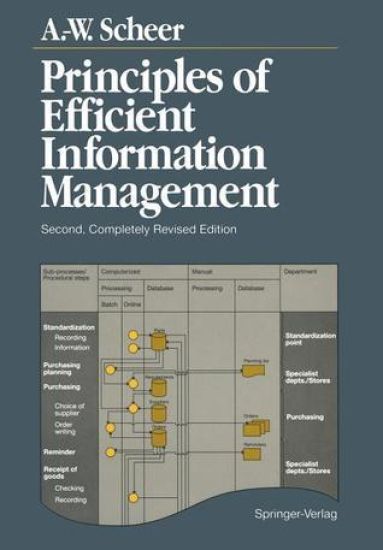
Principles of Efficient Information Management

Principles of Efficient Information Management

August-Wilhelm Scheer

Springer-Verlag Berlin and Heidelberg GmbH Co. K
2012
nidottu
The first edition of this book appeared in the Federal Republic of Gennany in 1984. and in English translation as "Computer: A Challenge for Business Administration" in 1985. This book. which is a translation of the fourth Gennan edition. has been comprehensively revised. As a result both the character and the expected audience of the book have changed. which is reflected in the alteration to the title. This book adresses itself to issues arising from the research areas of both infonnation systems and computer science. Computer science departments are primarily concerned with the development of EDP techniques. and the business economics aspects remain largely Ignored. The emphasis in infonnation systems departments is placed on the investigation of the business economic impact of the use of already existing systems. This strongly empirical approach is accompanied by a disinclination to consider actual system deSign: this is considered the responsibility of the software houses. This partitioning. however. leaves untapped the considerable potential which could be realized by an interdisciplinary approach from computer science and business economics. An isolated approach neglects both the effects that business economics can have on the implementation of EDP techniques. and the structural impact of EDP on business economics.
Architecture of Integrated Information Systems

Architecture of Integrated Information Systems

August-Wilhelm Scheer

Springer-Verlag Berlin and Heidelberg GmbH Co. K
2012
nidottu
The creation and implementation of integrated information systems involves a variety of collaborators including people from specialist departments. informatics. external advisers and manufacturers. They need clear rules and l1mits within which they can process their individual sub-tasks. in order to ensure the logical consistency of the entire project. An architecture therefore needs to be established to determine the components that make up the information system and the methods to be used to deSCribe it. Whereas previously. individual descriptive viewpoints such as the functional representation or the data model have dominated. this book creates an architecture within which the function. organization. and data views of an information system throughout the development phases of the requirements definition. design specification and the implementation deSCription can be given equal treatment. The ARIS architecture thereby developed is deSCribed in concrete terms as an information model within the entity-relationship approach. This information model provides the basis for the systematic and rational application of methods in the development of information systems. Furthermore. it is also the basis for a repository in which the enterprise's application-specific data. organization and function models can be stored. An essential property of the ARIS architecture is that the various views are not only considered in isolation. but a control view also represents their relationships with each other. As a result. new developments such as distributed databases or object-oriented approaches can be incorporated in the architecture. I would like to thank Irene Cameron for her careful translation of the German original.
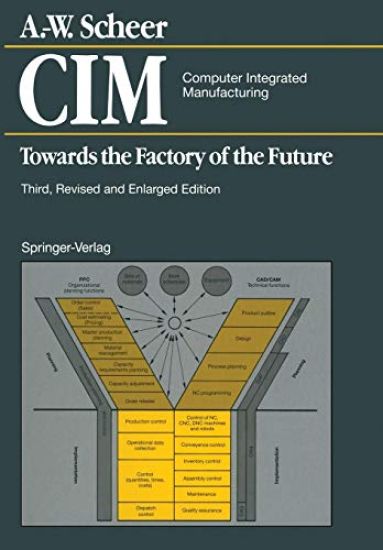
CIM Computer Integrated Manufacturing

CIM Computer Integrated Manufacturing

August-Wilhelm Scheer

Springer-Verlag Berlin and Heidelberg GmbH Co. K
2012
nidottu
Modern information technology has opened up new possibilities of flexibilization and cost reduction in production. The author defines CIM - Computer Integrated Manufacturing - as a concept for the structuring of industrial enterprises. Manufacturing technologies demand a CIM concept which can be realized through the capabilities of information processing available today. The idea of integrating different areas of CIM, such as production planning and control (PPC), computer aided design (CAD) and computer aided manufacturing (CAM), is explained through operating chains and put into a CIM architecture based on a hierarchy of EDP systems. The stance taken in this book of defining CIM as a total concept for industrial enterprises is increasingly gaining ground. The book does not aim to put the functional details of the individual CIM components (PPC, CAD, CAP and CAM) in the foreground, but rather to emphasize the integration principles for the functional demands of the individual components. This book appeared in the Federal Republic of Germany in 1987, and within one year it had run to three editions. The author contributes to this book not only his scientific knowledge but also his experience as a consultant for implementing CIM concepts.
CIM Computer Integrated Manufacturing

CIM Computer Integrated Manufacturing

August-Wilhelm Scheer

Springer-Verlag Berlin and Heidelberg GmbH Co. K
2011
nidottu
Computer Integrated Manufacturing (CIM) is the computerized handling of integrated business processes among all different functions in an enterprise. The consistent application of information technology, along with modern manufacturing techniques and new organizational procedures, opens up great potential for speeding up processes. This book discusses the current state of applications and new demands arising from the integration principle. It mainly emphasizes on strategies for realization and implementation based on the author's concrete experience. The "Y-CIM information management" model is presented as a procedural method for implementing CIM. The third edition has been supplemented by up-to-date specified examples of applied CIM solutions and transfer strategies.
Wirtschaftsinformatik

Wirtschaftsinformatik

August-Wilhelm Scheer

Springer-Verlag Berlin and Heidelberg GmbH Co. K
2011
nidottu
Die vierte Auflage unterscheidet sich von den vorhergehenden bereits formal durch einen erhoehten Seitenumfang. Dieser ist auf einen hoeheren Detaillierungsgrad und eme vollstandigere Problembeschreibung zuruckzufuhren. Der Detaillierungsgrad wurde bei solchen Problemen erhoeht, die fur die Auswahl und Gestaltung von Informationssystemen im Industriebetrieb besonders wichtig sind, z.B. die Produktbeschreibung und die CAM- Fabrikorganisation. Dadurch wird eine starkere Realitatsnahe erreicht, um den komplizierten Organismus eines Industriebetriebes verstehen zu koennen. Wahrend in den ersten Auflagen als Beschreibungssprache fur Infor- mationssysteme die Datenmodellierung dominierte, wurde jetzt mit der vom Verfasser entwickelten Architektur integrierter Informationssysteme (ARlS) ein ganzheitlicher Beschreibungsansatz verfolgt, der neben der Daten- auch eine Funktions-, Organisation- und Steuerungssicht enthalt und von der Analyse uber Fachkonzept, DV-Konzept bis zur Implementierung alle Phasen des Life-CycJe-Prozesses eines Informationssystems umfasst. Die entwickelten Referenzmodelle koennen somit als Ausgangsmodelle fur konkrete Anwendungen gelten. Die Beschreibung der Probleme nach dem ARlS-Konzept fuhrt zwangs- weise zu einer Erweiterung des Umfangs. Auf der anderen Seite wurde auf redundante Beschreibungen der fruheren Auflagen verzichtet, so z.B. auf die routinehafte UEbertragung der Entity-Relationship-Modelle in das Relationen- modell. Hier werden jetzt nur noch die Transformationsregeln und einige Beispiele angegeben. Eine wesentliche AEnderung des Buches ist die konsequente Ausrichtung des Stoffes auf Geschaftsprozesse gegenuber einer fruher starker funktionalen Gliederung. Dieses tragt dem Trend zur prozessorientierten Aufbau- und Ablauforganisation in Unternehmungen Rechnung, der gerade durch neue Mittel der Informationsverarbeitung unterstutzt wird. Diese Ausrichtung kommt auch im veranderten Untertitel zum Ausdruck.