Kirjojen hintavertailu. Mukana 12 484 348 kirjaa ja 12 kauppaa.

Kirjailija

August Wilson

Kirjat ja teokset yhdessä paikassa: 41 kirjaa, julkaisuja vuosilta 1985-2024, suosituimpien joukossa August Wilson's Two Trains Running. Vertaile teosten hintoja ja tarkista saatavuus suomalaisista kirjakaupoista.

41 kirjaa

Kirjojen julkaisuhaarukka 1985-2024.

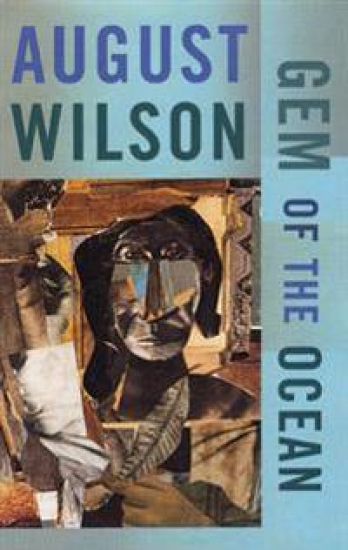
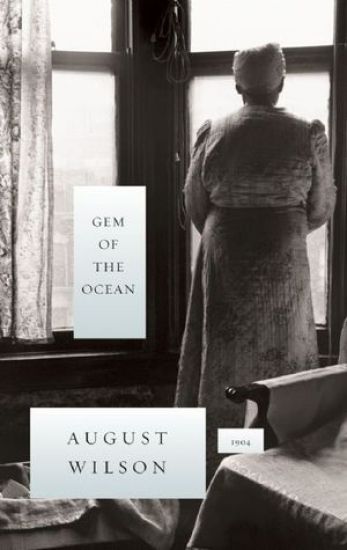
Gem of the Ocean

Gem of the Ocean

August Wilson

Theatre Communications Group Inc.,U.S.
2008
sidottu
"No one except perhaps Eugene O'Neill and Tennessee Williams has aimed so high and achieved so much in the American theater."--John Lahr, "The New Yorker""A swelling battle hymn of transporting beauty. Theatergoers who have followed August Wilson's career will find in Gem a touchstone for everything else he has written."--Ben Brantley, "The New York Times""Wilson's juiciest material. The play holds the stage and its characters hammer home, strongly, the notion of newfound freedom."--Michael Phillips, "Chicago Tribune""Gem of the Ocean" is the play that begins it all. Set in 1904 Pittsburgh, it is chronologically the first work in August Wilson's decade-by-decade cycle dramatizing the African American experience during the 20th century--an unprecedented series that includes the Pulitzer Prize-winning plays "Fences" and "The Piano Lesson." Aunt Esther, the drama's 287-year-old fiery matriarch, welcomes into her Hill District home Solly Two Kings, who was born into slavery and scouted for the Union Army, and Citizen Barlow, a young man from Alabama searching for a new life. "Gem of the Ocean" recently played across the country and on Broadway, with Phylicia Rashad as Aunt Esther.Earlier in 2005, on the completion of the final work of his ten play cycle-surely the most ambitious American dramatic project undertaken in our history-August Wilson disclosed his bout with cancer, an illness of unusual ferocity that would eventually claim his life on October 2. Fittingly the Broadway theatre where his last play will be produced in 2006 has been renamed the August Wilson Theater in his honor. His legacy will animate the theatre and stir the human heart for decades to come.
The Century Cycle

The Century Cycle

August Wilson

Theatre Communications Group Inc.,U.S.
2008
sidottu
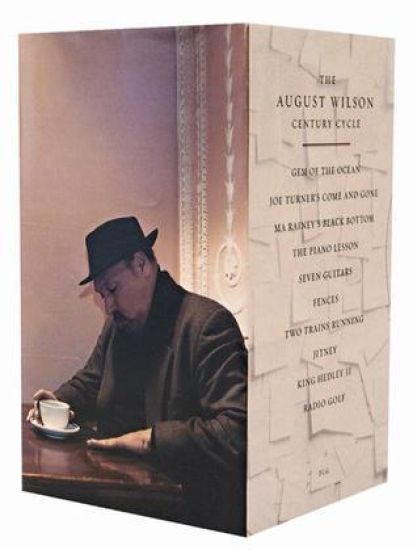
Series introduction by John Lahr with individual volumes introduced by Laurence Fishburne, Tony Kushner, Romulus Linney, Marion McClinton, Toni Morrison, Suzan-Lori Parks, Phylicia Rashad, Ishmael Reed, and Frank Rich."No one except perhaps Eugene O'Neill and Tennessee Williams has aimed so high and achieved so much in the American theater."--John Lahr, "The New Yorker ""Heroic is not a word one uses often without embarrassment to describe a writer or playwright, but the diligence and ferocity of effort behind the creation of his body of work is really an epic story. . . . For all the magic in his plays, he was writing in the grand tradition of Eugene O'Neill and Arthur Miller, the politically engaged, direct, social realist drama. He was reclaiming ground for the theater that most people thought had been abandoned."--Tony KushnerAugust Wilson's Century Cycle is "one of the most ambitious dramatic projects ever undertaken" ("The New York Times"). With it, Wilson dramatizes the African American experience and heritage in the twentieth century, with a play for each decade, almost all set in the Hill District of Pittsburgh, where he grew up. Wilson's extraordinary lifework--completed just before his death in October 2005--is presented here for the first time in its entirety."Art is beholden to the kiln in which the artist was fired. Before I am anything, a man or a playwright, I am an African American. . . . The cycle of plays that I have been writing since 1979 is my attempt to represent that culture on stage in all its richness and fullness and to demonstrate its ability to sustain us in all areas of human life and endeavor and through profound moments of our history in which the larger society has thought less of us than we have thought of ourselves. ""The characters in the plays still place their faith in America's willingness to live up to the meaning of her creed. It is this belief in America's honor that allows them to pursue the American Dream even as it remains elusive. . . . They shout, they argue, they wrestle with love, honor, duty, betrayal; they have loud voices and big hearts; they demand justice, they love, they laugh, they cry, they murder, and they embrace life with zest and vigor. . . . In all the plays, the characters remain pointed towards the future, their pockets lined with fresh hope and an abiding faith in their own abilities and their own heroics."--August Wilson
Gem of the Ocean

Gem of the Ocean

August Wilson; Phylicia Rashad

Theatre Communications Group Inc.,U.S.
2006
pokkari
"No one except perhaps Eugene O'Neill and Tennessee Williams has aimed so high and achieved so much in the American theater."--John Lahr, The New Yorker"A swelling battle hymn of transporting beauty. Theatergoers who have followed August Wilson's career will find in Gem a touchstone for everything else he has written."--Ben Brantley, The New York Times"Wilson's juiciest material. The play holds the stage and its characters hammer home, strongly, the notion of newfound freedom."--Michael Phillips, Chicago TribuneGem of the Ocean is the play that begins it all. Set in 1904 Pittsburgh, it is chronologically the first work in August Wilson's decade-by-decade cycle dramatizing the African American experience during the 20th century--an unprecedented series that includes the Pulitzer Prize-winning plays Fences and The Piano Lesson. Aunt Esther, the drama's 287-year-old fiery matriarch, welcomes into her Hill District home Solly Two Kings, who was born into slavery and scouted for the Union Army, and Citizen Barlow, a young man from Alabama searching for a new life. Gem of the Ocean recently played across the country and on Broadway, with Phylicia Rashad as Aunt Esther.Earlier in 2005, on the completion of the final work of his ten play cycle-surely the most ambitious American dramatic project undertaken in our history-August Wilson disclosed his bout with cancer, an illness of unusual ferocity that would eventually claim his life on October 2. Fittingly the Broadway theatre where his last play will be produced in 2006 has been renamed the August Wilson Theater in his honor. His legacy will animate the theatre and stir the human heart for decades to come.
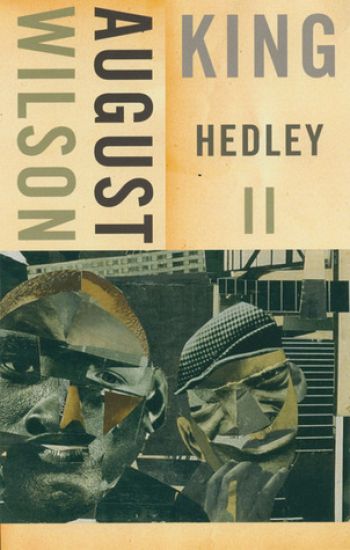
King Hedley II

King Hedley II

August Wilson

Theatre Communications Group Inc.,U.S.
2005
nidottu
The eighth work in playwright August Wilson's ten-play cycle chronicling the history of the African-American experience in each decade of the 20th century, "King Hedley II" is set in 1985 and tells the story of an ex-con in post-Reagan Pittsburgh trying to rebuild his life.
Seven Black Plays

Seven Black Plays

August Wilson

Northwestern University Press
2004
nidottu
Showcases a selection of award-winning African American drama. The seven plays represent a wide range of talents, experience and perspectives brought to bear on diverse themes, from a unique moment in the history of baseball's Negro League to a working-class couple contending with a bully.
The Ground On Which I Stand

The Ground On Which I Stand

August Wilson

Nick Hern Books
2001
nidottu
A passionate and controversial call for black cultural separatism, from the author of the Olivier award-winning Jitney and the Pulitzer Prize-winning King Hedley II. 'I believe that race matters - that it is the largest, most identifiable part of our personality... Cultural Imperialists view European culture as beyond reproach in its perfection. It is inconceivable to them that life could be lived without knowing Shakespeare or Mozart... The idea that blacks have their own way of responding to the world, their own values, style, linguistics, religion and aesthetics, is unacceptable to them... We reject any attempt to blot us out...' August Wilson August Wilson's The Ground on Which I Stand is published in the Nick Hern Books Dramatic Contexts series: important statements on the theatre by major figures in the theatre.
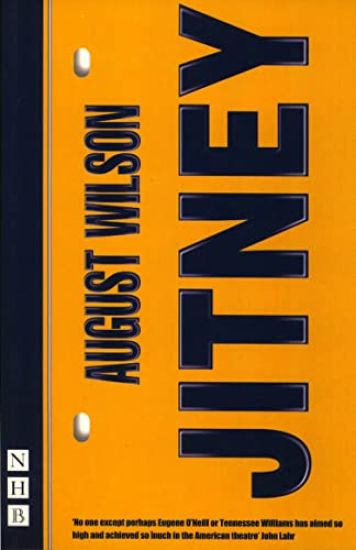
Jitney

Jitney

August Wilson

Nick Hern Books
2001
nidottu
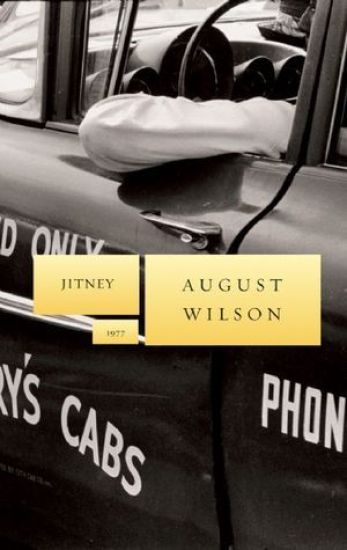
The seventh play in August Wilson's 10-play Century Cycle chronicling, decade by decade, the history of the African American experience in the 20th century. Olivier Award for Best New Play Jitney is set in the 1970s in Pittsburgh's Hill District, about a firm of mini-cab drivers who serve black neighbourhoods. 'No one except perhaps Eugene O'Neill or Tennessee Williams has aimed so high and achieved so much in the American theatre' - John Lahr
The Ground on Which I Stand

The Ground on Which I Stand

August Wilson

Theatre Communications Group Inc.,U.S.
2001
pokkari
"The Ground on Which I Stand is August Wilson's eloquent and personal call for African American artists to seize the power over their own cultural identity and to establish permanent institutions that celebrate and preserve the singular achievements of African American dramatic art and reaffirm its equal importance in contemporary American culture." Delivered as the keynote address of Theatre Communication's Group 11th biennial conference in June 1996, this speech refocused the agenda of that conference, and spurred months of debate about cultural diversity in the American theatre, culminating in a standing-room-only public debate at New York City's Town Hall.
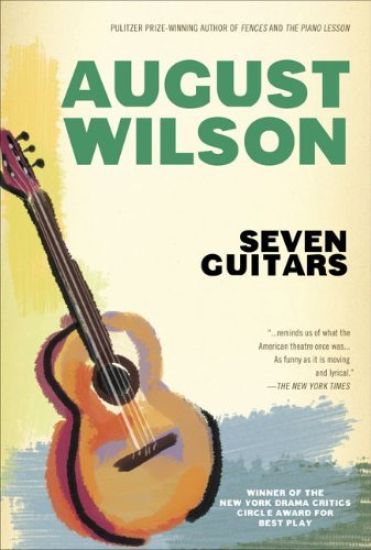
Seven Guitars

Seven Guitars

August Wilson

Plume Books
1997
nidottu
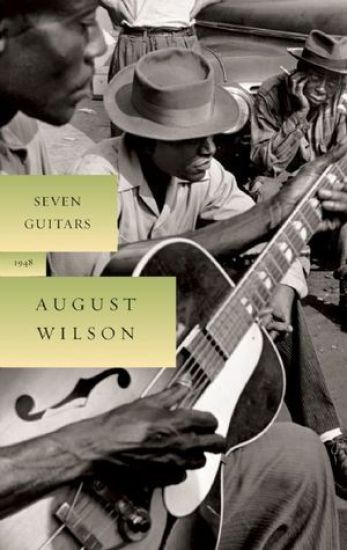
Pulitzer Prize-winning author of Fences and The Piano LessonWinner of the New York Drama Critics Circle Award for Best Play It is the spring of 1948. In the still cool evenings of Pittsburgh's Hill district, familiar sounds fill the air. A rooster crows. Screen doors slam. The laughter of friends gathered for a backyard card game rises just above the wail of a mother who has lost her son. And there's the sound of the blues, played and sung by young men and women with little more than a guitar in their hands and a dream in their hearts.August Wilson's Seven Guitars is the sixth chapter in his continuing theatrical saga that explores the hope, heartbreak, and heritage of the African-American experience in the twentieth century. The story follows a small group of friends who gather following the untimely death of Floyd "Schoolboy" Barton, a local blues guitarist on the edge of stardom. Together, they reminisce about his short life and discover the unspoken passions and undying spirit that live within each of them.
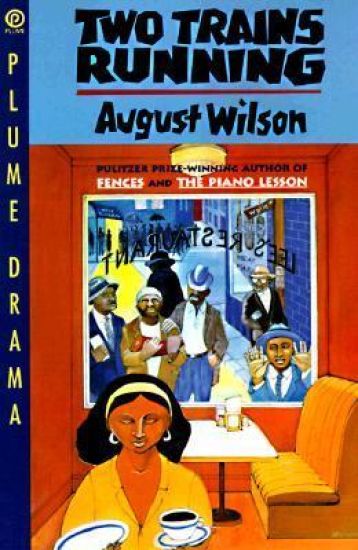
Two Trains Running

Two Trains Running

August Wilson

Plume Books
1993
nidottu
From the Pulitzer Prize-winning author of Fences and The Piano Lesson comes a "vivid and uplifting" (Time) play about unsung men and women who are anything but ordinary. August Wilson established himself as one of our most distinguished playwrights with his insightful, probing, and evocative portraits of Black America and the African American experience in the twentieth century. With the mesmerizing Two Trains Running, he crafted what Time magazine called "his most mature work to date." It is Pittsburgh, 1969, and the regulars of Memphis Lee's restaurant are struggling to cope with the turbulence of a world that is changing rapidly around them and fighting back when they can. The diner is scheduled to be torn down, a casualty of the city's renovation project that is sweeping away the buildings of a community, but not its spirit. For just as sure as an inexorable future looms right around the corner, these people of "loud voices and big hearts" continue to search, to father, to persevere, to hope. With compassion, humor, and a superb sense of place and time, Wilson paints a vivid portrait of everyday lives in the shadow of great events.
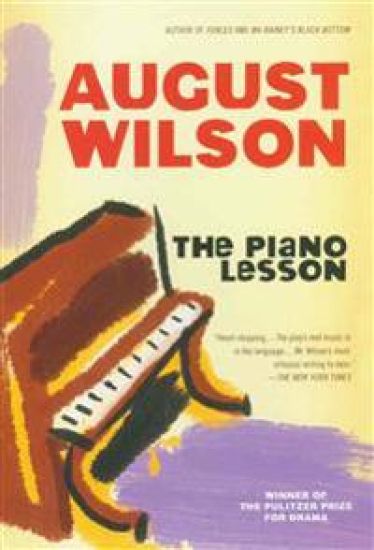
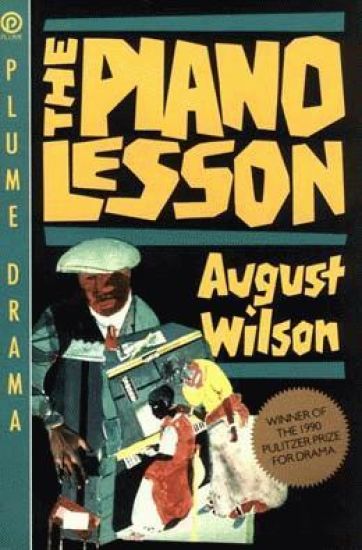
The Piano Lesson

The Piano Lesson

August Wilson

Plume Books
1990
nidottu
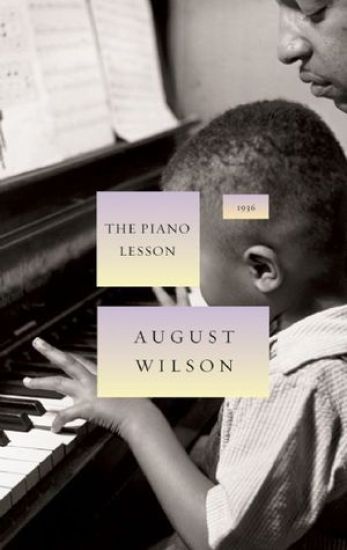
NOW A NETFLIX FILM STARRING SAMUEL L. JACKSON Winner of the New York Drama Critics Circle Award for Best Play, this modern American classic is about family, and the legacy of slavery in America. August Wilson has already given the American theater such spell-binding plays about the black experience in 20th-century America as Ma Rainey's Black Bottom, Joe Turner's Come and Gone, and the Pulitzer Prize-winning Fences. In his second Pulitzer Prize-winner, The Piano Lesson, Wilson has fashioned perhaps his most haunting and dramatic work. At the heart of the play stands the ornately carved upright piano which, as the Charles family's prized, hard-won possession, has been gathering dust in the parlor of Berniece Charles's Pittsburgh home. When Boy Willie, Berniece's exuberant brother, bursts into her life with his dream of buying the same Mississippi land that his family had worked as slaves, he plans to sell their antique piano for the hard cash he needs to stake his future. But Berniece refuses to sell, clinging to the piano as a reminder of the history that is their family legacy. This dilemma is the real "piano lesson," reminding us that blacks are often deprived both of the symbols of their past and of opportunity in the present.