Kirjojen hintavertailu. Mukana 12 211 821 kirjaa ja 12 kauppaa.

Kirjailija

Austin Sarat

Kirjat ja teokset yhdessä paikassa: 24 kirjaa, julkaisuja vuosilta 1993-2022, suosituimpien joukossa Mercy on Trial. Vertaile teosten hintoja ja tarkista saatavuus suomalaisista kirjakaupoista.

24 kirjaa

Kirjojen julkaisuhaarukka 1993-2022.

Mercy on Trial

Mercy on Trial

Austin Sarat

Princeton University Press
2007
pokkari
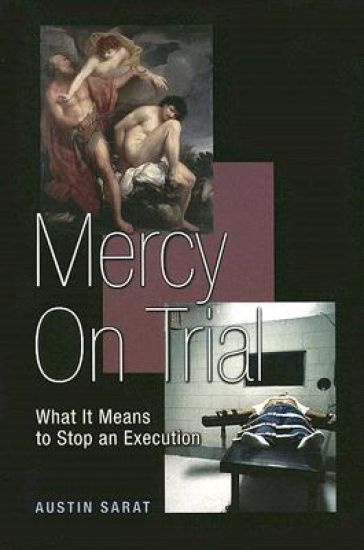
On January 11, 2003, Illinois Governor George Ryan--a Republican on record as saying that "some crimes are so horrendous ...that society has a right to demand the ultimate penalty"--commuted the capital sentences of all 167 prisoners on his state's death row. Critics demonized Ryan. For opponents of capital punishment, however, Ryan became an instant hero whose decision was seen as a signal moment in the "new abolitionist" politics to end killing by the state. In this compelling and timely work, Austin Sarat provides the first book-length work on executive clemency. He turns our focus from questions of guilt and innocence to the very meaning of mercy. Starting from Ryan's controversial decision, Mercy on Trial uses the lens of executive clemency in capital cases to discuss the fraught condition of mercy in American political life. Most pointedly, Sarat argues that mercy itself is on trial. Although it has always had a problematic position as a form of "lawful lawlessness," it has come under much more intense popular pressure and criticism in recent decades. This has yielded a radical decline in the use of the power of chief executives to stop executions. From the history of capital clemency in the twentieth century to surrounding legal controversies and philosophical debates about when (if ever) mercy should be extended, Sarat examines the issue comprehensively. In the end, he acknowledges the risks associated with mercy--but, he argues, those risks are worth taking.
Lethal Injection and the False Promise of Humane Execution
With a history marked by incompetence, political maneuvering, and secrecy, America's "most humane" execution method is anything but. From the beginning of the Republic, this country has struggled to reconcile its use of capital punishment with the Constitution's prohibition of cruel punishment. Death penalty proponents argue both that it is justifiable as a response to particularly heinous crimes, and that it serves to deter others from committing them in the future. However, since the earliest executions, abolitionists have fought against this state-sanctioned killing, arguing, among other things, that the methods of execution have frequently been just as gruesome as the crimes meriting their use. Lethal injection was first introduced in order to quell such objections, but, as Austin Sarat shows in this brief history, its supporters' commitment to painless and humane death has never been certain. This book tells the story of lethal injection's earliest iterations in the United States, starting with New York state's rejection of that execution method almost a century and half ago. Sarat recounts lethal injection's return in the late 1970s, and offers novel and insightful scrutiny of the new drug protocols that went into effect between 2010 and 2020. Drawing on rare data, he makes the case that lethal injections during this time only became more unreliable, inefficient, and more frequently botched. Beyond his stirring narrative history, Sarat mounts a comprehensive condemnation of the state-level maneuvering in response to such mishaps, whereby death penalty states adopted secrecy statutes and adjusted their execution protocols to make it harder to identify and observe lethal injection's flaws. What was once touted as America's most humane execution method is now its most unreliable one. What was once a model of efficiency in the grim business of state killing is now marked by mayhem. The book concludes by critically examining the place of lethal injection, and the death penalty writ large, today.
The Time of Catastrophe

The Time of Catastrophe

Christopher Dole; Robert Hayashi; Andrew Poe; Austin Sarat

Routledge
2019
nidottu
If catastrophes are, by definition, exceptional events of such magnitude that worlds and lives are dramatically overturned, the question of timing would pose a seemingly straightforward, if not redundant question. The Time of Catastrophe demonstrates the analytic productiveness of this question, arguing that there is much to be gained by interrogating the temporal conceits of conventional understandings of catastrophe and the catastrophic. Bringing together a distinguished, interdisciplinary group of scholars, the book develops a critical language for examining 'catastrophic time', recognizing the central importance of, and offering a set of frameworks for, examining the alluring and elusive qualities of catastrophe. Framed around the ideas of Agamben, Kant and Benjamin, and drawing on philosophy, history, law, political science, anthropology and the arts, this volume seeks to demonstrate how the question of 'catastrophic time' is in fact a question about something much more than the frequency of disasters in our so-called 'Age of Catastrophe'.
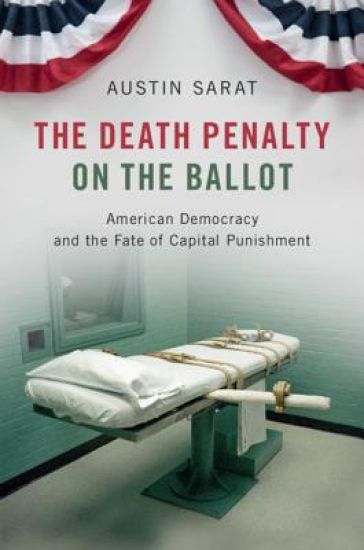
The Death Penalty on the Ballot

The Death Penalty on the Ballot

Austin Sarat

Cambridge University Press
2019
pokkari
Investigating the attitudes about capital punishment in contemporary America, this book poses the question: can ending the death penalty be done democratically? How is it that a liberal democracy like the United States shares the distinction of being a leading proponent of the death penalty with some of the world's most repressive regimes? Reporting on the first study of initiative and referendum processes used to decide the fate of the death penalty in the United States, this book explains how these processes have played an important, but generally neglected, role in the recent history of America's death penalty. While numerous scholars have argued that the death penalty is incompatible with democracy and that it cannot be reconciled with democracy's underlying commitment to respect the equal dignity of all, Professor Austin Sarat offers the first study of what happens when the public gets to decide on the fate of capital punishment.
The Death Penalty on the Ballot

The Death Penalty on the Ballot

Austin Sarat

Cambridge University Press
2019
sidottu
Investigating the attitudes about capital punishment in contemporary America, this book poses the question: can ending the death penalty be done democratically? How is it that a liberal democracy like the United States shares the distinction of being a leading proponent of the death penalty with some of the world's most repressive regimes? Reporting on the first study of initiative and referendum processes used to decide the fate of the death penalty in the United States, this book explains how these processes have played an important, but generally neglected, role in the recent history of America's death penalty. While numerous scholars have argued that the death penalty is incompatible with democracy and that it cannot be reconciled with democracy's underlying commitment to respect the equal dignity of all, Professor Austin Sarat offers the first study of what happens when the public gets to decide on the fate of capital punishment.
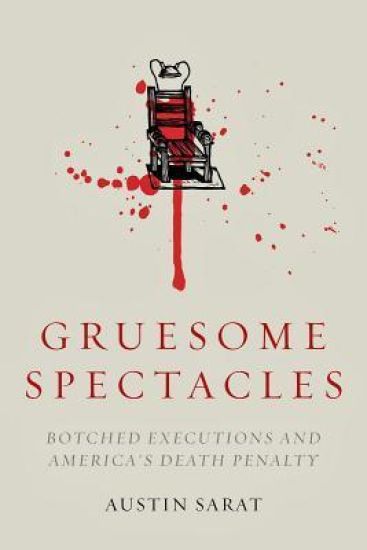
Gruesome Spectacles

Gruesome Spectacles

Austin Sarat

Stanford University Press
2016
pokkari
Gruesome Spectacles tells the sobering history of botched, mismanaged, and painful executions in the U.S. from 1890 to the present. Since the book's initial publication in 2014, the cruel and unusual executions of a number of people on death row, including Clayton Lockett in Oklahoma and Joseph Wood in Arizona, have made headlines and renewed vigorous debate surrounding the death penalty in America. Austin Sarat's book instantly became an essential resource for citizens, scholars, and lawmakers interested in capital punishment—even the Supreme Court, which cited the book in its recent opinion, Glossip v. Gross. Now in paperback, the book includes a new preface outlining the latest twists and turns in the death penalty debate, including the recent galvanization of citizens and leaders alike as recent botched executions have unfolded in the press. Sarat argues that unlike in the past, today's botched executions seem less like inexplicable mishaps and more like the latest symptoms of a death penalty machinery in disarray. Gruesome Spectacles traces the historical evolution of methods of execution, from hanging or firing squad to electrocution to gas and lethal injection. Even though each of these technologies was developed to "perfect" state killing by decreasing the chance of a cruel death, an estimated three percent of all American executions went awry in one way or another. Sarat recounts the gripping and truly gruesome stories of some of these deaths—stories obscured by history and to some extent, the popular press.
The Time of Catastrophe

The Time of Catastrophe

Christopher Dole; Robert Hayashi; Andrew Poe; Austin Sarat

Routledge
2015
sidottu
If catastrophes are, by definition, exceptional events of such magnitude that worlds and lives are dramatically overturned, the question of timing would pose a seemingly straightforward, if not redundant question. The Time of Catastrophe demonstrates the analytic productiveness of this question, arguing that there is much to be gained by interrogating the temporal conceits of conventional understandings of catastrophe and the catastrophic. Bringing together a distinguished, interdisciplinary group of scholars, the book develops a critical language for examining 'catastrophic time', recognizing the central importance of, and offering a set of frameworks for, examining the alluring and elusive qualities of catastrophe. Framed around the ideas of Agamben, Kant and Benjamin, and drawing on philosophy, history, law, political science, anthropology and the arts, this volume seeks to demonstrate how the question of 'catastrophic time' is in fact a question about something much more than the frequency of disasters in our so-called 'Age of Catastrophe'.
Gruesome Spectacles

Gruesome Spectacles

Austin Sarat

Stanford University Press
2014
sidottu
Gruesome Spectacles tells the sobering history of botched, mismanaged, and painful executions in the U.S. from 1890 to the present. Since the book's initial publication in 2014, the cruel and unusual executions of a number of people on death row, including Clayton Lockett in Oklahoma and Joseph Wood in Arizona, have made headlines and renewed vigorous debate surrounding the death penalty in America. Austin Sarat's book instantly became an essential resource for citizens, scholars, and lawmakers interested in capital punishment—even the Supreme Court, which cited the book in its recent opinion, Glossip v. Gross. Now in paperback, the book includes a new preface outlining the latest twists and turns in the death penalty debate, including the recent galvanization of citizens and leaders alike as recent botched executions have unfolded in the press. Sarat argues that unlike in the past, today's botched executions seem less like inexplicable mishaps and more like the latest symptoms of a death penalty machinery in disarray. Gruesome Spectacles traces the historical evolution of methods of execution, from hanging or firing squad to electrocution to gas and lethal injection. Even though each of these technologies was developed to "perfect" state killing by decreasing the chance of a cruel death, an estimated three percent of all American executions went awry in one way or another. Sarat recounts the gripping and truly gruesome stories of some of these deaths—stories obscured by history and to some extent, the popular press.
Merciful Judgments and Contemporary Society

Merciful Judgments and Contemporary Society

Austin Sarat

Cambridge University Press
2013
pokkari
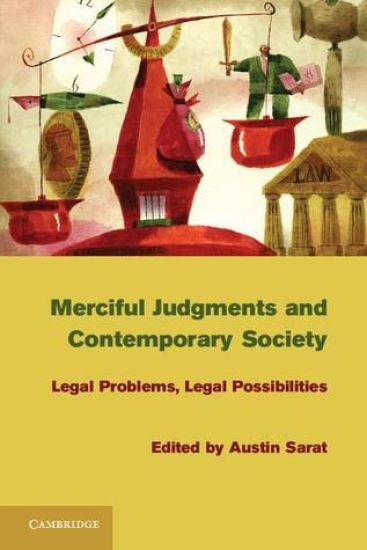
Merciful Judgments and Contemporary Society: Legal Problems, Legal Possibilities explores the tension between law's need for and dependence on merciful judgments and suspicions that regularly accompany them. Rather than focusing primarily on definitional questions or the longstanding debate about the moral worth and importance of mercy, this book focuses on mercy as a part of, and problem for, law. This book is a product of the University of Alabama School of Law symposia series on 'Law, Knowledge and Imagination'. It explores the ways law is known and imagined in a diverse array of disciplines, including political science, history, cultural studies, philosophy and science. In addition, books produced through the Alabama symposia explore various conjunctions of law, knowledge and imagination as they play out in debates about theory and policy and speak to venerable questions as well as contemporary issues.
Merciful Judgments and Contemporary Society

Merciful Judgments and Contemporary Society

Austin Sarat

Cambridge University Press
2011
sidottu
Merciful Judgments and Contemporary Society: Legal Problems, Legal Possibilities explores the tension between law's need for and dependence on merciful judgments and suspicions that regularly accompany them. Rather than focusing primarily on definitional questions or the longstanding debate about the moral worth and importance of mercy, this book focuses on mercy as a part of, and problem for, law. This book is a product of the University of Alabama School of Law symposia series on 'Law, Knowledge and Imagination'. It explores the ways law is known and imagined in a diverse array of disciplines, including political science, history, cultural studies, philosophy and science. In addition, books produced through the Alabama symposia explore various conjunctions of law, knowledge and imagination as they play out in debates about theory and policy and speak to venerable questions as well as contemporary issues.
Studies in Law, Politics, and Society

Studies in Law, Politics, and Society

Austin Sarat

Emerald Publishing Limited
2009
sidottu
Trials are well known as paradigmatic legal events. Some attract wide attention; others mostly escape notice. Indeed in the United States trials have recently become rare, with some scholars bemoaning the death of the trial. This issue of "Studies in Law, Politics and Society" contains, along with two general interest articles, a symposium on the past, present, and future of the trial. It brings together the work of leading scholars to think about the nature, utility, and limits of trials. This work takes stock of the field, charts its progress, and points the way for its future development.
Studies in Law, Politics, and Society

Studies in Law, Politics, and Society

Austin Sarat

Emerald Publishing Limited
2009
sidottu
Rights and rights talk have a long and storied history and have occupied a crucial place in the ideology of liberal legalism. With the development of Critical Legal Studies in the 1970s and 80s, rights were subject to extensive critique. Yet not long after that critique rights were rehabilitated by feminists and Critical Race Theorists. Today, scholars are investigating the role of rights in social movements, in legal consciousness, in organizations, in the international arena, etc. This volume of "Studies in Law, Politics, and Society" contains a Special Issue on rights. It brings together the work of leading scholars to think about the nature, utility and limits of rights. This work takes stock of the field, charts its progress and points the way for its future development.
Studies in Law, Politics, and Society

Studies in Law, Politics, and Society

Austin Sarat

Emerald Publishing Limited
2009
sidottu
This volume of "Studies in Law, Politics, and Society" contains a Special Issue on crime and criminal justice. It brings together the work of scholars whose work usefully illuminates central questions in about how we define and process those who violate the criminal law and about the technologies of policing and punishment. The articles published here exemplify the exciting and innovative work now being done in interdisciplinary legal scholarship.
When Law Fails

When Law Fails

Austin Sarat

New York University Press
2009
sidottu
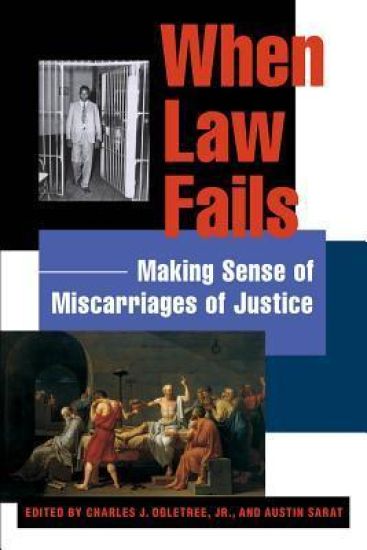
Since 1989, there have been over 200 post-conviction DNA exonerations in the United States. On the surface, the release of innocent people from prison could be seen as a victory for the criminal justice system: the wrong person went to jail, but the mistake was fixed and the accused set free. A closer look at miscarriages of justice, however, reveals that such errors are not aberrations but deeply revealing, common features of our legal system. The ten original essays in When Law Fails view wrongful convictions not as random mistakes but as organic outcomes of a misshaped larger system that is rife with faulty eyewitness identifications, false confessions, biased juries, and racial discrimination. Distinguished legal thinkers Charles J. Ogletree, Jr., and Austin Sarat have assembled a stellar group of contributors who try to make sense of justice gone wrong and to answer urgent questions. Are miscarriages of justice systemic or symptomatic, or are they mostly idiosyncratic? What are the broader implications of justice gone awry for the ways we think about law? Are there ways of reconceptualizing legal missteps that are particularly useful or illuminating? These instructive essays both address the questions and point the way toward further discussion. When Law Fails reveals the dramatic consequences as well as the daily realities of breakdowns in the law’s ability to deliver justice swiftly and fairly, and calls on us to look beyond headline-grabbing exonerations to see how failure is embedded in the legal system itself. Once we are able to recognize miscarriages of justice we will be able to begin to fix our broken legal system. Contributors: Douglas A. Berman, Markus D. Dubber, Mary L. Dudziak, Patricia Ewick, Daniel Givelber, Linda Ross Meyer, Charles J. Ogletree, Jr., Austin Sarat, Jonathan Simon, and Robert Weisberg.
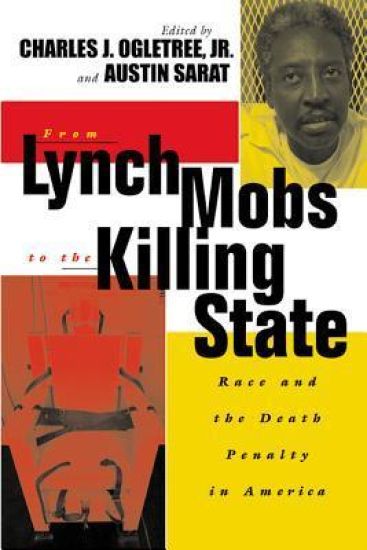
From Lynch Mobs to the Killing State

From Lynch Mobs to the Killing State

Austin Sarat

New York University Press
2006
sidottu
Situates the linkage between race and the death penalty in the history of the U.S. Since 1976, over forty percent of prisoners executed in American jails have been African American or Hispanic. This trend shows little evidence of diminishing, and follows a larger pattern of the violent criminalization of African American populations that has marked the country's history of punishment. In a bold attempt to tackle the looming question of how and why the connection between race and the death penalty has been so strong throughout American history, Ogletree and Sarat headline an interdisciplinary cast of experts in reflecting on this disturbing issue. Insightful original essays approach the topic from legal, historical, cultural, and social science perspectives to show the ways that the death penalty is racialized, the places in the death penalty process where race makes a difference, and the ways that meanings of race in the United States are constructed in and through our practices of capital punishment. From Lynch Mobs to the Killing State not only uncovers the ways that race influences capital punishment, but also attempts to situate the linkage between race and the death penalty in the history of this country, in particular the history of lynching. In its probing examination of how and why the connection between race and the death penalty has been so strong throughout American history, this book forces us to consider how the death penalty gives meaning to race as well as why the racialization of the death penalty is uniquely American.
Studies in Law, Politics, and Society

Studies in Law, Politics, and Society

Austin Sarat

JAI Press Inc.
2006
sidottu
This volume of "Studies in Law, Politics, and Society" presents a diverse array of articles by an interdisciplinary group of scholars. Their work covers several social science disciplines as well as law. Some of the articles published in this issue examine the interactions of law and "vulnerable" populations. Here research illustrates the complex ways law can be used by those groups, as well as the impact of law on their lives. Other articles focus on indigenous groups and particular legal controversies in which they are involved. Taken together they exemplify the exciting and innovative work now being done in interdisciplinary legal scholarship.
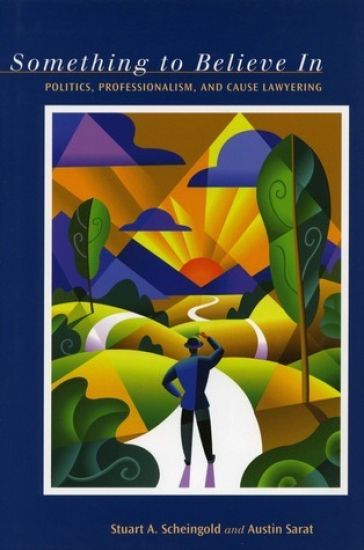
Something to Believe in

Something to Believe in

Stuart A. Scheingold; Austin Sarat

Stanford University Press
2004
sidottu
Lawyers in the United States are frequently described as "hired guns," willing to fight for any client and advance any interest. Claiming that their own beliefs are irrelevant to their work, they view lawyering as a technical activity, not a moral or political one. But there are others, those the authors call cause lawyers, who refuse to put aside their own convictions while they do their legal work. This "deviant" strain of lawyering is as significant as it is controversial, both in the legal profession and in the world of politics. It challenges mainstream ideas of what lawyers should do and of how they should behave. Human rights lawyers, feminist lawyers, right-to-life lawyers, civil rights and civil liberties lawyers, anti-death penalty lawyers, environmental lawyers, property rights lawyers, anti-poverty lawyers—cause lawyers go by many names, serving many causes. Something to Believe In explores the work that cause lawyers do, the role of moral and political commitment in their practice, their relationships to the organized legal profession, and the contributions they make to democratic politics.
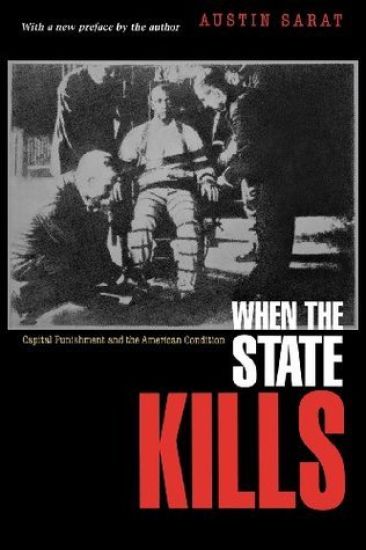
When the State Kills

When the State Kills

Austin Sarat

Princeton University Press
2002
pokkari
Is capital punishment just? Does it deter people from murder? What is the risk that we will execute innocent people? These are the usual questions at the heart of the increasingly heated debate about capital punishment in America. In this bold and impassioned book, Austin Sarat seeks to change the terms of that debate. Capital punishment must be stopped, Sarat argues, because it undermines our democratic society. Sarat unflinchingly exposes us to the realities of state killing. He examines its foundations in ideas about revenge and retribution. He takes us inside the courtroom of a capital trial, interviews jurors and lawyers who make decisions about life and death, and assesses the arguments swirling around Timothy McVeigh and his trial for the bombing in Oklahoma City. Aided by a series of unsettling color photographs, he traces Americans' evolving quest for new methods of execution, and explores the place of capital punishment in popular culture by examining such films as Dead Man Walking, The Last Dance, and The Green Mile. Sarat argues that state executions, once used by monarchs as symbolic displays of power, gained acceptance among Americans as a sign of the people's sovereignty. Yet today when the state kills, it does so in a bureaucratic procedure hidden from view and for which no one in particular takes responsibility. He uncovers the forces that sustain America's killing culture, including overheated political rhetoric, racial prejudice, and the desire for a world without moral ambiguity. Capital punishment, Sarat shows, ultimately leaves Americans more divided, hostile, indifferent to life's complexities, and much further from solving the nation's ills. In short, it leaves us with an impoverished democracy. The book's powerful and sobering conclusions point to a new abolitionist politics, in which capital punishment should be banned not only on ethical grounds but also for what it does to Americans and what we cherish.
How Does Law Matter?

How Does Law Matter?

Austin Sarat

Northwestern University Press
1998
nidottu
The question of how law matters has long been fundamental to the law and society field. Social science scholarship has repeatedly demonstrated that law matters less, or differently, than those who study only legal doctrine would have us believe. Yet research in this field depends on a belief in the relevance of law, no matter how often gaps are identified. The essays in this collection show how law is relevant in both an instrumental and a constitutive sense, as a tool to accomplish particular purposes and as an important force in shaping the everyday worlds in which we live. Essays examine these issues by focusing on legal consciousness, the body, discrimination, and colonialism as well as on more traditional legal concerns such as juries and criminal justice.
Divorce Lawyers and Their Clients

Divorce Lawyers and Their Clients

Austin Sarat; William L. F. Felstiner

Oxford University Press Inc
1998
nidottu
Based on over 100 lawyer-client conferences this book charts the complicated and shifting relationships between lawyers and clients as they work out the strategy and tactics of divorce. As observers, Felstiner and Sarat were present when lawyers and clients confronted the full range of issues that occur during a divorce. This book examines the relationship between lawyer and client, the nature of the marriage and why marriages fail, the nature of the legal process, and the best way to resolve divorce.