Kirjojen hintavertailu. Mukana 12 390 323 kirjaa ja 12 kauppaa.

Kirjailija

Averil Cameron

Kirjat ja teokset yhdessä paikassa: 17 kirjaa, julkaisuja vuosilta 1993-2025, suosituimpien joukossa The Later Roman Empire. Vertaile teosten hintoja ja tarkista saatavuus suomalaisista kirjakaupoista.

17 kirjaa

Kirjojen julkaisuhaarukka 1993-2025.

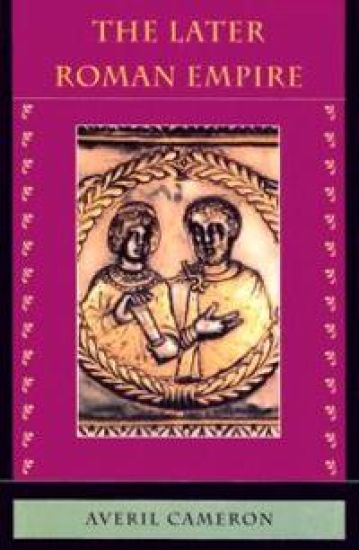
The Later Roman Empire

The Later Roman Empire

Averil Cameron

Fontana Press
1993
nidottu
A comprehensive study which introduces the reader to the vigour and variety of the fourth century AD. After being beset by invasion, civil war and internal difficulties for a century, the Roman Empire that Diocletian inherited in AD 284 desperately needed the organizational drive he brought to the task of putting its administration and defences on a newly secure footing. His successor, Constantine, sustained this consolidation of imperial strength by adopting a vibrant new religion, Christianity. The fourth century AD was a decisive period; its many new challenges and wide cultural diversity are reflected in the pages of its chief historian, Ammianus Marcellinus, and represented by figures as different as Julian the Apostate and St Augustine. Not only providing a vivid narrative of events, this book also draws on archaeological and artistic evidence to illuminate such central issues as economy, social structure, defence, religion and culture. ‘The Later Roman Empire’ is indispensable to students, and a compelling guide for anyone interested in the cultural development of late antiquity, or in the structure, evolution and fate of empires more generally.
From the Later Roman Empire to Late Antiquity and Beyond
Averil Cameron is one of the leading historians of late antiquity and Byzantium. This collection (Cameron’s third in the Variorum series) discusses the changing approach among historians of the later Roman empire from the 1960s to the present and the articles reproduced have been chosen to reflect both these wider changes in treatments of the subject as well as Cameron’s own development as a historian over many decades. It provides a revealing and important survey of some profound historiographical changes. Her volume contains fundamental papers and reviews that tell a story in which she has played a leading part. They move from her early days as an ancient historian to her important contribution in the establishment of the field of late antiquity and point to her later work as a Byzantinist, a trajectory rivalled by few other scholars. The book will be important for scholars and students of the later Roman empire and late antiquity, and for anyone interested in the inheritance of Edward Gibbon, the perennial questions about the end of the Roman empire and its supposed decline, or the emergence of Islam in the early seventh century and its relation to the late antique world. (CS 1113).
From the Later Roman Empire to Late Antiquity and Beyond
Averil Cameron is one of the leading historians of late antiquity and Byzantium. This collection (Cameron’s third in the Variorum series) discusses the changing approach among historians of the later Roman empire from the 1960s to the present and the articles reproduced have been chosen to reflect both these wider changes in treatments of the subject as well as Cameron’s own development as a historian over many decades. It provides a revealing and important survey of some profound historiographical changes. Her volume contains fundamental papers and reviews that tell a story in which she has played a leading part. They move from her early days as an ancient historian to her important contribution in the establishment of the field of late antiquity and point to her later work as a Byzantinist, a trajectory rivalled by few other scholars. The book will be important for scholars and students of the later Roman empire and late antiquity, and for anyone interested in the inheritance of Edward Gibbon, the perennial questions about the end of the Roman empire and its supposed decline, or the emergence of Islam in the early seventh century and its relation to the late antique world. (CS 1113).
Byzantine Matters

Byzantine Matters

Averil Cameron

Princeton University Press
2019
pokkari
Why the marginalized story of Byzantium has much to teach us about Western historyFor many, Byzantium remains byzantine—obscure, marginal, difficult. Despite the efforts of some recent historians, prejudices still deform understanding of the Byzantine civilization, often reducing it to a poor relation of Rome and the rest of the classical world. In this book, renowned historian Averil Cameron addresses misconceptions about Byzantium, suggests why it is so important to integrate the civilization into wider histories, and lays out why Byzantium should be central to ongoing debates about the relationships between West and East, Christianity and Islam, Catholicism and Eastern Orthodoxy, and the ancient and medieval periods. The result is a compelling call to reconsider the place of Byzantium in Western history and imagination.
Byzantine Christianity

Byzantine Christianity

Averil Cameron

SPCK Publishing
2017
pokkari
'... I have sailed the seas and come To the holy city of Byzantium.' W. B. Yeats From the foundation of Constantinople in 330 to its fall in 1453, this brief history explores the key components of Byzantine Christianity, including the development of monasticism, icons and iconoclasm, the role of the emperor in relation to church councils and beliefs, the difficult relationship with the papacy and the impact of the Crusades. The book also considers Byzantine Christianity as a living force today: the variety and vitality of Orthodox churches, the role of the Church in Russia and the enduring relevance of a spirituality derived from the church fathers.
Markion und der biblische Kanon / Christian Literature and Christian History

Markion und der biblische Kanon / Christian Literature and Christian History

Enrico Norelli; Averil Cameron

De Gruyter
2016
isokokoinen pokkari
Hans Lietzmann was not only a great scholar of the early church, but was also interested in early Christian literature and its value to the historian. However, although there is a large body of scholarship on patristic studies and theology, little attention has been paid even now to literary, as opposed to rhetorical, analysis. Some scholars are now trying to address the problem, which is both methodological and intellectual. This publication discusses the issues involved, and suggests new ways of applying literary readings to early Christian texts. Are we entering a new age of interpretation of the massive literary production by early Christians, and how does this relate to the traditional disciplines of patristics and church history?
Procopius and the Sixth Century

Procopius and the Sixth Century

Averil Cameron

Routledge
2016
sidottu
Originally published by Duckworth and the University of California Press, Procopius is now available for the first time in paperback. Professor Cameron emphasises the essential unity of Procopius' three works and, starting from the `minor' ones, demonstrates their intimate connection with the Wars. Procopius' writings are seen to comprise a subtle whole; only if they are understood in this way can their historical value be properly appreciated. The result is a new evaluation of Procopius which will be central to any future history of the sixth century.
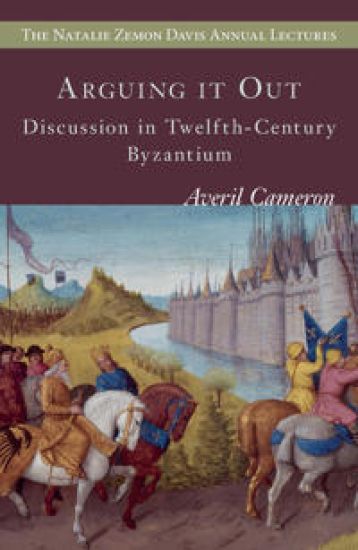
Arguing it Out

Arguing it Out

Averil Cameron

Central European University Press
2016
nidottu
The long twelfth century, from the seizure of the throne by Alexius I Comnenus in 1081, to the sack of Constantinople by the Fourth Crusade in 1204, is a period recognized as fostering the most brilliant cultural development in Byzantine history, especially in its literary production. It was a time of intense creativity as well as of rising tensions, and one for which literary approaches are a lively area in current scholarship. This study focuses on the prose dialogues in Greek from this period—of very varying kinds—and on what they can tell us about the society and culture of an era when western Europe was itself developing a new culture of schools, universities, and scholars. Yet it was also the period in which Byzantium felt the fateful impact of the Crusades, which ended with the momentous sack of Constantinople in 1204. Despite revisionist attempts to play down the extent of this disaster, it was a blow from which, arguably, the Byzantines never fully recovered.
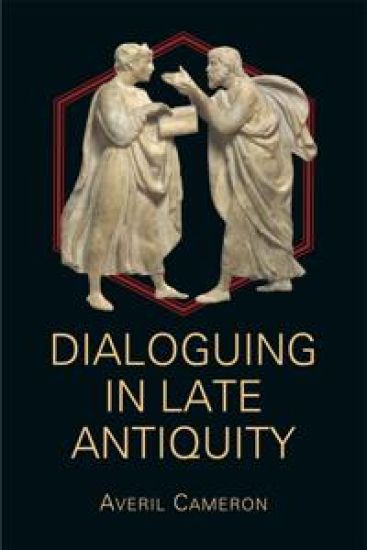
Dialoguing in Late Antiquity

Dialoguing in Late Antiquity

Averil Cameron

Harvard University, Center for Hellenic Studies
2014
nidottu
Christians talked, debated, and wrote dialogues in late antiquity and on throughout Byzantium. Some were philosophical, others more literary, theological, or Platonic; Aristotle also came into the picture as time went on. Sometimes the written works claim to be records of actual public debates, and we know that many such debates did take place and continued to do so. Dialoguing in Late Antiquity takes up a challenge laid down by recent scholars who argue that a wall of silence came down in the fifth century AD, after which Christians did not “dialogue.”Averil Cameron now returns to questions raised in her book Christianity and the Rhetoric of Empire (1991), drawing on the large repertoire of surviving Christian dialogue texts from late antiquity to make a forceful case for their centrality in Greek literature from the second century and the Second Sophistic onward. At the same time, Dialoguing in Late Antiquity points forward to the long and neglected history of dialogue in Byzantium. Throughout this study, Cameron engages with current literary approaches and is a powerful advocate for the greater integration of Christian texts by literary scholars and historians alike.
Byzantine Matters

Byzantine Matters

Averil Cameron

PRINCETON UNIVERSITY PRESS
2014
sidottu
For many of us, Byzantium remains "byzantine"--obscure, marginal, difficult. Despite the efforts of some recent historians, prejudices still deform popular and scholarly understanding of the Byzantine civilization, often reducing it to a poor relation of Rome and the rest of the classical world. In this book, renowned historian Averil Cameron presents an original and personal view of the challenges and questions facing historians of Byzantium today. The book explores five major themes, all subjects of controversy. "Absence" asks why Byzantium is routinely passed over, ignored, or relegated to a sphere of its own. "Empire" reinserts Byzantium into modern debates about empire, and discusses the nature of its system and its remarkable longevity. "Hellenism" confronts the question of the "Greekness" of Byzantium, and of the place of Byzantium in modern Greek consciousness. "The Realms of Gold" asks what lessons can be drawn from Byzantine visual art, and "The Very Model of Orthodoxy" challenges existing views of Byzantine Christianity. Throughout, the book addresses misconceptions about Byzantium, suggests why it is so important to integrate the civilization into wider histories, and lays out why Byzantium should be central to ongoing debates about the relationships between West and East, Christianity and Islam, Catholicism and Eastern Orthodoxy, and the ancient and medieval periods. The result is a forthright and compelling call to reconsider the place of Byzantium in Western history and imagination.
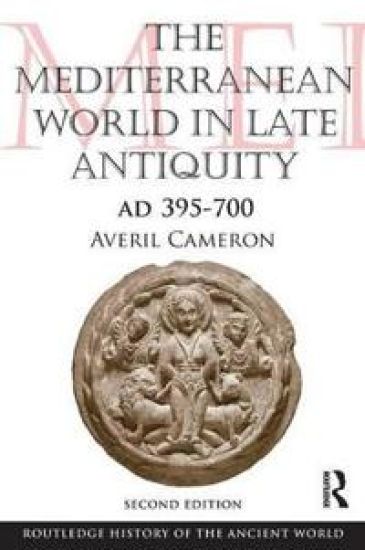
The Mediterranean World in Late Antiquity
This thoroughly revised and expanded edition of The Mediterranean World in Late Antiquity, now covering the period 395-700 AD, provides both a detailed introduction to late antiquity and a direct challenge to conventional views of the end of the Roman empire. Leading scholar Averil Cameron focuses on the changes and continuities in Mediterranean society as a whole before the Arab conquests. Two new chapters survey the situation in the east after the death of Justinian and cover the Byzantine wars with Persia, religious developments in the eastern Mediterranean during the life of Muhammad, the reign of Heraclius, the Arab conquests and the establishment of the Umayyad caliphate.Using the latest in-depth archaeological evidence, this all-round historical and thematic study of the west and the eastern empire has become the standard work on the period. The new edition takes account of recent research on topics such as the barbarian ‘invasions’, periodization, and questions of decline or continuity, as well as the current interest in church councils, orthodoxy and heresy and the separation of the miaphysite church in the sixth-century east. It contains a new introductory survey of recent scholarship on the fourth century AD, and has a full bibliography and extensive notes with suggestions for further reading.The Mediterranean World in Late Antiquity 395-700 AD continues to be the benchmark for publications on the history of Late Antiquity and is indispensible to anyone studying the period.
The Mediterranean World in Late Antiquity
This thoroughly revised and expanded edition of The Mediterranean World in Late Antiquity, now covering the period 395-700 AD, provides both a detailed introduction to late antiquity and a direct challenge to conventional views of the end of the Roman empire. Leading scholar Averil Cameron focuses on the changes and continuities in Mediterranean society as a whole before the Arab conquests. Two new chapters survey the situation in the east after the death of Justinian and cover the Byzantine wars with Persia, religious developments in the eastern Mediterranean during the life of Muhammad, the reign of Heraclius, the Arab conquests and the establishment of the Umayyad caliphate.Using the latest in-depth archaeological evidence, this all-round historical and thematic study of the west and the eastern empire has become the standard work on the period. The new edition takes account of recent research on topics such as the barbarian ‘invasions’, periodization, and questions of decline or continuity, as well as the current interest in church councils, orthodoxy and heresy and the separation of the miaphysite church in the sixth-century east. It contains a new introductory survey of recent scholarship on the fourth century AD, and has a full bibliography and extensive notes with suggestions for further reading.The Mediterranean World in Late Antiquity 395-700 AD continues to be the benchmark for publications on the history of Late Antiquity and is indispensible to anyone studying the period.
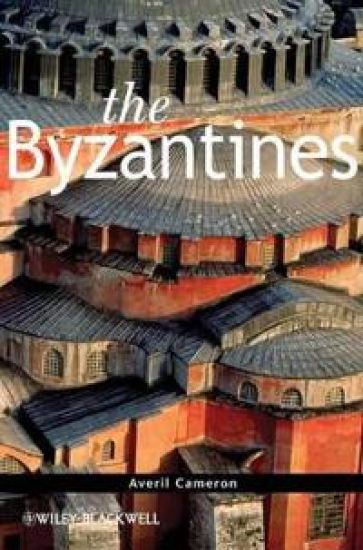
The Byzantines

The Byzantines

Averil Cameron

Wiley-Blackwell (an imprint of John Wiley Sons Ltd)
2009
nidottu
Winner of the 2006 John D. Criticos Prize This book introduces the reader to the complex history, ethnicity, and identity of the Byzantines. This volume brings Byzantium – often misconstrued as a vanished successor to the classical world – to the forefront of European historyDeconstructs stereotypes surrounding ByzantiumBeautifully illustrated with photographs and maps
The Byzantines

The Byzantines

Averil Cameron

Blackwell Publishers
2006
sidottu
Winner of the 2006 John D. Criticos Prize This book introduces the reader to the complex history, ethnicity, and identity of the Byzantines. This volume brings Byzantium – often misconstrued as a vanished successor to the classical world – to the forefront of European historyDeconstructs stereotypes surrounding ByzantiumBeautifully illustrated with photographs and maps
Procopius and the Sixth Century

Procopius and the Sixth Century

Averil Cameron

Routledge
1996
nidottu
Originally published by Duckworth and the University of California Press, Procopius is now available for the first time in paperback. Professor Cameron emphasises the essential unity of Procopius' three works and, starting from the `minor' ones, demonstrates their intimate connection with the Wars. Procopius' writings are seen to comprise a subtle whole; only if they are understood in this way can their historical value be properly appreciated. The result is a new evaluation of Procopius which will be central to any future history of the sixth century.
Christianity and the Rhetoric of Empire

Christianity and the Rhetoric of Empire

Averil Cameron

University of California Press
1994
pokkari
Many reasons can be given for the rise of Christianity in late antiquity and its flourishing in the medieval world. In asking how Christianity succeeded in becoming the dominant ideology in the unpromising circumstances of the Roman Empire, Averil Cameron turns to the development of Christian discourse over the first to sixth centuries A.D., investigating the discourse's essential characteristics, its effects on existing forms of communication, and its eventual preeminence. Scholars of late antiquity and general readers interested in this crucial historical period will be intrigued by her exploration of these influential changes in modes of communication. The emphasis that Christians placed on language - writing, talking, and preaching - made possible the formation of a powerful and indeed a totalizing discourse, argues the author. Christian discourse was sufficiently flexible to be used as a public and political instrument, yet at the same time to be used to express private feelings and emotion. Embracing the two opposing poles of logic and mystery, it contributed powerfully to the gradual acceptance of Christianity and the faith's transformation from the enthusiasm of a small sect to an institutionalized world religion.
The Later Roman Empire: AD 284-430

The Later Roman Empire: AD 284-430

Averil Cameron

HARVARD UNIVERSITY PRESS
1993
nidottu
Marked by the shift of power from Rome to Constantinople and the Christianization of the Empire, this pivotal era requires a narrative and interpretative history of its own. Averil Cameron, an authority on later Roman and early Byzantine history and culture, captures the vigor and variety of the fourth century, doing full justice to the enormous explosion of recent scholarship. After a hundred years of political turmoil, civil war, and invasion, the Roman Empire that Diocletian inherited in AD 284 desperately needed the radical restructuring he gave its government and defenses. His successor, Constantine, continued the revolution by adopting--for himself and the Empire--a vibrant new religion: Christianity. The fourth century is an era of wide cultural diversity, represented by figures as different as Julian the Apostate and St. Augustine. Cameron provides a vivid narrative of its events and explores central questions about the economy, social structure, urban life, and cultural multiplicity of the extended empire. Examining the transformation of the Roman world into a Christian culture, she takes note of the competition between Christianity and Neoplatonism. And she paints a lively picture of the new imperial city of Constantinople. By combining literary, artistic, and archaeological evidence. Cameron has produced an exciting record of social change. The Later Roman Empire is a compelling guide for anyone interested in the cultural development of late antiquity.