Kirjojen hintavertailu. Mukana 12 390 323 kirjaa ja 12 kauppaa.

Kirjailija

Avi Friedman

Kirjat ja teokset yhdessä paikassa: 43 kirjaa, julkaisuja vuosilta 2001-2026, suosituimpien joukossa Innovative Apartment Buildings. Vertaile teosten hintoja ja tarkista saatavuus suomalaisista kirjakaupoista.

43 kirjaa

Kirjojen julkaisuhaarukka 2001-2026.

Sole Survivor

Sole Survivor

Avi Friedman

UNIVERSITY OF CALGARY PRESS
2026
pokkari
Chaim Frydman survived the Holocaust. He was the only Frydman who did. In Sole Survivor, architect and academic Avi Friedman travels to Europe to trace his father's journey through the Holocaust and find his family's genesis. He visits the homes, factories, and synagogues in which the Frydmans made their lives and the ghettos and camps in which they were imprisoned and killed. Avi finds powerful stories in interviews, archives, and the built environment itself, illustrating the ways that buildings were made to affect the events that took place in them and how the architecture of the Holocaust remains a haunting memorial to this day. Sole Survivor is the story of Chaim Frydman, who fought in the Polish army and returned to survive forced labour, death marches, and the horror of the camps. It is the story of Avram and Rachla Frydman, who raised Chaim alongside seven siblings, of their children and grandchildren, who died in the Lódz ghetto, in the killing centre at Chelmno, in Auschwitz. It is the story of Avi Friedman, witnessing his father's testimony of from the trenches of Gniezno through Birkenau to freedom and discovering himself as the descendent of a family who survived against impossible odds. In sharing the Frydman's history, their experiences, and their testimony, Avi Friedman has created a vital resource for future generations. In sharing his journey and thoughtful exploration of the responsibilities the living bear the dead, he has created a work that will resonate for years to come.
Sole Survivor

Sole Survivor

Avi Friedman

UNIVERSITY OF CALGARY PRESS
2026
sidottu
Chaim Frydman survived the Holocaust. He was the only Frydman who did. In Sole Survivor, architect and academic Avi Friedman travels to Europe to trace his father’s journey through the Holocaust and find his family’s genesis. He visits the homes, factories, and synagogues in which the Frydmans made their lives and the ghettos and camps in which they were imprisoned and killed. Avi finds powerful stories in interviews, archives, and the built environment itself, illustrating the ways that buildings were made to affect the events that took place in them and how the architecture of the Holocaust remains a haunting memorial to this day. Sole Survivor is the story of Chaim Frydman, who fought in the Polish army and returned to survive forced labour, death marches, and the horror of the camps. It is the story of Avram and Rachla Frydman, who raised Chaim alongside seven siblings, of their children and grandchildren, who died in the Lódz ghetto, in the killing centre at Chelmno, in Auschwitz. It is the story of Avi Friedman, witnessing his father's testimony of from the trenches of Gniezno through Birkenau to freedom and discovering himself as the descendent of a family who survived against impossible odds. In sharing the Frydman’s history, their experiences, and their testimony, Avi Friedman has created a vital resource for future generations. In sharing his journey and thoughtful exploration of the responsibilities the living bear the dead, he has created a work that will resonate for years to come.
Affordable Housing for Livable Cities

Affordable Housing for Livable Cities

Avi Friedman; Genessa Bates

ANTHEM PRESS
2026
sidottu
The book addresses current housing affordability challenges and presents innovative planning and design strategies for contemporary communities and homes that are both livable and affordable. Written by a team of a planner and an architect, each of the book’s chapters stands for a subject in the design process moving from urban scale to that of a home and includes richly illustrated case studies that inspire and inform the design. By exploring the role of livability in the design process, the book presents methods of fostering community resilience and opportunity.
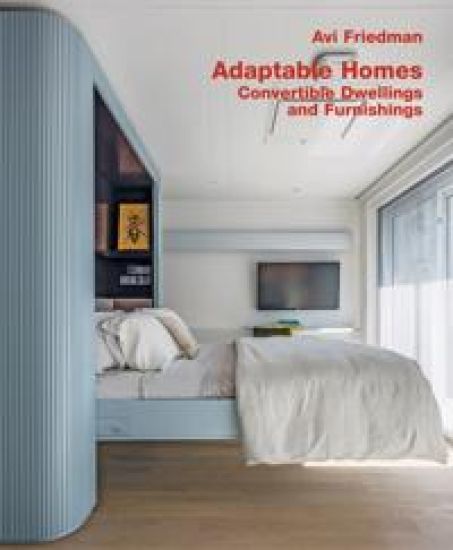
Adaptable Homes. Convertible Dwellings and Furnishings
Rising housing and energy costs, the emergence of the non-traditional small household and an increase in the number of seniors have contributed to a renewed interest in adaptable dwellings. These designs can be defined as units or furnishings that permit change of space or function at any time. With their popularity rising rapidly around the world, people are becoming aware of the environmental and budgetary implications of owning a very large single-family home, especially when some spaces in these homes are hardly ever used. Notable additional advantages of adaptable homes are lower property taxes and construction costs, and time savings through possible prefabrication. To be efficient, adaptable dwellings must be carefully designed since minor decisions can have a large impact on their use. Light, boundaries, circulation, choice of materials and furnishings are some of the tools that can be used by designers to resolve challenges and expand spatial perception. Therefore, a good adapt- able design should not only be versatile and efficient but also avoid simplicity and dullness. Japanese architects, such as Shigeru Ban, have pioneered solutions to these problems by using curtains or shutters to separate between outdoors and indoors. Such fixtures can be opened during the day to let in light and fresh air but can be closed at night. Those designers also encourage the inhabitants to engage with the outside by creating large, easily accessible rooftop spaces that can used for outdoor seating, for example. When partitions must be installed, transparent ones are recommended since they still permit the dispersal of light. Moveable partitions, or sliding panels, are also useful in defining spaces since they allow one to temporarily redefine small spaces according to need. Lastly, an open floor concept with large exterior openings permit views of the outside which, as noted above, can increase the perception of a house’s size. Increasing the floor height can greatly expand space without enlarging the floor area. The book displays a collection of outstanding innovative residential projects and furnishings made to accommodate the daily or yearly changing living space needs of occupants.
Fundamentals of Community Design for Wellbeing

Fundamentals of Community Design for Wellbeing

Avi Friedman

TAYLOR FRANCIS LTD
2026
sidottu
Fundamentals of Community Design for Wellbeing addresses the need to rethink the philosophy and form of residential environments due to recent social, economic, environmental, and cultural shifts, including depletion of non-renewable resources, elevated levels of greenhouse gas emissions, and climate change. This book highlights innovative planning strategies for livability and wellbeing of communities supported by lessons from notable international case studies, addressing varied issues including accommodating elderly populations, designing walkable communities, and closing the affordability gap. Authored by an architecture professor who is also a practicing architect and urban planner, this book navigates the residential design process from site planning to individual home design, emphasizing principles of sustainability. Each of its 20 illustrated chapters focuses on a distinct aspect of residential design that highlights effective solutions for today’s pressing challenges. This book is essential for students of urban planning, architecture, and sustainability, as well as professionals and policy makers.
Fundamentals of Community Design for Wellbeing

Fundamentals of Community Design for Wellbeing

Avi Friedman

TAYLOR FRANCIS LTD
2026
nidottu
Fundamentals of Community Design for Wellbeing addresses the need to rethink the philosophy and form of residential environments due to recent social, economic, environmental, and cultural shifts, including depletion of non-renewable resources, elevated levels of greenhouse gas emissions, and climate change. This book highlights innovative planning strategies for livability and wellbeing of communities supported by lessons from notable international case studies, addressing varied issues including accommodating elderly populations, designing walkable communities, and closing the affordability gap. Authored by an architecture professor who is also a practicing architect and urban planner, this book navigates the residential design process from site planning to individual home design, emphasizing principles of sustainability. Each of its 20 illustrated chapters focuses on a distinct aspect of residential design that highlights effective solutions for today’s pressing challenges. This book is essential for students of urban planning, architecture, and sustainability, as well as professionals and policy makers.
Fundamentals of Planning and Designing Sustainable Post-Disaster Shelters

Fundamentals of Planning and Designing Sustainable Post-Disaster Shelters

Avi Friedman; Baichi Chaki

Springer International Publishing AG
2025
sidottu
The book explores essential principles and practices for planning and designing sustainable refugee shelters. With millions of people forced to flee their homes annually due to conflict, environmental disasters, or persecution, the urgency of this global crisis cannot be overstated. Since refugees often reside in temporary shelters for years after years, it is imperative to construct refugee camps and shelters that address their long-term needs. This comprehensive guide delves into emergency shelter design and refugee camp planning concepts, exploring topics ranging from site selection and infrastructure development to shelter design and material choice. Drawing on real-world case studies and expert insights, this book offers a vital resource for architects, urban planners, humanitarian aid workers, policymakers, researchers, and students. As climate change exacerbates the refugee crisis, it becomes increasingly imperative to prioritize innovative, sustainable solutions for development and foster resilience.
Small Living

Small Living

Avi Friedman

EDITION AXEL MENGES
2025
sidottu
In recent decades demographic shifts have significantly influenced young peoples’ residential preference. Due to the rise of single-person households, smaller family sizes, and the desire for lower maintenance and utility costs, many young individuals are choosing to live in smaller, efficient spaces in proximity to work and urban amenities. These changes have led to an increase demand for multi-functional, space-efficient designs. As people’s daily routines and expectations evolve, the design of living spaces must adapt accordingly. The need for multifunctional rooms has become apparent; a living room that seamlessly transitions into a home office represents just one of the many adaptations that modern dwellers require. Architects, interior designers, and homebuilders are responding with innovative solutions like convertible furniture, built-in storage, and open-plan layouts that facilitate a compact but comfortable living environment. An often-discussed notion in design and construction is sustainability. Its origin and widespread use of the term sustainable development can be attributed to events and circumstances that occurred several decades ago. The 1992 United Nations Conference on the Human Environment in Stockholm addressed concerns regarding humanity’s potential overuse of the earth’s "carrying capacity". As people’s awareness of protecting our living environment increases, the choice of smaller homes is becoming a more common and environmentally responsible decision. This shift is driven by the need to reduce resource consumption, as smaller homes require fewer materials for construction, maintenance, and repairs. Moreover, smaller homes are inherently more energy-efficient due to their reduced space, which requires less energy for heating and cooling. Additionally, the smaller footprint means using less land per dwelling unit.
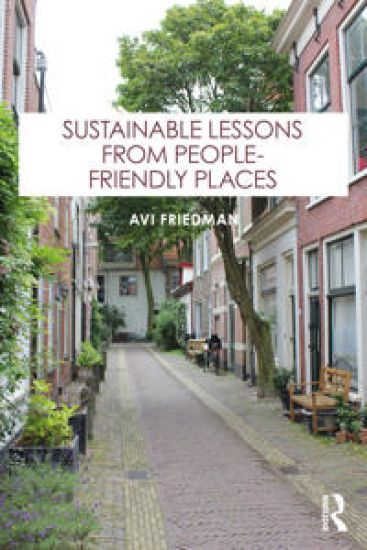
Sustainable Lessons from People-Friendly Places
Current planning and design modes of cities are facing challenges of philosophy and form. Past approaches no longer sustain new demands and call for innovative thinking. In a world that is becoming highly urbanized, the need for a new outlook is propelled by fundamental global changes that touch upon environmental, economic and social aspects.The book introduces fundamental principles of timely sustainable urban design, paying attention to architecture, integration of natural features, public urban spaces and their successful use. Readers will learn how cities are transitioning to active mobility by placing the wellbeing of citizens at the heart of planning; making buildings fit nature; supporting local culture through preservation; and including community gardens in neighborhoods, among others. Written by a practicing architect, professor and author, the book is richly illustrated and features meticulously selected international case studies.
Sustainable Lessons from People-Friendly Places
Current planning and design modes of cities are facing challenges of philosophy and form. Past approaches no longer sustain new demands and call for innovative thinking. In a world that is becoming highly urbanized, the need for a new outlook is propelled by fundamental global changes that touch upon environmental, economic and social aspects.The book introduces fundamental principles of timely sustainable urban design, paying attention to architecture, integration of natural features, public urban spaces and their successful use. Readers will learn how cities are transitioning to active mobility by placing the wellbeing of citizens at the heart of planning; making buildings fit nature; supporting local culture through preservation; and including community gardens in neighborhoods, among others. Written by a practicing architect, professor and author, the book is richly illustrated and features meticulously selected international case studies.
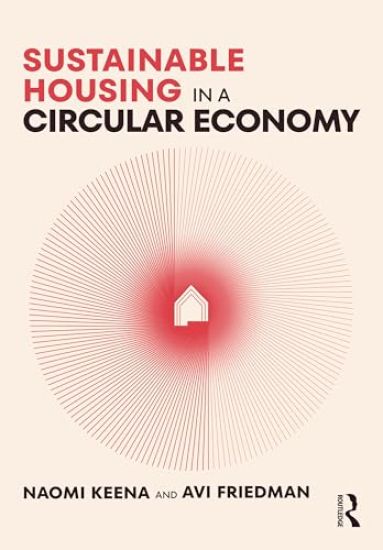
Sustainable Housing in a Circular Economy

Sustainable Housing in a Circular Economy

Naomi Keena; Avi Friedman

TAYLOR FRANCIS LTD
2024
sidottu
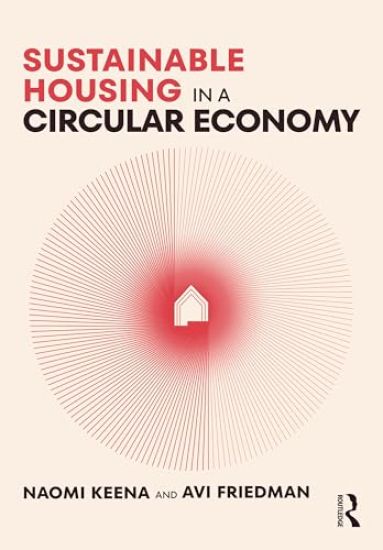
This book relates circular economy principles to housing design and construction and highlights how those principles can result in both monetary savings, positive environmental impact, and socio-ecological change.Chapters focus on three key circular economy principles and apply them to architectural construction and design, namely rethinking of the end-of-use phase of a building and the potential of design-for-disassembly; the role of digitization and data standardization in fostering evidence-based circular economy design decision-making; and presenting space as a resource to conserve, via exploration of the sharing economy and flexibility principles. Beyond waste management and material cycles, this book provides a holistic understanding of the opportunities across the building life cycle that can allow for sustainable and affordable circular housing. With case studies from 13 different countries, including but not limited to the Hammarby Sjöstad district in Sweden, the Circle House in Denmark, Benny Farm in Canada, VMD Prefabricated House in Mexico, and the Deep Performance Dwelling in China, authors pair theoretical frameworks with real-world examples.This will be a useful resource for upper-level students and academics of architecture, construction, and planning, especially those studying and researching housing design, building technology, green project management, and environmental design.
Sustainable Housing in a Circular Economy

Sustainable Housing in a Circular Economy

Naomi Keena; Avi Friedman

TAYLOR FRANCIS LTD
2024
nidottu
This book relates circular economy principles to housing design and construction and highlights how those principles can result in both monetary savings, positive environmental impact, and socio-ecological change.Chapters focus on three key circular economy principles and apply them to architectural construction and design, namely rethinking of the end-of-use phase of a building and the potential of design-for-disassembly; the role of digitization and data standardization in fostering evidence-based circular economy design decision-making; and presenting space as a resource to conserve, via exploration of the sharing economy and flexibility principles. Beyond waste management and material cycles, this book provides a holistic understanding of the opportunities across the building life cycle that can allow for sustainable and affordable circular housing. With case studies from 13 different countries, including but not limited to the Hammarby Sjöstad district in Sweden, the Circle House in Denmark, Benny Farm in Canada, VMD Prefabricated House in Mexico, and the Deep Performance Dwelling in China, authors pair theoretical frameworks with real-world examples.This will be a useful resource for upper-level students and academics of architecture, construction, and planning, especially those studying and researching housing design, building technology, green project management, and environmental design.
The Sustainable Digital City

The Sustainable Digital City

Avi Friedman

Springer International Publishing AG
2024
nidottu
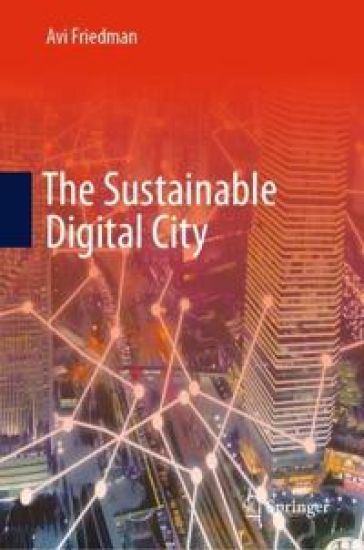
This book explores the rise of technology-centered urban planning and the diffusion of these practices around the world. Seven axes of urban planning have been selected to highlight how data and technology currently work and how these systems can be improved going forward. Each aspect is explored in its own chapter that combines narrative description, illustrations, and case studies to show how technology currently shapes our cities and how this may impact the urban environments. Topics include infrastructure, mobility, energy use and distribution, work, public health, and knowledge transfer among others. The book also demonstrates how these aspects are tied to and affect the four pillars of sustainability: environment, society, economy, and culture.
Fundamentals of Planning Cities for Healthy Living

Fundamentals of Planning Cities for Healthy Living

Avi Friedman; Alexandra Pollock

ANTHEM PRESS
2024
nidottu
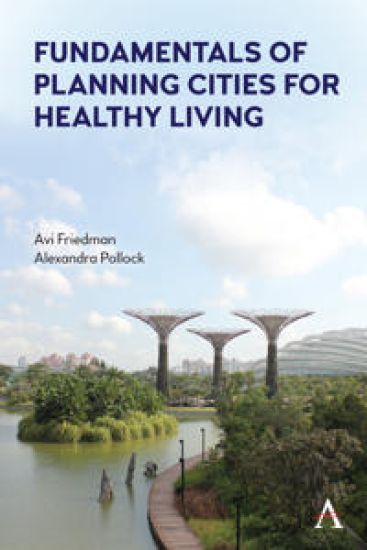
The obesity crisis has affected many nations. It is also one of the factors listed as contributing cause to the COVID-19 fatalities. The common tendency is to blame people’s dietary choices and sedentary habits. Yet, it can also be argued that social inequity and poor urban planning practices have largely contributed to a lack of active lifestyles. Low-density suburban sprawl, long commutes, food deserts, and diminishing green areas are some aspects that have led to reduced physical activity, among residents of all ages. The proposed book illustrates the decline of community planning for healthy living and outlines measures that can be reintroduced to foster active lifestyles. Each chapter stands for another subject that merits intervention and illustrates strategic approaches. Its uniqueness lies in its comprehensiveness. It covers the key principles of residential planning and offers principles of neighborhood design along with sustainable strategies, as well as their applications. The text is not limited to a theoretical aspect but offers contemporary well-designed and illustrated examples of communities and firsthand information about them that was obtained through site visits and interviews with their designers.
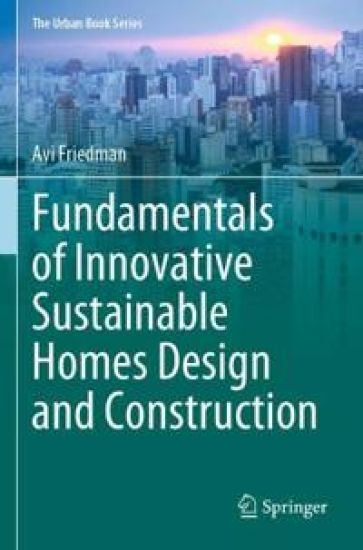
Fundamentals of Innovative Sustainable Homes Design and Construction

Fundamentals of Innovative Sustainable Homes Design and Construction

Avi Friedman

Springer International Publishing AG
2023
sidottu
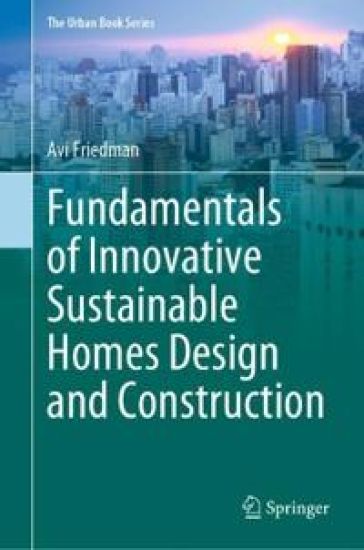
This book offers ideas and practices on contemporary design concepts and illustrates them with plans and photographs of outstanding examples. Current planning and design modes of dwellings and neighborhoods are facing challenges of philosophy and form. Past approaches no longer sustain new demands and require innovative thinking. The need for a new outlook is propelled by fundamental changes that touch upon environmental, economic and social aspects. The depletion of non-renewable natural resources and climate change are a few of the environmental challenges. Increasing costs of material, labor, land and infrastructure have posed economic challenges with affordability being paramount among them. Social challenges are also drawing the attention of designers, builders and homeowners. Walkable communities, aging in place and multigenerational living are some of the concepts considered. In addition, live-work environments have become part of the economic reality for those who wishto work from home—which has become possible through digital advances. The text would be of interest to scholars working in: architecture, urban planning, and construction.
The Sustainable Digital City

The Sustainable Digital City

Avi Friedman

Springer International Publishing AG
2023
sidottu
This book explores the rise of technology-centered urban planning and the diffusion of these practices around the world. Seven axes of urban planning have been selected to highlight how data and technology currently work and how these systems can be improved going forward. Each aspect is explored in its own chapter that combines narrative description, illustrations, and case studies to show how technology currently shapes our cities and how this may impact the urban environments. Topics include infrastructure, mobility, energy use and distribution, work, public health, and knowledge transfer among others. The book also demonstrates how these aspects are tied to and affect the four pillars of sustainability: environment, society, economy, and culture.
Fundamentals of Planning Cities for Healthy Living

Fundamentals of Planning Cities for Healthy Living

Avi Friedman; Alexandra Pollock

ANTHEM PRESS
2022
sidottu
The obesity crisis has affected many nations. It is also one of the factors listed as contributing cause to the COVID-19 fatalities. The common tendency is to blame people’s dietary choices and sedentary habits. Yet, it can also be argued that social inequity and poor urban planning practices have largely contributed to a lack of active lifestyles. Low-density suburban sprawl, long commutes, food deserts, and diminishing green areas are some aspects that have led to reduced physical activity, among residents of all ages. The proposed book illustrates the decline of community planning for healthy living and outlines measures that can be reintroduced to foster active lifestyles. Each chapter stands for another subject that merits intervention and illustrates strategic approaches. Its uniqueness lies in its comprehensiveness. It covers the key principles of residential planning and offers principles of neighborhood design along with sustainable strategies, as well as their applications. The text is not limited to a theoretical aspect but offers contemporary well-designed and illustrated examples of communities and firsthand information about them that was obtained through site visits and interviews with their designers.
Future Homes

Future Homes

Avi Friedman

Images Publishing Group Pty Ltd
2022
sidottu
New challenges on a global scale have forced a rethinking about the way homes and communities are designed. Future Homes provides an engaging and in-depth analysis of possible solutions, providing hope for the future. Broadly speaking these challenges came in three ways: environmental, social, and economic. The challenges posed by climate change demand urgent consideration and response. But a change in methodology and the ingenious employment of technological advances offers solutions to these challenges. This book provides important examples of ways to meet the global challenges by using innovative concepts and practices, leading to a transformation of how residences will appear in the years to come. With sustainability as an overarching strategy for future retooling and design of our homes, it’s worth taking a look at the new challenges we face and the ways they can be approached by stakeholders such as urban planners, architects, designers, builders, and individuals considering building their own home.
Designing Innovative Sustainable Neighborhoods

Designing Innovative Sustainable Neighborhoods

Avi Friedman

TAYLOR FRANCIS LTD
2022
nidottu
This book covers fundamental aspects of neighborhood planning and architecture along sustainable principles. Written by a designer and instructor, the book’s fully illustrated chapters provide detailed insights into contemporary strategies that architects, planners and builders are integrating into their thought processes and residential design practices.Past approaches to planning and design modes of dwellings and neighborhoods can no longer sustain new demands and require innovative thinking. This book explores new outlooks on neighborhood design, which are propelled by fundamental changes that touch upon environmental, economic and social aspects. It presents contemporary well-designed and illustrated examples of communities and detailed analysis of topics including the depletion of non-renewable natural resources, elevated levels of greenhouse gas emissions and climate change. It also explores the increasing costs of material, labor, land and infrastructure, which pose economic challenges; as well as social challenges including the need for walkable communities and the increase in live-work environments.The need to think innovatively about neighborhoods is at the core of this book, which will be useful to students and practitioners of urban design, urban planning, geography and urban systems; and to architecture studios focused on sustainable residential development.