Kirjojen hintavertailu. Mukana 12 230 928 kirjaa ja 12 kauppaa.

Kirjailija

Avner de-Shalit

Kirjat ja teokset yhdessä paikassa: 12 kirjaa, julkaisuja vuosilta 1994-2023, suosituimpien joukossa The Environment Between Theory and Practice. Vertaile teosten hintoja ja tarkista saatavuus suomalaisista kirjakaupoista.

Mukana myös kirjoitusasut: Avner de Shalit

12 kirjaa

Kirjojen julkaisuhaarukka 1994-2023.

City of Equals

City of Equals

Jonathan Wolff; Avner de Shalit

Oxford University Press
2023
sidottu
When we think about equality in the city, we are very likely to think first of the wide and growing divide between rich and poor, in material terms. Yet when we think more about a 'city of equals' it becomes apparent that how people feel treated by the city and those around them, and whether they can live according to their values, are much more central. Accordingly, combining their own reflections, a multi-disciplinary literature review, and, distinctively, more than 180 interviews in 10 cities in 6 countries, Wolff and de Shalit have derived an account of a city of equals based on the idea that it should give each of its city-zens a secure sense of place or belonging. Four underlying values structure this account. First, access to the goods and services of the city should not be based purely on the market. Second, each person should be able to live a life they find meaningful. Third, there should be diversity and wide social mixing. Fourth, there should be 'non-deferential inclusion': each person should be able to get access to what they are entitled to without being treated as less worthy than others. They should be able to enjoy their rights without bowing and scraping, waiting longer than others, or going through special bureaucratic hurdles. In sum, in a city of equals each person is proud of their city and has the (justified) feeling that their city is proud of (people like) them. This is an open access title available under the terms of a [CC BY-NC-ND 4.0 International] licence. It is free to read at Oxford Scholarship Online and offered as a free PDF download from OUP and selected open access locations.
Cities and Immigration

Cities and Immigration

Avner de Shalit

Oxford University Press
2018
sidottu
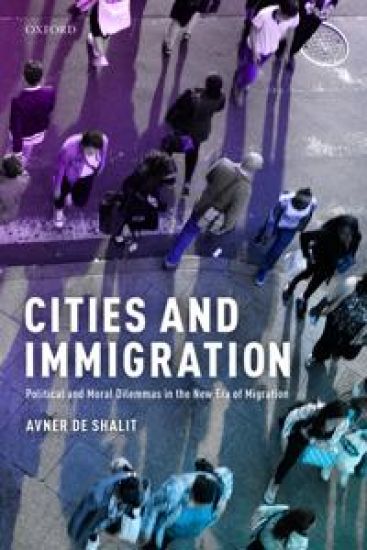
All over the world immigration is one of the most urgent political issues, creating tensions and unrest as well as questions of justice and fairness. Academics as well as politicians have been relating to the question of how states should cope with immigrants; but 96% of immigrants end up in cities, and in Europe and the USA, two thirds of the immigrants settle in seven or eight cities. Indeed, most of us encounter with immigrants as city-zens, in our everyday life, rather than as citizens of states. So how should cities integrate immigrants? Should cities be allowed to design their autonomous integration policies? Could they issue visas and permits to immigrants? Should immigrants be granted voting rights in local elections before naturalization? And how do cities think about these issues? What can we learn from cities which are thought to be successful in integrating and assimilating immigrants? Is there a model of integration within the city which is best? The book discusses these questions both empirically and normatively. The book is based on hundreds of in depth discussions of these matters with city dwellers in San Francisco, New York, London, Amsterdam, Berlin, Thessaloniki and Jerusalem. It shifts the discourse on immigration from 'thinking like a state' to 'thinking like a city' .
The Spirit of Cities

The Spirit of Cities

Daniel A. Bell; Avner de-Shalit

Princeton University Press
2013
pokkari
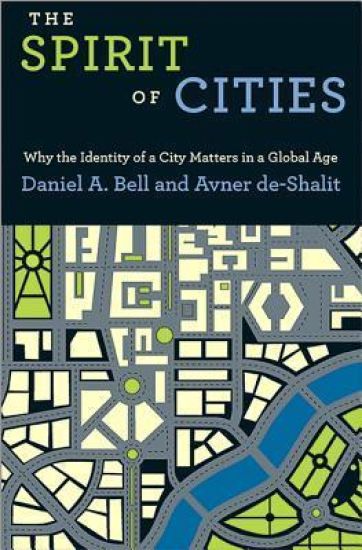
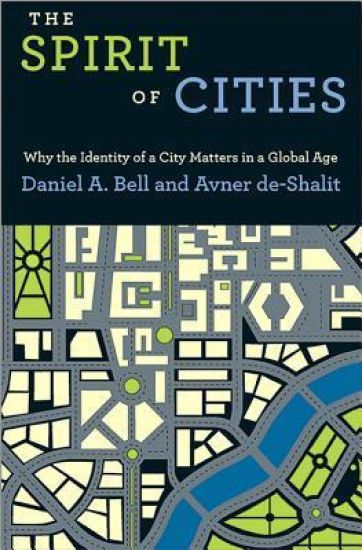
Cities shape the lives and outlooks of billions of people, yet they have been overshadowed in contemporary political thought by nation-states, identity groups, and concepts like justice and freedom. The Spirit of Cities revives the classical idea that a city expresses its own distinctive ethos or values. In the ancient world, Athens was synonymous with democracy and Sparta represented military discipline. In this original and engaging book, Daniel Bell and Avner de-Shalit explore how this classical idea can be applied to today's cities, and they explain why philosophy and the social sciences need to rediscover the spirit of cities. Bell and de-Shalit look at nine modern cities and the prevailing ethos that distinguishes each one. The cities are Jerusalem (religion), Montreal (language), Singapore (nation building), Hong Kong (materialism), Beijing (political power), Oxford (learning), Berlin (tolerance and intolerance), Paris (romance), and New York (ambition). Bell and de-Shalit draw upon the richly varied histories of each city, as well as novels, poems, biographies, tourist guides, architectural landmarks, and the authors' own personal reflections and insights. They show how the ethos of each city is expressed in political, cultural, and economic life, and also how pride in a city's ethos can oppose the homogenizing tendencies of globalization and curb the excesses of nationalism. The Spirit of Cities is unreservedly impressionistic. Combining strolling and storytelling with cutting-edge theory, the book encourages debate and opens up new avenues of inquiry in philosophy and the social sciences. It is a must-read for lovers of cities everywhere. In a new preface, Bell and de-Shalit further develop their idea of "civicism," the pride city dwellers feel for their city and its ethos over that of others.
Disadvantage

Disadvantage

Jonathan Wolff; Avner de-Shalit

Oxford University Press
2013
nidottu
What does it mean to be disadvantaged? Is it possible to compare different disadvantages? What should governments do to move their societies in the direction of equality, where equality is to be understood both in distributional and social terms? Linking rigorous analytical philosophical theory with broad empirical studies, including interviews conducted for the purpose of this book, Wolff and de-Shalit show how taking theory and practice together is essential if the theory is to be rich enough to be applied to the real world, and policy systematic enough to have purpose and justification. The book is in three parts. Part 1 presents a pluralist analysis of disadvantage, modifying the capability theory of Sen and Nussbaum to produce the 'genuine opportunity for secure functioning' view. This emphasises risk and insecurity as a central component of disadvantage. Part 2 shows how to identify the least advantaged in society even on a pluralist view. The authors suggest that disadvantage 'clusters' in the sense that some people are disadvantaged in several different respects. Thus identifying the least advantaged is not as problematic as it appears to be. Conversely, a society which has 'declustered disadvantaged' - in the sense that no group lacks secure functioning on a range of functionings - has made considerable progress in the direction of equality. Part 3 explores how to decluster disadvantage, by paying special attention to 'corrosive disadvantages' - those disadvantages which cause further disadvantages - and 'fertile functionings' - those which are likely to secure other functionings. In sum this book presents a refreshing new analysis of disadvantage, and puts forward proposals to help governments improve the lives of the least advantaged in their societies, thereby moving in the direction of equality. Oxford Political Theory presents the best new work in contemporary political theory. It is intended to be broad in scope, including original contributions to political philosophy, and also work in applied political theory. The series will contain works of outstanding quality with no restriction as to approach or subject matter. Series Editors: Will Kymlicka, David Miller, and Alan Ryan.
The Spirit of Cities

The Spirit of Cities

Daniel A. Bell; Avner De-Shalit

Princeton University Press
2011
sidottu
Cities shape the lives and outlooks of billions of people, yet they have been overshadowed in contemporary political thought by nation-states, identity groups, and concepts like justice and freedom. The Spirit of Cities revives the classical idea that a city expresses its own distinctive ethos or values. In the ancient world, Athens was synonymous with democracy and Sparta represented military discipline. In this original and engaging book, Daniel Bell and Avner de-Shalit explore how this classical idea can be applied to today's cities, and they explain why philosophy and the social sciences need to rediscover the spirit of cities. Bell and de-Shalit look at nine modern cities and the prevailing ethos that distinguishes each one. The cities are Jerusalem (religion), Montreal (language), Singapore (nation building), Hong Kong (materialism), Beijing (political power), Oxford (learning), Berlin (tolerance and intolerance), Paris (romance), and New York (ambition). Bell and de-Shalit draw upon the richly varied histories of each city, as well as novels, poems, biographies, tourist guides, architectural landmarks, and the authors' own personal reflections and insights. They show how the ethos of each city is expressed in political, cultural, and economic life, and also how pride in a city's ethos can oppose the homogenizing tendencies of globalization and curb the excesses of nationalism. The Spirit of Cities is unreservedly impressionistic. Combining strolling and storytelling with cutting-edge theory, the book encourages debate and opens up new avenues of inquiry in philosophy and the social sciences. It is a must-read for lovers of cities everywhere.
Disadvantage

Disadvantage

Jonathan Wolff; Avner de-Shalit

Oxford University Press
2007
sidottu
What does it mean to be disadvantaged? Is it possible to compare different disadvantages? What should governments do to move their societies in the direction of equality, where equality is to be understood both in distributional and social terms? Linking rigorous analytical philosophical theory with broad empirical studies, including interviews conducted for the purpose of this book, Wolff and de-Shalit show how taking theory and practice together is essential if the theory is to be rich enough to be applied to the real world, and policy systematic enough to have purpose and justification. The book is in three parts. Part 1 presents a pluralist analysis of disadvantage, modifying the capability theory of Sen and Nussbaum to produce the 'genuine opportunity for secure functioning' view. This emphasises risk and insecurity as a central component of disadvantage. Part 2 shows how to identify the least advantaged in society even on a pluralist view. The authors suggest that disadvantage 'clusters' in the sense that some people are disadvantaged in several different respects. Thus identifying the least advantaged is not as problematic as it appears to be. Conversely, a society which has 'declustered disadvantaged' - in the sense that no group lacks secure functioning on a range of functionings - has made considerable progress in the direction of equality. Part 3 explores how to decluster disadvantage, by paying special attention to 'corrosive disadvantages' - those disadvantages which cause further disadvantages - and 'fertile functionings' - those which are likely to secure other functionings. In sum this books presents a refreshing new analysis of disadvantage, and puts forward proposals to help governments improve the lives of the least advantaged in their societies, thereby moving in the direction of equality.
Power to the People

Power to the People

Avner De-Shalit

Lexington Books
2006
sidottu
Power to the People examines the teaching of political philosophy in what is taken to be skeptical times. Author Avner de-Shalit encourages political philosophers to remain committed to the analytical achievements of political philosophy while also revising and improving the teachings of the discipline to be more in tune with the demands of democratic society. Using highly accessible language, de-Shalit argues that distinguishing political philosophy from politics is methodologically and normatively wrong; that political philosophy can empower its students; and that political philosophy should be democraticized. De-Shalit's radical and provocative theory will fascinate anyone involved in politics, philosophy, and education.
Power to the People

Power to the People

Avner De-Shalit

Lexington Books
2006
nidottu
Power to the People examines the teaching of political philosophy in what is taken to be skeptical times. Author Avner de-Shalit encourages political philosophers to remain committed to the analytical achievements of political philosophy while also revising and improving the teachings of the discipline to be more in tune with the demands of democratic society. Using highly accessible language, de-Shalit argues that distinguishing political philosophy from politics is methodologically and normatively wrong; that political philosophy can empower its students; and that political philosophy should be democraticized. De-Shalit's radical and provocative theory will fascinate anyone involved in politics, philosophy, and education.
The Environment Between Theory and Practice

The Environment Between Theory and Practice

Avner de-Shalit

Oxford University Press
2000
sidottu
Why is there a gap between the questions that environmental philosophers discuss and the issues that motivate environmental activists? The author attempts to bridge this gap by combining tools of political philosophy with questions of environmental ethics and politics. He defends a radical position in relations to environmental protection and social policies in order to put forward a political theory, which is not only philosophically sound, but also relevant to the practice of environmental activism. He argues that several directions in environmental ethics can be at odds with the contemporary political debates surrounding environmental politics. He then goes on to examine the environmental scope of the political theories of liberalism, communitarianism, participatory democracy, and socialism, and concludes that the last two are crucial for protecting the environment.
The Environment Between Theory and Practice

The Environment Between Theory and Practice

Avner de-Shalit

Oxford University Press
2000
nidottu
Why is there a gap between the questions that environmental philosophers discuss and the issues that motivate environmental activists? The author attempts to bridge this gap by combining tools of political philosophy with questions of environmental ethics and politics. He defends a radical position in relations to environmental protection and social policies in order to put forward a political theory, which is not only philosophically sound, but also relevant to the practice of environmental activism. He argues that attempts to find 'independent' values in nature can be at odds with the contemporary political debates surrounding environmental politics. In the second half of the book, the author examines the environmental scope of several key political ideologies: liberalism, communitarianism, participatory democracy, and socialism.
Why Posterity Matters

Why Posterity Matters

Avner De-Shalit

Routledge
1994
nidottu
Why Posterity Matters is the first comprehensive philosophical examination of our duties to future generations. It appears at a time when it is becoming increasingly obvious that we can no longer exploit the environment without causing risks for posterity.Dr de-Shalit argues that our obligations towards new generations are a matter of justice, not of charity or supererogation. It becomes our duty to consider them when we distribute access to natural resources, decide on environmental policies and plan budgets. This raises problems for conventional theories of justice. Why Posterity Matters puts forward a new communitarian theory of intergenerational justice, which can serve as the moral basis for environmental policy.