Kirjojen hintavertailu. Mukana 12 595 353 kirjaa ja 12 kauppaa.
Kirjailija
Avraham Mayevsky
Kirjat ja teokset yhdessä paikassa: 10 kirjaa, julkaisuja vuosilta 2015-2026, suosituimpien joukossa Physiological Mapping of the Cerebral Cortex in Neuropathology. Vertaile teosten hintoja ja tarkista saatavuus suomalaisista kirjakaupoista.
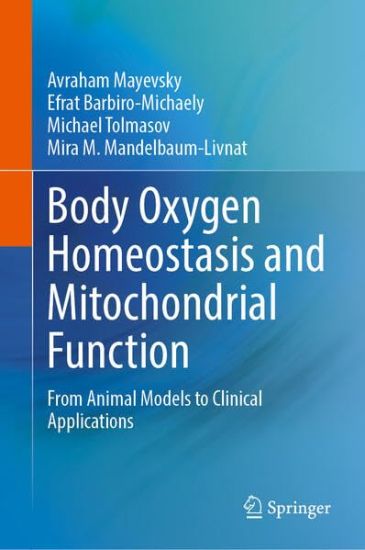
This book links oxygen metabolism from experimental animal models to human clinical applications, bringing together concepts and knowledge from laboratory models to clinical practice. In particular, the book provides the experimental results of a rat model exposed to various protocols that prove the suggested monitoring approach, describes the various monitoring devices developed for patients’ monitoring in clinical situations, and provides a discussion of the results as well as conclusions. The book is ideal for a range of basic scientists, seeking greater understanding of the clinical applications and potential translation of in vitro and animal model studies as well as a range of clinicians, seeking greater understanding of the fundamentals of oxygen metabolism and homeostasis.
Exposure of patients to a high oxygen environment is a standard treatment in a select group of patients. The development of oxygen toxicity must be avoided in those patients. This book describes the effects of normobaric and hyperbaric oxygen treatment of animal models on brain biochemical and physiological responses. This book provides a summary of our knowledge on the effects of hyperbaric oxygenation on mitochondrial activity in vivo, and other functions of the brain. A chapter covering the use of hyperbaric hyperoxia in patients’ brain pathology and care is also included. This is an ideal book for students, research groups, and clinicians studying hyperbaric oxygen and its connection to mitochondrial activity and brain physiological functions.
The Mongolian gerbil brain lies in the anatomy of the blood vessels supplying blood to the brain. In all mammals, there is a special mechanism that compensates for the decreased blood flow to the brain in the case of development of stroke. This mechanism is missing in the gerbil and therefore makes the Mongolian gerbil a unique model for stroke. Dr. Mayevsky adopted the gerbil as a model for stroke and his laboratory uniquely studied the mitochondria in the gerbil brain under various pathophysiological conditions.This book describes the history of the Mongolian gerbil in research, the brain energy metabolism and mitochondrial function and brain real-time monitoring systems used in gerbils, as well as the brain vasculature of the Mongolian gerbil. Further, the book includes chapters on brain multisite recording under brain perturbations, multiparametric responses to brain activation, and the effect of neuroprotectants on the gerbil brain. This is an ideal book for research teams researching stroke and epilepsy.
Exposure of patients to a high oxygen environment is a standard treatment in a select group of patients. The development of oxygen toxicity must be avoided in those patients. This book describes the effects of normobaric and hyperbaric oxygen treatment of animal models on brain biochemical and physiological responses. This book provides a summary of our knowledge on the effects of hyperbaric oxygenation on mitochondrial activity in vivo, and other functions of the brain. A chapter covering the use of hyperbaric hyperoxia in patients’ brain pathology and care is also included. This is an ideal book for students, research groups, and clinicians studying hyperbaric oxygen and its connection to mitochondrial activity and brain physiological functions.
This book focuses on energy metabolism and brain functions related to Cortical Spreading Depression of Leao (CSD), an important issue in brain pathophysiology. The first part of the book offers a comprehensive overview of the history and early research on CSD, and then discusses the recent advances in the technology used to map and monitor brain mitochondrial NADH redox state and other physiological functions during CSD. The chapters explore the connection between CSD and mitochondrial function under hypoxia, Ischemia and various drugs treatment, and provide a resource to scientists researching the development of CSD during various brain pathophysiological conditions. This book is essential to scientists and students working in the field of bioenergetics of the brain and various organs and tissues in the body. The use of this technology is also crucial and applicable in the neuroscience field.
This book focuses on energy metabolism and brain functions related to Cortical Spreading Depression of Leao (CSD), an important issue in brain pathophysiology. The first part of the book offers a comprehensive overview of the history and early research on CSD, and then discusses the recent advances in the technology used to map and monitor brain mitochondrial NADH redox state and other physiological functions during CSD. The chapters explore the connection between CSD and mitochondrial function under hypoxia, Ischemia and various drugs treatment, and provide a resource to scientists researching the development of CSD during various brain pathophysiological conditions. This book is essential to scientists and students working in the field of bioenergetics of the brain and various organs and tissues in the body. The use of this technology is also crucial and applicable in the neuroscience field.
This book covers both the technological development and biomedical applications of NADH fluorescence. Topics covered include perspectives on the history of monitoring NADH fluorescence, the relationship between mitochondrial function and other functions at the tissue level, responses of NADH to physiological and pathophysiological conditions, monitoring of NADH in the human brain and other organs, and metabolism. It also includes an in-depth look at flavoprotein (Fp) fluorescence and NADH in relation to redox state. This is an ideal book for biomedical engineers, researchers, and graduate students interested in learning the biomedical applications of NADH fluorescence.This book also:Covers multisite monitoring of NADH, as well as multiparametric responses of NADH to physiological and pathophysiological conditions, and monitoring of various organs in various animal modelsDescribes the relationship between brain activation (i.e. epileptic activity and cortical spreading depression) and NADH redox statePresents the effects of hypoxia,hyperbaric hyperoxia, and ischemia on brain NADH fluorescence and other tissue physiological parameters About the Author Avraham Mayevsky, Ph.D. is a Professor Emeritus in theFaculty of Life Sciences and the Brain Research Center at Bar Ilan University, Israel.He has published more than two hundred papers in the field of mitochondrial function and tissue physiology in vivo under pathophysiological conditions.
This book covers both the technological development and biomedical applications of NADH fluorescence. Topics covered include perspectives on the history of monitoring NADH fluorescence, the relationship between mitochondrial function and other functions at the tissue level, responses of NADH to physiological and pathophysiological conditions, monitoring of NADH in the human brain and other organs, and metabolism. It also includes an in-depth look at flavoprotein (Fp) fluorescence and NADH in relation to redox state. This is an ideal book for biomedical engineers, researchers, and graduate students interested in learning the biomedical applications of NADH fluorescence.This book also:Covers multisite monitoring of NADH, as well as multiparametric responses of NADH to physiological and pathophysiological conditions, and monitoring of various organs in various animal modelsDescribes the relationship between brain activation (i.e. epileptic activity and cortical spreading depression) and NADH redox statePresents the effects of hypoxia,hyperbaric hyperoxia, and ischemia on brain NADH fluorescence and other tissue physiological parameters About the Author Avraham Mayevsky, Ph.D. is a Professor Emeritus in theFaculty of Life Sciences and the Brain Research Center at Bar Ilan University, Israel.He has published more than two hundred papers in the field of mitochondrial function and tissue physiology in vivo under pathophysiological conditions.