Kirjojen hintavertailu. Mukana 12 657 676 kirjaa ja 12 kauppaa.

Kirjailija

Avshalom Caspi

Kirjat ja teokset yhdessä paikassa: 4 kirjaa, julkaisuja vuosilta 2001-2023, suosituimpien joukossa The Origins of You. Vertaile teosten hintoja ja tarkista saatavuus suomalaisista kirjakaupoista.

4 kirjaa

Kirjojen julkaisuhaarukka 2001-2023.

The Origins of You

The Origins of You

Jay Belsky; Avshalom Caspi; Terrie E. Moffitt; Richie Poulton

HARVARD UNIVERSITY PRESS
2023
nidottu
A Marginal Revolution Book of the Year“Brings the groundbreaking research of the top developmental psychologists of the past quarter-century to a wider audience…A masterpiece!”—Dante Cicchetti, Institute for Child Development at the University of Minnesota“Deliver[s] a flood of insights around the book’s central question: To what degree do our childhood personalities and behaviors predict our adult selves?”—Wall Street Journal“One of the best and most important works of the last few years…Fascinating.”—Tyler Cowen, Marginal RevolutionDoes childhood temperament predict adult personality? What role do parents play in shaping how a child matures? Is day care bad—or good—for children? Does adolescent delinquency forecast a life of crime? Do genes influence success in life? Is one’s health shaped by childhood experiences? In search of answers to these questions, four leading psychologists dedicated their careers to studying thousands of people, observing them as they grew and emerging with unprecedented insight into what makes us who we are.They found that human development is not subject to ironclad laws so much as a matter of possibilities and probabilities—multiple forces that together determine the direction of one’s life. The early years do predict who we become, but they do so imperfectly. At once actionable and revelatory, The Origins of You is an invaluable guide for parents, teachers, and anyone working with or caring for children.

The Origins of You

The Origins of You

Jay Belsky; Avshalom Caspi; Terrie E. Moffitt; Richie Poulton

Harvard University Press
2020
sidottu
A Marginal Revolution Book of the YearAfter tracking the lives of thousands of people from birth to midlife, four of the world’s preeminent psychologists reveal what they have learned about how humans develop.Does temperament in childhood predict adult personality? What role do parents play in shaping how a child matures? Is day care bad—or good—for children? Does adolescent delinquency forecast a life of crime? Do genes influence success in life? Is health in adulthood shaped by childhood experiences? In search of answers to these and similar questions, four leading psychologists have spent their careers studying thousands of people, observing them as they’ve grown up and grown older. The result is unprecedented insight into what makes each of us who we are.In The Origins of You, Jay Belsky, Avshalom Caspi, Terrie Moffitt, and Richie Poulton share what they have learned about childhood, adolescence, and adulthood, about genes and parenting, and about vulnerability, resilience, and success. The evidence shows that human development is not subject to ironclad laws but instead is a matter of possibilities and probabilities—multiple forces that together determine the direction a life will take. A child’s early years do predict who they will become later in life, but they do so imperfectly. For example, genes and troubled families both play a role in violent male behavior, and, though health and heredity sometimes go hand in hand, childhood adversity and severe bullying in adolescence can affect even physical well-being in midlife.Painstaking and revelatory, the discoveries in The Origins of You promise to help schools, parents, and all people foster well-being and ameliorate or prevent developmental problems.
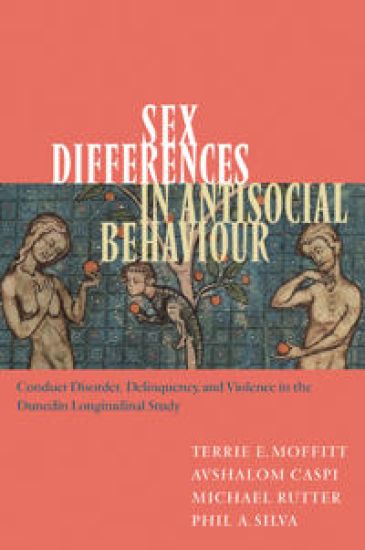
Sex Differences in Antisocial Behaviour

Sex Differences in Antisocial Behaviour

Terrie E. Moffitt; Avshalom Caspi; Michael Rutter; Phil A. Silva

Cambridge University Press
2001
pokkari
Why are females rarely antisocial and males antisocial so often? This key question is addressed in a fresh approach to sex differences in the causes, course and consequences of antisocial behaviour. The book presents all-new findings from a landmark investigation of 1,000 males and females studied from ages 3 to 21 years. It shows that young people develop antisocial behaviour for two main reasons. One form of antisocial behaviour is a neurodevelopmental disorder afflicting males, with low prevalence in the population, early childhood onset and subsequent persistence. The other form of antisocial behaviour, afflicting females as well as males, is common and emerges in the context of social relationships. The book offers insights about diagnosis and measurement, the importance of puberty, the problem of partner violence and the nature of intergenerational transmission. It puts forward a new agenda for research about both neurodevelopmental and social influences on antisocial behaviour.
Sex Differences in Antisocial Behaviour

Sex Differences in Antisocial Behaviour

Terrie E. Moffitt; Avshalom Caspi; Michael Rutter; Phil A. Silva

Cambridge University Press
2001
sidottu
Why are females rarely antisocial and males antisocial so often? This key question is addressed in a fresh approach to sex differences in the causes, course and consequences of antisocial behaviour. The book presents findings from a landmark investigation of 1,000 males and females studied from ages 3 to 21 years. It shows that young people develop antisocial behaviour for two main reasons. One form of antisocial behaviour is a neurodevelopmental disorder afflicting males, with low prevalence in the population, early childhood onset and subsequent persistence. The other form of antisocial behaviour, afflicting females as well as males, is common and emerges in the context of social relationships. The book offers insights about diagnosis and measurement, the importance of puberty, the problem of partner violence and the nature of intergenerational transmission. It puts forward an agenda for research about both neurodevelopmental and social influences on antisocial behaviour.