Kirjojen hintavertailu. Mukana 12 390 323 kirjaa ja 12 kauppaa.

Kirjailija

Axel Dreher

Kirjat ja teokset yhdessä paikassa: 7 kirjaa, julkaisuja vuosilta 2000-2022, suosituimpien joukossa Banking on Beijing. Vertaile teosten hintoja ja tarkista saatavuus suomalaisista kirjakaupoista.

7 kirjaa

Kirjojen julkaisuhaarukka 2000-2022.

Banking on Beijing

Banking on Beijing

Axel Dreher; Andreas Fuchs; Bradley Parks; Austin Strange; Michael J. Tierney

Cambridge University Press
2022
sidottu
China is now the lender of first resort for much of the developing world, but Beijing has fueled speculation among policymakers, scholars, and journalists by shrouding its grant-giving and lending activities in secrecy. Introducing a systematic and transparent method of tracking Chinese development projects around the world, this book explains Beijing's motives and analyzes the intended and unintended effects of its overseas investments. Whereas China almost exclusively provided aid during the twentieth century, its twenty-first century transition from 'benefactor' to 'banker' has had far-reaching impacts in low-income and middle-income countries that are not widely understood. Its use of debt rather than aid to bankroll big-ticket infrastructure projects creates new opportunities for developing countries to achieve rapid socio-economic gains, but it has also introduced major risks, such as corruption, political capture, and conflict. This book will be of interest to policymakers, students and scholars of international political economy, Chinese politics and foreign policy, economic development, and international relations.
Banking on Beijing

Banking on Beijing

Axel Dreher; Andreas Fuchs; Bradley Parks; Austin Strange; Michael J. Tierney

Cambridge University Press
2022
pokkari
China is now the lender of first resort for much of the developing world, but Beijing has fueled speculation among policymakers, scholars, and journalists by shrouding its grant-giving and lending activities in secrecy. Introducing a systematic and transparent method of tracking Chinese development projects around the world, this book explains Beijing's motives and analyzes the intended and unintended effects of its overseas investments. Whereas China almost exclusively provided aid during the twentieth century, its twenty-first century transition from 'benefactor' to 'banker' has had far-reaching impacts in low-income and middle-income countries that are not widely understood. Its use of debt rather than aid to bankroll big-ticket infrastructure projects creates new opportunities for developing countries to achieve rapid socio-economic gains, but it has also introduced major risks, such as corruption, political capture, and conflict. This book will be of interest to policymakers, students and scholars of international political economy, Chinese politics and foreign policy, economic development, and international relations.
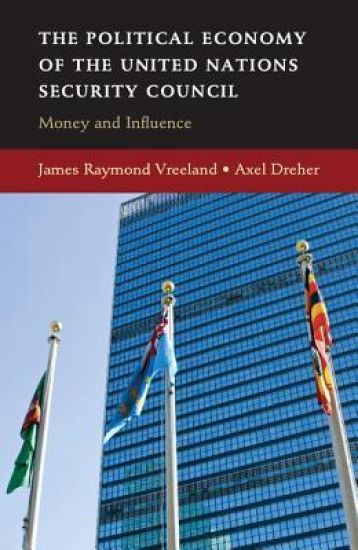
The Political Economy of the United Nations Security Council

The Political Economy of the United Nations Security Council

James Raymond Vreeland; Axel Dreher

Cambridge University Press
2014
sidottu
Trades of money for political influence persist at every level of government. Not surprisingly, governments themselves trade money for political support on the international stage. Strange, however, is the tale of this book. For, in this study, legitimacy stands as the central political commodity at stake. The book investigates the ways governments trade money for favors at the United Nations Security Council - the body endowed with the international legal authority to legitimize the use of armed force to maintain or restore peace. With a wealth of quantitative data, the book shows that powerful countries, such as the United States, Japan, and Germany, extend financial favors to the elected members of the Security Council through direct foreign aid and through international organizations, such as the International Monetary Fund and the World Bank. In return, developing countries serving on the Security Council must deliver their political support … or face the consequences.
The Political Economy of the United Nations Security Council

The Political Economy of the United Nations Security Council

James Raymond Vreeland; Axel Dreher

Cambridge University Press
2014
pokkari
Trades of money for political influence persist at every level of government. Not surprisingly, governments themselves trade money for political support on the international stage. Strange, however, is the tale of this book. For, in this study, legitimacy stands as the central political commodity at stake. The book investigates the ways governments trade money for favors at the United Nations Security Council - the body endowed with the international legal authority to legitimize the use of armed force to maintain or restore peace. With a wealth of quantitative data, the book shows that powerful countries, such as the United States, Japan, and Germany, extend financial favors to the elected members of the Security Council through direct foreign aid and through international organizations, such as the International Monetary Fund and the World Bank. In return, developing countries serving on the Security Council must deliver their political support … or face the consequences.
Measuring Globalisation

Measuring Globalisation

Axel Dreher; Noel Gaston; Pim Martens

Springer-Verlag New York Inc.
2010
nidottu
During the last few decades, human dynamics, institutional change, political relations, and the natural environment have become successively more intertwined. While the increased global economic integration, global forms of governance, globally inter-linked social and environmental developments are often referred to as “globalisation,” there is no unanimously-agreed upon definition of the term. Depending on the researcher or commentator, it can mean, among other things, the growing integration of markets and nation-states, receding geographical constraints on social and cultural arrangements, the increased dissemination of ideas and technologies, the threat to national sovereignty by trans-national actors; or the transformation of the economic, political and cultural foundations of societies. Regardless of perspective, globalisation permeates our economic, political, and social institutions to a profound degree. Recently, the issue of “sustainability” has reached the mainstream: are the forces of globalisation ultimately contributing to growth and opportunity—or to destruction and chaos? Against the chorus of globalisation’s proponents and detractors, the authors propose an approach for measuring globalisation and its consequences. Undertaking a comprehensive review of the literature on globalisation and using data from the MGI and KOF indices, the authors build a framework for defining globalisation and analyzing the relationships among economic, political, and social variables. In particular, they apply the methodology to analyze the effects of globalisation on tax policy, government spending, economic growth, inequality, union power, and the natural environment and consider additional avenues for research, analysis, and decision making. In the process, they hope that by introducing objective measures to enhance our insight into the functioning of the complex global system. Dreher, Gaston and Martens have produced the most systematicand comprehensive research I have seen on both measuring globalisation and analyzing its impact on the most important social and economic issues of our time. Globalisation research is a dense thicket. This books stands out among its many thorns. Geoffrey Garrett, President of the Pacific Council on International Policy This is an important contribution to the growing literature on measuring globalization. The analysis is comprehensive and insightful, making it a work that the students of globalization cannot ignore. Jagdish Bhagwati, University Professor, Economics and Law, Columbia University and Author of In Defense of Globalization
Measuring Globalisation

Measuring Globalisation

Axel Dreher; Noel Gaston; Pim Martens

Springer-Verlag New York Inc.
2008
sidottu
During the last few decades, human dynamics, institutional change, political relations, and the natural environment have become successively more intertwined. While the increased global economic integration, global forms of governance, globally inter-linked social and environmental developments are often referred to as “globalisation,” there is no unanimously-agreed upon definition of the term. Depending on the researcher or commentator, it can mean, among other things, the growing integration of markets and nation-states, receding geographical constraints on social and cultural arrangements, the increased dissemination of ideas and technologies, the threat to national sovereignty by trans-national actors; or the transformation of the economic, political and cultural foundations of societies. Regardless of perspective, globalisation permeates our economic, political, and social institutions to a profound degree. Recently, the issue of “sustainability” has reached the mainstream: are the forces of globalisation ultimately contributing to growth and opportunity—or to destruction and chaos? Against the chorus of globalisation’s proponents and detractors, the authors propose an approach for measuring globalisation and its consequences. Undertaking a comprehensive review of the literature on globalisation and using data from the MGI and KOF indices, the authors build a framework for defining globalisation and analyzing the relationships among economic, political, and social variables. In particular, they apply the methodology to analyze the effects of globalisation on tax policy, government spending, economic growth, inequality, union power, and the natural environment and consider additional avenues for research, analysis, and decision making. In the process, they hope that by introducing objective measures to enhance our insight into the functioning of the complex global system. Dreher, Gaston and Martens have produced the most systematicand comprehensive research I have seen on both measuring globalisation and analyzing its impact on the most important social and economic issues of our time. Globalisation research is a dense thicket. This books stands out among its many thorns. Geoffrey Garrett, President of the Pacific Council on International Policy This is an important contribution to the growing literature on measuring globalization. The analysis is comprehensive and insightful, making it a work that the students of globalization cannot ignore. Jagdish Bhagwati, University Professor, Economics and Law, Columbia University and Author of In Defense of Globalization