Kirjojen hintavertailu. Mukana 12 595 353 kirjaa ja 12 kauppaa.

Kirjailija

Axel Michaels

Kirjat ja teokset yhdessä paikassa: 12 kirjaa, julkaisuja vuosilta 2003-2026, suosituimpien joukossa The Pandit. Vertaile teosten hintoja ja tarkista saatavuus suomalaisista kirjakaupoista.

12 kirjaa

Kirjojen julkaisuhaarukka 2003-2026.

The Pandit

The Pandit

Axel Michaels

Manohar Publishers and Distributors
2025
sidottu
In January 1999, the distinguished scholar Pandit Dr. Parameswara Aithal retired from his position at Heidelberg University. To mark this occasion, Prof. Axel Michaels organized a symposium on the institution of the Pandit and the future of traditional Sanskrit scholarship in India and the West. Pt. Aithal, an internationally esteemed expert in Dharmashastra and manuscriptology, was born in Kota (Karnataka). He received his early Sanskrit education in the traditional method at home and became a staff member of the Adyar Library and Research Centre, Chennai, in 1962. In 1968, he joined the South Asia Institute, Heidelberg University, as a Sanskrit lecturer where he stayed for about thirty years. The present volume contains the learned papers of the conference which?cover a wide range of topics, e.g.: -the pandit as a private scholar, university teacher, public intellectual or legal?adviser; -traditional ways of Sanskrit teaching and learning, especially the methods of memorization and transfer of traditional knowledge; -the relevance of traditional Sanskrit grammar for the learning of Sanskrit; -the prestige of Sanskrit and the social standing of pandits; -the special guru-shishya-relationship; -the relationship between pandit and professor in academic systems; -life histories of some well-known pandits such as Krishnashastri Chiplunkar, Hazari Prasad Dvivedi, Gopinath Kaviraj, V.S. Apte, and others -the role of Tantrik pandits. The contributors of this Festschrift are friends and colleagues of Pandit Aithal.
Nepal

Nepal

Axel Michaels

OXFORD UNIVERSITY PRESS INC
2024
sidottu
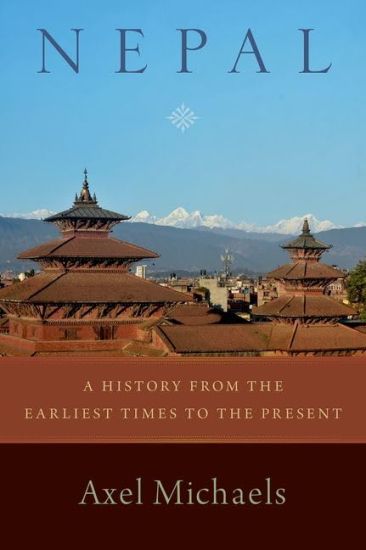
Until 1951 Nepal was closed to the world, landlocked between the strongest Asian powers, India and China. With its exceptional landscape, it touts the highest mountains and the greatest biodiversity on earth. It is best known as the home of Mt. Everest and holds particular fascination for those interested in climbing the Himalayas. Having long maintained its self-imposed isolation, the nation is one of the least developed in the world. Yet it is inhabited by a remarkably diverse population of 125 ethnic groups, 123 languages, and numerous religions, most notably Hinduism and Buddhism. In this book, South Asia expert Axel Michaels covers the history of Nepal from prehistoric times and the period of the Licchavi dynasty through more recent developments, such as the rise of the republic, the first elections challenged by the Maoist insurgency (1996-2006), and the royal massacre in 2001. Chapters discuss the different principalities on the territory, among them the mysterious and legendary Mustang and Sherpa realms. Since the eighteenth century, these domains have been bundled into a contentious national history. Thus, going well beyond the center of power in the Kathmandu Valley, the book examines Nepal's relations with neighboring cultures in India, Tibet, and China, as well as the influence of British colonial power. It particularly focuses on its rich history of arts, architecture, and handicrafts. Although the Buddha was born in Nepal, the country is the world's last Hindu kingdom and is also a stronghold of Tantric traditions, shamanism, and many folk religions whose festivals and rituals mark daily life. Based on a wealth of primary sources in Nepali, Sanskrit, and other indigeneous languages, Nepal offers a comprehensive and updated history of this unique culture and history.
Homo Ritualis

Homo Ritualis

Axel Michaels

Oxford University Press Inc
2016
sidottu
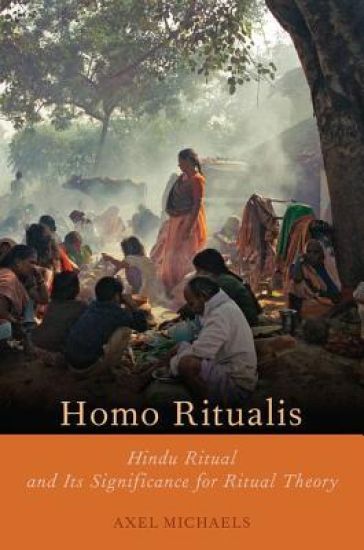
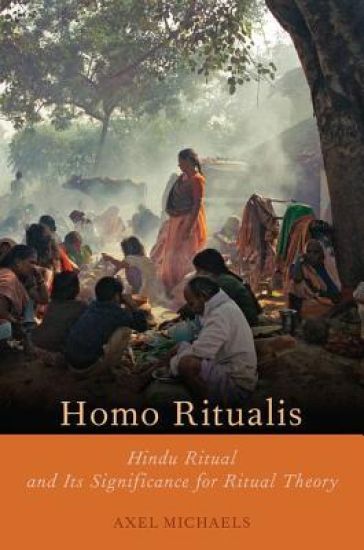
Are the richness and diversity of rituals and celebrations in South Asia unique? Can we speak of a homo ritualis when it comes to India or Hinduism? Are Indians or Hindus more involved in rituals than other people? If so, what makes them special? Homo Ritualis is the first book to present a Hindu theory of rituals. Based on extensive textual studies and field-work in Nepal and India, Axel Michaels argues that ritual is a distinctive way of acting, which, as in the theater, can be distinguished from other forms of action. The book analyzes ritual in these cultural-specific and religious contexts, taking into account how indigenous terms and theories affect and contribute to current ritual theory. It describes and investigates various forms of Hindu rituals and festivals, such as life-cycle rituals, the Vedic sacrifice, vows processions, and the worship of deities (puja). It also examines conceptual components of (Hindu) rituals such as framing, formality, modality, and theories of meaning.
Homo Ritualis

Homo Ritualis

Axel Michaels

Oxford University Press Inc
2016
nidottu
Are the richness and diversity of rituals and celebrations in South Asia unique? Can we speak of a homo ritualis when it comes to India or Hinduism? Are Indians or Hindus more involved in rituals than other people? If so, what makes them special? Homo Ritualis is the first book to present a Hindu theory of rituals. Based on extensive textual studies and field-work in Nepal and India, Axel Michaels argues that ritual is a distinctive way of acting, which, as in the theater, can be distinguished from other forms of action. The book analyzes ritual in these cultural-specific and religious contexts, taking into account how indigenous terms and theories affect and contribute to current ritual theory. It describes and investigates various forms of Hindu rituals and festivals, such as life-cycle rituals, the Vedic sacrifice, vows processions, and the worship of deities (puja). It also examines conceptual components of (Hindu) rituals such as framing, formality, modality, and theories of meaning.
Siva in Trouble

Siva in Trouble

Axel Michaels

Oxford University Press Inc
2008
sidottu
The town of Deopatan, three kilometers northeast of Kathmandu, is above all famous for its main sanctum, the temple of Pasupati, the 'lord of the animals,' a form of Siva and the tutelary deity of the kings of Nepal since ancient times. By its name alone, the temple attracts thousands of pilgrims each year and has made itself known far beyond the Kathamndu Valley. However, for the dominant Newar population the town is by no means merely the seat of Siva or Pasupati. It is also a city of wild goddesses and other deities. Due to this tension between two strands of Hinduism - the pure, vegetarian Smarta Hinduism and the Newar Hinduism which implies alcohol and blood sacrifices - Siva/Pasupati has more than once been in trouble, as the many festivals and rituals descripbed and analyzed in this book reveal. Deopatan is a contested field. Different deities, agents social groups, ritual specialists, and institutions are constantly seeking dominance, challenging and even fighting each other, thus contributing to social and political dynamics and tensions that are indeed distinct in South Asia. It is these aspects on which Axel Michaels concentrates in this book.
Handling Death: The Dynamics of Death Rituals and Ancestor Rituals Among the Newars of Bhaktapur, Nepal
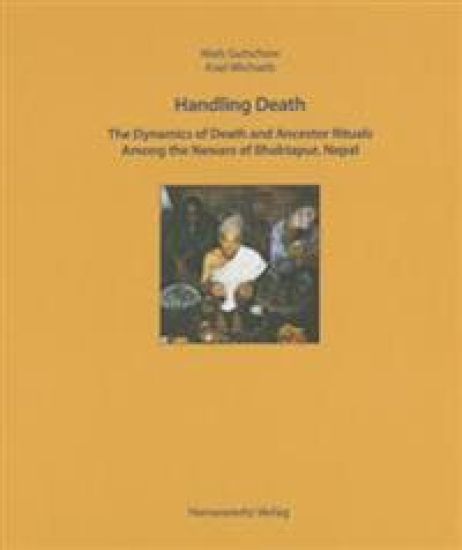
In a rare combination of competence, an architectural historian (Niels Gutschow) and an indologist (Axel Michaels) have documented death rituals of the ethnic community of Newars in the Kathmandu Valley, Nepal. The first part of the book focusses to a specific setting, the ancient city of Bhaktapur and its calendric rituals of death and renewal. An introduction to the urban fabric with its cremation places, routes of death processions, places of spirits and ancestor deities is followed by a presentation of specialists involved in the death and ancestor rituals - illustrated by 28 maps. The second part presents a detailed description of the union of the deceased with his forefathers, a ritual which is also documented on a DVD. In addition, local handbooks and manuals used by the Brahmin priest during this ritual are edited and translated. This ethno-indological method of combination of textual and contextual approaches aims at understanding both the agency in rituals and the function of the text in contexts. Formalized rituals turn out to be by no means strict, stereotypical and unchangeable. The uniqueness of the actors, places and time has prompted the authors to name places and actors and to date time. The study of death rituals represents the first part of a trilogy of studies of life-cycle rituals in Nepal, carried out under the auspices of the Collaborative Research Centre "Dynamics of Ritual" (Sonderforschungsbereich 619: Ritualdynamik).
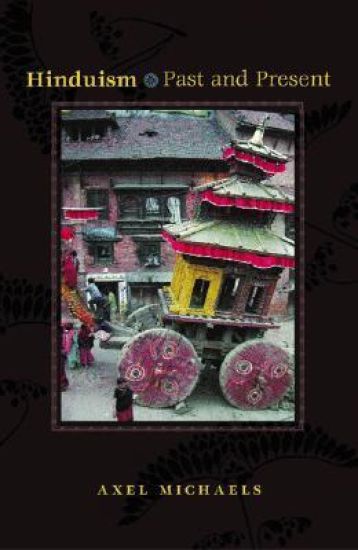
Hinduism

Hinduism

Axel Michaels

Princeton University Press
2003
pokkari
Hinduism is currently followed by one-fifth of humankind. Far from a monolithic theistic tradition, the religion comprises thousands of gods, a complex caste system, and hundreds of languages and dialects. Such internal plurality inspires vastly ranging rites and practices amongst Hinduism's hundreds of millions of adherents. It is therefore not surprising that scholars have been hesitant to define universal Hindu beliefs and practices. In this book, Axel Michaels breaks this trend. He examines the traditions, beliefs, and rituals Hindus hold in common through the lens of what he deems its "identificatory habitus," a cohesive force that binds Hindu religions together and fortifies them against foreign influences. Thus, in his analysis, Michaels not only locates Hinduism's profoundly differentiating qualities, but also provides the framework for an analysis of its social and religious coherence. Michaels blends his insightful arguments and probing questions with introductions to major historical epochs, ample textual sources as well as detailed analyses of major life-cycle rituals, the caste system, forms of spiritualism, devotionalism, ritualism, and heroism. Along the way he points out that Hinduism has endured and repeatedly resisted the missionary zeal and universalist claims of Christians, Muslims, and Buddhists. He also contrasts traditional Hinduism with the religions of the West, "where the self is preferred to the not-self, and where freedom in the world is more important than liberation from the world." Engaging and accessible, this book will appeal to laypersons and scholars alike as the most comprehensive introduction to Hinduism yet published. Not only is Hinduism refreshingly new in its methodological approach, but it also presents a broad range of meticulous scholarship in a clear, readable style, integrating Indology, religious studies, philosophy, anthropological theory and fieldwork, and sweeping analyses of Hindu texts.