Kirjojen hintavertailu. Mukana 12 657 676 kirjaa ja 12 kauppaa.

Kirjailija

Aynsley Kellow

Kirjat ja teokset yhdessä paikassa: 10 kirjaa, julkaisuja vuosilta 1995-2021, suosituimpien joukossa The OECD: A Decade of Transformation. Vertaile teosten hintoja ja tarkista saatavuus suomalaisista kirjakaupoista.

10 kirjaa

Kirjojen julkaisuhaarukka 1995-2021.

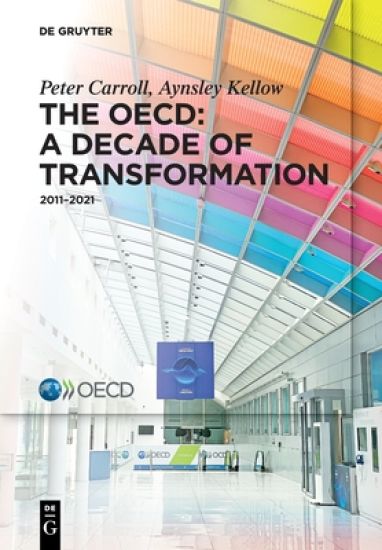
The OECD: A Decade of Transformation

The OECD: A Decade of Transformation

Peter Carroll; Aynsley Kellow

De Gruyter
2021
isokokoinen pokkari
In the last decade, the OECD has undergone a period of transformation under the leadership of Secretary-General Angel Gurría and his senior management – a transformation that has revitalised the organisation’s operations and outputs. Now celebrating its 60th anniversary, the OECD provides an increasingly valuable resource for its members and partners worldwide. This, the only book to cover the last ten years of the OECD’s work, focuses on the policy-related advice, evidence-based global standards, trusted statistics and analysis, and support for policy reform that it has developed. The book commences with a brief history of the OECD and its key decision processes and then examines the impact of its leadership in driving a wide range of achievements and in securing an expanding, increasingly global role. It focuses on the organisation’s green agenda and the move to measure living conditions in a more detailed fashion, rather than relying largely on GDP, and on the inclusive growth project that aims at making markets work for all. It discusses the OECD’s remarkably influential work in education, including PISA and PIAAC, and demonstrates the capacity of the OECD to embrace new areas of work – the importance of innovation and the digital economy in driving economic growth. Based on access to a wide range of documents and extensive interviews with senior officials and members, this comprehensive book also sheds light on the OECD’s partnership with the G20 in the push for stronger international co-operation and transparency in tax matters as well their Inclusive Framework on Base Erosion and Profit shifting (BEPS), aimed at tackling tax avoidance. The OECD’s strategic response to the COVID-19 pandemic and the drive to develop ‘Smart Data’ are also covered.

Negotiating Climate Change

Negotiating Climate Change

Aynsley Kellow

Edward Elgar Publishing Ltd
2018
sidottu
The 2015 Paris Agreement on climate change marked a reset of global climate policy, but was jeopardised by the partisan nature of the debates. In this unique overview, Aynsley Kellow suggests that global policy on climate change should have started with the Paris Agreement, and that almost a quarter of a century has been wasted following the wrong path. Looking critically at the interplay between interests, science, and global norms, Negotiating Climate Change shows how the initial selection of the wrong `metapolicy' hindered the development of global climate policy. Examining key debates, and the problems which arose from them, Kellow exposes the failings of the Kyoto Process and the subsequent issues raised in the negotiations culminating in the Paris Agreement. Providing analysis of the failings of past decades as well as looking towards the future of climate policy, this book will be invaluable to advanced undergraduate and postgraduate students of global environmental politics, environmental governance and international relations, as well as for policy workers in agencies involved in climate policy.
Middle Powers and International Organisations

Middle Powers and International Organisations

Aynsley Kellow; Peter Carroll

Edward Elgar Publishing Ltd
2017
sidottu
This book provides a unique examination of how a middle power uses international organisations to achieve greater global influence. The authors focus on the OECD, 'the rich man's club' of most of the world's wealthiest nations. It demonstrates how the decision by Australia to apply for membership was a long drawn out process, delayed by political factors. Eventually agreement was reached with assurances that membership would provide access to valuable and timely policy-related information, especially in relation to international trade and finance. In addition, membership would potentially increase influence by providing greater access to its powerful member states at an earlier stage in their policy discussions and agreements. On gaining membership, Australia found that the OECD's comparative research and policy development activities, across a wide range of areas and issues, were a valuable source for policy learning which, in turn, helped the ongoing maintenance and further building of policy capacity in the country. This detailed study of how a nation state engages with an international organisation will be a great source of insight and information for scholars and advanced students of international relations and public policy. It will also be a valuable resource for policymakers and practitioners working in the field.
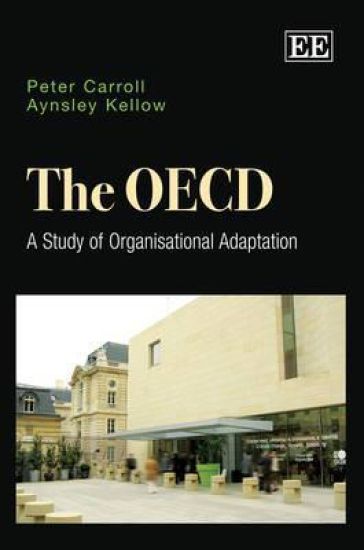
The OECD

The OECD

Peter Carroll; Aynsley Kellow

Edward Elgar Publishing Ltd
2011
sidottu
The book reveals, for the first time, the origins, growth and complex role of the OECD as it celebrates its fiftieth anniversary, showing how it has adapted - for the most part successfully - to the changing needs of its members, both large and small. Peter Carroll and Aynsley Kellow provide a comprehensive account and analysis of the origins, development and, most intriguingly, the recent reforms that characterise the OECD. They argue that this increasingly complex organisation has fulfilled its design to be an adaptive, learning organisation and explore how the OECD has spread its wings beyond its European and North American roots to become an increasingly influential body in global governance. Topical chapters include the OECD's work on health and the environment, relations with international, intergovernmental organisations, the OECD's structure and also the key processes. This fascinating book will be warmly welcomed by academics, researchers and postgraduate students in a wide range of fields including international relations, international business, political science, public policy and public administration. Public servants in national departments and agencies - particularly those with significant international activities - will also find the book to be of great interest, as will professionals within international organisations such as IMF, World Bank, EU, UN and (of course) the OECD itself.
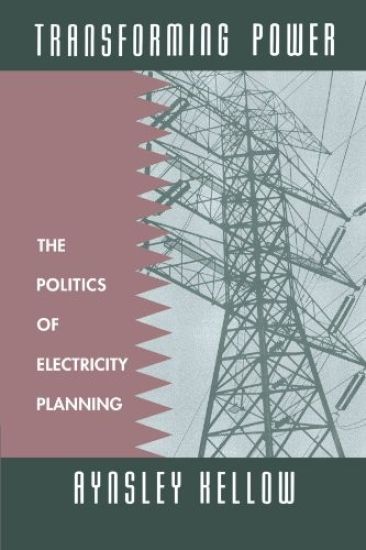
Transforming Power

Transforming Power

Aynsley Kellow

Cambridge University Press
2011
pokkari
Originally published in 1996, this book is an exploration and analysis of the electricity industry in the context of uncertainty following the energy crisis of the 1970s and concern over the greenhouse effect. Few industries demand a similar level of foresight and planning, or such vast amounts of capital. The book examines five well-known Australian, Canadian and New Zealand cases and closely analyses the ways in which various agencies have sought ends to serve the means at their disposal. Electricity has long been regarded as a natural monopoly, but questions of privatisation, regulation and government control are increasingly prevalent. The book explores these issues and also notes the experiences of other countries in its analysis of institutional reform. Aynsley Kellow argues for different approaches to electricity planning, which offer much by way of economic savings and minimisation of environmental problems.
Science and Public Policy

Science and Public Policy

Aynsley Kellow

Edward Elgar Publishing Ltd
2007
sidottu
This book is an examination of a neglected form of scientific corruption - corruption by political attachment to noble causes.We are used to hearing that economic interests have corrupted scientific findings, but the possibility that science might be corrupted by noble causes is largely overlooked. This book shows that this danger is real, that values can often lead to poor science, and that we are more likely to accept lower quality science when it lends support to our political preferences. Using the examples of biodiversity and climate science and the attack on Lomborg's The Skeptical Environmentalist on these two issues, Aynsley Kellow reveals how the reliance of environmental science on mathematical models and the infusion of values into its conduct have produced a preference for virtual over observational data. It argues that both sides of politics are capable of exerting such an influence, but suggests some reasons why those on the political Left seem to be more prone to do so at present, to the detriment of public policy.Science and Public Policy is a unique and challenging book. It does not argue that any one political persuasion exerts a corrupting influence on science policy, instead it makes extensive use of peer-reviewed literature to explore scientific controversies and the role of politics in them.This fascinating book will appeal to high-level general readers as well as to scholars and researchers at all levels of academe working in environmental politics and policy; and science policy.
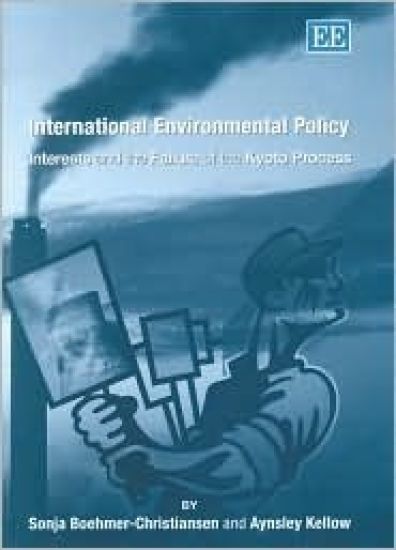
International Environmental Policy

International Environmental Policy

Sonja Boehmer-Christiansen; Aynsley Kellow

Edward Elgar Publishing Ltd
2002
sidottu
The Kyoto Protocol has singularly failed to shape international environmental policy-making in the way that the earlier Montreal protocol did. Whereas Montreal placed reliance on the force of science and moralistic injunctions to save the planet, and successfully determined the international response to climate change, Kyoto has proved significantly more problematic. International Environmental Policy considers why this is the case.The authors contend that such arguments on this occasion proved inadequate to the task, not just because the core issues of the Kyoto process were subject to more powerful and conflicting interests than previously, and the science too uncertain, but because the science and moral arguments themselves remained too weak. They argue that 'global warming' is a failing policy construct because it has served to benefit limited but undeclared interests that were sustained by green beliefs rather than robust scientific knowledge.This highly topical book takes a frank look at the political motivations that underpin the global warming debate, and will appeal to political scientists and energy policy analysts as well as anyone with an interest in the future of the environment and in the policies we create to protect it.
International Toxic Risk Management

International Toxic Risk Management

Aynsley Kellow

Cambridge University Press
1999
pokkari
This original and sometimes controversial book is concerned with international regulation, negotiation and policy-making in the environmental realm. In particular, it focuses on toxic chemicals, and the ways in which risk associated with hazardous substances is assessed, and the policy outcomes that result. A key assertion is that the international arena is more favourable to environment groups while the domestic arena tends to favour industry. Perhaps surprisingly, the author posits that environmental organisations such as Greenpeace, while occupying the moral highground, oversimplify complex issues. While this can help stimulate action, the author argues it can hinder the development of effective policies at the international level. Grounded in major international case studies, the book is based on research into many international agencies and takes a multidisciplinary approach.
International Toxic Risk Management

International Toxic Risk Management

Aynsley Kellow

Cambridge University Press
1999
sidottu
This original and sometimes controversial book is concerned with international regulation, negotiation and policy-making in the environmental realm. In particular, it focuses on toxic chemicals, and the ways in which risk associated with hazardous substances is assessed, and the policy outcomes that result. A key assertion is that the international arena is more favourable to environment groups while the domestic arena tends to favour industry. Perhaps surprisingly, the author posits that environmental organisations such as Greenpeace, while occupying the moral highground, oversimplify complex issues. While this can help stimulate action, the author argues it can hinder the development of effective policies at the international level. Grounded in major international case studies, the book is based on research into many international agencies and takes a multidisciplinary approach.
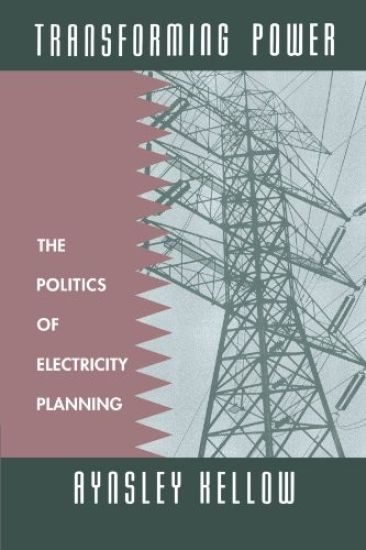
Transforming Power

Transforming Power

Aynsley Kellow

Cambridge University Press
1995
sidottu
This book is an exploration and analysis of the electricity industry in the context of uncertainty following the energy crisis of the 1970s and concern over the greenhouse effect. Few industries demand a similar level of foresight and planning, or such vast amounts of capital. The book examines five well-known Australian, Canadian and New Zealand cases and closely analyses the ways in which various agencies have sought ends to serve the means at their disposal. Electricity has long been regarded as a natural monopoly, but questions of privatisation, regulation and government control are increasingly prevalent. The book explores these issues and also notes the experiences of other countries in its analysis of institutional reform. Aynsley Kellow argues for new approaches to electricity planning, which offer much by way of economic savings and minimisation of environmental problems.