Kirjojen hintavertailu. Mukana 12 595 353 kirjaa ja 12 kauppaa.

Kirjailija

Babette Rothschild

Kirjat ja teokset yhdessä paikassa: 26 kirjaa, julkaisuja vuosilta 2000-2026, suosituimpien joukossa 8 Keys to Mental Health Through Exercise. Vertaile teosten hintoja ja tarkista saatavuus suomalaisista kirjakaupoista.

26 kirjaa

Kirjojen julkaisuhaarukka 2000-2026.

8 Keys to Mental Health Through Exercise

8 Keys to Mental Health Through Exercise

Christina Hibbert; Babette Rothschild

WW Norton Co
2016
nidottu
We all know that exercise is good for physical health. Improved fitness has been proven to increase longevity and stave off illness. Recently, there has been a wealth of data proving that exercise also contributes to overall mental well-being. Routine exercise alleviates stress and anxiety, moderates depression, relieves chronic pain, and improves self-esteem. Christina G. Hibbert, an expert on women’s mental health, grief and self-esteem issues, here offers readers step-by-step strategies for sticking to fitness goals, overcoming motivation challenges and roadblocks to working out, and maintaining a physically and emotionally healthy exercise regimen. The techniques she offers will benefit readers at any stage of life or fitness level. Whether you have worked out periodically in the past or have never hit the gym, this book will help you get moving, stay moving, and maintain the inspiration you need to reap the mental health benefits of regular exercise.
8 Keys to Healing, Managing, and Preventing Burnout

8 Keys to Healing, Managing, and Preventing Burnout

Morgan Johnson; Babette Rothschild

WW NORTON CO
2025
nidottu
Burnout will not be reversed from a meditation retreat or taking up jogging. And those who find themselves at their wit’s end due to exploitative systems are not to be blamed for simply “not taking care of themselves”. This inclusive book is for anyone looking for evidence-based and clinically-informed strategies for real relief from burnout. Each of the eight keys presented here moves beyond typical self-care and stress-management techniques, inviting readers to learn experientially and to evaluate to see what works for them. The book is designed to be used differently by each unique reader, as it’s written to support those who feel called to stay in a role that’s burning them out, those who plan to stop or step back in the future or those who want space to discern their options. The book concludes with guidance to leverage individual privilege, both socially and politically, to change exploitative systems and reduce harm.
8 Keys to Safe Trauma Recovery Workbook

8 Keys to Safe Trauma Recovery Workbook

Babette Rothschild; Vanessa Bear

WW NORTON CO
2023
nidottu
Drawing from neuroscience and psychotherapy with empowering strategies to take charge of healing from trauma, this workbook follows the theme of each of the 8 keys in 8 Keys to Safe Trauma Recovery. The two books complement each other but it is not necessary to have read the original to benefit from this workbook, which presents practical exercises and activities integral to safe trauma recovery, and is designed to support readers’ control of their mind, body and life in the aftermath of trauma. One thing is for sure: there is no one-size-fits-all method for healing trauma. This workbook will help readers identify, assess and celebrate the resources they already have and add more resources to their toolbox. Most importantly, the authors do not subscribe to the old motto “no pain, no gain,” fostering instead the concept that healing from trauma should not be traumatic.
Help for the Helper

Help for the Helper

Babette Rothschild

WW NORTON CO
2023
nidottu
Since the publication of the first edition of Help for the Helper in 2006, the world has changed. Significantly. Due to existing and growing threats of war, increasing areas of civil unrest, the COVID-19 pandemic, financial collapse, natural disasters and more, therapists and other helping professionals now often find themselves in a particularly tricky position: They are struggling to personally cope with traumas and massive stresses that are very similar to those experienced by their clients and others they serve. To address these unique challenges, this revised and expanded edition now includes guidance for helping clients while maintaining therapists’ own safety and sanity in crisis situations, managing the usual stresses and challenges during normal times, and tips for dealing with trauma when that is not a therapist’s specialty. Topics include the neurophysiology and regulation of arousal, self-care during shared community/world crises, maintaining balance and strength, countertransference, somatic empathy, mirroring and mimicry.
The Body Remembers Volume 1 and Revolutionizing Trauma Treatment, Two-Book Set
This product includes Babette Rothschild's The Body Remembers and Revolutionizing Trauma Treatment. For both clinicians and their clients, there is tremendous value in understanding the psychophysiology of trauma and knowing what to do about its manifestations. The Body Remembers illuminates that physiology, shining a bright light on the impact of trauma on the body and the phenomenon of somatic memory. Packed with engaging case studies, this perennial bestseller integrates body and mind in the treatment of post traumatic stress disorder. The paperback edition of Rothschild's The Body Remembers, Volume 2, Revolutionizing Trauma Treatment clarifies and simplifies autonomic nervous system (ANS) understanding and observation. Multiple therapeutic transcripts illuminate key points in trauma treatment, including stabilizing clients who dissociate, identifying and implementing hidden somatic resources, and utilizing good memories and somatic markers. It includes a full-color table that distinguishes six levels of arousal, which has proven to be an essential clinical tool. The full-color ANS table is also available separately as a laminated desk reference card.
Revolutionizing Trauma Treatment

Revolutionizing Trauma Treatment

Babette Rothschild

WW Norton Co
2021
nidottu
Being able to monitor and modulate a trauma client’s dysregulated nervous system is one of the practitioner’s best lines of defence against traumatic hyperarousal going amok—risking consequences such as dissociation and decompensation. This paperback edition of Babette Rothschild’s The Body Remembers Volume 2, clarifies and simplifies autonomic nervous system (ANS) understanding and observation. It includes a full-colour table that distinguishes six levels of arousal, which has proven to be an essential clinical tool, presenting a new and useful distinction between trauma-induced hypoarousal and the low arousal that is caused by lethargy or depression. Multiple therapeutic transcripts illuminate key points in trauma treatment, including stabilising clients who dissociate, identifying and implementing hidden somatic resources, and utilising good memories and somatic markers. With an authoritative yet personal voice, Rothschild’s book is essential reading for anyone working with those who have experienced trauma. The full-colour ANS table is also available separately as a laminated desk reference card.
Apua auttajalle

Apua auttajalle

Babette Rothschild; Marjorie L. Rand

Traumaterapiakeskus
2021
nidottu
Terapeutin loppuun palaminen on vakava haaste ja itsehoito on mahdollinen vain, jos terapeutit aktiivisesti auttavat itse itseään. APUA AUTTAJALLE haastaa nykyiset käsitykset asiakkaiden vaikutuksesta terapeutteihin ja arvioi avoimesti psykoterapiatyön riskejä: myötätuntouupumusta ja sijaistraumatisoitumista. Tuloksena on uusi näkökulma terapeuttiseen prosessiin. Näkökulma tarjoaa mielenterveysalan ammattilaisille mielenterveyttä ja hyvinvointia ylläpitäviä strategioita ja konkreettisia välineitä sekä samalla maksimoivat terapeutin pätevyyden asiakastyössä.
8 Keys to End Emotional Eating

8 Keys to End Emotional Eating

Howard Farkas; Babette Rothschild

WW Norton Co
2019
nidottu
Traditional diet books focus on meal plans, low- calorie solutions and quick fixes. But these approaches just treat the symptoms, not the cause— which leads many dieters to return to their bad habits. Howard S. Farkas, who has more than two decades of professional and teaching experience in clinical psychology, digs deeper by looking at the single greatest cause of overeating: our emotions. Emotional eaters— those who eat in response to feelings rather than hunger—usually understand basic nutrition and how to control their weight. They may take charge of every other aspect of their life, but still feel helpless against the emotional barriers keeping them from healthy eating. 8 Keys to End Emotional Eating provides a detailed plan for overcoming these barriers. By exploring the causes that drive the desire to over eat, Farkas develops practical skills to manage this desire on a daily basis. His road map for the future will help readers maintain healthy eating habits for years to come.
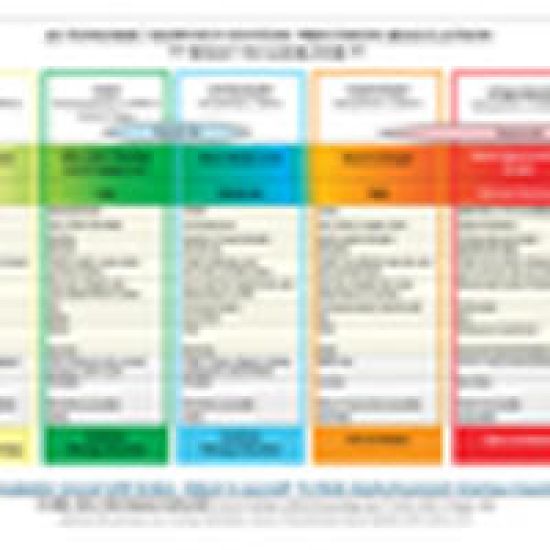
Autonomic Nervous System Table: Laminated Card
The Body Remembers, Volume 2: Revolutionizing Trauma Treatment continues the discussion begun more than fifteen years ago with the publication of the best-selling and beloved The Body Remembers: The Psychophysiology of Trauma and Trauma Treatment. This new book is grounded in the belief that the most important goal for any trauma treatment is to improve the quality of life of the client. Therefore, the first prerequisite is that the client be reliably stable and feel safe in his or her daily life as well as the therapy situation. To accomplish this, Babette Rothschild empowers both therapists and clients by expanding trauma treatment options. For clients who prefer not to review memories, or are unable to do so safely, new and expanded strategies and principles for trauma recovery are presented. And for those who wish to avail themselves of more typical trauma memory work, tools to make trauma memory resolution even safer are included. Being able to monitor and modulate a trauma client’s dysregulated nervous system is one of the practitioner’s best lines of defence against traumatic hyperarousal going amok—risking such consequences as dissociation and decompensation. Rothschild clarifies and simplifies autonomic nervous system (ANS) understanding and observation with her creation of an original full colour table that distinguishes six levels of arousal. Included in this table (and the discussion that accompanies it) is a new and essential distinction between trauma-induced hypoarousal and the low arousal that is caused by lethargy or depression. Combining an authoritative yet personal voice, Rothschild gives clinicians the space to recognise where they may have made mistakes—by sharing her own!—as well as a road map towards more effective practice in the future. This book is absolutely essential reading for anyone working with those who have experienced trauma. The full colour ANS table is also available from W.W. Norton as a laminated desk reference and a wall poster suitable for framing so this valuable therapeutic tool will always be at hand.
Help! I've Got an Alarm Bell Going Off in My Head!

Help! I've Got an Alarm Bell Going Off in My Head!

K.L. Aspden; Babette Rothschild

Jessica Kingsley Publishers
2015
pokkari
Ever wondered what happens inside our bodies when we feel angry, nervous, stressed or anxious? This straightforward, illustrated guide explores just that, explaining what happens to the brain and nervous system when that alarm bell in our heads starts ringing. It describes how our bodies can become very sensitive and set off false alarms, and includes tips and activities to help you reduce feelings of anxiety and keep your nervous system healthy.Designed for ages 9-12, the book aims to teach children who suffer from anxiety, stress or anger about the fight, flight or freeze response in their bodies and what can trigger it, and helps them to understand that it is something that everyone experiences. It also includes ways to manage the stress reaction and reduce feelings of shame. It is an invaluable resource for anyone supporting children who are easily triggered into anxiety or anger, including parents and carers, support workers, teachers, and therapists.
8 Keys to Parenting Children with ADHD

8 Keys to Parenting Children with ADHD

Cindy Goldrich; Babette Rothschild

WW Norton Co
2015
nidottu
Parenting children with ADHD, whether diagnosed or undiagnosed, can be challenging and complex. But just as a child who struggles with reading can learn to decode words, children with ADHD can learn patience, communication and solution-seeking skills to become more confident, independent and capable. This book, rich with optimism, tips, tools and action plans, offers science-based insights and systems for parents to help cultivate these skills. Combining expert information with practical, sensitive advice, the eight "key" concepts here will help parents reduce chaos, improve cooperation and nurture the advantages—like creativity and drive—that often accompany all of that energy. Based on author Cindy Goldrich’s seven-session workshop entitled Calm and Connected: Parenting Kids with ADHD©, this book focuses on developing and strengthening effective interpersonal skills in both parents and children as a way to improve conflict resolution. Following the parenting principle to "Parent the child you have", Goldrich offers advice to help readers tailor their parenting to meet the needs of their unique child. The book also leads parents to recognise the value of being a leader and a guide to children, building parents’ confidence in their decision-making, and giving children a sense of safety, security and confidence. .
8 Keys to Forgiveness

8 Keys to Forgiveness

Robert Enright; Babette Rothschild

WW Norton Co
2015
nidottu
While it may seem like a simple enough act, forgiveness is a difficult, delicate process that, if executed correctly, can be a profoundly moving and deep learning experience. Whatever the scenario may be—whether you need to make peace with a certain situation, with a loved one or friend, or with a total stranger—the process of forgiveness is an art and a science. This hands-on guide walks readers through the process in 8 key steps. How can we become forgivingly "fit"? How can we identify the source of our pain and inner turmoil? How can we find meaning in what we have suffered, or learn to forgive ourselves? What should we do when forgiveness feels particularly hard? All these questions and more are answered here, leading us to become more tolerant, compassionate and hopeful human beings.
8 Keys to Practicing Mindfulness

8 Keys to Practicing Mindfulness

Manuela Mischke-Reeds; Babette Rothschild

WW Norton Co
2015
nidottu
Mindfulness can be defined as the ability to be present with your experiences without judgment; to witness your thoughts, feelings, and sensations with curiosity during both ordinary and dramatic moments. If you strive to be more awake and alive in your daily life, if you feel stressed, want to improve your relationships, or gain more resources to get you through hard times, mindfulness can be the answer. The 8 “keys” in this book will help readers foster a calm, sustained and mindful inner state that leads to rejuvenation, connection and confidence. Practical teachings are applied through stories and descriptions, and easy-to-understand exercises walk readers through every key. For anyone who wants to learn how to use the power of mindfulness to transform their daily life and to deal with problems such as stress, trauma, anxiety, depression, and even addiction, this book will guide the way.
8 Keys to Old School Parenting for Modern-Day Families

8 Keys to Old School Parenting for Modern-Day Families

Michael Mascolo; Babette Rothschild

WW Norton Co
2015
nidottu
"Helicopter parenting" and "child-centred parenting", two of the latest parenting fads, have resulted in a new generation of highly dependent, overly sensitive children who demonstrate few qualities of resilience and confidence. Perhaps as a response to the strict parenting of yesteryear, we have now seen the pendulum shift to an overly permissive style, where crying and punishment must be avoided at all costs. But having high expectations of kids and teaching them to be self-sufficient does not mean a return to the Bad Old Days of parenting. This book presents a mix of tried-and-true and new parenting strategies. It offers a counterbalance to some of today’s prevailing parenting theories, teaching parents how to reclaim their authority while remaining caring and nurturing. It is perfect for parents who find themselves thinking, "Didn’t my own parents do this better?"
8 Keys to End Bullying

8 Keys to End Bullying

Signe Whitson; Babette Rothschild

WW Norton Co
2014
nidottu
Groundbreaking books have peered into the psychology of bullying and the cultural climate that—seemingly now more than ever—gives rise to such cruelty and aggression. But few have been able to synthesize what we know into 8 simple, targeted “keys” that equip educators, professionals, and parents with practical strategies to tackle the issue head-on. This book answers that call. Social media bullying—and the recent tragedies stemming from it—has given the widespread problem a new dimension. While no magic cure-all exists, adults can learn and implement all sorts of quick and easy techniques that can make a huge difference in the lives of kids. In 8 core strategies, this book lays them out, from establishing meaningful connections with kids to creating a positive school climate, addressing cyberbullying, building social emotional competence, reaching out to bullies, empowering bystanders, and much more.
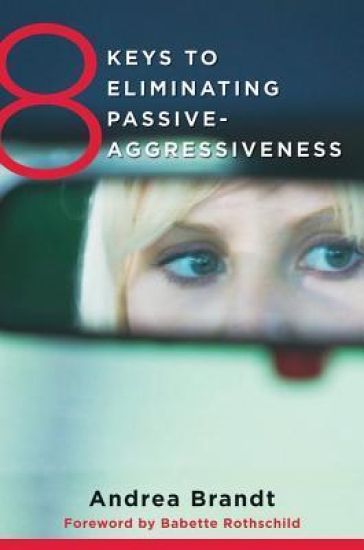
8 Keys to Eliminating Passive-Aggressiveness

8 Keys to Eliminating Passive-Aggressiveness

Andrea Brandt; Babette Rothschild

WW Norton Co
2013
nidottu
Many people often say “yes” to something when they’d rather say “no.” They offer cooperation through words but follow up with how they really feel—in actions that contradict their words. That’s passive-aggression. At its heart, passive-aggression is about being untrue to oneself, which makes it impossible to have a clean relationship with others. Passive-aggression as a communication method doesn’t make someone “bad.” It is simply a strategy learned in childhood as a coping mechanism, a hard-to-break habit. Changing passive-aggressive behavior requires knowledge, tools, and practice, as outlined here. The book offers effective methods for transforming passive-aggression into healthy assertiveness to communicate in constructive ways through eight keys: Recognize Your Hidden Anger; Reconnect Your Emotions to Your Thoughts; Listen to Your Body; Set Healthy Boundaries; Communicate Assertively; Interact Using Mindfulness; Disable the Enabler; and Problem-Solve for Better Outcomes. Hands-on exercises are featured, enabling readers to better understand themselves.
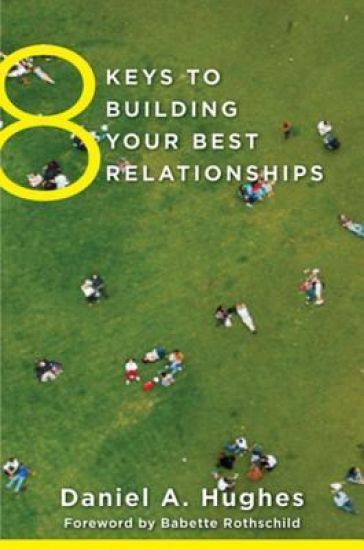
8 Keys to Building Your Best Relationships

8 Keys to Building Your Best Relationships

Daniel A. Hughes; Babette Rothschild

WW Norton Co
2013
nidottu
A revolution is under way in how we understand the nature of relationships, how we develop in those relationships, and how our brains function synergistically in connection with others. This field is known as attachment theory, and until now most of the cutting-edge insights have been written in "researcher-speak" and reserved for neurologists, psychologists, and others in the healing professions. Here veteran therapist and specialist in attachment disorders Daniel A. Hughes demystifies the research for lay people. By summarizing in short, easy-to-read "keys" the theory and brain science that underpin our ability to form relationships, he skillfully reveals how we can become better friends, spouses, siblings, and children. For anyone interested in how to develop meaningful new relationships or how to deepen and enrich their current ones, this book makes sense of it all.
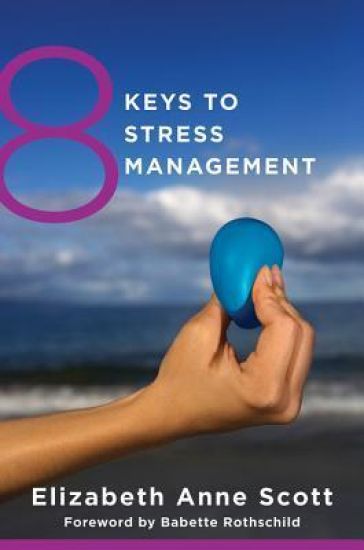
8 Keys to Stress Management

8 Keys to Stress Management

Elizabeth Anne Scott; Babette Rothschild

WW Norton Co
2013
nidottu
Stress has become a near-universal experience as well as a rising public health concern. According to many measures, people today are dealing with stressors that are greater in number and severity than in the past several decades, and this stress is taking a toll on our collective wellness. Bringing considerable content from her popular stress management Web site on About.com, Elizabeth Scott distills information about stress management into central ideas and strategies for consumers. These include learning to reduce the stress response and stressors, practicing long-term resilience habits, and putting positive psychology research into action. These various perspectives provide a multilayered framework for understanding stress and approaching stress management that is inspirational, action-oriented, and backed by foundational and recent knowledge in the field. The quick-to-read “8 keys” format of the book can be utilized on many levels so that busy readers can quickly find relief from stress.
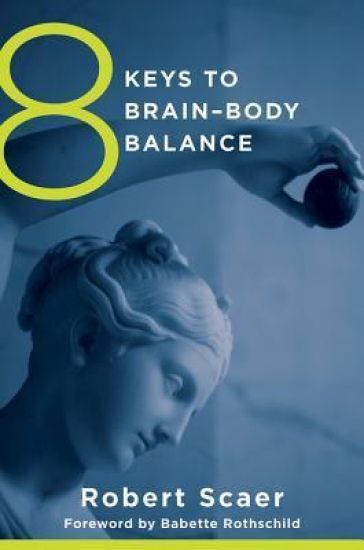
8 Keys to Brain-Body Balance

8 Keys to Brain-Body Balance

Robert Scaer; Babette Rothschild

WW Norton Co
2012
nidottu
Understanding how our brains and bodies actually work is a powerful tool in mitigating the anxiety generated by unpleasant physical and emotional symptoms that we all may experience from time to time. Here, Robert Scaer unravels the complexities of the brain-body connection, equipping all those who are in distress with a plausible explanation for how they feel. Making the science accessible, he outlines the core neurobiological concepts underlying the brain-body interface and explains why physical and emotional symptoms of stress and trauma occur. He explains why “feelings” represent physical sensations that inform us about the nature of our brain-body conflicts. He also offers practical, easy-to-implement strategies for strengthening motor skills, learning to listen to our gut to gauge our feelings, attuning to the present, and restoring personal boundaries to relieve symptoms and navigate a path to recovery.