Kirjojen hintavertailu. Mukana 12 390 323 kirjaa ja 12 kauppaa.

Kirjailija

Baltazar Aguda

Kirjat ja teokset yhdessä paikassa: 2 kirjaa, julkaisuja vuosilta 2008-2012, suosituimpien joukossa Models of Cellular Regulation. Vertaile teosten hintoja ja tarkista saatavuus suomalaisista kirjakaupoista.

2 kirjaa

Kirjojen julkaisuhaarukka 2008-2012.

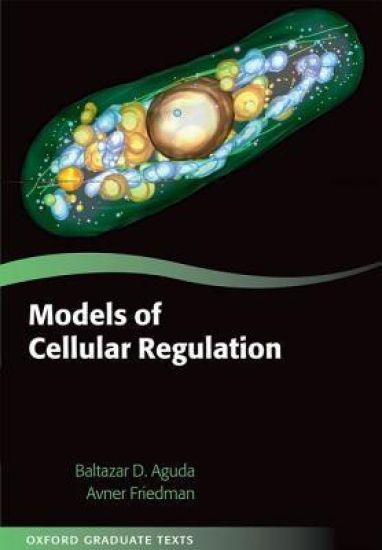
Models of Cellular Regulation

Models of Cellular Regulation

Baltazar Aguda; Avner Friedman

Oxford University Press
2012
nidottu
The human genome of three billion letters has been sequenced. So have the genomes of thousands of other organisms. With unprecedented resolution, modern technologies are allowing us to peek into the world of genes, biomolecules, and cells - and flooding us with data of immense complexity that we are just barely beginning to understand. A huge gap separates our knowledge of the components of a cell and what is known from our observations of its physiology. The authors have written this graduate textbook to explore what has been done to close this gap of understanding between the realms of molecules and biological processes. They have gathered together illustrative mechanisms and models of gene regulatory networks, DNA replication, the cell cycle, cell death, differentiation, cell senescence, and the abnormal state of cancer cells. The mechanisms are biomolecular in detail, and the models are mathematical in nature. The interdisciplinary presentation will be of interest to both biologists and mathematicians, and every discipline in between.
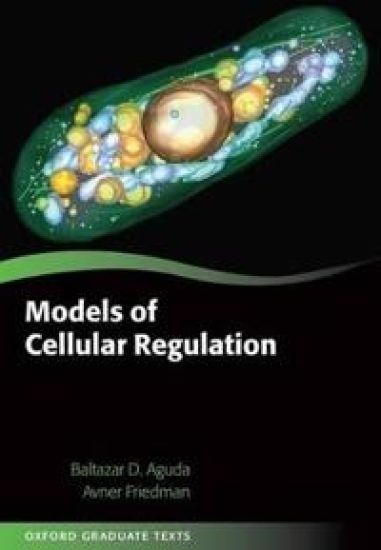
Models of Cellular Regulation

Models of Cellular Regulation

Baltazar Aguda; Avner Friedman

Oxford University Press
2008
sidottu
The human genome of three billion letters has been sequenced. So have the genomes of thousands of other organisms. With unprecedented resolution, modern technologies are allowing us to peek into the world of genes, biomolecules, and cells - and flooding us with data of immense complexity that we are just barely beginning to understand. A huge gap separates our knowledge of the components of a cell and what is known from our observations of its physiology. The authors have written this graduate textbook to explore what has been done to close this gap of understanding between the realms of molecules and biological processes. They have gathered together illustrative mechanisms and models of gene regulatory networks, DNA replication, the cell cycle, cell death, differentiation, cell senescence, and the abnormal state of cancer cells. The mechanisms are biomolecular in detail, and the models are mathematical in nature. The interdisciplinary presentation will be of interest to both biologists and mathematicians, and every discipline in between.