Kirjojen hintavertailu. Mukana 12 595 353 kirjaa ja 12 kauppaa.

Kirjailija

Barbara A. Biesecker

Kirjat ja teokset yhdessä paikassa: 3 kirjaa, julkaisuja vuosilta 2000-2026, suosituimpien joukossa Reinventing World War II. Vertaile teosten hintoja ja tarkista saatavuus suomalaisista kirjakaupoista.

3 kirjaa

Kirjojen julkaisuhaarukka 2000-2026.

Reinventing World War II

Reinventing World War II

Barbara A. Biesecker

Pennsylvania State University Press
2026
nidottu
By the 1970s, World War II had all but disappeared from US popular culture. But beginning in the mid-eighties it reemerged with a vengeance, and for nearly fifteen years World War II was ubiquitous across US popular and political culture. In this book, Barbara A. Biesecker explores the prestige and rhetorical power of the “Good War,” revealing how it was retooled to restore a new kind of social equilibrium to the United States. Biesecker analyzes prominent cases of World War II remembrance, including the canceled exhibit of the Enola Gay at the National Air and Space Museum in 1995 and its replacement, Steven Spielberg’s Saving Private Ryan, Tom Brokaw’s The Greatest Generation, and the United States Holocaust Memorial Museum. Situating these popular memory texts within the culture and history wars of the day and the broader framework of US political and economic life, Biesecker argues that, with the notable exception of the Holocaust Memorial Museum, these reinventions of the Good War worked rhetorically to restore a strong sense of national identity and belonging fitted to the neoliberal nationalist agenda. By tracing the links between the popular retooling of World War II and the national state fantasy, and by putting the lessons of Foucault, Derrida, Lacan, and their successors to work for a rhetorical-political analysis of the present, Biesecker not only explains the emergence and strength of the MAGA movement but also calls attention to the power of public memory to shape and contest ethnonational identity today. This book will interest rhetoricians and historians as well as students and scholars in the fields of US politics and communication studies.
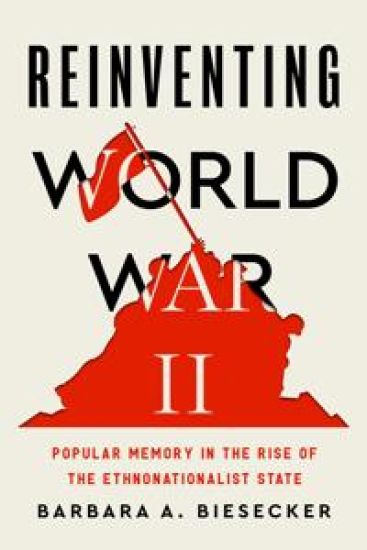
Reinventing World War II

Reinventing World War II

Barbara A. Biesecker

Pennsylvania State University Press
2024
sidottu
By the 1970s, World War II had all but disappeared from US popular culture. But beginning in the mid-eighties it reemerged with a vengeance, and for nearly fifteen years World War II was ubiquitous across US popular and political culture. In this book, Barbara A. Biesecker explores the prestige and rhetorical power of the “Good War,” revealing how it was retooled to restore a new kind of social equilibrium to the United States.Biesecker analyzes prominent cases of World War II remembrance, including the canceled exhibit of the Enola Gay at the National Air and Space Museum in 1995 and its replacement, Steven Spielberg’s Saving Private Ryan, Tom Brokaw’s The Greatest Generation, and the United States Holocaust Memorial Museum. Situating these popular memory texts within the culture and history wars of the day and the broader framework of US political and economic life, Biesecker argues that, with the notable exception of the Holocaust Memorial Museum, these reinventions of the Good War worked rhetorically to restore a strong sense of national identity and belonging fitted to the neoliberal nationalist agenda.By tracing the links between the popular retooling of World War II and the national state fantasy, and by putting the lessons of Foucault, Derrida, Lacan, and their successors to work for a rhetorical-political analysis of the present, Biesecker not only explains the emergence and strength of the MAGA movement but also calls attention to the power of public memory to shape and contest ethnonational identity today. This book will interest rhetoricians and historians as well as students and scholars in the fields of US politics and communication studies.
Addressing Postmodernity

Addressing Postmodernity

Barbara A. Biesecker

The University of Alabama Press
2000
nidottu
This text examines the relationship between rhetoric and social change, and how people transform social relations through the use of symbols. It focuses on the work of Kenneth Burke, to discern the conditions of possibility for social transformation and the role of people and rhetoric in it.