Kirjojen hintavertailu. Mukana 12 595 353 kirjaa ja 12 kauppaa.

Kirjailija

Barbara A. Holdrege

Kirjat ja teokset yhdessä paikassa: 4 kirjaa, julkaisuja vuosilta 2015-2027, suosituimpien joukossa Hindus, Jews, and the Politics of Comparison: Embodied Communities and Models of Religious Tradition. Vertaile teosten hintoja ja tarkista saatavuus suomalaisista kirjakaupoista.

4 kirjaa

Kirjojen julkaisuhaarukka 2015-2027.

Hindus, Jews, and the Politics of Comparison: Embodied Communities and Models of Religious Tradition
In Hindus, Jews, and the Politics of Comparison: Embodied Communities and Models of Religious Tradition, Barbara A. Holdrege emphasizes the role of comparative study as a method of critical interrogation that can serve as a means to challenge hegemonic taxonomies and categories in the academy and to reconstitute our scholarly discourse to allow for a multiplicity of epistemologies. Holdrege provides an extended series of reflections on the politics, problematics, and dynamics of comparison in which she explores how certain analytical categories in the study of religion-such as the body, scripture, sacrifice, purity, and food-can be fruitfully reimagined through a comparative analysis of their Hindu and Jewish instantiations. The author argues that this re-visioning of analytical categories through sustained comparative historical studies of a range of Hindu and Jewish traditions can provide the basis for generating alternative imaginaries to the prevailing Eurocentric and Protestant-based paradigms in the academy that have perpetuated the ideals of Enlightenment discourse and colonial and neocolonial projects. Such studies can serve as an important corrective to the scholarly practices through which certain categories and models have been privileged over others in the social sciences and humanities and in religious studies more specifically.
Hindus, Jews, and the Politics of Comparison

Hindus, Jews, and the Politics of Comparison

Barbara A. Holdrege

BLOOMSBURY PUBLISHING PLC
2025
sidottu
In Hindus, Jews, and the Politics of Comparison: Embodied Communities and Models of Religious Tradition, Barbara A. Holdrege emphasizes the role of comparative study as a method of critical interrogation that challenges hegemonic taxonomies and categories in the academy to reconstitute our scholarly discourse and allow for a multiplicity of epistemologies. Holdrege reflects on the politics, problems, and dynamics of comparison and explores how certain analytical categories in the study of religion—such as the body, scripture, sacrifice, purity, and food—can be fruitfully reimagined through a comparative analysis of their Hindu and Jewish instantiations. The author argues that this re-visioning of analytical categories through sustained comparative historical studies of a range of Hindu and Jewish traditions provides the basis for generating alternative imaginaries to the dominant paradigms in the academy that have perpetuated the ideals of Enlightenment discourse and colonial and neocolonial projects. Such studies serve as an important corrective to the scholarly practices in the social sciences, humanities, and religious studies through which these categories and models have been privileged over others.
Bhakti and Embodiment

Bhakti and Embodiment

Barbara A. Holdrege

Routledge
2018
nidottu
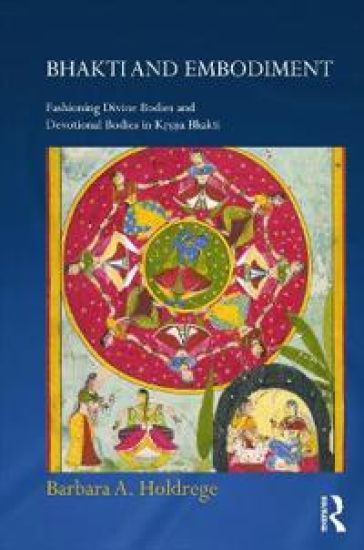
The historical shift from Vedic traditions to post-Vedic bhakti (devotional) traditions is accompanied by a shift from abstract, translocal notions of divinity to particularized, localized notions of divinity and a corresponding shift from aniconic to iconic traditions and from temporary sacrificial arenas to established temple sites. In Bhakti and Embodiment Barbara Holdrege argues that the various transformations that characterize this historical shift are a direct consequence of newly emerging discourses of the body in bhakti traditions in which constructions of divine embodiment proliferate, celebrating the notion that a deity, while remaining translocal, can appear in manifold corporeal forms in different times and different localities on different planes of existence. Holdrege suggests that an exploration of the connections between bhakti and embodiment is critical not only to illuminating the distinctive transformations that characterize the emergence of bhakti traditions but also to understanding the myriad forms that bhakti has historically assumed up to the present time.This study is concerned more specifically with the multileveled models of embodiment and systems of bodily practices through which divine bodies and devotional bodies are fashioned in Krsna bhakti traditions and focuses in particular on two case studies: the Bhagavata Purana, the consummate textual monument to Vaisnava bhakti, which expresses a distinctive form of passionate and ecstatic bhakti that is distinguished by its embodied nature; and the Gaudiya Vaisnava tradition, an important bhakti tradition inspired by the Bengali leader Caitanya in the sixteenth century, which articulates a robust discourse of embodiment pertaining to the divine bodies of Krsna and the devotional bodies of Krsna bhaktas that is grounded in the canonical authority of the Bhagavata Purana.
Bhakti and Embodiment

Bhakti and Embodiment

Barbara A. Holdrege

Routledge
2015
sidottu
The historical shift from Vedic traditions to post-Vedic bhakti (devotional) traditions is accompanied by a shift from abstract, translocal notions of divinity to particularized, localized notions of divinity and a corresponding shift from aniconic to iconic traditions and from temporary sacrificial arenas to established temple sites. In Bhakti and Embodiment Barbara Holdrege argues that the various transformations that characterize this historical shift are a direct consequence of newly emerging discourses of the body in bhakti traditions in which constructions of divine embodiment proliferate, celebrating the notion that a deity, while remaining translocal, can appear in manifold corporeal forms in different times and different localities on different planes of existence. Holdrege suggests that an exploration of the connections between bhakti and embodiment is critical not only to illuminating the distinctive transformations that characterize the emergence of bhakti traditions but also to understanding the myriad forms that bhakti has historically assumed up to the present time.This study is concerned more specifically with the multileveled models of embodiment and systems of bodily practices through which divine bodies and devotional bodies are fashioned in Krsna bhakti traditions and focuses in particular on two case studies: the Bhagavata Purana, the consummate textual monument to Vaisnava bhakti, which expresses a distinctive form of passionate and ecstatic bhakti that is distinguished by its embodied nature; and the Gaudiya Vaisnava tradition, an important bhakti tradition inspired by the Bengali leader Caitanya in the sixteenth century, which articulates a robust discourse of embodiment pertaining to the divine bodies of Krsna and the devotional bodies of Krsna bhaktas that is grounded in the canonical authority of the Bhagavata Purana.