Kirjojen hintavertailu. Mukana 12 595 353 kirjaa ja 12 kauppaa.

Kirjailija

Barbara A. Wilson

Kirjat ja teokset yhdessä paikassa: 27 kirjaa, julkaisuja vuosilta 1992-2021, suosituimpien joukossa God Is Knocking. Vertaile teosten hintoja ja tarkista saatavuus suomalaisista kirjakaupoista.

Mukana myös kirjoitusasut: Barbara A Wilson

27 kirjaa

Kirjojen julkaisuhaarukka 1992-2021.

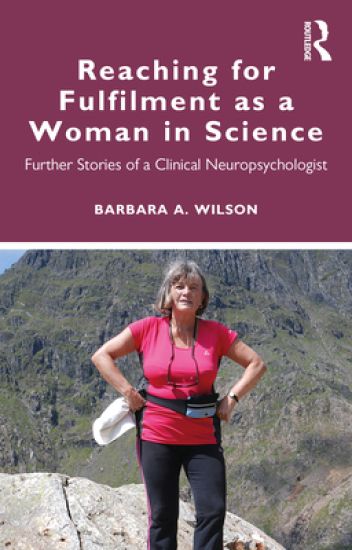
Reaching for Fulfilment as a Woman in Science
This vivid memoir presents adventures from the life of Barbara A. Wilson, an internationally honoured scientist who played an influential role in the development of neuropsychological rehabilitation at a time when the scientific field was dominated by men.As a follow-up to the highly successful Story of a Clinical Neuropsychologist, this book includes a host of memories, both personal and professional, which focus on Barbara’s development of her career as a woman in science. From childhood recollections and travels in Africa, to lifetime achievement awards and the restrictions of global pandemics, Barbara tells the story of her full and varied life and her unparalleled career in neuropsychological rehabilitation. Her book indicates that one can lead a meaningful and full life even after one of the most awful of losses, the death of a child, and also emphasizes the need to stick to one’s principles in trying times. The result is an unparalleled insight into the life of a clinical neuropsychologist, which can encourage the next generation of professionals who are trying to balance career, international travel and family, as well as inspire any girls interested in entering the world of science.
Reaching for Fulfilment as a Woman in Science
This vivid memoir presents adventures from the life of Barbara A. Wilson, an internationally honoured scientist who played an influential role in the development of neuropsychological rehabilitation at a time when the scientific field was dominated by men.As a follow-up to the highly successful Story of a Clinical Neuropsychologist, this book includes a host of memories, both personal and professional, which focus on Barbara’s development of her career as a woman in science. From childhood recollections and travels in Africa, to lifetime achievement awards and the restrictions of global pandemics, Barbara tells the story of her full and varied life and her unparalleled career in neuropsychological rehabilitation. Her book indicates that one can lead a meaningful and full life even after one of the most awful of losses, the death of a child, and also emphasizes the need to stick to one’s principles in trying times. The result is an unparalleled insight into the life of a clinical neuropsychologist, which can encourage the next generation of professionals who are trying to balance career, international travel and family, as well as inspire any girls interested in entering the world of science.
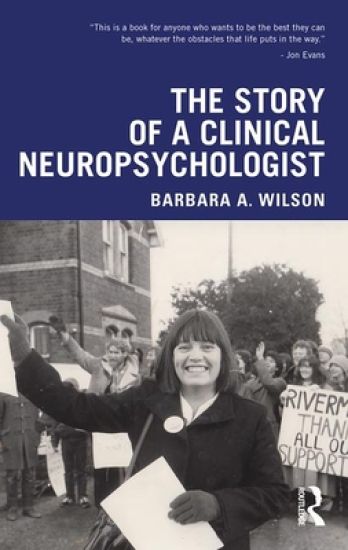
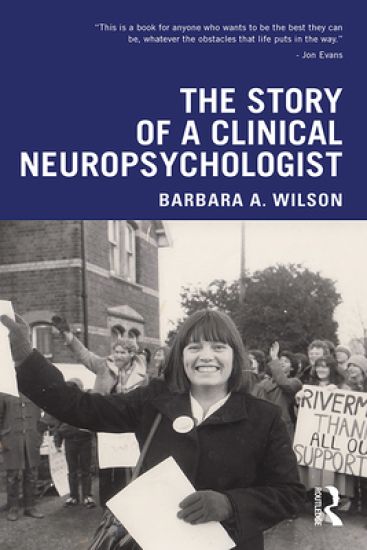
The Story of a Clinical Neuropsychologist
From a disadvantaged childhood to becoming one of our best-loved clinical neuropsychologists, this exceptional book tells the life story of Barbara A. Wilson, who has changed the way we think about brain injury rehabilitation. Barbara’s story shows how it is possible to have a fulfilling career alongside a successful family life, even when faced with the deepest of personal tragedies; the death of her adult daughter Sarah. Clinical and neuropsychologists will recognise Barbara’s influence on rehabilitation practice and her tireless aim to get what is best for people needing neuropsychological rehabilitation. It will inspire those with brain injury and their families who may struggle to make life meaningful, as well as encourage readers to stick to their beliefs and triumph in the face of obstacles.
The Story of a Clinical Neuropsychologist
From a disadvantaged childhood to becoming one of our best-loved clinical neuropsychologists, this exceptional book tells the life story of Barbara A. Wilson, who has changed the way we think about brain injury rehabilitation. Barbara’s story shows how it is possible to have a fulfilling career alongside a successful family life, even when faced with the deepest of personal tragedies; the death of her adult daughter Sarah. Clinical and neuropsychologists will recognise Barbara’s influence on rehabilitation practice and her tireless aim to get what is best for people needing neuropsychological rehabilitation. It will inspire those with brain injury and their families who may struggle to make life meaningful, as well as encourage readers to stick to their beliefs and triumph in the face of obstacles.
Essentials of Neuropsychological Rehabilitation

Essentials of Neuropsychological Rehabilitation

Barbara A. Wilson; Shai Betteridge

Guilford Press
2019
nidottu
For people with disabilities caused by nonprogressive brain injury, challenges in everyday living can be multifaceted and overwhelming. This book presents key principles of holistic neuropsychological rehabilitation, helping practitioners stay on track through complex terrain. Leading authorities Barbara A. Wilson and Shai Betteridge provide a framework for effective intervention based on a collaborative understanding of clients' strengths and needs. They describe essential strategies for assessing and remediating the impact of cognitive and psychosocial problems in everyday life. Detailed case examples illustrate the process of building partnerships with families, setting meaningful goals, developing skills and supports, and addressing emotional and mental health concerns. Innovative uses of technology are highlighted. Several reproducible clinical tools can be downloaded and printed in a convenient 8 1/2" x 11" size.
Essentials of Neuropsychological Rehabilitation

Essentials of Neuropsychological Rehabilitation

Barbara A. Wilson; Shai Betteridge

Guilford Press
2019
sidottu
For people with disabilities caused by nonprogressive brain injury, challenges in everyday living can be multifaceted and overwhelming. This book presents key principles of holistic neuropsychological rehabilitation, helping practitioners stay on track through complex terrain. Leading authorities Barbara A. Wilson and Shai Betteridge provide a framework for effective intervention based on a collaborative understanding of clients' strengths and needs. They describe essential strategies for assessing and remediating the impact of cognitive and psychosocial problems in everyday life. Detailed case examples illustrate the process of building partnerships with families, setting meaningful goals, developing skills and supports, and addressing emotional and mental health concerns. Innovative uses of technology are highlighted. Several reproducible clinical tools can be downloaded and printed in a convenient 8 1/2" x 11" size.
God Is Knocking

God Is Knocking

Barbara A. Wilson

Independently Published
2017
nidottu
The author of God is Knocking has used simple, down-to-earth language on heavenly subjects. The inspiration for this work was not always recognized as such. The proverbial flash of light of inspiration coming as a blinding and guiding light simply never occurred. Rather, inspiration came in many quick, quiet, strong, noisy, and emotion packed forms. Sometimes it presented itself in the depths of loneliness, heartache, sorrow, and despair. And sometimes it came as a soft, warm glow within the recesses of the heart --a heart that knows, loves, and serves God to the best of its ability. Knowledge of God's help was constantly apparent, especially during crucial moments. Much of this work reads as a prayer. Prayer fills the heart and soul with love of God, and always God's presence is felt during prayer. The author offers this work to you in the humble hope that one word, one phrase, one thought, may bring YOU closer to God and His love.
First Year, Worst Year

First Year, Worst Year

Barbara A. Wilson; Michael John Wilson

John Wiley Sons Inc
2004
nidottu
When clinical psychologist Barbara Wilson was faced with the devastating loss of her adult daughter Sarah, her professional skills were sorely tested. How she, her husband Mick, and their family came to terms with their loss is detailed in First Year, Worst Year, a moving memoir of survival during and after bereavement. Filled with photos of the Wilson family and their journey retracing the last moments of their daughter, who perished in a rafting accident in Peru, this book is a testament to the resilience of the human heart, even after it’s been broken.
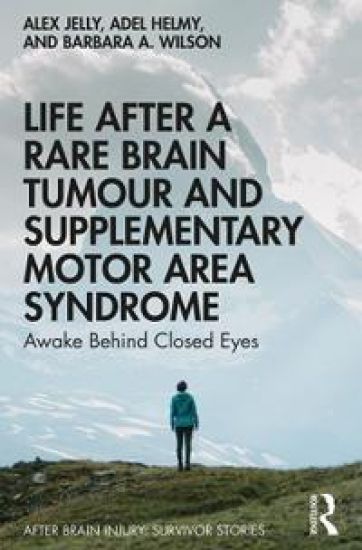
Life After a Rare Brain Tumour and Supplementary Motor Area Syndrome

Life After a Rare Brain Tumour and Supplementary Motor Area Syndrome

Alex Jelly; Adel Helmy; Barbara A. Wilson

Routledge
2019
nidottu
This book offers a personal insight into the experience of Alex Jelly, a professional fundraiser who developed a rare brain tumour, a papillary meningioma, which was successfully removed. She was left with Supplementary Motor Area Syndrome and associated problems including motor and speech impairments and a temporary psychosis. Discussing Alex’s struggles and triumphs throughout her rehabilitation, this book offers an honest account of her journey from diagnosis to recovery.Part I introduces Alex’s early life and employment, symptom onset and diagnosis, treatment and rehabilitation. Part II presents her neurosurgeon, Adel Helmy, and a clinical neuropsychologist, Barbara A. Wilson. Adel provides a medical context by explaining Alex’s successful surgery and her post-operative experience. Finally, Barbara concludes with a comprehensive view of Alex’s recovery and gives a voice to the therapists and psychologists who worked with Alex throughout her in and outpatient rehabilitation journey.This book provides support, understanding and hope for patients who have suffered a brain tumour, and their families. It is valuable reading for any professional involved in neurorehabilitation, studemts of clinical neuropsychology and those touched by brain injury.
Life After a Rare Brain Tumour and Supplementary Motor Area Syndrome

Life After a Rare Brain Tumour and Supplementary Motor Area Syndrome

Alex Jelly; Adel Helmy; Barbara A. Wilson

Routledge
2019
sidottu
This book offers a personal insight into the experience of Alex Jelly, a professional fundraiser who developed a rare brain tumour, a papillary meningioma, which was successfully removed. She was left with Supplementary Motor Area Syndrome and associated problems including motor and speech impairments and a temporary psychosis. Discussing Alex’s struggles and triumphs throughout her rehabilitation, this book offers an honest account of her journey from diagnosis to recovery.Part I introduces Alex’s early life and employment, symptom onset and diagnosis, treatment and rehabilitation. Part II presents her neurosurgeon, Adel Helmy, and a clinical neuropsychologist, Barbara A. Wilson. Adel provides a medical context by explaining Alex’s successful surgery and her post-operative experience. Finally, Barbara concludes with a comprehensive view of Alex’s recovery and gives a voice to the therapists and psychologists who worked with Alex throughout her in and outpatient rehabilitation journey.This book provides support, understanding and hope for patients who have suffered a brain tumour, and their families. It is valuable reading for any professional involved in neurorehabilitation, studemts of clinical neuropsychology and those touched by brain injury.
Creativity Cycling

Creativity Cycling

Barbara A Wilson; Tracy Stanley

Tracy Stanley
2018
pokkari
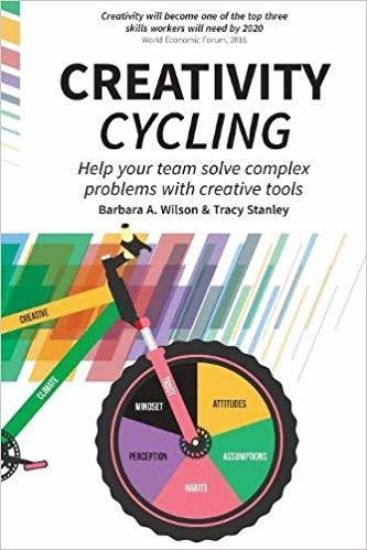
Creativity will be one of the top three skills needed by 2020 according to the World Economic Forum.Creativity Cycling is written for leaders who want to help their team solve complex problems by applying creative thinking skills. In a fast-changing world, new challenges frequently arise and complex problems benefit from creative thinking revealing new perspectives and opportunities.This book provides an overview of the conditions for creativity, both individual and team, and presents a tried and tested creative process for solving complex problems and envisioning the future.It is written for leaders who want to enable their team to work creatively in responding to challenges.Many people have analytical tools they've acquired through formal studies or work experience that they apply when faced with a challenging situation. Indeed, organisations have extensive experience in applying rational and analytical skills such as data mining, correlation analysis, scenario analysis and forecasting, to name a few. These are all valuable and have their place.Organisations sometimes lack knowledge or experience of using other tools and processes such as creative tools. In this book the authors describe our favourite creative exercises and how we've used them for solving complex problems and envisioning the future.
Soliloquy

Soliloquy

Barbara A. Wilson; Barbara Wilson

Independently Published
2018
nidottu
Come along with the author on a voyage of faith. Find within the pages prayers and stories that will fill you with faith and joy. Discover along with the author that God's time isn't our time. There are prayers for every occasion and poems designed to educate and bring you to a firm belief of the hand of God in one woman's life.
In Love with God

In Love with God

Barbara A. Wilson

Independently Published
2018
nidottu
Join in a journey of love Travel a path of love over years of loss, grief, care and turmoil, with faith, hope and charity Share the pains, twists and turns of a person over eighty years with God, our Father, Jesus, His Son, and the Holy Spirit in love. This is a journey, a walk with God through loss, sorrow, and problems of every form. Follow it closely as it weaves a magic over your entire being. It is from the Holy Spirit and there are pinpoints of light for every reader meant for their heart alone May one word, thought or prayer speak to YOUR heart even as the Holy Spirit has spoken through mine.
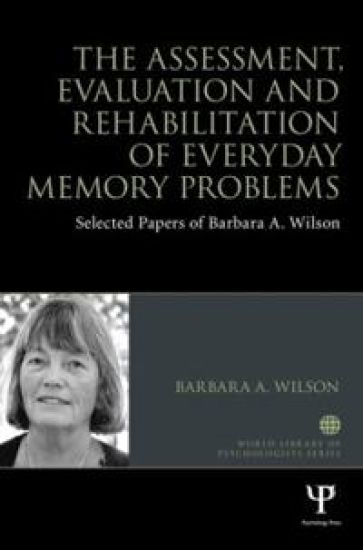
The Assessment, Evaluation and Rehabilitation of Everyday Memory Problems
In the World Library of Psychologists series, international experts present career-long collections of what they judge to be their finest work—extracts from books, key articles, salient research findings and their major theoretical and practical contributions.This volume of self-selected papers recognises Professor Barbara A. Wilson's major contribution to the study of neuropsychology. Published over a 25-year period, the papers included here address the assessment, treatment and evaluation of rehabilitation provided to people who have memory difficulties arising from an injury or illness affecting the brain. This selection of papers includes work on errorless learning, the natural history of the development of compensatory memory systems, paging systems developed to enhance independent daily living for memory impaired people and single-case experimental designs to appraise the response of individual patients. The final section includes a practical framework for understanding compensatory behaviour, a model of cognitive rehabilitation and a discussion of the dilemmas created by the different aims of neuroscience as opposed to those of clinicians.This book will be of great interest to clinical psychologists, neuropsychologists, occupational therapists and speech and language therapists, along with anyone who is interested in reducing the impact of memory problems on people who have suffered brain injury.
Behavioural Approaches in Neuropsychological Rehabilitation

Behavioural Approaches in Neuropsychological Rehabilitation

Barbara A. Wilson; Camilla M. Herbert; Agnes Shiel

Psychology Press Ltd
2016
nidottu
The potential of behavioural approaches for improving the lives of people with acquired brain injury is immense. Here that potential is laid out and explored with a thoroughgoing regard for clinical practice and the theoretical frameworks that underpin that practice. This book will prove an invaluable resource for clinical psychologists and the whole range of therapists working with patients suffering from acquired brain damage.
Surviving Brain Damage After Assault

Surviving Brain Damage After Assault

Barbara A. Wilson; Samira Kashinath Dhamapurkar; Anita Rose

Routledge
2016
sidottu
At the age of twenty eight Gary was assaulted by a gang with baseball bats and a hammer, resulting in several skull fractures and severe brain damage. For nineteen months he had little awareness of his surroundings before he started to show some recovery. This inspirational book documents his exceptional journey.The book presents a series of interviews with Gary, his mother Wendie, who never gave up, the medical team who initially treated him, and the therapists who worked with him over a period of three years. Through their testimony we learn about the devastating effects which can follow a serious assault to the head, and the long process of recovery over several years. With specialist rehabilitation and continuing family support Gary has exceeded expectations and, apart from some minor physical problems, he is now a normal young man.Surviving Brain Damage after Assault shows that, contrary to popular belief, considerable gains can be made by people who have experienced a long period of reduced consciousness. The book will be of great value to all professionals working in rehabilitation - psychologists, speech and language therapists, occupational therapists, social workers and rehabilitation doctors, and to people who have sustained a brain injury and their families.
Surviving Brain Damage After Assault

Surviving Brain Damage After Assault

Barbara A. Wilson; Samira Kashinath Dhamapurkar; Anita Rose

Routledge
2016
nidottu
At the age of twenty eight Gary was assaulted by a gang with baseball bats and a hammer, resulting in several skull fractures and severe brain damage. For nineteen months he had little awareness of his surroundings before he started to show some recovery. This inspirational book documents his exceptional journey.The book presents a series of interviews with Gary, his mother Wendie, who never gave up, the medical team who initially treated him, and the therapists who worked with him over a period of three years. Through their testimony we learn about the devastating effects which can follow a serious assault to the head, and the long process of recovery over several years. With specialist rehabilitation and continuing family support Gary has exceeded expectations and, apart from some minor physical problems, he is now a normal young man.Surviving Brain Damage after Assault shows that, contrary to popular belief, considerable gains can be made by people who have experienced a long period of reduced consciousness. The book will be of great value to all professionals working in rehabilitation - psychologists, speech and language therapists, occupational therapists, social workers and rehabilitation doctors, and to people who have sustained a brain injury and their families.
Identity Unknown

Identity Unknown

Barbara A. Wilson; Claire Robertson; Joe Mole

Psychology Press Ltd
2014
nidottu
Imagine being unable to recognise your spouse, your children, or even yourself when you look in the mirror, despite having good eyesight and being able to read well and name objects. This is a condition which, in rare cases, some brain injury survivors experience every day.Identity Unknown gives an exceptional, poignant and in-depth understanding of what it is like to live with the severe after-effects of brain damage caused by a viral infection of the brain. It tells the story of Claire, a nurse, wife, and mother of four, who having survived encephalitis, was left with an inability to recognise faces – a condition also known as prosopagnosia together with a loss of knowledge of people and more general loss of semantic memory Part One describes our current knowledge of encephalitis, of perception and memory, and the theoretical aspects of prosopagnosia and semantic memory. Part Two, told in Claire’s own words, is an account of her life before her illness, her memories of the early days in hospital, an account of the treatment she received at the Oliver Zangwill Centre, and her description of the long-term consequences of encephalitis. Claire’s profound insights, clear writing style, and powerful portrayal of her feelings provide us with a moving insider’s view of her condition. These chapters also contain additional commentary from Barbara Wilson, providing further detail about the condition, treatment possibilities, potential outcomes, and follow-up options.Identity Unknown provides a unique personal insight into a condition which many of us have, for too long, known too little about. It will be of great interest to a broad audience including professionals working in rehabilitation settings, and all those who have sustained a brain injury, their families and carers.
Identity Unknown

Identity Unknown

Barbara A. Wilson; Claire Robertson; Joe Mole

Psychology Press Ltd
2014
sidottu
Imagine being unable to recognise your spouse, your children, or even yourself when you look in the mirror, despite having good eyesight and being able to read well and name objects. This is a condition which, in rare cases, some brain injury survivors experience every day.Identity Unknown gives an exceptional, poignant and in-depth understanding of what it is like to live with the severe after-effects of brain damage caused by a viral infection of the brain. It tells the story of Claire, a nurse, wife, and mother of four, who having survived encephalitis, was left with an inability to recognise faces – a condition also known as prosopagnosia together with a loss of knowledge of people and more general loss of semantic memory Part One describes our current knowledge of encephalitis, of perception and memory, and the theoretical aspects of prosopagnosia and semantic memory. Part Two, told in Claire’s own words, is an account of her life before her illness, her memories of the early days in hospital, an account of the treatment she received at the Oliver Zangwill Centre, and her description of the long-term consequences of encephalitis. Claire’s profound insights, clear writing style, and powerful portrayal of her feelings provide us with a moving insider’s view of her condition. These chapters also contain additional commentary from Barbara Wilson, providing further detail about the condition, treatment possibilities, potential outcomes, and follow-up options.Identity Unknown provides a unique personal insight into a condition which many of us have, for too long, known too little about. It will be of great interest to a broad audience including professionals working in rehabilitation settings, and all those who have sustained a brain injury, their families and carers.
The Assessment, Evaluation and Rehabilitation of Everyday Memory Problems
In the World Library of Psychologists series, international experts present career-long collections of what they judge to be their finest work—extracts from books, key articles, salient research findings and their major theoretical and practical contributions.This volume of self-selected papers recognises Professor Barbara A. Wilson's major contribution to the study of neuropsychology. Published over a 25-year period, the papers included here address the assessment, treatment and evaluation of rehabilitation provided to people who have memory difficulties arising from an injury or illness affecting the brain. This selection of papers includes work on errorless learning, the natural history of the development of compensatory memory systems, paging systems developed to enhance independent daily living for memory impaired people and single-case experimental designs to appraise the response of individual patients. The final section includes a practical framework for understanding compensatory behaviour, a model of cognitive rehabilitation and a discussion of the dilemmas created by the different aims of neuroscience as opposed to those of clinicians.This book will be of great interest to clinical psychologists, neuropsychologists, occupational therapists and speech and language therapists, along with anyone who is interested in reducing the impact of memory problems on people who have suffered brain injury.