Kirjailija
Barbara Cassin
Kirjat ja teokset yhdessä paikassa: 17 kirjaa, julkaisuja vuosilta 1995-2024, suosituimpien joukossa Jacques the Sophist. Vertaile teosten hintoja ja tarkista saatavuus suomalaisista kirjakaupoista.
17 kirjaa
Kirjojen julkaisuhaarukka 1995-2024.
Sophistry, since Plato and Aristotle, has been philosophy's negative alter ego, its bad other. Yet sophistry's emphasis on words and performativity over the fetishization of truth makes it an essential part of our world's cultural, political, and philosophical repertoire. In this dazzling book, Barbara Cassin, who has done more than anyone to reclaim a mode of thought that traditional philosophy disavows, shows how the sophistical tradition has survived in the work of psychoanalysis. In a highly original rereading of the writings and seminars of Jacques Lacan, together with works of Freud and others, Cassin shows how psychoanalysis, like the sophists, challenges the very foundations of scientific rationality. In taking seriously equivocations, jokes, and unfinishable projects of interpretation, the analyst, like the sophist, allows performance, signifier, and inconsistency to reshape truth. This witty, brilliant tour de force celebrates how psychoanalysts have become our culture's key dissidents and register, in Lacan's words, "the presence of the sophist in our time."
Der Platoniker und die Sophistin
Alain Badiou; Barbara Cassin
Passagen Verlag Ges.M.B.H
2024
pokkari
Sophistry, since Plato and Aristotle, has been philosophy's negative alter ego, its bad other. Yet sophistry's emphasis on words and performativity over the fetishization of truth makes it an essential part of our world's cultural, political, and philosophical repertoire. In this dazzling book, Barbara Cassin, who has done more than anyone to reclaim a mode of thought that traditional philosophy disavows, shows how the sophistical tradition has survived in the work of psychoanalysis. In a highly original rereading of the writings and seminars of Jacques Lacan, together with works of Freud and others, Cassin shows how psychoanalysis, like the sophists, challenges the very foundations of scientific rationality. In taking seriously equivocations, jokes, and unfinishable projects of interpretation, the analyst, like the sophist, allows performance, signifier, and inconsistency to reshape truth. This witty, brilliant tour de force celebrates how psychoanalysts have become our culture's key dissidents and register, in Lacan's words, "the presence of the sophist in our time."

"Google is a champion of cultural democracy, but without culture and without democracy." In this witty and polemical critique the philosopher Barbara Cassin takes aim at Google and our culture of big data. Enlisting her formidable knowledge of the rhetorical tradition, Cassin demolishes the Google myth of a "good" tech company and its "democracy of clicks," laying bare the philosophical poverty and political naiveté that underwrites its founding slogans: "Organize the world's information," and "Don't be evil." For Cassin, this conjunction of globalizing knowledge and moral imperative is frighteningly similar to the way American demagogues justify their own universalizing mission before the world. While sensitive to the possibilities of technology and to Google's playful appeal, Cassin shows what is lost when a narrow worship of information becomes dogma, such that research comes to mean data mining and other languages become provincial "flavors" folded into an impoverished Globish, or global English.
There’s No Such Thing as a Sexual Relationship
Alain Badiou; Barbara Cassin
Columbia University Press
2017
sidottu
Published in 1973, "L'Etourdit" was one of the French philosopher Jacques Lacan's most important works. The book posed questions that traversed the entire body of Lacan's psychoanalytical explorations, including his famous idea that "there is no such thing as a sexual relationship," which seeks to undermine our certainties about intimacy and reality. In There's No Such Thing as a Sexual Relationship, Alain Badiou and Barbara Cassin take possession of Lacan's short text, thinking "with" Lacan about his propositions and what kinds of questions they raise in relation to knowledge. Cassin considers the relationship of the real to language through a Sophist lens, while the Platonist Badiou unpacks philosophical claims about truth. Each of their contributions echoes back to one another, offering new ways of thinking about Lacan, his seminal ideas, and his role in advancing philosophical thought.
There’s No Such Thing as a Sexual Relationship
Alain Badiou; Barbara Cassin
Columbia University Press
2017
pokkari
Published in 1973, "L'Etourdit" was one of the French philosopher Jacques Lacan's most important works. The book posed questions that traversed the entire body of Lacan's psychoanalytical explorations, including his famous idea that "there is no such thing as a sexual relationship," which seeks to undermine our certainties about intimacy and reality. In There's No Such Thing as a Sexual Relationship, Alain Badiou and Barbara Cassin take possession of Lacan's short text, thinking "with" Lacan about his propositions and what kinds of questions they raise in relation to knowledge. Cassin considers the relationship of the real to language through a Sophist lens, while the Platonist Badiou unpacks philosophical claims about truth. Each of their contributions echoes back to one another, offering new ways of thinking about Lacan, his seminal ideas, and his role in advancing philosophical thought.
Martin Heidegger was an ordinary Nazi and a loyal member of the provincial petty bourgeoisie. He was also a seminal thinker of the Continental tradition and one of the twentieth century's most important philosophers. How are we to make sense of this dual life? Should we factor Heidegger's domestic and political associations into our understanding of his thought, or should we treat his intellectual work independently of his abhorrent politics? How does any thinker reconcile the mundane with the ideal or the pursuit of philosophical inquiry with the demands of civic engagement? In Heidegger, Alain Badiou and Barbara Cassin immerse themselves in the philosopher's correspondence with his wife Elfride to answer these questions as they relate to Heidegger and all thinkers vulnerable to the politics of their times. They focus on Heidegger's tormented relationship with his wife, with Hannah Arendt, and with numerous other women, bringing an unusual level of intimacy to his personal and intellectual worlds.
Winner, French Voices Grand Prize Nostalgia makes claims on us both as individuals and as members of a political community. In this short book, Barbara Cassin provides an eloquent and sophisticated treatment of exile and of desire for a homeland, while showing how it has been possible for many to reimagine home in terms of language rather than territory. Moving from Homer's and Virgil's foundational accounts of nostalgia to the exilic writings of Hannah Arendt, Cassin revisits the dangerous implications of nostalgia for land and homeland, thinking them anew through questions of exile and language. Ultimately, Cassin shows how contemporary philosophy opens up the political stakes of rootedness and uprootedness, belonging and foreignness, helping us to reimagine our relations to others in a global and plurilingual world.
Sophistics is the paradigm of a discourse that does things with words. It is not pure rhetoric, as Plato wants us to believe, but it provides an alternative to the philosophical mainstream. A sophistic history of philosophy questions the orthodox philosophical history of philosophy: that of ontology and truth in itself. In this book, we discover unusual Presocratics, wreaking havoc with the fetish of true and false. Their logoi perform politics and perform reality. Their sophistic practice can shed crucial light on contemporary events, such as the Truth and Reconciliation Commission in South Africa, where, to quote Desmond Tutu, "words, language, and rhetoric do things," creating things like the new "rainbow people." Transitional justice requires a consistent and sustainable relativism: not Truth, but truth for, and enough of the truth for there to be a community. Philosophy itself is about words before it is about concepts. Language manifests itself in reality only as multiplicity; different languages perform different types of worlds; and difficulties of translation are but symptoms of these differences. This desacralized untranslatability undermines and deconstructs the Heideggerian statement that there is a historical language of philosophy that is Greek by essence (being the only language able to say what "is") and today is German. Sophistical Practice constitutes a major contribution to the debate among philosophical pluralism, unitarism, and pragmatism. It will change how we discuss such words as city, truth, and politics. Philologically and philosophically rethinking the sophistical gesture, relying on performance and translation, it proposes a new paradigm for the human sciences.
Sophistics is the paradigm of a discourse that does things with words. It is not pure rhetoric, as Plato wants us to believe, but it provides an alternative to the philosophical mainstream. A sophistic history of philosophy questions the orthodox philosophical history of philosophy: that of ontology and truth in itself. In this book, we discover unusual Presocratics, wreaking havoc with the fetish of true and false. Their logoi perform politics and perform reality. Their sophistic practice can shed crucial light on contemporary events, such as the Truth and Reconciliation Commission in South Africa, where, to quote Desmond Tutu, “words, language, and rhetoric do things,” creating things like the new “rainbow people.” Transitional justice requires a consistent and sustainable relativism: not Truth, but truth for, and enough of the truth for there to be a community. Philosophy itself is about words before it is about concepts. Language manifests itself in reality only as multiplicity; different languages perform different types of worlds; and difficulties of translation are but symptoms of these differences. This desacralized untranslatability undermines and deconstructs the Heideggerian statement that there is a historical language of philosophy that is Greek by essence (being the only language able to say what “is”) and today is German. Sophistical Practice constitutes a major contribution to the debate among philosophical pluralism, unitarism, and pragmatism. It will change how we discuss such words as city, truth, and politics. Philologically and philosophically rethinking the sophistical gesture, relying on performance and translation, it proposes a new paradigm for the human sciences.
L'Animal Dans l'Antiquite
Barbara Cassin; Jean-Louis Labarriere; Gilbert Romeyer Dherbey
Librarie Philosophique J. Vrin
1997
nidottu
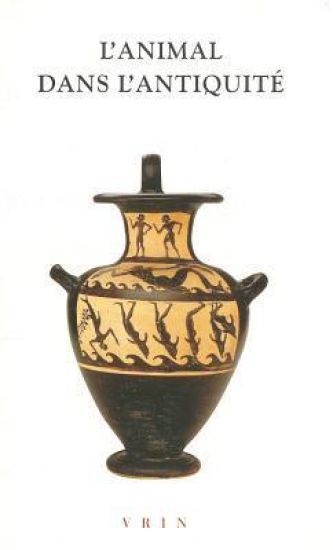
L'un a les flancs bleutes, l'autre la poitrine gluante; une nageoire pousse ici sur un dos, surgit la une queue; tantot la tete manque, tantot le reste; la main de celui-ci ondule, et celui-la reclame en hurlant ses pieds qui s'evanouissent. Introduisant a la polymorphie de l'animal, le frontispice, ainsi commente par Philostrate, est deploye a travers ce receuil qui explore la difference entre homme, animal et plante. De la medecine a la religion, en passant par les modeles et contre-modeles politiques, les metaphores et les fables, l'imagerie et la logique, textes et images y sont analyses. Car l'animal (dit-on meme animal en grec?) est l'un des lieux de polemique majeurs pour determiner les ruptures au sein de l'Antiquite greco-latine et mieux fixer les coupures entre Antiquite et Modernite.
Here's the best single-source guide to the basic science and clinical skills needed by ophthalmic medical personnel! Designed for both on-the-job and classroom training, this multi-faceted, new text is packed with all of the information needed to build afoundation in basic ophthalmic sciences, neuroanatomy, and optics. Plus, step-by-step guidelines give readers hands-on exposure to the full range of skills needed in practice - from the basics, such as history taking and visual assessment, to the most advanced such as ophthalmic photography and surgical assisting. Concise coverage of pathology helps readers recognize and understand the eye disorders and eye diseases they face in practice.In-depth discussions and a full range of practical examples make concepts easy to grasp Learning objectives help readers to understand and master the basic skills, while easy-to-follow guidelines and over 750 illustrations - 42 in full color - make the full range of technical skills immediately practice applicableA full color Pathology Insert provides the visual guidelines necessary for accurate assessment of the eye disorders and diseases readers encounter in practice Appendix A - a Mathematics Reference - and the exercises and practice problems in Appendix B promote a full understanding and proficiency in the ophthalmic calculations needed in practice