Kirjojen hintavertailu. Mukana 12 657 676 kirjaa ja 12 kauppaa.
Kirjailija
Barbara Czarniawska
Kirjat ja teokset yhdessä paikassa: 28 kirjaa, julkaisuja vuosilta 1997-2025, suosituimpien joukossa Kvalitative metoder. Vertaile teosten hintoja ja tarkista saatavuus suomalaisista kirjakaupoista.
Svend Brinkmann; Charlotte Andreas Baarts; Barbara Czarniawska; Peter Dahler-Larsen; Norman Denzin; Bent Flyvbjerg; Morten Frederiksen; Judy Gammelgaard; Bente Halkier; Martyn Hammersley; Kirsten Hastrup; Bo Jacobsen; Casper Bruun Jensen; Frederikke Skaaning Knage; Søren Kristiansen; Unni Lind; Kennet Lynggaard; Perle Møhl; Anne-Kirstine Mølholt; Henrik Kaare Nielsen; Kristian Nødvedt Knudsen; Louise Jane Phillips; Pernille Rasmussen; Jakob Steensig; Thomas Szulevicz; Dorte Marie Søndergaard; Lene Tanggaard Pedersen
KVALITATIVE METODER belyser, hvordan mennesker oplever og beretter om verden, hvordan de agerer, og hvordan menneskelige fænomener fremtræder og udvikler sig i komplekse sammenhænge. I denne 4. udgave er samtlige kapitler reviderede og opdaterede, og indeholder bl.a. nye kapitler om digital etnografi, kvalitative forløbsstudier, forandringsorienteret forskning, sensoriske metoder, Arts-Based Research og feministisk inspireret metodologi, og er velegnet for både studerende og erfarne kvalitative forskere. Bogens 29 kapitler giver en indføring i de kvalitative metoders teori, men lægger først og fremmest vægt på konkret at beskrive den håndværksmæssige kunnen, som præger indsigtsgivende kvalitative studier. Bogen tilbyder et overblik over typiske, kvalitative metoder, og hvordan disse anvendes i dansk og international kontekst. Kvalitative metoder har været i hastig vækst i human- og samfundsvidenskaberne i de seneste ca. 25 år, og forskere har på tværs af faggrænser udviklet et væld af forskellige teknikker, tilgange og perspektiver. De beskrevne metoder er på forskellig vis egnede til at beskrive, forstå, fortolke og analysere den menneskelige erfarings mange nuancer og kvaliteter, hvilket gør denne bog til et centralt værktøj og supplement for mange forskellige fag og uddannelsesniveauer. Svend Brinkmann er professor i psykologi ved Aalborg Universitet. Lene Tanggaard er professor i pædagogisk psykologi ved Aalborg Universitet.
This book offers a unique perspective on Sweden’s COVID-19 response in its publicly funded welfare sector, which was initially highly criticised but later recognised as exemplary on the global stage in the aftermath of the pandemic. Using diaries, stories and interviews from 73 workers across 30 professions, it reveals the everyday experiences of those maintaining welfare services, both on the front lines and behind the scenes. Covering 2020 to 2022, it spans major cities and smaller municipalities across Gothenburg, Uppsala and Stockholm and introduces 'pandemicracy,' a concept exploring pandemic-era governance and organisation of the public sector. This insightful analysis sparks a wider discussion on adapting to unforeseen challenges in public welfare.
I samband med de stora flyktingströmmarna under 2015 och 2016 startades forskningsprogrammet Organizing Integration på Gothenburg Research Institute vid Göteborgs universitet. Det var ett av de forskningsprogram där professor Barbara Czarniawska var synnerligen aktiv. Hon ansåg att det fanns all anledning att försöka förstå vad en så pass omfattande flyktingsituation betydde och betyder, och visste att skönlitteratur är en viktig källa i våra försök att förstå vardagen. I den här boken analyserar Barbara Czarniawska trettiotvå romaner som belyser immigrationsproblematiken i Sverige under perioden 1945 till 2015. Boken avslutas med en diskussion om begreppen assimilering, integration, mångfald och hybridisering.
While the careers of secret agents have inspired many genres of popular culture, relatively little research has been carried out until now on spying as a profession. Through the lens of personnel management, the authors offer a unique and compelling analysis of secret service employee biographies and autobiographies, giving the reader an improved understanding of people management in all organisations.Personnel Management in Secret Service Organizations pinpoints key events in an agent’s career, focusing on how they enter their profession, how they perform espionage work; how they are trained and managed and what the circumstances of promotion and demotion might be, up to the point of exit from the profession (through retirement, capture, or death). Within this framework, it illustrates the ways that secret service organizations play a crucial role in contemporary societies.Drawing comparisons with personnel management in standard organizations, Personnel Management in Secret Service Organizations will be a valuable resource for researchers and students of management and organization. The use of narratology-inspired methods will appeal to younger scholars with an interest in organizational studies too.
Den 5 maj 2023 deklarerade WHO att covid-19-pandemin äntligen var över. Under den drygt tre år långa pandemin smittade viruset 765 miljoner människor världen över, varav nästan 7 miljoner dog. Världens länder och deras sjukvårdssystem fick under denna svåra period göra sitt yttersta för att minimera antal smittade och avlidna. Men att skydda människor från viruset handlade inte bara om de rent medicinska och folkhälsoaspekterna. Det krävdes stora insatser från hela samhället för att det skulle kunna fortsätta att fungera inom områden som bland annat skola och utbildning, barn- och äldreomsorg, sociala tjänster, försvar, forskning och kultur. Men hur gick detta till?Baserat på dagböcker, observationer och intervjuer med människor som representerar ett trettiotal olika välfärdsyrken och professioner i Sverige tecknar författarna en bild av det dagliga välfärdsarbetet i tider av kris. Detta i ett land som ur ett internationellt perspektiv utmärkte sig som ett undantag i hanteringen av pandemin. Boken innehåller även en analys av pandemikrati: hur samhället organiseras under extraordinära omständigheter. Vilka lösningar finns det på pandemirelaterade utmaningar och kunde pandemin visa oss mer effektiva sätt att organisera den offentliga sektorn?
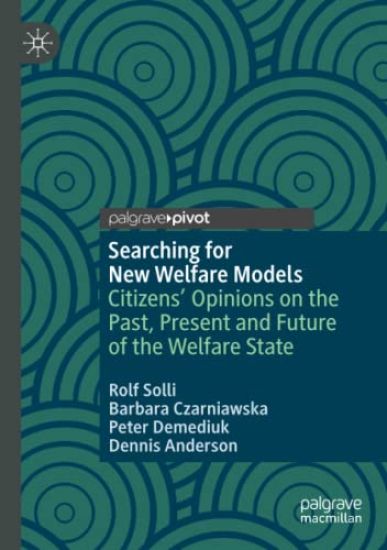
This book explores the ways in which different generations think about how the welfare state is organised at present, and how it will be organised in future. Using the results of a study from Canada, Australia and Sweden, the book’s findings complement more traditional studies of the welfare sector, capturing the anxieties of citizens about the present and future of their countries’ welfare models, and presenting their thoughts on how the system can be re-organised in future. Positioning their three-country study within the history of the welfare state around the world, the authors seek to re-assess the role of the welfare state in governments around the world. Their findings will be of interest to those studying welfare policy as well as innovations such as basic income, e-health and policy responses to automisation.
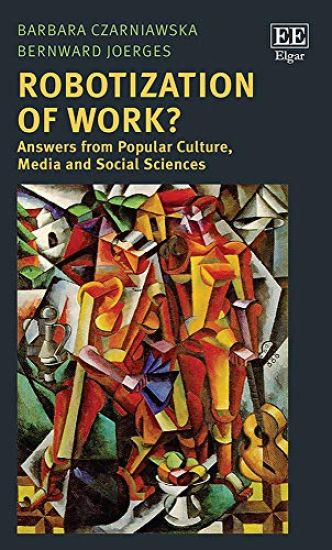
In this timely book, Barbara Czarniawska and Bernward Joerges examine the hopes and fears around work and job security inspired by automation, from the original coining of the term 'robot' to the present day media fascination. Have these hopes and fears changed or do they remain the same? This discerning book investigates whether these changes in perception correlate to actual changes taking place in the field of robotics. Exploring several streams of popular culture, including ground-breaking science fiction novels and films, the impact of these globally renowned works on public opinion regarding robotics is assessed. Detailed media analysis identifies the frequency and complexity of common views that stem from the ideas found in both fiction and scientific research results disseminated by the news. Recent social science works dedicated to the study of robotziation are then reviewed, illustrating current and future debates surrounding the phenomenon of the 'robot revolution'. Robotization of Work? will be a key resource for students and scholars studying the organization of work, IT and digitalization, and cultural studies. It will also be of interest to anyone engaged with the concepts of artificial intelligence (AI) and robotization.
This book explores the ways in which different generations think about how the welfare state is organised at present, and how it will be organised in future. Using the results of a study from Canada, Australia and Sweden, the book’s findings complement more traditional studies of the welfare sector, capturing the anxieties of citizens about the present and future of their countries’ welfare models, and presenting their thoughts on how the system can be re-organised in future. Positioning their three-country study within the history of the welfare state around the world, the authors seek to re-assess the role of the welfare state in governments around the world. Their findings will be of interest to those studying welfare policy as well as innovations such as basic income, e-health and policy responses to automisation.
In this timely book, Barbara Czarniawska and Bernward Joerges examine the hopes and fears around work and job security inspired by automation, from the original coining of the term 'robot' to the present day media fascination. Have these hopes and fears changed or do they remain the same? This discerning book investigates whether these changes in perception correlate to actual changes taking place in the field of robotics. Exploring several streams of popular culture, including ground-breaking science fiction novels and films, the impact of these globally renowned works on public opinion regarding robotics is assessed. Detailed media analysis identifies the frequency and complexity of common views that stem from the ideas found in both fiction and scientific research results disseminated by the news. Recent social science works dedicated to the study of robotziation are then reviewed, illustrating current and future debates surrounding the phenomenon of the 'robot revolution'. Robotization of Work? will be a key resource for students and scholars studying the organization of work, IT and digitalization, and cultural studies. It will also be of interest to anyone engaged with the concepts of artificial intelligence (AI) and robotization.
Gudbjörg Erlingsdóttir; Helena Sandberg; Martin Berg; Barbara Czarniawska; Mats Johansson; Ericka Johnson; Karin Jonnergård; Titti Mattsson; Åsa Mäkitalo; Lena Petersson
Införandet av e-hälsotjänster beskrivs som ett paradigmskifte som ska öka patienters delaktighet, valfrihet och makt samt ge ökad transparens i vården. Budskapet är att framtida vårdbehov ska tillgodoses utan ökade resurser och att e-hälsa är en del av lösningen. I boken På tal om e-hälsa görs en nödvändig nyansering av denna bild genom ett brett och flervetenskapligt angreppssätt där tio författare från sex olika lärosäten ger sina perspektiv på e-hälsa.E-hälsa är inte bara teknik. Syftet med boken är att öka förståelsen av e-hälsa som ett samtida samhällsfenomen. Här diskuteras bland annat frågor som: Hur kan e-hälsa begripliggöras, kritiskt analyseras, kontextualiseras och appliceras? Vad säger den om oss och vår samtid? Vilka är de juridiska och etiska implikationerna? Hur kan vi förstå e-hälsa som övervakningsteknologi, som medieinnehåll och som konsumenttrend? Den mångfacetterade bild som boken ger bidrar till en ökad förståelse av digitaliseringen av hälsa bland studenter, forskare, praktiker och beslutsfattare.
Organisationsteorin har kraftigt förändrats under senaste decennierna. Fokus har skiftat från strukturer till processer, från organisationer till organisering. Det har blivit uppenbart att strukturer är optiska synvillor, stillbilder av processer, och att formella organisationer är ett resultat av organisering, snarare än dess premiss.Det konstruktivistiska perspektivet som råder inom samhällsvetenskapen har hjälpt organisationsforskare inse att allt flyter; förändring, inte stabilitet, är normen. Den globala ekonomin och dess bundsförvant, IT, har tvingat dem upptäcka att organisering sker tvärs över nations- och koncerngränserna, att översättning av globala idéer till lokal praxis hör till den organisatoriska vardagen, och att cyborger och robotar kan handla på penningmarknader.I den här boken bjuder Barbara Czarniawska på sin egen variant av en organisationsteori anpassad till vår tid.
This new edition of A Theory of Organizing continues to promote a processual view of organizing, and presents a theory developed by combining multiple field studies with recent theoretical insights. The author defends the constructionist perspective from idealist interpretations, demonstrating how people and machines collaborate in constructing action nets, which eventually produce both the global economy and its local translations. Helped by information technologies, global ideas travel across the world - in physical space and in cyberspace, over national, sectorial and organizational borders, within and outside organizations - and are then translated into local practices.Provocative in its questioning of established truths in the field of organizational studies, this book will continue to challenge and stimulate organizational theoreticians and organizational practitioners. It will also prove lively reading for academics from a range of backgrounds, including management studies, business administration, sociology, ethnology, and political sciences.
Den form av forskning som förordas i boken bygger på antagandet att metoder och tekniker måste anpassas till forskningsproblemet – och till forskarens personlighet. Det finns en rad olika metodologiska ansatser och tekniker att välja bland. Så här låter författarinnas råd till en förbryllad ung forskare: Sök förstå vad som är möjligt och välj sedan det som lämpar sig bäst för dig och ditt problem. Det finns så många metodböcker inom samhällsvetenskapen att en resehandbok behövs för att orientera sig i dem. Denna bok skall uppfylla just en sådan funktion. Den sträcker sig över hela forskningsprocessen – från valet av ämne till det som ska göras efter att studien är färdigskriven. Den presenterar åsikter och upplysningar som kommer från författarinnas långa erfarenhet av fältstudier, men innehåller även lästips över andra ansatser och fördjupningslitteratur.
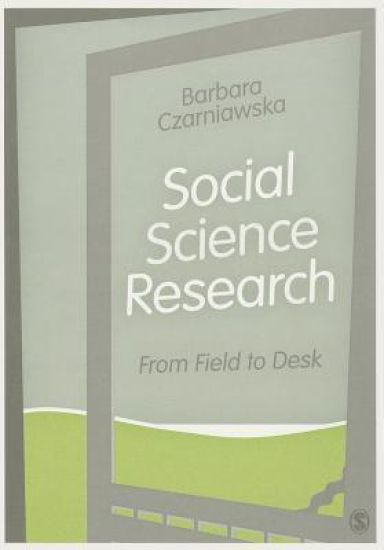
This clear, straightforward textbook embraces the practical reality of actually doing fieldwork. It tackles the common problems faced by new researchers head on, offering sensible advice and instructive case studies from the author’s own experience. Barbara Czarniawska takes us on a master class through the research process, encouraging us to revisit the various facets of the fieldwork research and helping us to reframe our own experiences. Combining a conversational style of writing with an impressive range of empirical examples she takes the reader from planning and designing research to collecting and analyzing data all the way to writing up and disseminating findings. This is a sophisticated introduction to a broad range of research methods and methodologies; it will be of great interest to anyone keen to revisit social research in the company of an expert guide.
Have you ever wondered how organizations decide which news is important? This insightful book portrays in detail everyday work in three news agencies: Swedish TT, Italian ANSA and the worldwide Reuters. This unique study is about organizing rather than journalism, revealing two accelerating phenomena: cybernization (machines play a more and more central role in news production) and cyborgization (people rely more and more on machines). Barbara Czarniawska reveals that technological developments lead to many unexpected consequences and complications. Cyberfactories will prove essential to researchers interested in contemporary forms of organizing, studies of technology, and media. It will also appeal to a lay reader interested in how news is produced.
Narratives in Social Science Research introduces students to the use of narrative methodology as a research tool. It offers a rigorous framework for the application of these devices within qualitative research. The book provides: An historical overview of the development of the narrative approach within the social sciencesA guide to how narrative methods can be applied in fieldworkAn explanation of how to incorporate a narrative approach within a research projectGuidelines for interpreting collected or produced narrativesA student-focused approach - key arguments and methods are illustrated by case-studies and lists of further reading. Written in an accessible and engaging manner, this detailed text will be a useful resource for researchers and students taking courses in qualitative research across a variety of social disciplines.