Kirjojen hintavertailu. Mukana 12 390 323 kirjaa ja 12 kauppaa.

Kirjailija

Barbara Earl Thomas

Kirjat ja teokset yhdessä paikassa: 4 kirjaa, julkaisuja vuosilta 1998-2021, suosituimpien joukossa Barbara Earl Thomas. Vertaile teosten hintoja ja tarkista saatavuus suomalaisista kirjakaupoista.

4 kirjaa

Kirjojen julkaisuhaarukka 1998-2021.

Barbara Earl Thomas

Barbara Earl Thomas

Catharina Manchanda; Halima Taha; Barbara Earl Thomas

Seattle Art Museum
2021
pokkari
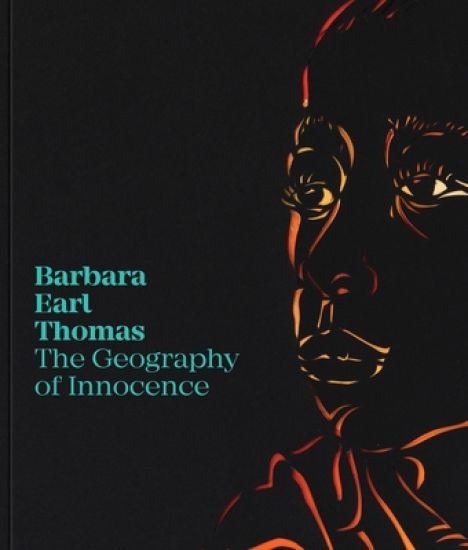
A revered Seattle-based artist calls for hope, faith, and truthBarbara Earl Thomas's new body of work carries within it the sediments of history and grapples with race and the color line. At the heart of it lies a story of life and death, hope and resilience—a child's survival. With her quietly glowing portraits of young Black boys and girls, Thomas puts before us the humble question: can we see, and be present to, the humanity, the trust, the hopes and dreams of each of these children?The Geography of Innocence offers a reexamination of Black portraiture and the preconceived dichotomies of innocence and guilt and sin and redemption, and the ways in which these notions are assigned and distorted along cultural and racial lines. Two interconnected visual arguments unfold: a portrait gallery of children from the artist's extended community and an illuminated environment that appears like a delicate paper lantern. To accompany the visual elements, the book's essays examine Thomas's work in the context of different art historical portraiture traditions and political relevance. Thomas also contributes an interview and an essay reflecting on the current climate in which the work exists.
Joe Feddersen

Joe Feddersen

Rebecca J. Dobkins; Barbara Earl Thomas; Gail Tremblay

University of Washington Press
2008
pokkari
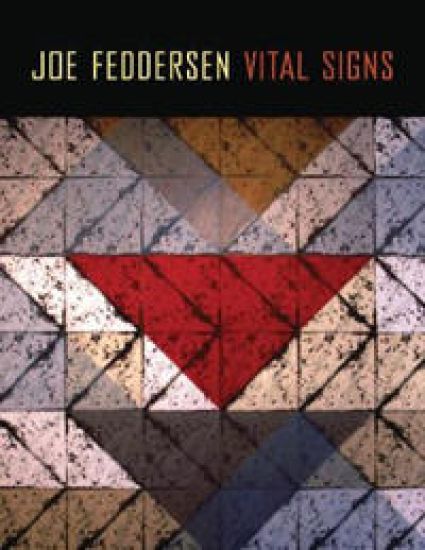
Vital signs, the pulses and patterns of the body, are indicators of essential life functions. The powerful work of Joe Feddersen reveals, like vital signs themselves, the state of the human condition from the vantage point of a contemporary artist who has inherited an ancient aesthetic tradition.Arising from Plateau Indian iconographic interpretations of the human-environment relationship, Feddersen's prints, weavings, and glass sculptures explore the interrelationships between contemporary urban place markers and indigenous design. Following in the footsteps of his Plateau Indian ancestors who "spoke to the land in the patterns of the baskets," Feddersen interprets the urbanscapes and the landscapes surrounding him and transforms those rhythms into art forms that are both coolly modern and warmly expressionistic.Joe Feddersen was born in 1953, in Omak, Washington, just off the Colville Indian Reservation. His mother was Okanogan and Lakes from Penticton, Canada; his father was the son of German immigrants. He has been a member of the art faculty at Evergreen State College in Olympia, Washington, since 1989.Rebecca J. Dobkins is a curator at the Hallie Ford Museum of Art and associate professor of anthropology at Willamette University, Salem, Oregon. Barbara Earl Thomas is a painter and writer living in Seattle. Gail Tremblay is a member of the faculty of the Evergreen State College, Olympia, Washington.
Never Late for Heaven

Never Late for Heaven

Sheryl Conkelton; Barbara Earl Thomas; Janeanne A. Upp

University of Washington Press
2003
sidottu
Never Late for Heaven chronicles an odyssey in American art and social events beginning with the often-romanticized Harlem Renaissance and traveling through the Great Depression and beyond. Gwen Knight's story reveals the life and the passion for painting of a young woman who was surrounded and supported by her community.Her formal education cut short by the Depression, Knight left Howard University and returned to Harlem, where her real art education began. For several years she participated in WPA apprenticeships and workshops, guided by her own independent mind and spirit. She and her fellow painters, including Jacob Lawrence (whom she later married), immersed themselves in a world that was creating its own narrative in history, literature, music, and theater. As New York was a mecca for artists of all stripes, Harlem was a singular world within that mecca. Knight recalls that everything was alive; that she lived so rigorously in the present that there was no thought about the future. Knight and Lawrence moved to Seattle in 1971, when Jacob accepted a teaching post in the art school at the University of Washington.Knight's paintings, spanning more than sixty years in New York and Seattle, demonstrate one artist's determination to make art. There was no career path or external motivation to drive her, only a belief that making art was a way of life. The skillful, intellectual, and emotionally sensitive works in this book pull the viewer into a world that is both controlled and fluid. Never Late for Heaven shows a painter whose long life and good fortune have delivered her to us, with her art work, right on time.Never Late for Heaven accompanied a 2003 exhibit at the Tacoma Art Museum featuring paintings from the Francine Seders Gallery in Seattle.
Storm Watch

Storm Watch

Barbara Earl Thomas; Jacob Lawrence

University of Washington Press
1998
pokkari
As a painter and writer of prodigious talent and remarkable visionary sensibility, Barbara Earl Thomas continues to spark increasing attention both regionally and nationally. The granddaughter of southern sharecroppers who migrated to Seattle in the middle 1940s, Thomas expresses in her art a dual heritage, translating her own vision of southern roots and culture into a Northwestern landscape.Storm Watch is a radiant book, offering a richly satisfying combination of luminous images and the written word. Generously illustrated, it includes a color sequence of more than twenty powerful paintings, representing two decades of Thomas's career. In her paintings, Thomas incorporates themes of people and their rituals with the land, weaving images around the metaphor of place as both a geographical and spiritual location. Her writing, too, pulses with life. Her essay, "Passing Secrets," not only offers a perceptive sketch of the attitudes of black immigrants to the Northwest but also provides a personal insight into her technical and philosophical approach. Because her use of imagery is highly symbolic, Storm Watch has an appeal that crosses the boundaries of artistic media—of painting and writing—and transcends regional locale.Vicki Halper's masterful introduction chronicles Barbara Thomas's life and education and traces the impact of those experiences in the development of her art. Halper quotes extensively from Thomas's discussions about herself and her work, and draws useful comparisons between her art and that of selected painters, in particular, Americans Jacob Lawrence and Guy Anderson, and British artist William Blake. Most of all, she sheds light on the magic realism that infuses the stories Thomas tells with her paintings.