Kirjojen hintavertailu. Mukana 12 595 353 kirjaa ja 12 kauppaa.

Kirjailija

Barbara Foley

Kirjat ja teokset yhdessä paikassa: 27 kirjaa, julkaisuja vuosilta 1899-2020, suosituimpien joukossa Spectres of 1919. Vertaile teosten hintoja ja tarkista saatavuus suomalaisista kirjakaupoista.

27 kirjaa

Kirjojen julkaisuhaarukka 1899-2020.

The Bride, the Blueprint, and the Bumps in the Road

The Bride, the Blueprint, and the Bumps in the Road

Barbara Foley

Trilogy Christian Publishing
2020
pokkari
"Does God have a Plan for me?" "What am I supposed to be doing?" "Am I on the Narrow Path that Jesus said few find?" During Jesus' earthly ministry He prophetically laid out how we grow from spiritual infancy to full maturity. It's been hidden in the scriptures until now. His interactions with the women in the New Testament serve as metaphors of His Church (the Bride of Christ). By linking these encounters properly, the mystery of the Bride of Christ is unveiled, and a blueprint that each of us will walk in forming our own unique weave into the tapestry of His beloved is revealed By attaching yourself to the characters on the timeline of the blueprint, many questions will be answered. You will perceive where you've been, where you are now, and what to expect next. God is raising up a living body of people who are being made fit to rule and reign with Him, and, for this reason, He needs certain things worked into our character, and other things worked out You will come to understand what happens at each stage of growth and the responses that will determine the degree of your maturity in Christ.
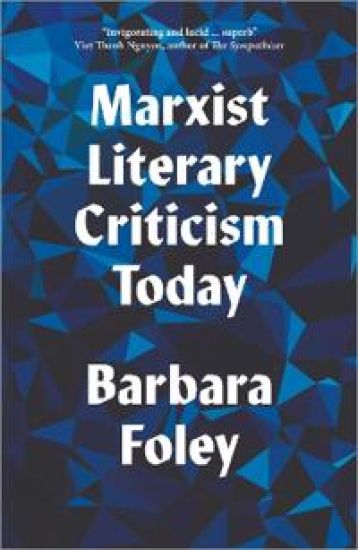
Marxist Literary Criticism Today

Marxist Literary Criticism Today

Barbara Foley

Pluto Press
2019
sidottu
*Winner of the CHOICE Outstanding Academic Book Prize, 2019* *Shortlisted for the Isaac Deutscher Prize 2019* Why Marxism? Why today? In the first introduction to Marxist literary criticism to be published in decades, Barbara Foley argues that Marxism continues to offer the best framework for exploring the relationship between literature and society. She lays out in clear terms the principal aspects of Marxist methodology - historical materialism, political economy and ideology critique - as well as key debates, among Marxists and non-Marxists alike, about the nature of literature and the goals of literary criticism and pedagogy. Foley examines through the empowering lens of Marxism a wide range of texts: from Jane Austen's Pride and Prejudice to E. L. James's Fifty Shades of Grey; from Frederick Douglass's 'What to the Slave Is the Fourth of July?' to Annie Proulx's 'Brokeback Mountain'; from W.B. Yeats's 'The Second Coming' to Claude McKay's 'If We Must Die'.
Marxist Literary Criticism Today

Marxist Literary Criticism Today

Barbara Foley

Pluto Press
2019
pokkari
*Winner of the CHOICE Outstanding Academic Book Prize, 2019* *Shortlisted for the Isaac Deutscher Prize 2019* Why Marxism? Why today? In the first introduction to Marxist literary criticism to be published in decades, Barbara Foley argues that Marxism continues to offer the best framework for exploring the relationship between literature and society. She lays out in clear terms the principal aspects of Marxist methodology - historical materialism, political economy and ideology critique - as well as key debates, among Marxists and non-Marxists alike, about the nature of literature and the goals of literary criticism and pedagogy. Foley examines through the empowering lens of Marxism a wide range of texts: from Jane Austen's Pride and Prejudice to E. L. James's Fifty Shades of Grey; from Frederick Douglass's 'What to the Slave Is the Fourth of July?' to Annie Proulx's 'Brokeback Mountain'; from W.B. Yeats's 'The Second Coming' to Claude McKay's 'If We Must Die'.
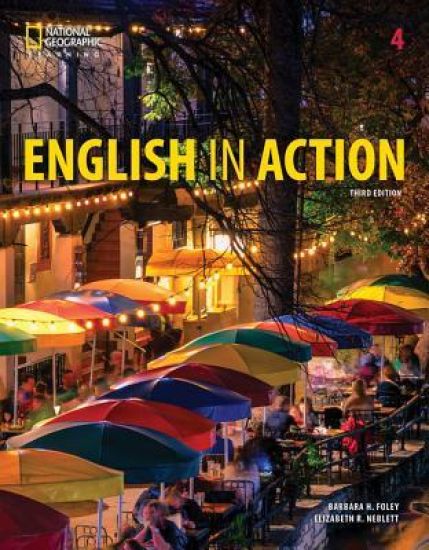
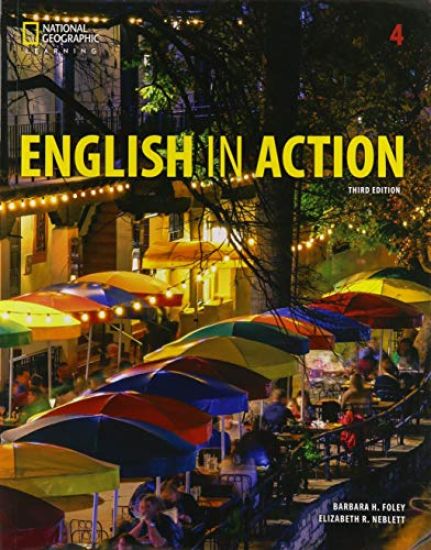
English in Action 4: Student's Book

English in Action 4: Student's Book

Barbara Foley; Elizabeth Neblett

Cengage ELT
2018
nidottu
English in Action is a four-level, standards-based integrated language learning program that prepares adults for work and academic success. The third edition of English in Action features authentic and high-interest content from National Geographic to promote critical thinking and 21st century skills. English in Action is retaining its best-selling grammar approach and relevance of topics to learners’ lives that prepare learners for education or a career pathway.
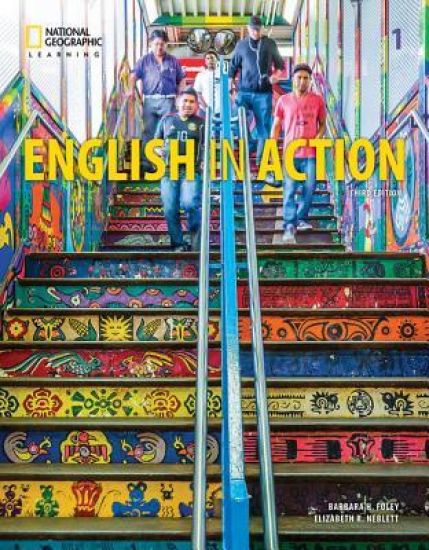
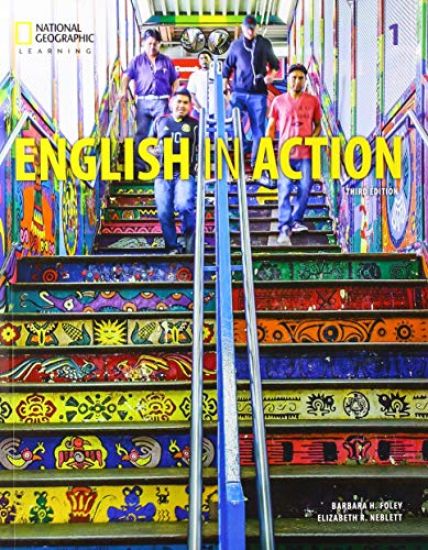
English in Action 1: Student's Book

English in Action 1: Student's Book

Barbara Foley; Elizabeth Neblett

Cengage ELT
2018
nidottu
English in Action is a four-level, standards-based integrated language learning program that prepares adults for work and academic success. The third edition of English in Action features authentic and high-interest content from National Geographic to promote critical thinking and 21st century skills. English in Action is retaining its best-selling grammar approach and relevance of topics to learners’ lives that prepare learners for education or a career pathway.
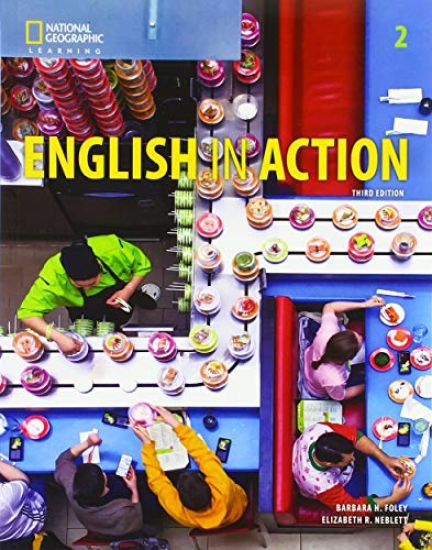
English in Action 2: Student's Book

English in Action 2: Student's Book

Barbara Foley; Elizabeth Neblett

Cengage ELT
2018
nidottu
English in Action is a four-level, standards-based integrated language learning program that prepares adults for work and academic success. The third edition of English in Action features authentic and high-interest content from National Geographic to promote critical thinking and 21st century skills. English in Action is retaining its best-selling grammar approach and relevance of topics to learners’ lives that prepare learners for education or a career pathway.
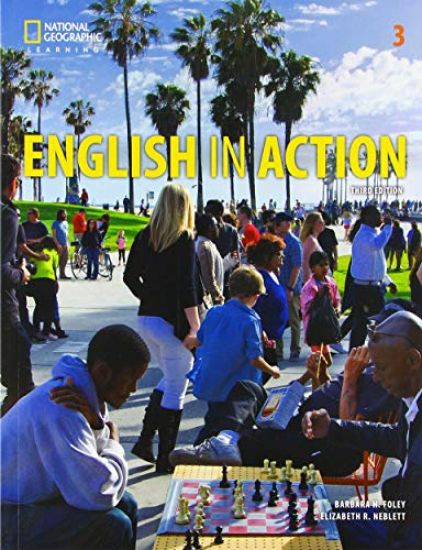
English in Action 3: Student's Book

English in Action 3: Student's Book

Barbara Foley; Elizabeth Neblett

Cengage ELT
2018
nidottu
English in Action is a four-level, standards-based integrated language learning program that prepares adults for work and academic success. The third edition of English in Action features authentic and high-interest content from National Geographic to promote critical thinking and 21st century skills. English in Action is retaining its best-selling grammar approach and relevance of topics to learners’ lives that prepare learners for education or a career pathway.
Jean Toomer

Jean Toomer

Barbara Foley

University of Illinois Press
2014
nidottu
The 1923 publication of Cane established Jean Toomer as a modernist master and one of the key literary figures of the emerging Harlem Renaissance. Though critics and biographers alike have praised his artistic experimentation and unflinching eyewitness portraits of Jim Crow violence, few seem to recognize how much Toomer's interest in class struggle, catalyzed by the Russian Revolution and the post–World War One radical upsurge, situate his masterwork in its immediate historical context. In Jean Toomer: Race, Repression, and Revolution, Barbara Foley explores Toomer's political and intellectual connections with socialism, the New Negro movement, and the project of Young America. Examining his rarely scrutinized early creative and journalistic writings, as well as unpublished versions of his autobiography, she recreates the complex and contradictory consciousness that produced Cane. Foley's discussion of political repression runs parallel with a portrait of repression on a personal level. Examining family secrets heretofore unexplored in Toomer scholarship, she traces their sporadic surfacing in Cane. Toomer's text, she argues, exhibits a political unconscious that is at once public and private.
Jean Toomer

Jean Toomer

Barbara Foley

University of Illinois Press
2014
sidottu
The 1923 publication of Cane established Jean Toomer as a modernist master and one of the key literary figures of the emerging Harlem Renaissance. Though critics and biographers alike have praised his artistic experimentation and unflinching eyewitness portraits of Jim Crow violence, few seem to recognize how much Toomer's interest in class struggle, catalyzed by the Russian Revolution and the post–World War One radical upsurge, situate his masterwork in its immediate historical context. In Jean Toomer: Race, Repression, and Revolution, Barbara Foley explores Toomer's political and intellectual connections with socialism, the New Negro movement, and the project of Young America. Examining his rarely scrutinized early creative and journalistic writings, as well as unpublished versions of his autobiography, she recreates the complex and contradictory consciousness that produced Cane. Foley's discussion of political repression runs parallel with a portrait of repression on a personal level. Examining family secrets heretofore unexplored in Toomer scholarship, she traces their sporadic surfacing in Cane. Toomer's text, she argues, exhibits a political unconscious that is at once public and private.
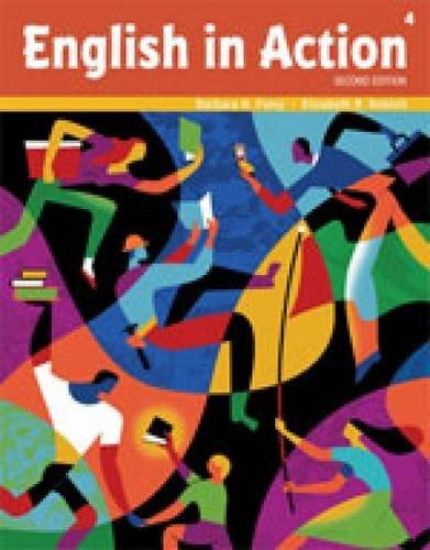
English in Action 4: Workbook with Audio CD

English in Action 4: Workbook with Audio CD

Barbara Foley; Elizabeth Neblett

Cengage ELT
2010
muu
Fun, engaging, and action-packed! Students learn better and are more motivated when they can put English into action! The second edition of English in Action provides learners with competency-based support for building language, life, and work skills in real world settings. Learners are engaged as workers, family members, and citizens through a communicative, practical, and active approach. Fun English in Action is filled with fun and exciting content and activities which motivate students to master the skills presented. Engaging English in Action empowers students and promotes learner persistence through dynamic, communicative activities, helping to build confidence in and out of the classroom. Action-packed English in Action encourages learners to communicate and participate in a lively learning process that offers interactive technology options, providing various avenues to learning.
Wrestling with the Left

Wrestling with the Left

Barbara Foley

Duke University Press
2010
sidottu
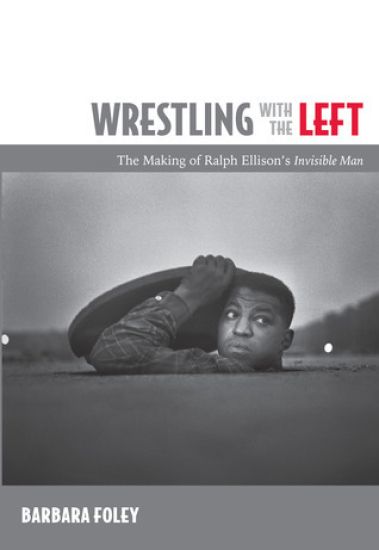
In Wrestling with the Left, Barbara Foley presents a penetrating analysis of the creation of Invisible Man. In the process she sheds new light not only on Ralph Ellison’s celebrated novel but also on his early radicalism and the relationship between African American writers and the left during the early years of the cold war. Foley scrutinized thousands of pages of drafts and notes for the novel, as well as the author’s early journalism and fiction, published and unpublished. While Ellison had cut his ties with the Communist left by the time he began Invisible Man in 1945, Foley argues that it took him nearly seven years to wrestle down his leftist consciousness (and conscience) and produce the carefully patterned cold war text that won the National Book Award in 1953 and has since become a widely taught American classic. She interweaves her account of the novel’s composition with the history of American Communism, linking Ellison’s political and artistic transformations to his distress at the Communists’ wartime policies, his growing embrace of American nationalism, his isolation from radical friends, and his recognition, as the cold war heated up, that an explicitly leftist writer could not expect to have a viable literary career. Foley suggests that by expunging a leftist vision from Invisible Man, Ellison rendered his novel not only less radical but also less humane than it might otherwise have been.
Wrestling with the Left

Wrestling with the Left

Barbara Foley

Duke University Press
2010
pokkari
In Wrestling with the Left, Barbara Foley presents a penetrating analysis of the creation of Invisible Man. In the process she sheds new light not only on Ralph Ellison’s celebrated novel but also on his early radicalism and the relationship between African American writers and the left during the early years of the cold war. Foley scrutinized thousands of pages of drafts and notes for the novel, as well as the author’s early journalism and fiction, published and unpublished. While Ellison had cut his ties with the Communist left by the time he began Invisible Man in 1945, Foley argues that it took him nearly seven years to wrestle down his leftist consciousness (and conscience) and produce the carefully patterned cold war text that won the National Book Award in 1953 and has since become a widely taught American classic. She interweaves her account of the novel’s composition with the history of American Communism, linking Ellison’s political and artistic transformations to his distress at the Communists’ wartime policies, his growing embrace of American nationalism, his isolation from radical friends, and his recognition, as the cold war heated up, that an explicitly leftist writer could not expect to have a viable literary career. Foley suggests that by expunging a leftist vision from Invisible Man, Ellison rendered his novel not only less radical but also less humane than it might otherwise have been.