
Kirjojen hintavertailu. Mukana 12 390 323 kirjaa ja 12 kauppaa.

Kirjailija

Barbara Geddes

Kirjat ja teokset yhdessä paikassa: 4 kirjaa, julkaisuja vuosilta 1996-2018, suosituimpien joukossa Politician's Dilemma. Vertaile teosten hintoja ja tarkista saatavuus suomalaisista kirjakaupoista.

4 kirjaa

Kirjojen julkaisuhaarukka 1996-2018.

How Dictatorships Work

How Dictatorships Work

Barbara Geddes; Joseph Wright; Erica Frantz

Cambridge University Press
2018
pokkari
This accessible volume shines a light on how autocracy really works by providing basic facts about how post-World War II dictatorships achieve, retain, and lose power. The authors present an evidence-based portrait of key features of the authoritarian landscape with newly collected data about 200 dictatorial regimes. They examine the central political processes that shape the policy choices of dictatorships and how they compel reaction from policy makers in the rest of the world. Importantly, this book explains how some dictators concentrate great power in their own hands at the expense of other members of the dictatorial elite. Dictators who can monopolize decision making in their countries cause much of the erratic, warlike behavior that disturbs the rest of the world. By providing a picture of the central processes common to dictatorships, this book puts the experience of specific countries in perspective, leading to an informed understanding of events and the likely outcome of foreign responses to autocracies.

How Dictatorships Work

How Dictatorships Work

Barbara Geddes; Joseph Wright; Erica Frantz

Cambridge University Press
2018
sidottu
This accessible volume shines a light on how autocracy really works by providing basic facts about how post-World War II dictatorships achieve, retain, and lose power. The authors present an evidence-based portrait of key features of the authoritarian landscape with newly collected data about 200 dictatorial regimes. They examine the central political processes that shape the policy choices of dictatorships and how they compel reaction from policy makers in the rest of the world. Importantly, this book explains how some dictators concentrate great power in their own hands at the expense of other members of the dictatorial elite. Dictators who can monopolize decision making in their countries cause much of the erratic, warlike behavior that disturbs the rest of the world. By providing a picture of the central processes common to dictatorships, this book puts the experience of specific countries in perspective, leading to an informed understanding of events and the likely outcome of foreign responses to autocracies.
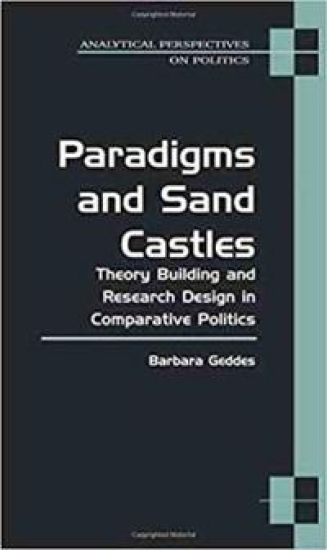
Paradigms and Sand Castles

Paradigms and Sand Castles

Barbara Geddes

The University of Michigan Press
2003
nidottu
Paradigms and Sand Castles demonstrates the relationship between thoughtful research design and the collection of persuasive evidence in support of theory. It teaches the craft of research through interesting and carefully selected examples from the field of comparative development studies.Barbara Geddes is Professor of Political Science at the University of California, Los Angeles.
Politician's Dilemma

Politician's Dilemma

Barbara Geddes

University of California Press
1996
pokkari
In Latin America as elsewhere, politicians routinely face a painful dilemma: whether to use state resources for national purposes, especially those that foster economic development, or to channel resources to people and projects that will help insure political survival and reelection. While politicians may believe that a competent state bureaucracy is intrinsic to the national good, political realities invariably tempt leaders to reward powerful clients and constituents, undermining long-term competence. "Politician's Dilemma" explores the ways in which political actors deal with these contradictory pressures and asks the question: when will leaders support reforms that increase state capacity and that establish a more meritocratic and technically competent bureaucracy? Barbara Geddes brings rational choice theory to her study of Brazil between 1930 and 1964 and shows how state agencies are made more effective when they are protected from partisan pressures and operate through merit-based recruitment and promotion strategies. Looking at administrative reform movements in other Latin American democracies, she traces the incentives offered politicians to either help or hinder the process. In its balanced insight, wealth of detail, and analytical rigor, "Politician's Dilemma" provides a powerful key to understanding the conflicts inherent in Latin American politics and to unlocking possibilities for real political change.