Kirjojen hintavertailu. Mukana 12 169 058 kirjaa ja 12 kauppaa.

Kirjailija

Barbara H. Rosenwein

Kirjat ja teokset yhdessä paikassa: 19 kirjaa, julkaisuja vuosilta 1982-2025, suosituimpien joukossa The Middle Ages in 50 Objects. Vertaile teosten hintoja ja tarkista saatavuus suomalaisista kirjakaupoista.

19 kirjaa

Kirjojen julkaisuhaarukka 1982-2025.

The Middle Ages in 50 Objects

The Middle Ages in 50 Objects

Elina Gertsman; Barbara H. Rosenwein

Cambridge University Press
2018
sidottu
The extraordinary array of images included in this volume reveals the full and rich history of the Middle Ages. Exploring material objects from the European, Byzantine and Islamic worlds, the book casts a new light on the cultures that formed them, each culture illuminated by its treasures. The objects are divided among four topics: The Holy and the Faithful; The Sinful and the Spectral; Daily Life and Its Fictions, and Death and Its Aftermath. Each section is organized chronologically, and every object is accompanied by a penetrating essay that focuses on its visual and cultural significance within the wider context in which the object was made and used. Spot maps add yet another way to visualize and consider the significance of the objects and the history that they reveal. Lavishly illustrated, this is an appealing and original guide to the cultural history of the Middle Ages.
Winter Dreams

Winter Dreams

Barbara H. Rosenwein

REAKTION BOOKS
2025
sidottu
Winter Dreams is an evocative history of the ways the old have thought, felt and expressed themselves over two millennia, tracking the experience of ageing through artistic, literary and historical records. While old age is often depicted as ‘sans teeth, sans eyes, sans taste, sans everything’, Barbara H. Rosenwein shows that the elderly have always retained their emotional depth and desires. She explores how these have changed over time, as societies’ views of the elderly and of a ‘good’ old age have changed. And through careful exegesis, she allows the elderly, so often absent from the historical record, to speak to us. We live in a rapidly ageing society, yet ageism is rampant and death and dying are taboo subjects. Rosenwein’s book is a finely wrought testimony to the value of ageing and the richness of our Winter Dreams.
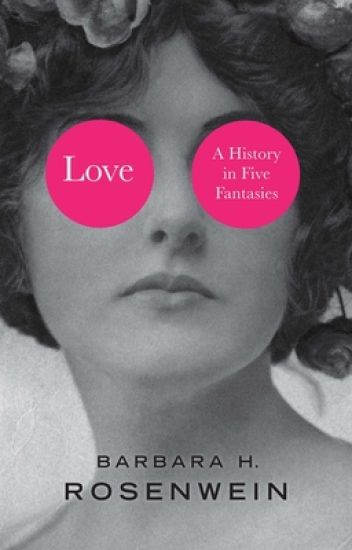
Love

Love

Barbara H. Rosenwein

Polity Press
2021
sidottu
We make sense of love with fantasies, stories that shape feelings that are otherwise too overwhelming, incoherent, and wayward to be tamed. For love is a complex, bewildering, and ecstatic emotion covering a welter of different feelings and moral judgments. Drawing on poetry, fiction, letters, memoirs, and art, and with the aid of a rich array of illustrations, historian Barbara H. Rosenwein explores five of our most enduring fantasies of love: like-minded union, transcendent rapture, selfless giving, obsessive longing, and insatiable desire. Each has had a long and tangled history with lasting effects on how we in the West think about love today. Yet each leads to a different conclusion about what we should strive for in our relationships. If only we could peel back the layers of love and discover its “true” essence. But love doesn’t work like that; it is constructed on the shards of experience, story, and feeling, shared over time, intertwined with other fantasies. By understanding the history of how we have loved, Rosenwein argues, we may better navigate our own tumultuous experiences and perhaps write our own scripts.
Anger

Anger

Barbara H. Rosenwein

Yale University Press
2020
sidottu
Tracing the story of anger from the Buddha to Twitter, Rosenwein provides a much-needed account of our changing and contradictory understandings of this emotion All of us think we know when we are angry, and we are sure we can recognize anger in others as well. But this is only superficially true. We see anger through lenses colored by what we know, experience, and learn. Barbara H. Rosenwein traces our many conflicting ideas about and expressions of anger, taking the story from the Buddha to our own time, from anger’s complete rejection to its warm reception. Rosenwein explores how anger has been characterized by gender and race, why it has been tied to violence and how that is often a false connection, how it has figured among the seven deadly sins and yet is considered a virtue, and how its interpretation, once largely the preserve of philosophers and theologians, has been gradually handed over to scientists—with very mixed results. Rosenwein shows that the history of anger can help us grapple with it today.
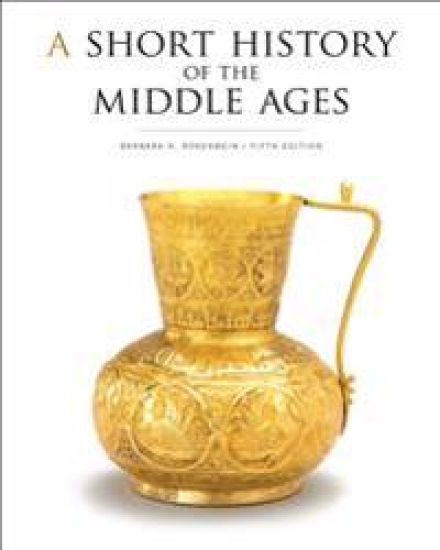
A Short History of the Middle Ages, Fifth Edition

A Short History of the Middle Ages, Fifth Edition

Barbara H. Rosenwein

University of Toronto Press
2018
pokkari
In this newest edition of her bestselling book, Barbara H. Rosenwein integrates the history of European, Byzantine, and Islamic medieval cultures—as well as their Eurasian connections—in a dynamic narrative. The text has been significantly updated to reflect growing interest in the Islamic world and Mediterranean region. Stunning plates featuring art and architecture weave together events, mentalities, and aesthetics. Medievalist Riccardo Cristiani authors a new feature on material culture that examines the intricacies of manuscript production and the lustrous glazes of Islamic ceramics. A fully revised map program offers user-friendly spot maps that clarify events right where they are discussed as well as dazzling topographical maps that reveal the very contours of the medieval world. Helpful genealogies, figures, architectural plans, and lists of key dates complement the text. All maps, genealogies, and figures are available on the History Matters website (www.utphistorymatters.com) for easy download. Students will find this site equally useful for its hundreds of study questions and their click-to-reveal answers.
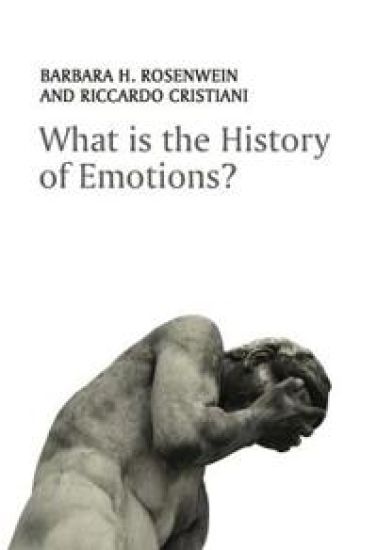
What is the History of Emotions?

What is the History of Emotions?

Barbara H. Rosenwein; Riccardo Cristiani

Polity Press
2017
sidottu
What Is the History of Emotions? offers an accessible path through the thicket of approaches, debates, and past and current trends in the history of emotions. Although historians have always talked about how people felt in the past, it is only in the last two decades that they have found systematic and well-grounded ways to treat the topic. Rosenwein and Cristiani begin with the science of emotion, explaining what contemporary psychologists and neuropsychologists think emotions are. They continue with the major early, foundational approaches to the history of emotions, and they treat in depth new work that emphasizes the role of the body and its gestures. Along the way, they discuss how ideas about emotions and their history have been incorporated into modern literature and technology, from children's books to videogames. Students, teachers, and anyone else interested in emotions and how to think about them historically will find this book to be an indispensable and fascinating guide not only to the past but to what may lie ahead.
What is the History of Emotions?

What is the History of Emotions?

Barbara H. Rosenwein; Riccardo Cristiani

Polity Press
2017
nidottu
What Is the History of Emotions? offers an accessible path through the thicket of approaches, debates, and past and current trends in the history of emotions. Although historians have always talked about how people felt in the past, it is only in the last two decades that they have found systematic and well-grounded ways to treat the topic. Rosenwein and Cristiani begin with the science of emotion, explaining what contemporary psychologists and neuropsychologists think emotions are. They continue with the major early, foundational approaches to the history of emotions, and they treat in depth new work that emphasizes the role of the body and its gestures. Along the way, they discuss how ideas about emotions and their history have been incorporated into modern literature and technology, from children's books to videogames. Students, teachers, and anyone else interested in emotions and how to think about them historically will find this book to be an indispensable and fascinating guide not only to the past but to what may lie ahead.
The Making of the West, Combined Volume 5e & Launchpad for the Making of the West 5e (Twelve-Month Online) [With eBook]
The Making of the West features a chronological narrative that offers a truly global context and tells the story of the cross-cultural exchanges that have shaped western history. This brief book includes a full-color map and art program and comprehensive supplement options. The result is a brief book that is an excellent price and an outstanding value.
Generations of Feeling

Generations of Feeling

Barbara H. Rosenwein

Cambridge University Press
2015
sidottu
Generations of Feeling is the first book to provide a comprehensive history of emotions in pre- and early modern Western Europe. Charting the varieties, transformations and constants of human sentiments over the course of eleven centuries, Barbara H. Rosenwein explores the feelings expressed in a wide range of 'emotional communities' as well as the theories that served to inform and reflect their times. Focusing specifically on groups within England and France, chapters address communities as diverse as the monastery of Rievaulx in twelfth-century England and the ducal court of fifteenth-century Burgundy, assessing the ways in which emotional norms and modes of expression respond to, and in turn create, their social, religious, ideological, and cultural environments. Contemplating emotions experienced 'on the ground' as well as those theorized in the treatises of Alcuin, Thomas Aquinas, Jean Gerson and Thomas Hobbes, this insightful study offers a profound new narrative of emotional life in the West.
Generations of Feeling

Generations of Feeling

Barbara H. Rosenwein

Cambridge University Press
2015
pokkari
Generations of Feeling is the first book to provide a comprehensive history of emotions in pre- and early modern Western Europe. Charting the varieties, transformations and constants of human sentiments over the course of eleven centuries, Barbara H. Rosenwein explores the feelings expressed in a wide range of 'emotional communities' as well as the theories that served to inform and reflect their times. Focusing specifically on groups within England and France, chapters address communities as diverse as the monastery of Rievaulx in twelfth-century England and the ducal court of fifteenth-century Burgundy, assessing the ways in which emotional norms and modes of expression respond to, and in turn create, their social, religious, ideological, and cultural environments. Contemplating emotions experienced 'on the ground' as well as those theorized in the treatises of Alcuin, Thomas Aquinas, Jean Gerson and Thomas Hobbes, this insightful study offers a profound new narrative of emotional life in the West.
Emotional Communities in the Early Middle Ages

Emotional Communities in the Early Middle Ages

Barbara H. Rosenwein

Cornell University Press
2007
pokkari
"With this book Barbara Rosenwein has made the emotions an essential component of our approach to the changing social history." - Jacques Le Goff Proposing that people lived (and live) in "emotional communities"-each having its own particular norms of emotional valuation and expression-Barbara H. Rosenwein here discusses some instances from the Early Middle Ages. Drawing on extensive microhistorical research, as well as cognitive and social constructionist theories of the emotions, Rosenwein shows that different emotional communities coexisted, that some were dominant at times, and that religious beliefs affected emotional styles even as those styles helped shape religious expression. This highly original book is both a study of emotional discourse in the Early Middle Ages and a contribution to the debates among historians and social scientists about the nature of human emotions. Rosenwein explores the character of emotional communities as discovered in several case studies: the funerary inscriptions of three different Gallic cities; the writings of Pope Gregory the Great; the affective world of two friends, Gregory of Tours and Venantius Fortunatus; the Neustrian court of Clothar II and his heirs; and finally the tumultuous period of the late seventh century. In this essay, the author presents a new way to consider the history of emotions, inviting others to continue and advance the inquiry. For medievalists, early modernists, and historians of the modern world, the book will be of interest for its persuasive critique of Norbert Elias's highly influential notion of the "civilizing process." Rosenwein's notion of emotional communities is one with which all historians and social scientists working on the emotions will need to contend.
To Be the Neighbor of Saint Peter

To Be the Neighbor of Saint Peter

Barbara H. Rosenwein

Cornell University Press
2006
pokkari
Barbara H. Rosenwein here reassesses the significance of property in the tenth and eleventh centuries, a period of transition from the Carolingian empire to the regional monarchies of the High Middle Ages. In To Be the Neighbor of Saint Peter she explores in rich detail the question of monastic donations, illuminating the human motives, needs, and practices behind gifts of land and churches to the French monastery of Cluny during the 140 years that followed its founding. Donations, Rosenwein shows, were largely the work of neighbors, and they set up and affirmed relationships with Saint Peter, to whom Cluny was dedicated.Cluny was an eminent religious institution and served as a model for other monasteries. It attracted numerous donations and was party to many land transactions. Its charters and cartularies constitute perhaps the single richest collection of information on property for the period 909–1049. Analyzing the evidence found in these records, Rosenwein considers the precise nature of Cluny's ownership of land, the character of its claims to property, and its tutelage over the land of some of the monasteries in its ecclesia.
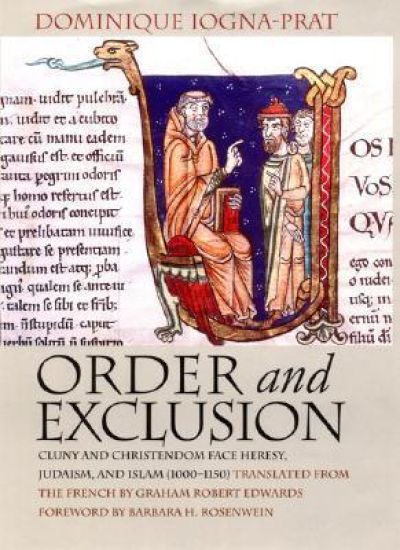
Order and Exclusion

Order and Exclusion

Dominique Iogna-Prat; Barbara H. Rosenwein

Cornell University Press
2003
sidottu
This fine translation provides English readers with a recent and thought-provoking work of medieval history by Iogna-Pratt (director of research at the Centre National de la Recherche Scientifique, Paris, France). The study begins with an investigation of the terms order and authority and their use
Negotiating Space

Negotiating Space

Barbara H. Rosenwein

Cornell University Press
1999
pokkari
Why did early medieval kings declare certain properties to be immune from the judicial and fiscal encroachments of their own agents? Did weakness compel them to prohibit their agents from entering these properties, as historians have traditionally believed? In a richly detailed book that will be greeted as a landmark addition to the literature on the Middle Ages, Barbara H. Rosenwein argues that immunities were markers of power. By placing restraints on themselves and their agents, kings demonstrated their authority, affirmed their status, and manipulated the boundaries of sacred space.Rosenwein transforms our understanding of an institution central to the political and social dynamics of medieval Europe. She reveals how immunities were used by kings and other leaders to forge alliances with the noble families and monastic centers that were central to their power. Generally viewed as unchanging juridical instruments, immunities as they appear here are as fluid and diverse as the disparate social and political conflicts that they at once embody and seek to defuse. Their legacy reverberates in the modern world, where liberal institutions, with their emphasis on state restraint, clash with others that encourage governmental intrusion. The protections against unreasonable searches and seizures provided by English common law and the U.S. Constitution developed in part out of the medieval experience of immunities and the institutions that were elaborated to breach them.
Negotiating Space

Negotiating Space

Barbara H. Rosenwein

Cornell University Press
1999
sidottu
Why did early medieval kings declare certain properties to be immune from the judicial and fiscal encroachments of their own agents? Did weakness compel them to prohibit their agents from entering these properties, as historians have traditionally believed? In a richly detailed book that will be greeted as a landmark addition to the literature on the Middle Ages, Barbara H. Rosenwein argues that immunities were markers of power. By placing restraints on themselves and their agents, kings demonstrated their authority, affirmed their status, and manipulated the boundaries of sacred space.Rosenwein transforms our understanding of an institution central to the political and social dynamics of medieval Europe. She reveals how immunities were used by kings and other leaders to forge alliances with the noble families and monastic centers that were central to their power. Generally viewed as unchanging juridical instruments, immunities as they appear here are as fluid and diverse as the disparate social and political conflicts that they at once embody and seek to defuse. Their legacy reverberates in the modern world, where liberal institutions, with their emphasis on state restraint, clash with others that encourage governmental intrusion. The protections against unreasonable searches and seizures provided by English common law and the U.S. Constitution developed in part out of the medieval experience of immunities and the institutions that were elaborated to breach them.
Rhinoceros Bound

Rhinoceros Bound

Barbara H. Rosenwein

University of Pennsylvania Press
1982
sidottu
"The rhinoceros, that is, any powerful man, is bound with a thong so that he may crush the clods of the valleys, that is, the oppressors of the humble."-Odo of Cluny, Vita Geraldi i.8 To the second abbot of the great monastery at Cluny, Saint Odo, tenth-century Europe was a world filled with violent men oppressing at whim the poor and the powerless. As royal authority waned, local magnates, unrestrained by any authority, divine or human, seized the opportunity to enhance their positions. Odo, along with Cluny's other founding spiritual and ideological leaders, created within the protective walls of the monastery a model of restraint, instituting in place of the instability of everyday life an interpretation of the Benedictine Rule that stressed ritual, order, and lawfulness. Such were the beginnings of the monastery that Pope Urban II in the eleventh century would call "the light of the world," the fountainhead of what would become one of the most far-reaching religious reform movements in European history. Barbara Rosenwein in Rhinoceros Bound focuses on Cluny's founding and early growth within the context of a society shaped by the needs of those set adrift in the social upheaval of the tenth century. Examining in the first chapter traditional approaches to Cluniac studies, the author reveals that historians have generally considered Cluny's eleventh-century role in church reform without analyzing the peculiar combination of forces and founders that created the Cluniac ideal and gave it its original momentum. This fundamental problem is the topic of the second chapter. She then examines how the early Cluniacs perceived the world outside the monastery and how they viewed their own world inside of it. Rosenwein concludes with a chapter on Cluny in the tenth century that combines traditional historical techniques with contemporary sociological insights. She provides in this study a significant reassessment of a period crucial to the political development of Europe, as well as a case study of institutional response to acute and political change.