Kirjojen hintavertailu. Mukana 12 390 323 kirjaa ja 12 kauppaa.

Kirjailija

Barbara Hahn

Kirjat ja teokset yhdessä paikassa: 11 kirjaa, julkaisuja vuosilta 2005-2025, suosituimpien joukossa The U.S. City in Transition. Vertaile teosten hintoja ja tarkista saatavuus suomalaisista kirjakaupoista.

11 kirjaa

Kirjojen julkaisuhaarukka 2005-2025.

Die US-amerikanische Stadt im Wandel

Die US-amerikanische Stadt im Wandel

Barbara Hahn

Springer Fachmedien Wiesbaden
2025
sidottu
Die US-amerikanische Stadt ist einem steten Wandel unterworfen. Im Osten und Mittleren Westen sind die meisten Städte als Handelsorte an Wasserwegen gegründet worden. Zu Zeiten der Industrialisierung erlebten sie einen Aufschwung, und ihr Bevölkerungsmaximum erreichten sie Mitte des 20. Jahrhunderts, ehe aufgrund von Suburbanisierung und Deindustrialisierung ein Bedeutungsrückgang einsetzte. Überall zeigten sich Spuren des Verfalls, und die Prognosen für die Zukunft waren denkbar schlecht. Wie Barbara Hahn in ihrem Buch zeigt, scheint dieser Trend mittlerweile gebrochen: Es geht wieder aufwärts mit der US-amerikanischen Stadt. Einigen der früheren Industriestädte ist ein Strukturwandel gelungen. Im Süden und Westen des Landes haben sich die Städte zu neuen Wachstumszentren entwickelt. Allerdings profitieren nicht alle Städte von dieser positiven Entwicklung, und viele schrumpfen weiter in erschreckendem Ausmaß. Wie die Autorin betont, sind unabhängig von Lage und Entwicklungsstand in allen Städten ähnliche Prozesse wie Neoliberalisierung, Deregulierung, Privatisierung und Gentrifizierung zu beobachten. Aufgrund der Vielzahl an didaktisch aufgearbeiteten Grafiken eignet sich das Buch für Studierende, Wissenschaftler und interessierte Laien als Lektüre. Die Charakteristika der US-amerikanischen Stadt, die anhand aktueller Beispiele herausgearbeitet sind, veranschaulichen ebenso wie die illustrativen Fotos auch dem interessierten Leser den Wandel der US-amerikanischen Stadt.
The U.S. City in Transition

The U.S. City in Transition

Barbara Hahn

Springer-Verlag Berlin and Heidelberg GmbH Co. KG
2023
nidottu
The U.S. city is undergoing constant change. In the East and Midwest, most cities were founded as trading posts on waterways. They boomed during the industrial era and reached their population peak in the mid-20th century, before suburbanization and deindustrialization caused them to decline in importance. Traces of decay were everywhere, and the prognosis for the future was conceivably poor. As Barbara Hahn shows in her book, this trend now seems to have been broken: Things are looking up again for the US city. Some of the former industrial cities have succeeded in structural change. In the south and west of the country, cities have developed into new growth centers. However, not all cities are benefiting from this positive development, and many continue to shrink at an alarming rate. As the author points out, similar processes such as neoliberalisation, deregulation, privatisation and gentrification can be observed in all cities, regardless of their location and levelof development.Due to the large number of didactically prepared graphics, the book is suitable as a study read for students and scholars. The characteristics of the U.S. city, which are elaborated on the basis of current examples, as well as the illustrative photos also illustrate the change of the U.S. city to the interested reader.
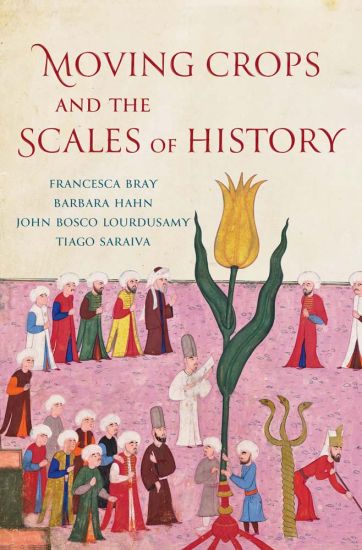
Moving Crops and the Scales of History

Moving Crops and the Scales of History

Francesca Bray; Barbara Hahn; John Bosco Lourdusamy; Tiago Saraiva

YALE UNIVERSITY PRESS
2023
sidottu
A bold redefinition of historical inquiry based on the “cropscape”—the people, creatures, technologies, ideas, and places that surround a crop Human efforts to move crops from one place to another have been a key driving force in history. Crops have been on the move for millennia, from wildlands into fields, from wetlands to dry zones, from one imperial colony to another. This book is a bold but approachable attempt to redefine historical inquiry based on the “cropscape”: the assemblage of people, places, creatures, technologies, and other elements that form around a crop. The cropscape is a method of reconnecting the global with the local, the longue durée with microhistory, and people, plants, and places with abstract concepts such as tastes, ideas, skills, politics, and economic forces. Through investigating a range of contrasting cropscapes spanning millennia and the globe, the authors break open traditional historical structures of period, geography, and direction to glean insight into previously invisible actors and forces.
The U.S. City in Transition

The U.S. City in Transition

Barbara Hahn

Springer-Verlag Berlin and Heidelberg GmbH Co. KG
2022
sidottu
The U.S. city is undergoing constant change. In the East and Midwest, most cities were founded as trading posts on waterways. They boomed during the industrial era and reached their population peak in the mid-20th century, before suburbanization and deindustrialization caused them to decline in importance. Traces of decay were everywhere, and the prognosis for the future was conceivably poor. As Barbara Hahn shows in her book, this trend now seems to have been broken: Things are looking up again for the US city. Some of the former industrial cities have succeeded in structural change. In the south and west of the country, cities have developed into new growth centers. However, not all cities are benefiting from this positive development, and many continue to shrink at an alarming rate. As the author points out, similar processes such as neoliberalisation, deregulation, privatisation and gentrification can be observed in all cities, regardless of their location and levelof development.Due to the large number of didactically prepared graphics, the book is suitable as a study read for students and scholars. The characteristics of the U.S. city, which are elaborated on the basis of current examples, as well as the illustrative photos also illustrate the change of the U.S. city to the interested reader.
Rahel Varnhagen

Rahel Varnhagen

Hannah Arendt; Barbara Hahn

New York Review Books
2022
nidottu
A biography of a Jewish woman, a writer who hosted a literary and political salon in late eighteenth- and early nineteenth-century Germany, written by one of the twentieth century's most prominent intellectuals, Hannah Arendt. Rahel Varnhagen: The Life of a Jewish Woman was Hannah Arendt's first book, largely completed when she went into exile from Germany in 1933, though it would not be published until the 1950s. It is the biography of a remarkable, complicated, troubled, passionate woman, an important figure in German romanticism, the person who in a sense founded the Goethe cult that would become central to German cultural life in the nineteenth century, as well as someone who confronted with unusual determination and bore the burden of being both a woman in a man's world and an assimilated Jew in Germany. Rahel Levin Varnhagen was, Arendt writes, "neither beautiful nor attractive. . . and possessed no talents with which to employ her extraordinary intelligence and passionate originality." Arendt sets out to tell the story of Rahel's life as Rahel might have told it and, in doing so, to reveal the way in which intellectual and social assimilation works out in one person's destiny. On her deathbed Rahel is reported to have said, "The thing which all my life seemed to me the greatest shame, which was the misery and misfortune of my life--having been born a Jewess--this I should on no account now wish to have missed." Only because she had remained both a Jew and a pariah, Arendt observes, "did she find a place in the history of European humanity."
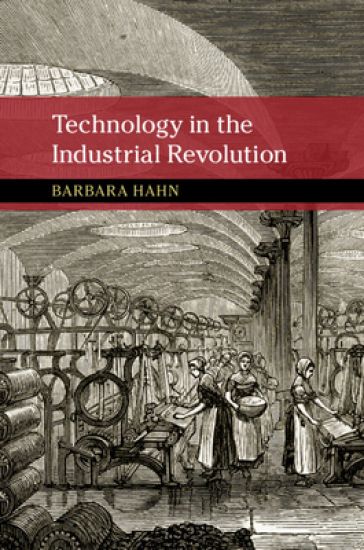
Technology in the Industrial Revolution

Technology in the Industrial Revolution

Barbara Hahn

Cambridge University Press
2020
pokkari
Technological change is about more than inventions. This concise history of the Industrial Revolution places the eighteenth-century British Industrial Revolution in global context, locating its causes in government protection, global competition, and colonialism. Inventions from spinning jennies to steam engines came to define an age that culminated in the acceleration of the fashion cycle, the intensification in demand and supply of raw materials and the rise of a plantation system that would reconfigure world history in favour of British (and European) global domination. In this accessible analysis of the classic case of rapid and revolutionary technological change, Barbara Hahn takes readers from the north of England to slavery, cotton plantations, the Anglo-Indian trade and beyond - placing technological change at the centre of world history.
Technology in the Industrial Revolution

Technology in the Industrial Revolution

Barbara Hahn

Cambridge University Press
2020
sidottu
Technological change is about more than inventions. This concise history of the Industrial Revolution places the eighteenth-century British Industrial Revolution in global context, locating its causes in government protection, global competition, and colonialism. Inventions from spinning jennies to steam engines came to define an age that culminated in the acceleration of the fashion cycle, the intensification in demand and supply of raw materials and the rise of a plantation system that would reconfigure world history in favour of British (and European) global domination. In this accessible analysis of the classic case of rapid and revolutionary technological change, Barbara Hahn takes readers from the north of England to slavery, cotton plantations, the Anglo-Indian trade and beyond - placing technological change at the centre of world history.
The Jewess Pallas Athena

The Jewess Pallas Athena

Barbara Hahn

Princeton University Press
2016
pokkari
"The Jewess Pallas Athena"--a line from a poem by Paul Celan. It is a provocative phrase, cutting across cultures and traditions. But it poses questions: How to reconstruct a culture that has been destroyed? How to conceive of history after the catastrophes of the twentieth century? This book begins in the mid-eighteenth century with the first Jewish women to raise their voices in German. It ends two hundred years later, with another group of Jewish women looking back at a country from which they had been expelled and to which they would never want to return. Among the many prominent female intellectuals and literary figures Barbara Hahn discusses are Hannah Arendt, Gertrud Kantorowicz, Rosa Luxemburg, Else Lasker-Schuler, Margarete Susman, and Rahel Levin Varnhagen. In examining their writing, she reflects upon the question of how German culture was constructed--with its inherent patterns of exclusion. This is a book about hope and despair, possibilities and preventions. We see attempts at dialogue between Christians and Jews, men and women, "Germans" and "Jews," attempts initiated by these women that, for the most part, remained unanswered. Finally, the book reconstructs the changing notions of the "Jewess," a key word in modern German history with its connotations of "salons," "beauty," and "esprit." And yet a word that is also disastrous, in which there culminated everything the dominant culture condemned as dangerous.
The Cotton Kings

The Cotton Kings

Bruce E. Baker; Barbara Hahn

Oxford University Press Inc
2016
sidottu
The Cotton Kings relates a rip-roaring drama of competition in the marketplace and reveals the damage markets can cause when they do not work properly. It also explains how they can be fixed through careful regulation. At the turn of the twentieth century, cotton was still the major agricultural product of the American South and an important commodity for world industry. Key to marketing cotton were futures contracts, traded at exchanges in New York and New Orleans. Futures contracts had the potential to hedge risk and reduce price volatility, but only if the markets in which they were traded worked properly. Increasing corruption on the powerful New York Cotton Exchange pushed prices steadily downwards in the 1890s, impoverishing millions of cotton farmers. The U.S. Department of Agriculture tried to solve the problem with better crop predictions and market information, shared equally and simultaneously with all participants, but these efforts failed. To fight the cotton market's corruption, cotton brokers in New Orleans, led by William P. Brown and Frank Hayne, began quietly to assemble resources. They triumphed in the summer of 1903, when they cornered the world market in cotton and raised its price to reflect the reality of increasing demand and struggling supply. The brokers' success pushed up the price of cotton for the next ten years. However, the structural problems of self-regulation by market participants still threatened the cotton trade. More corruption at the New York Cotton Exchange appeared, until eventually political pressure inspired the Cotton Futures Act of 1914, the federal government's first successful regulation of a financial derivative.
Welthandel

Welthandel

Barbara Hahn

Spektrum Akademischer Verlag
2009
sidottu
Es vergeht kaum eine Woche, in der der Welthandel in Deutschland keine Nachrichten produziert: sei es der Verlauf einer Welthandelsrunde, Handelsstreit zwischen der EU und der USA, eine Ver nderung des lpreises, der Auftritt von Globalisierungsgegnern oder "nur" die bernahme eines Konzerns durch einen anderen. Auf der anderen Seite blickt das Thema Handel auf eine lange und spannende mehr als zweitausendj hrige Geschichte zur ck. Die Seidenstra e, die Hanse, die Fugger oder die Handelskompanien der fr hen Neuzeit sind nur einige Beispiele. Der Welthandel in seiner heutigen Form begann mit dem Abkommen von Bretton Woods 1944, aus dem sich sp ter GATT und 1995 die WTO (World Trade Organization) entwickelte. Sie bildet heute zusammen mit zahllosen bilateralen und multilateralen Abkommen (z.B. EU, EFTA, NAFTA, MERCOSUR, ASEAN) den Rahmen f r einen sich immer noch rasant entwickelten Handel mit Waren, Dienstleistungen und Finanzprodukten. Wer handelt was, wo, wie und warum? Barbara Hahn beschreibt die Handelpartner (L nder, Konzerne), die wichtigsten Waren (z. B., Rohstoffe, Nahrungsmittel, Fahrzeuge, Textilien, Aktien), die Handelszentren und -routen, die Verkehrstr ger (z.B. Containerschiffe), Logistik und Kommunikation und nicht zuletzt die Theorien zum Welthandel und die Auswirkungen des Handels auch auf unser t gliches Leben. Mit anschaulichen Karten, Grafiken, Fotos und Tabellen kann sich der Leser einen guten berblick verschaffen und sich auf dieser Grundlage eine fundierte eigene Meinung zu aktuellen Handelsthemen bilden.
The Jewess Pallas Athena

The Jewess Pallas Athena

Barbara Hahn

Princeton University Press
2005
sidottu
"The Jewess Pallas Athena"--a line from a poem by Paul Celan. It is a provocative phrase, cutting across cultures and traditions. But it poses questions: How to reconstruct a culture that has been destroyed? How to conceive of history after the catastrophes of the twentieth century? This book begins in the mid-eighteenth century with the first Jewish women to raise their voices in German. It ends two hundred years later, with another group of Jewish women looking back at a country from which they had been expelled and to which they would never want to return. Among the many prominent female intellectuals and literary figures Barbara Hahn discusses are Hannah Arendt, Gertrud Kantorowicz, Rosa Luxemburg, Else Lasker-Schuler, Margarete Susman, and Rahel Levin Varnhagen. In examining their writing, she reflects upon the question of how German culture was constructed--with its inherent patterns of exclusion. This is a book about hope and despair, possibilities and preventions. We see attempts at dialogue between Christians and Jews, men and women, "Germans" and "Jews," attempts initiated by these women that, for the most part, remained unanswered. Finally, the book reconstructs the changing notions of the "Jewess," a key word in modern German history with its connotations of "salons," "beauty," and "esprit." And yet a word that is also disastrous, in which there culminated everything the dominant culture condemned as dangerous.