Kirjojen hintavertailu. Mukana 12 559 499 kirjaa ja 12 kauppaa.

Kirjailija

Barbara J. Sahakian

Kirjat ja teokset yhdessä paikassa: 4 kirjaa, julkaisuja vuosilta 2009-2025, suosituimpien joukossa Brain Boost. Vertaile teosten hintoja ja tarkista saatavuus suomalaisista kirjakaupoista.

4 kirjaa

Kirjojen julkaisuhaarukka 2009-2025.

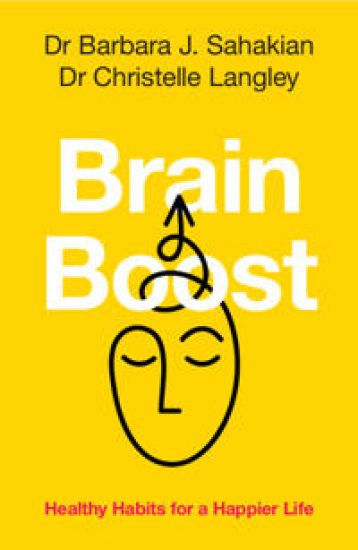
Brain Boost

Brain Boost

Barbara J. Sahakian; Christelle Langley

Cambridge University Press
2025
pokkari
Your mental health is as important as your physical health and, in times of stress, it's vital to have enhanced cognition and reserves of resilience. This book is packed with practical tips, based on scientific evidence, that will teach you how to implement lifestyle strategies that will improve your brain health, cognition, and overall wellbeing. Covering the benefits of exercise, diet, sleep, social interactions, kindness, mindfulness, and learning, you will discover how adopting habits to improve these areas of your life at an early age will lead to a longer, healthier life. Embracing these simple strategies to prioritise your brain health and wellbeing is essential for a fulfilling life, with lifestyle choices playing a significant role in promoting resilience, creativity, and overall quality of life across all ages. For anyone seeking to lead a fulfilling life through happiness, health, and personal growth, this is the book for you.
Sex, Lies, and Brain Scans

Sex, Lies, and Brain Scans

Barbara J. Sahakian; Julia Gottwald

Oxford University Press
2019
nidottu
The recent explosion of neuroscience techniques has proved to be game changing in terms of understanding the healthy brain, and in the development of neuropsychiatric treatments. One of the key techniques available to us is functional magnetic resonance imaging (fMRI), which allows us to examine the human brain non-invasively, and observe brain activity in real time. Through fMRI, we are beginning to build a deeper understanding of our thoughts, motivations, and behaviours. Recent reports that some patients who have all indications of being in a persistent vegetative state actually show conscious awareness, and were able to communicate with researchers, demonstrate perhaps the most remarkable and dramatic use of fMRI. But this is just the most striking of a number of areas in which fMRI is being used to 'read minds', albeit in a very limited way. As neuroscientists unravel the regions of the brain involved in reward and motivation, and in romantic love, we are likely to develop the capacity to influence responses such as love using drugs. fMRI studies have also been used to indicate that many people who would not regard themselves as racist show a racial bias in their emotional responses to faces of another racial group. Meanwhile, the reliability of fMRI as a lie detector in murder cases is being debated - what if the individual simply believes, falsely, that he or she committed a murder? Sex, Lies, and Brain Scans takes readers beyond the media headlines. Barbara J. Sahakian and Julia Gottwald consider what the technique of fMRI entails, and what information it can give us, showing which applications are possible today, and which ones are science fiction. They also consider the important ethical questions these techniques raise. Should individuals applying for jobs as teachers or judges be screened for unconscious racial bias? What if the manipulation of love using 'love potions' was misused for economic or military ends? How far will we allow neuroscience to go? It is time to make up our minds.
Sex, Lies, and Brain Scans

Sex, Lies, and Brain Scans

Barbara J. Sahakian; Julia Gottwald

Oxford University Press
2017
sidottu
The recent explosion of neuroscience techniques has been game-changing in terms of understanding the healthy brain, and in the development of neuropsychiatric treatments. One of the key techniques is functional magnetic resonance imaging (fMRI), which allows us to examine the human brain non-invasively, and observe brain activity in real time. Through fMRI, we are beginning to build a deeper understanding of our thoughts, motivations, and behaviours. Already fMRI has been used to detect conscious activity in some patients who had all indications of being in a vegetative state, and even enabled us to communicate with some of them. This is just one of the many striking areas in which fMRI can be used to 'read minds'. As neuroscientists unravel the brain networks of self-control and morality, we might find abnormalities in criminal offenders. Could we predict crimes before they are committed? fMRI has also been used to detect racial bias in some people who regarded themselves as fair-minded. Meanwhile, the reliability of fMRI as a lie detector in murder cases or as a tool for marketing is being debated. Sex, Lies, and Brain Scans takes readers beyond the media headlines. Barbara Sahakian and Julia Gottwald consider what the technique of fMRI entails, and what information it can give us, showing which applications are possible today, and which ones are science fiction. They also consider the important ethical questions these techniques raise. Should brain scans be allowed at airports to screen for terrorists? Should they be used to vet future judges and teachers? How far will we allow neuroscience to go? It is time to make up our minds.
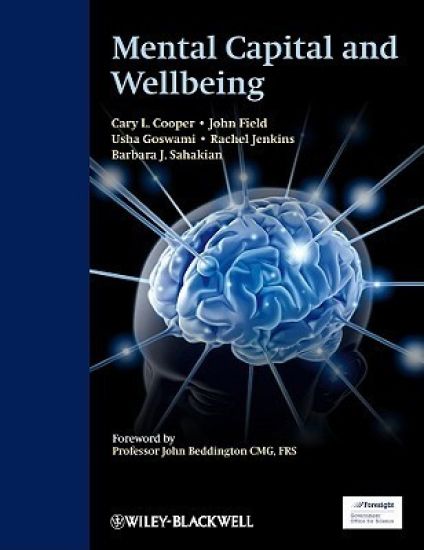
Mental Capital and Wellbeing

Mental Capital and Wellbeing

Cary Cooper; Usha Goswami; Barbara J. Sahakian

Wiley-Blackwell (an imprint of John Wiley Sons Ltd)
2009
sidottu
This major new reference presents The Foresight Mental Capital and Wellbeing Project (a UK Government project in the Government Office for Science). It offers a comprehensive exploration of how mental capital and wellbeing operate over the lifespan; how experiences in the family, in school, at work and following retirement augment or reduce mental capital and wellbeing, and the impact that this has for the individual and for the welfare and economic progress of the nation. Mental Capital and Wellbeingcomprises a series of scientific reviews written by leading international scientists and social scientists in the field. The reviews undertake systematic analyses of the evidence base surrounding five key themes, on which they propose future policies will have to be based. An internationally renowned team of Editors introduce each theme and draw together conclusions in terms of both policy and practice. Section 1 (Mental Capital and Wellbeing Through Life) – Mental capital refers to the totality of an individual’s cognitive and emotional resources, including their cognitive capability, flexibility and efficiency of learning, emotional intelligence and resilience in the face of stress. The extent of an individual’s resources reflects his or her basic endowment (e.g. genes and early biological programming), motivation and experiences (e.g. education) which take place throughout the life course. This section presents the very latest on the science of mental capital throughout life. Section 2 (Learning Through Life) provides a coherent overview of a fast-moving and complex field of policy and practice. Educational attainment has a considerable impact on physical and mental wellbeing, both directly and indirectly, by enabling people better to achieve their goals. The ability to continue learning throughout the lifespan is critical to a successful and rewarding life in contemporary societies. Section 3 (Mental Health and Ill-Health) draws together the most recent evidence about positive mental health as well as a range of mental disorders to consider their importance to the population and economy in terms of prevalence and disability and the wider burden on society. Section 4 (Wellbeing and Work) – It is estimated that 13 million working days are lost through stress each year, costing the economy over £3.7 billion per annum. This theme explores those drivers that influence the nature and structure of work and the impact this has on employee wellbeing. Section 5 (Learning Difficulties) – This theme provides a cutting-edge picture of how recent insights from genetics, cognitive and neuroscience improve our understanding of learning difficulties such as dyslexia, dyscalculia and attention-deficit-hyperactivity disorder. Reviews focus on how current research can contribute to early diagnosis and improved intervention.