Kirjojen hintavertailu. Mukana 12 253 440 kirjaa ja 12 kauppaa.

Kirjailija

Barbara K. Seeber

Kirjat ja teokset yhdessä paikassa: 7 kirjaa, julkaisuja vuosilta 2000-2025, suosituimpien joukossa The Slow Professor. Vertaile teosten hintoja ja tarkista saatavuus suomalaisista kirjakaupoista.

7 kirjaa

Kirjojen julkaisuhaarukka 2000-2025.

The Slow Professor

The Slow Professor

Maggie Berg; Barbara K. Seeber

UNIVERSITY OF TORONTO PRESS
2025
sidottu
A decade after its initial release, The Slow Professor: Challenging the Culture of Speed in the Academy returns with an expanded anniversary edition that both reaffirms and reignites its call to resist the corporatization of academic life. In The Slow Professor, Maggie Berg and Barbara K. Seeber discuss how adopting the principles of the Slow movement in academic life can counter the erosion of humanistic education. Building on their original groundbreaking work, the authors offer fresh insights and reflections on the evolving landscape of higher education, while thoughtfully responding to critiques of Slow principles. This edition includes the full original text, a foreword by Stefan Collini, a new introduction, and sixteen contributions from academics and professionals across disciplines, institutions, and career stages. The contributors share personal observations on how The Slow Professor has influenced their teaching, research, and practices over the past ten years, adding nuance, insight, and practical examples to the ongoing relevance of the Slow movement within academic life. As pressures of corporatization and efficiency continue to intensify, this anniversary edition reemphasizes the urgent need to confront and counter the culture of speed and promote more sustainable, meaningful ways of working. The Slow Professor, Tenth Anniversary Edition is a must-read for new and returning readers in academia concerned about the frantic pace of contemporary university life.
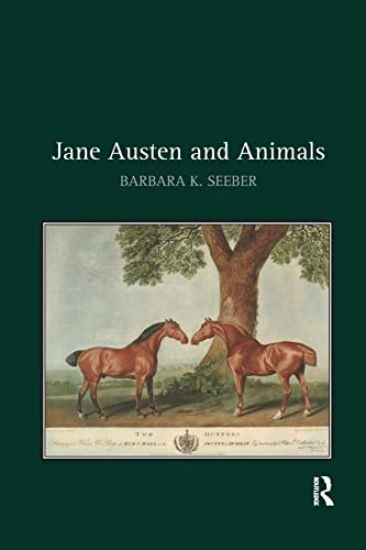
Jane Austen and Animals

Jane Austen and Animals

Barbara K. Seeber

TAYLOR FRANCIS LTD
2021
nidottu
The first full-length study of animals in Jane Austen, Barbara K. Seeber’s book situates the author’s work within the serious debates about human-animal relations that began in the eighteenth century and continued into Austen’s lifetime. Seeber shows that Austen’s writings consistently align the objectification of nature with that of women and that Austen associates the hunting, shooting, racing, and consuming of animals with the domination of women. Austen’s complicated depictions of the use and abuse of nature also challenge postcolonial readings that interpret, for example, Fanny Price’s rejoicing in nature as a celebration of England’s imperial power. In Austen, hunting and the owning of animals are markers of station and a prerogative of power over others, while her representation of the hierarchy of food, where meat occupies top position, is identified with a human-nature dualism that objectifies not only nature, but also the women who are expected to serve food to men. In placing Austen’s texts in the context of animal-rights arguments that arose in the late eighteenth and early nineteenth centuries, Seeber expands our understanding of Austen’s participation in significant societal concerns and makes an important contribution to animal, gender, food, and empire studies in the nineteenth century.
The Slow Professor

The Slow Professor

Maggie Berg; Barbara K. Seeber

University of Toronto Press
2017
pokkari
If there is one sector of society that should be cultivating deep thought in itself and others, it is academia. Yet the corporatisation of the contemporary university has sped up the clock, demanding increased speed and efficiency from faculty regardless of the consequences for education and scholarship. In The Slow Professor, Maggie Berg and Barbara K. Seeber discuss how adopting the principles of the Slow movement in academic life can counter this erosion of humanistic education. Focusing on the individual faculty member and his or her own professional practice, Berg and Seeber present both an analysis of the culture of speed in the academy and ways of alleviating stress while improving teaching, research, and collegiality. The Slow Professor will be a must-read for anyone in academia concerned about the frantic pace of contemporary university life.
The Slow Professor

The Slow Professor

Maggie Berg; Barbara K. Seeber

University of Toronto Press
2016
sidottu
If there is one sector of society that should be cultivating deep thought in itself and others, it is academia. Yet the corporatisation of the contemporary university has sped up the clock, demanding increased speed and efficiency from faculty regardless of the consequences for education and scholarship. In The Slow Professor, Maggie Berg and Barbara K. Seeber discuss how adopting the principles of the Slow movement in academic life can counter this erosion of humanistic education. Focusing on the individual faculty member and his or her own professional practice, Berg and Seeber present both an analysis of the culture of speed in the academy and ways of alleviating stress while improving teaching, research, and collegiality. The Slow Professor will be a must-read for anyone in academia concerned about the frantic pace of contemporary university life.
Jane Austen and Animals

Jane Austen and Animals

Barbara K. Seeber

Ashgate Publishing Limited
2013
sidottu
The first full-length study of animals in Jane Austen, Barbara K. Seeber’s book situates the author’s work within the serious debates about human-animal relations that began in the eighteenth century and continued into Austen’s lifetime. Seeber shows that Austen’s writings consistently align the objectification of nature with that of women and that Austen associates the hunting, shooting, racing, and consuming of animals with the domination of women. Austen’s complicated depictions of the use and abuse of nature also challenge postcolonial readings that interpret, for example, Fanny Price’s rejoicing in nature as a celebration of England’s imperial power. In Austen, hunting and the owning of animals are markers of station and a prerogative of power over others, while her representation of the hierarchy of food, where meat occupies top position, is identified with a human-nature dualism that objectifies not only nature, but also the women who are expected to serve food to men. In placing Austen’s texts in the context of animal-rights arguments that arose in the late eighteenth and early nineteenth centuries, Seeber expands our understanding of Austen’s participation in significant societal concerns and makes an important contribution to animal, gender, food, and empire studies in the nineteenth century.
General Consent in Jane Austen

General Consent in Jane Austen

Barbara K. Seeber

McGill-Queen's University Press
2000
sidottu
General Consent in Jane Austen examines the "early" and "late" novels as well as the juvenilia in the light of three paradigms: "The Other Heroine" focuses on voices that challenge and compete with the central heroines, "Cameo Appearances" examines buried past narratives, and "Investigating Crimes" explores acts of violence. These three avenues into dialogic space destabilize conventional readings of Austen. The Bakhtinian model that structures this book is not one of linearity and balance but one of conflict, simultaneity, and multiplicity. While some novels fit into only one paradigm, others incorporate more than one; Mansfield Park receives the most attention. A bold and provocative study, General Consent in Jane Austen will be of interest not only to Austen scholars but to scholars of literary theory and dialogism.