Kirjojen hintavertailu. Mukana 12 595 353 kirjaa ja 12 kauppaa.

Kirjailija

Barbara Means

Kirjat ja teokset yhdessä paikassa: 6 kirjaa, julkaisuja vuosilta 1986-2018, suosituimpien joukossa Learning Online. Vertaile teosten hintoja ja tarkista saatavuus suomalaisista kirjakaupoista.

6 kirjaa

Kirjojen julkaisuhaarukka 1986-2018.

Learning Analytics Goes to School

Learning Analytics Goes to School

Andrew Krumm; Barbara Means; Marie Bienkowski

Routledge
2018
sidottu
Learning Analytics Goes to School presents a framework for engaging in education research and improving education practice through the use of newly available data sources and analytical approaches. The application of data-intensive research techniques to understanding and improving learning environments has been growing at a rapid pace. In this book, three leading researchers convey lessons from their own experiences—and the current state of the art in educational data mining and learning analytics more generally—by providing an explicit set of tools and processes for engaging in collaborative data-intensive improvement.
Learning Analytics Goes to School

Learning Analytics Goes to School

Andrew Krumm; Barbara Means; Marie Bienkowski

Routledge
2018
nidottu
Learning Analytics Goes to School presents a framework for engaging in education research and improving education practice through the use of newly available data sources and analytical approaches. The application of data-intensive research techniques to understanding and improving learning environments has been growing at a rapid pace. In this book, three leading researchers convey lessons from their own experiences—and the current state of the art in educational data mining and learning analytics more generally—by providing an explicit set of tools and processes for engaging in collaborative data-intensive improvement.
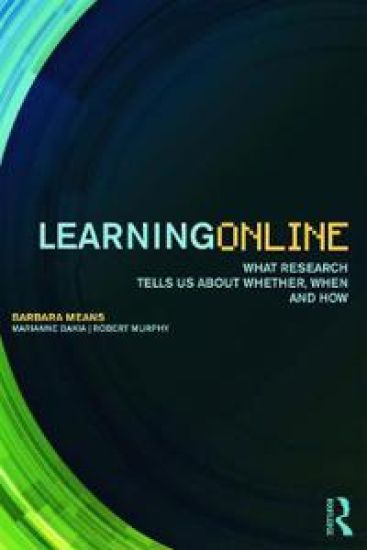
Learning Online

Learning Online

Barbara Means; Marianne Bakia; Robert Murphy

Routledge
2014
sidottu
At a time when more and more of what people learn both in formal courses and in everyday life is mediated by technology, Learning Online provides a much-needed guide to different forms and applications of online learning. This book describes how online learning is being used in both K-12 and higher education settings as well as in learning outside of school. Particular online learning technologies, such as MOOCs (massive open online courses), multi-player games, learning analytics, and adaptive online practice environments, are described in terms of design principles, implementation, and contexts of use. Learning Online synthesizes research findings on the effectiveness of different types of online learning, but a major message of the book is that student outcomes arise from the joint influence of implementation, context, and learner characteristics interacting with technology--not from technology alone. The book describes available research about how best to implement different forms of online learning for specific kinds of students, subject areas, and contexts. Building on available evidence regarding practices that make online and blended learning more effective in different contexts, Learning Online draws implications for institutional and state policies that would promote judicious uses of online learning and effective implementation models. This in-depth research work concludes with a call for an online learning implementation research agenda, combining education institutions and research partners in a collaborative effort to generate and share evidence on effective practices.
Learning Online

Learning Online

Barbara Means; Marianne Bakia; Robert Murphy

Routledge
2014
nidottu
At a time when more and more of what people learn both in formal courses and in everyday life is mediated by technology, Learning Online provides a much-needed guide to different forms and applications of online learning. This book describes how online learning is being used in both K-12 and higher education settings as well as in learning outside of school. Particular online learning technologies, such as MOOCs (massive open online courses), multi-player games, learning analytics, and adaptive online practice environments, are described in terms of design principles, implementation, and contexts of use. Learning Online synthesizes research findings on the effectiveness of different types of online learning, but a major message of the book is that student outcomes arise from the joint influence of implementation, context, and learner characteristics interacting with technology--not from technology alone. The book describes available research about how best to implement different forms of online learning for specific kinds of students, subject areas, and contexts. Building on available evidence regarding practices that make online and blended learning more effective in different contexts, Learning Online draws implications for institutional and state policies that would promote judicious uses of online learning and effective implementation models. This in-depth research work concludes with a call for an online learning implementation research agenda, combining education institutions and research partners in a collaborative effort to generate and share evidence on effective practices.
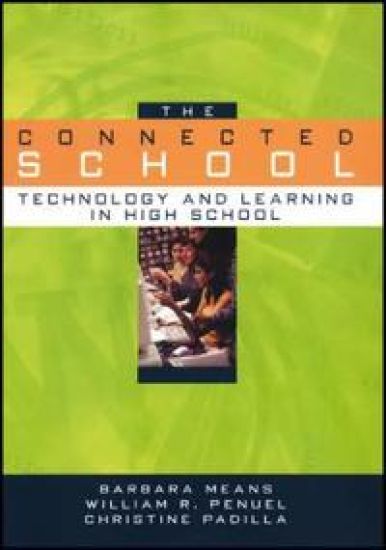
The Connected School

The Connected School

Barbara Means; William R. Penuel; Christine Padilla

John Wiley Sons Inc
2008
nidottu
Take an intimate look at six technology-using high schools and gain useful insight regarding how computer and Internet technology can best support teaching and learning. The Connected School offers school administrators, leaders, and teachers a behind-the-scenes look at what happens when a school becomes "connected," not just in terms of computers and networking but in terms of teacher collaboration and support as well. Based on the real life experiences of six "connected" schools, the authors make a compelling case for the appropriate use of technology and show how it can greatly enhance students' learning experiences and further their educational goals, even in challenging urban settings.
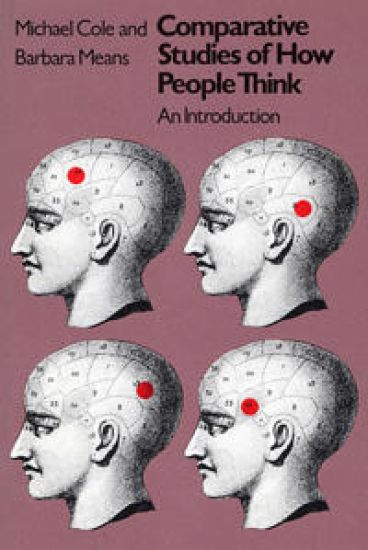
Comparative Studies of How People Think

Comparative Studies of How People Think

Michael Cole; Barbara Means

Harvard University Press
1986
nidottu
The psychology of thinking has traditionally been in the business of making comparisons between different groups of people. On the whole, these comparisons have rendered a substantial body of knowledge; but all too often, they have suffered the pitfalls of faulty organizational logic and unfounded or invidious conclusions. In this extraordinarily clear and critical introduction, Michael Cole and Barbara Means out the problems involved in comparing how people think. They show, for example, how variables confounded with the constitution of two groups can lead to the wrong interpretation of group differences. More subtly, they demonstrate how cognitive differences between groups can destroy the equivalence of the tests used to make comparisons. They also discuss the unfortunate way that observed differences between groups have led to prejudicial interpretations in which mental differences are transformed into mental deficits.Cole and Means illustrate all these problems with a rich variety of examples drawn from the research literature in comparative cognition. Because they use real examples. Cole and Means offer much more than the usual banal remedies for improving research design. Instead of merely telling the student to run the right control groups, for example, they show how theory enters into the selection of appropriate controls and how atheoretic comparative work can easily run amok.It is a rare event when seasoned researchers take time to tell the novice how to avoid the problems of previous research. Comparative Studies of How People Think provides just such an event.