

Kirjailija
Barbara Prainsack
Kirjat ja teokset yhdessä paikassa: 16 kirjaa, julkaisuja vuosilta 2012-2026, suosituimpien joukossa Datenschlussverkauf. Vertaile teosten hintoja ja tarkista saatavuus suomalaisista kirjakaupoista.
16 kirjaa
Kirjojen julkaisuhaarukka 2012-2026.

States of Solidarity: How to Build a Society makes the urgent case that solidarity is not a relic of the past but a foundational pillar for building just, democratic, and sustainable futures. While contemporary societies have invested heavily in debates about justice and institutional reform, they often overlook the social glue that binds people together in everyday life: solidarity. Without it, democratic legitimacy weakens, trust frays, and the collective capacity to act on shared problems-such as climate change, economic inequality, or the governance of digital technologies-gets lost. This timely and original monograph reclaims solidarity as a dynamic and generative social force. It explores how practices of mutual support, rooted in shared experiences and goals, can restore trust and cohesion in fragmented societies. Rather than reducing solidarity to charity or moral duty, it understands it as a deeply political practice that empowers people to shape their collective lives. Bringing conceptual clarity and empirical insight to bear, States of Solidarity addresses three of the defining challenges of our time-environmental crisis, democratic erosion in economic governance, and digital transformations with the proliferation of artificial intelligence-through the lens of solidaristic institutions and relationships. It shows how hegemonic narratives and technocratic complexity often obstruct collective action, but also how grassroots movements and inclusive practices can reinvigorate democratic life. The book ends with a powerful vision of the 'good state' in the 21st century-one that nurtures solidaristic ties, prioritises care and economic justice, and equips societies to thrive in conditions of uncertainty. States of Solidarity invites readers to engage in a bold reimagining of what our political and economic systems could become, and why we must act together to build them.



COVID-19 has exposed defects in our current political–economic order: extreme wealth inequality, an ideology-driven government, a greedy corporate sector, a precarious labour force and a looming climate catastrophe. This accessible book offers a unique blend of moral imagination and social–political analysis to overcome these defects. It focuses on two characteristics of contemporary societies – hegemony and complexity – that have inhibited our ability to imagine, and take seriously, better practices and institutions. Considering housing, work, governance, finance, climate change and more, this book presents feasible and pragmatic solutions which are informed by a comprehensive vision of a flourishing, sustainable and richly democratic society.

COVID-19 has exposed defects in our current political–economic order: extreme wealth inequality, an ideology-driven government, a greedy corporate sector, a precarious labour force and a looming climate catastrophe. This accessible book offers a unique blend of moral imagination and social–political analysis to overcome these defects. It focuses on two characteristics of contemporary societies – hegemony and complexity – that have inhibited our ability to imagine, and take seriously, better practices and institutions. Considering housing, work, governance, finance, climate change and more, this book presents feasible and pragmatic solutions which are informed by a comprehensive vision of a flourishing, sustainable and richly democratic society.

Qualitative und interpretative Methoden in der Politikwissenschaft
Barbara Prainsack; Mirjam Pot
UTB GmbH
2021
pokkari


Solidarity in Biomedicine and Beyond
Barbara Prainsack; Alena Buyx
Cambridge University Press
2018
pokkari
In times of global economic and political crises, the notion of solidarity is gaining new currency. This book argues that a solidarity-based perspective can help us to find new ways to address pressing problems. Exemplified by three case studies from the field of biomedicine: databases for health and disease research, personalised healthcare, and organ donation, it explores how solidarity can make a difference in how we frame problems, and in the policy solutions that we can offer.
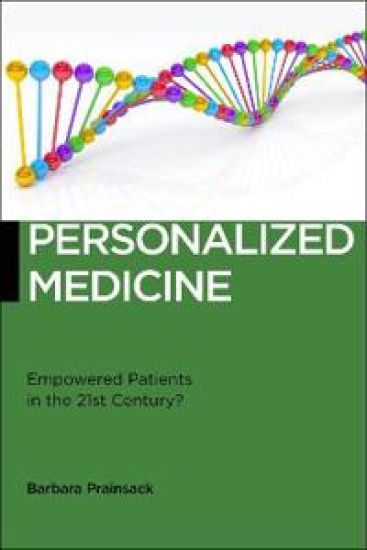
Inside today's data-driven personalized medicine, and the time, effort, and information required from patients to make it a reality Medicine has been personal long before the concept of "personalized medicine" became popular. Health professionals have always taken into consideration the individual characteristics of their patients when diagnosing, and treating them. Patients have cared for themselves and for each other, contributed to medical research, and advocated for new treatments. Given this history, why has the notion of personalized medicine gained so much traction at the beginning of the new millennium? Personalized Medicine investigates the recent movement for patients' involvement in how they are treated, diagnosed, and medicated; a movement that accompanies the increasingly popular idea that people should be proactive, well-informed participants in their own healthcare. While it is often the case that participatory practices in medicine are celebrated as instances of patient empowerment or, alternatively, are dismissed as cases of patient exploitation, Barbara Prainsack challenges these views to illustrate how personalized medicine can give rise to a technology-focused individualism, yet also present new opportunities to strengthen solidarity. Facing the future, this book reveals how medicine informed by digital, quantified, and computable information is already changing the personalization movement, providing a contemporary twist on how medical symptoms or ailments are shared and discussed in society. Bringing together empirical work and critical scholarship from medicine, public health, data governance, bioethics, and digital sociology, Personalized Medicine analyzes the challenges of personalization driven by patient work and data. This compelling volume proposes an understanding that uses novel technological practices to foreground the needs and interests of patients, instead of being ruled by them.
Inside today's data-driven personalized medicine, and the time, effort, and information required from patients to make it a reality Medicine has been personal long before the concept of “personalized medicine” became popular. Health professionals have always taken into consideration the individual characteristics of their patients when diagnosing, and treating them. Patients have cared for themselves and for each other, contributed to medical research, and advocated for new treatments. Given this history, why has the notion of personalized medicine gained so much traction at the beginning of the new millennium? Personalized Medicine investigates the recent movement for patients’ involvement in how they are treated, diagnosed, and medicated; a movement that accompanies the increasingly popular idea that people should be proactive, well-informed participants in their own healthcare. While it is often the case that participatory practices in medicine are celebrated as instances of patient empowerment or, alternatively, are dismissed as cases of patient exploitation, Barbara Prainsack challenges these views to illustrate how personalized medicine can give rise to a technology-focused individualism, yet also present new opportunities to strengthen solidarity. Facing the future, this book reveals how medicine informed by digital, quantified, and computable information is already changing the personalization movement, providing a contemporary twist on how medical symptoms or ailments are shared and discussed in society. Bringing together empirical work and critical scholarship from medicine, public health, data governance, bioethics, and digital sociology, Personalized Medicine analyzes the challenges of personalization driven by patient work and data. This compelling volume proposes an understanding that uses novel technological practices to foreground the needs and interests of patients, instead of being ruled by them.

The real heroes of television crime shows in the twenty-first century are no longer police detectives but forensic technologies. The immense popularity of high-tech crime television shows has changed the way in which crime scene work is viewed. The term 'CSI-effect' was coined to signify a situation where people's views and practices have been influenced by such media representations, e.g. judges and jurors putting more weight on forensic evidence that has been produced with high-tech tools - in particular, DNA evidence - than on other kinds of evidence. While considerable scholarly attention has been paid to examining the CSI effect on publics, jurors, judges, and police investigators, prisoners' views on forensic technologies and policing have been under-explored. Drawing on a research sample of over 50 interviews carried out with prisoners in Portugal and Austria, this groundbreaking book shows how prisoners view crime scene traces, how they understand crime scene technologies, and what effect they attribute to the existence of large police databases on their own lives, careers, and futures. Through critically engaging with STS, sociological and criminological perspectives on the use of DNA technologies within the criminal justice system, this work provides the reader with valuable insights into the effect of different legal, political, discursive, and historical configurations on how crime scene technologies are utilized by the police and related to by convicted offenders.

Genetics as Social Practice
Barbara Prainsack; Silke Schicktanz; Gabriele Werner-Felmayer
Routledge
2017
nidottu
Recent debate about the ethical and regulatory dimensions of developments in genetics has sidelined societal and cultural aspects, which arguably are indispensable for a nuanced understanding of the complexities of the topic. Regulatory and ethical debates benefit from taking seriously this ’third dimension’ of culture, which often determines the configurations and limits of the space within which scientific, ethical and legal debate can take place. To fill this gap, this volume brings together contributions exploring the mutual relationships between genetics, markets, societies and identities in genetics and genomics. It draws upon the recent transdisciplinary debate on how socio-cultural factors influence understandings of ’genetics2.0' and shows how individual and collective identities are challenged or reinforced by cultural meanings and practices of genetics. This book will become a standard reference for everyone seeking to make sense of the controversies and shifts in the field of genetics in the second decade of the twenty-first century.

Solidarity in Biomedicine and Beyond
Barbara Prainsack; Alena Buyx
Cambridge University Press
2017
sidottu
In times of global economic and political crises, the notion of solidarity is gaining new currency. This book argues that a solidarity-based perspective can help us to find new ways to address pressing problems. Exemplified by three case studies from the field of biomedicine: databases for health and disease research, personalised healthcare, and organ donation, it explores how solidarity can make a difference in how we frame problems, and in the policy solutions that we can offer.

Genetics as Social Practice
Barbara Prainsack; Silke Schicktanz; Gabriele Werner-Felmayer
Ashgate Publishing Limited
2014
sidottu
Recent debate about the ethical and regulatory dimensions of developments in genetics has sidelined societal and cultural aspects, which arguably are indispensable for a nuanced understanding of the complexities of the topic. Regulatory and ethical debates benefit from taking seriously this ’third dimension’ of culture, which often determines the configurations and limits of the space within which scientific, ethical and legal debate can take place. To fill this gap, this volume brings together contributions exploring the mutual relationships between genetics, markets, societies and identities in genetics and genomics. It draws upon the recent transdisciplinary debate on how socio-cultural factors influence understandings of ’genetics2.0' and shows how individual and collective identities are challenged or reinforced by cultural meanings and practices of genetics. This book will become a standard reference for everyone seeking to make sense of the controversies and shifts in the field of genetics in the second decade of the twenty-first century.

The real heroes of television crime shows in the twenty-first century are no longer police detectives but forensic technologies. The immense popularity of high-tech crime television shows has changed the way in which crime scene work is viewed. The term 'CSI-effect' was coined to signify a situation where people's views and practices have been influenced by such media representations, e.g. judges and jurors putting more weight on forensic evidence that has been produced with high-tech tools - in particular, DNA evidence - than on other kinds of evidence. While considerable scholarly attention has been paid to examining the CSI effect on publics, jurors, judges, and police investigators, prisoners' views on forensic technologies and policing have been under-explored. Drawing on a research sample of over 50 interviews carried out with prisoners in Portugal and Austria, this groundbreaking book shows how prisoners view crime scene traces, how they understand crime scene technologies, and what effect they attribute to the existence of large police databases on their own lives, careers, and futures. Through critically engaging with STS, sociological and criminological perspectives on the use of DNA technologies within the criminal justice system, this work provides the reader with valuable insights into the effect of different legal, political, discursive, and historical configurations on how crime scene technologies are utilized by the police and related to by convicted offenders.