Kirjojen hintavertailu. Mukana 12 595 353 kirjaa ja 12 kauppaa.

Kirjailija

Barbara Revelle

Kirjat ja teokset yhdessä paikassa: 2 kirjaa, julkaisuja vuodelta 2022, suosituimpien joukossa Miami Virtue. Vertaile teosten hintoja ja tarkista saatavuus suomalaisista kirjakaupoista.

2 kirjaa

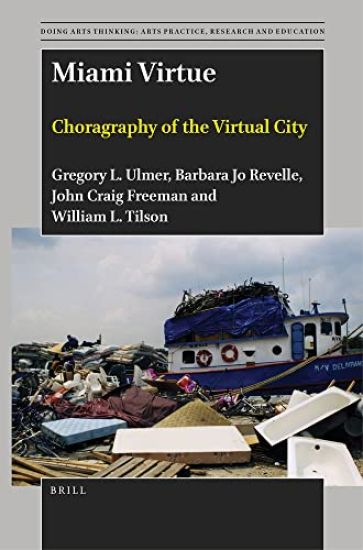
Miami Virtue

Miami Virtue

Gregory Ulmer; Barbara Revelle; John Freeman; William Tilson

BRILL
2022
sidottu
The Florida Research Ensemble (Ulmer, Revelle, Freeman and Tilson) is an interdisciplinary collaborative arts and research group developing choragraphy, a method of inquiry which applies modernist arts practices and poststructural theory to the design and testing of image as category. The authors argue that image categories functions for networked digital media the way Aristotle's word categories functioned for literate concepts. “Chora” was retrieved for contemporary philosophy by Jacques Derrida, in the context of his deconstruction of Western metaphysics. Grounded in grammatology (the history and theory of writing), Derrida’s critique of Being and Becoming as primary concepts of reality is that the category or classification system invented within literacy is not adequate for the apparatus of electracy that has developed since the industrial revolution. The FRE project in Miami designed and tested a prototype for a choral category, capable of coordinating real places, cultural collective information, digital technologies, and personal experience. Miami Virtue tested choragraphy as a method for adopting a particular region (the Miami River), including primary discourses organizing its lifeworld, and articulating it as a category of thought. The designed and recorded virtual site functions for electracy the way concepts function for literacy: as a navigable set supporting holistic intelligence and public discourse.
Miami Virtue

Miami Virtue

Gregory Ulmer; Barbara Revelle; John Freeman; William Tilson

BRILL
2022
nidottu
The Florida Research Ensemble (Ulmer, Revelle, Freeman and Tilson) is an interdisciplinary collaborative arts and research group developing choragraphy, a method of inquiry which applies modernist arts practices and poststructural theory to the design and testing of image as category. The authors argue that image categories functions for networked digital media the way Aristotle's word categories functioned for literate concepts. “Chora” was retrieved for contemporary philosophy by Jacques Derrida, in the context of his deconstruction of Western metaphysics. Grounded in grammatology (the history and theory of writing), Derrida’s critique of Being and Becoming as primary concepts of reality is that the category or classification system invented within literacy is not adequate for the apparatus of electracy that has developed since the industrial revolution. The FRE project in Miami designed and tested a prototype for a choral category, capable of coordinating real places, cultural collective information, digital technologies, and personal experience. Miami Virtue tested choragraphy as a method for adopting a particular region (the Miami River), including primary discourses organizing its lifeworld, and articulating it as a category of thought. The designed and recorded virtual site functions for electracy the way concepts function for literacy: as a navigable set supporting holistic intelligence and public discourse.