Kirjojen hintavertailu. Mukana 12 295 749 kirjaa ja 12 kauppaa.

Kirjailija

Barbara Riddick

Kirjat ja teokset yhdessä paikassa: 8 kirjaa, julkaisuja vuosilta 1982-2017, suosituimpien joukossa Dyslexia. Vertaile teosten hintoja ja tarkista saatavuus suomalaisista kirjakaupoista.

8 kirjaa

Kirjojen julkaisuhaarukka 1982-2017.

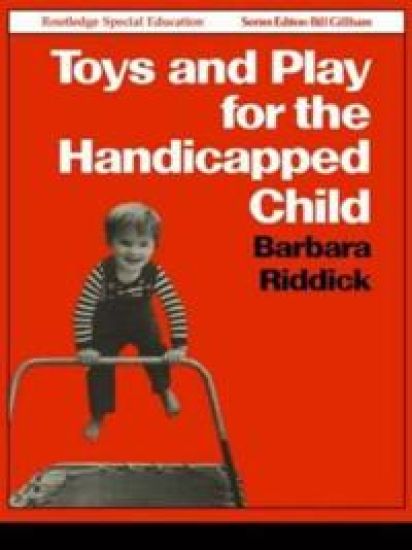
Toys and Play for the Handicapped Child
Toys and Play for the Handicapped Child is written by a psychologist who ran the first professionally staffed Toy Library in the UK. Her experience enables her to write in practical detail about the role of toys and play, both in normal development and in the development of handicapped children. It will be found equally useful by parents, teachers and other professionals, and by those concerned to promote productive play in handicapped and non handicapped children.
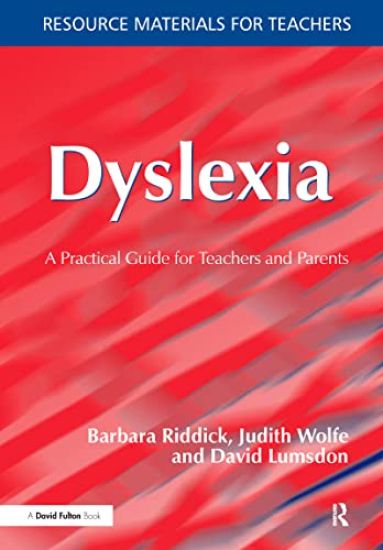
Dyslexia

Dyslexia

Barbara Riddick; Judith Wolfe; David Lumsdon

CRC Press
2016
sidottu
This book focuses on realistic strategies for non-specialists to use when working with pupils who have dyslexia. It offers detailed, practical guidance on defining and identifying dyslexia, dyslexia in the early and middle years and at secondary school, and worked examples of IEPs. It also discusses providing effective support for the literacy and numeracy hours, raising self-esteem, and working with parents and voluntary organizations. In addition, the authors cover using checklists and assessments, choosing suitable programs and resources, and useful addresses and books. Teachers and teaching assistants in mainstream classrooms and parents wanting to help their children will find this book invaluable.
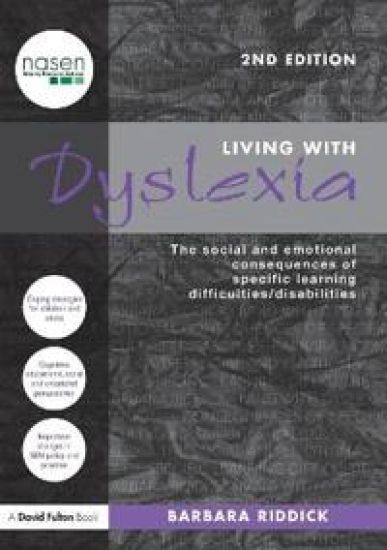
Living With Dyslexia

Living With Dyslexia

Barbara Riddick

Routledge
2016
sidottu
This book reinforces the need for understanding and support for childrenwith dyslexia from parents and teachers, but also the importance of thechildren's own understanding of their strengths and weaknesses in orderto fulfil their potential. It should be recommended reading for allthose involved in dyslexia. - Professor Angela Fawcett, Director of the Centre for Child Research, Swansea UniversityWhat is it like living with dyslexia on a day-to-day basis? Based on interviews with dyslexic children and their families, this insightful book presents first-hand accounts of how dyslexia affects the children themselves and the people around them.Living with Dyslexia, Second Edition places the original fascinating findings within the context of current research and practice in the UK, Europe, Australia and the USA. The author: examines issues of confidence and self-esteem; explores the coping strategies adopted by children and adults with dyslexia; investigates the concept of dyslexia-friendly schools; studies how children were first identified as having dyslexia, and the social and emotional difficulties they encountered; offers guidance on how teachers and parents can best support children with specific learning difficulties; considers the cognitive, educational, social and emotional perspectives in order for teachers and parents to gain a better understanding of dyslexia.This new edition provides an updated account of cognitive research and examines important changes in relation to Special Educational Needs policy and practice in the last ten years, including the Revised SEN Code of Practice (2001), Removing Barriers to Achievement (2004) and the National Literacy Strategy (2006).Living with Dyslexia recognises that the voices of children with dyslexia are increasingly important in developing good educational practice and makes an important contribution to the literature on dyslexia.
Living With Dyslexia

Living With Dyslexia

Barbara Riddick

Routledge
2009
nidottu
This book reinforces the need for understanding and support for childrenwith dyslexia from parents and teachers, but also the importance of thechildren's own understanding of their strengths and weaknesses in orderto fulfil their potential. It should be recommended reading for allthose involved in dyslexia. - Professor Angela Fawcett, Director of the Centre for Child Research, Swansea UniversityWhat is it like living with dyslexia on a day-to-day basis? Based on interviews with dyslexic children and their families, this insightful book presents first-hand accounts of how dyslexia affects the children themselves and the people around them.Living with Dyslexia, Second Edition places the original fascinating findings within the context of current research and practice in the UK, Europe, Australia and the USA. The author: examines issues of confidence and self-esteem; explores the coping strategies adopted by children and adults with dyslexia; investigates the concept of dyslexia-friendly schools; studies how children were first identified as having dyslexia, and the social and emotional difficulties they encountered; offers guidance on how teachers and parents can best support children with specific learning difficulties; considers the cognitive, educational, social and emotional perspectives in order for teachers and parents to gain a better understanding of dyslexia.This new edition provides an updated account of cognitive research and examines important changes in relation to Special Educational Needs policy and practice in the last ten years, including the Revised SEN Code of Practice (2001), Removing Barriers to Achievement (2004) and the National Literacy Strategy (2006).Living with Dyslexia recognises that the voices of children with dyslexia are increasingly important in developing good educational practice and makes an important contribution to the literature on dyslexia.
Dyslexia

Dyslexia

Barbara Riddick; Judith Wolfe; David Lumsdon

David Fulton Publishers Ltd
2004
nidottu
This book focuses on realistic strategies for non-specialists to use when working with pupils who have dyslexia. It offers detailed, practical guidance on defining and identifying dyslexia, dyslexia in the early and middle years and at secondary school, and worked examples of IEPs. It also discusses providing effective support for the literacy and numeracy hours, raising self-esteem, and working with parents and voluntary organizations. In addition, the authors cover using checklists and assessments, choosing suitable programs and resources, and useful addresses and books. Teachers and teaching assistants in mainstream classrooms and parents wanting to help their children will find this book invaluable.
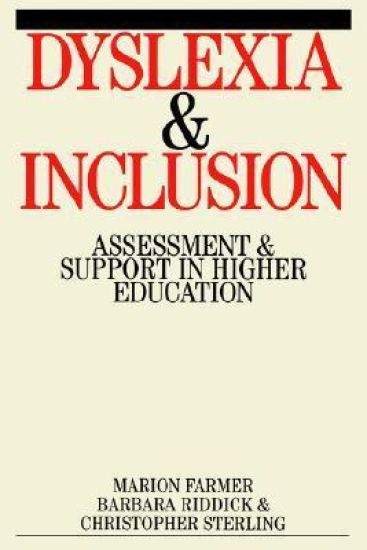
Dyslexia and Inclusion

Dyslexia and Inclusion

Marion Farmer; Barbara Riddick; Christopher M. Sterling

JOHN WILEY SONS INC
2002
nidottu
This book reflects on issues relating to the assessment and support of students with dyslexia within Universities and other institutions of higher education. It considers primarily how current practice in higher education can be developed to facilitate inclusion. The authors present the results of a series of qualitative and quantitative studies which investigate the coping, adjustment and perceptions of students with dylsexia, and the attitudes, perceptions and support strategies of academic and support staff. The book gives important information and advice and also food for thought for academic and support staff within the University sector who are concerned to improve the educational experience of all students. It should also be of interest to teachers in secondary and further education who are preparing students for higher education. Researchers in dyslexia as well as dyslexic students themselves will also find much to increase their understanding of this complex aspect of individual development.
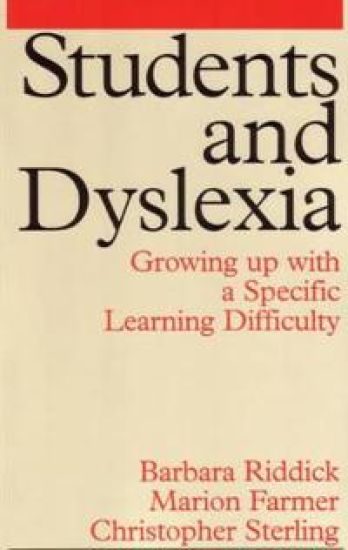
Students and Dyslexia

Students and Dyslexia

Barbara Riddick; Marion Farmer; Christopher M. Sterling

Whurr Publishers Ltd
1997
nidottu
Drawn from a research study of university students with dyslexia, this book presents transcripts of in-depth interviews in which students give compelling accounts of their experiences of growing up with dyslexia. The book is intended to help students or prospective students with dyslexia and also the people teaching them.
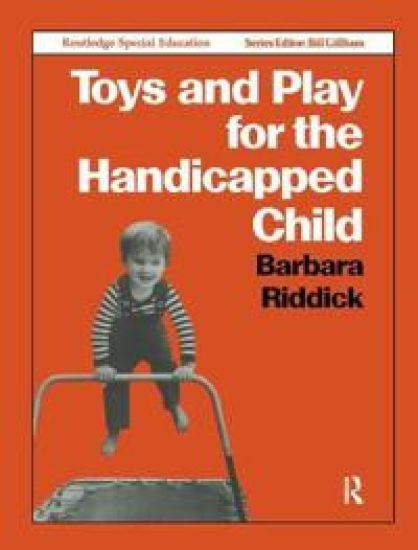
Toys and Play for the Handicapped Child
Toys and Play for the Handicapped Child is written by a psychologist who ran the first professionally staffed Toy Library in the UK. Her experience enables her to write in practical detail about the role of toys and play, both in normal development and in the development of handicapped children. It will be found equally useful by parents, teachers and other professionals, and by those concerned to promote productive play in handicapped and non handicapped children.