Kirjojen hintavertailu. Mukana 12 576 394 kirjaa ja 12 kauppaa.

Kirjailija

Barbara Tepa Lupack

Kirjat ja teokset yhdessä paikassa: 11 kirjaa, julkaisuja vuosilta 1994-2023, suosituimpien joukossa Critical Essays on Jerzy Kosinski. Vertaile teosten hintoja ja tarkista saatavuus suomalaisista kirjakaupoista.

11 kirjaa

Kirjojen julkaisuhaarukka 1994-2023.

The Othering of Women in Silent Film

The Othering of Women in Silent Film

Barbara Tepa Lupack

BLOOMSBURY PUBLISHING PLC
2023
sidottu
In The Othering of Women in Silent Film: Cultural, Historical, and Literary Contexts, Barbara Tepa Lupack explores the rampant racial and gender stereotyping depicted in early cinema, demonstrating how those stereotypes helped shape American attitudes and practices. Using social, cultural, literary, and cinema history as a focus, this book offers insights into issues of Othering, including discrimination, exclusion, and sexism, that are as timely today as they were a century ago. Lupack not only examines the ways that dominant cinema of the era imprinted indelible and pejorative images of women—including African Americans, Native Americans, Asians, Hispanics, and New Women/Suffragists—but also reveals the ways in which a number of pioneering early filmmakers and performers attempted to counter those depictions by challenging the imagery, interrogating the stereotypes, and re-politicizing the familiar narratives. Scholars of film, gender, history, and race studies will find this book of particular interest.
Being There in the Age of Trump

Being There in the Age of Trump

Barbara Tepa Lupack

Rowman Littlefield
2020
sidottu
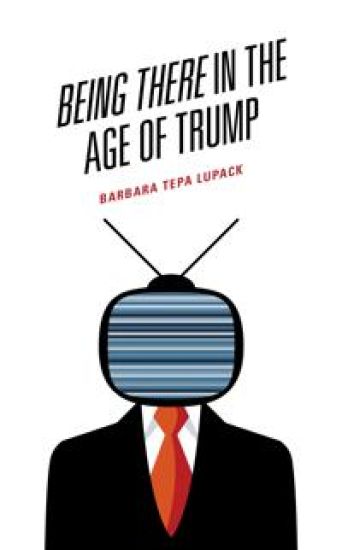
Jerzy Kosinski’s Being There (published in 1970 and adapted to film in 1979) was prescient in its vision of a simple man without discernible talent or political experience whose knowledge of the world comes almost exclusively from television. Yet his very shallowness establishes him as a TV celebrity and propels him to the pinnacle of American government. Both an incisive satire and a clarion call to resist the collectivizing force of the media that influences American life and shapes, distorts, and ultimately corrupts politics and culture, Being There offered a trenchant comment on the nature of “being” in the modern world of power. And it critiqued the tendency of Americans to seek mindless distraction rather than engagement and to find profundity in banal slogans and slick visuals. Issued a half century ago, Kosinski’s warning not to let hollow imagery trump our good sense and become our new reality is even more urgent today. The first book-length examination of Kosinski in more than a decade, Being There in the Age of Trump goes beyond conventional literary and film analysis to a larger interdisciplinary and cultural study of a work still timely and popular.
Silent Serial Sensations

Silent Serial Sensations

Barbara Tepa Lupack

Cornell University Press
2020
pokkari
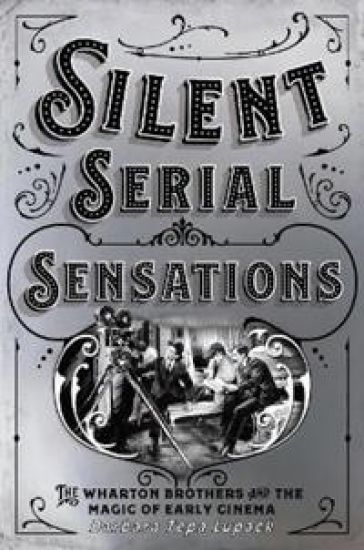
The first book-length study of pioneering and prolific filmmakers Ted and Leo Wharton, Silent Serial Sensations offers a fascinating account of the dynamic early film industry. As Barbara Tepa Lupack demonstrates, the Wharton brothers were behind some of the most profitable and influential productions of the era, including The Exploits of Elaine and The Mysteries of Myra, which starred such popular performers as Pearl White, Irene Castle, Francis X. Bushman, and Lionel Barrymore. Working from the independent film studio they established in Ithaca, New York, Ted and Leo turned their adopted town into "Hollywood on Cayuga." By interweaving contemporary events and incorporating technological and scientific innovations, the Whartons expanded the possibilities of the popular serial motion picture and defined many of its conventions. A number of the sensational techniques and character types they introduced are still being employed by directors and producers a century later.
Richard E. Norman and Race Filmmaking

Richard E. Norman and Race Filmmaking

Barbara Tepa Lupack

Indiana University Press
2013
pokkari
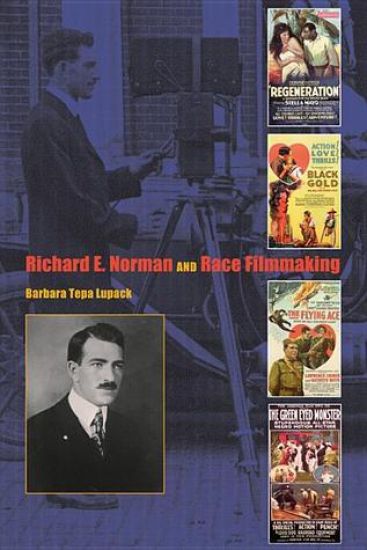
In the early 1900s, so-called race filmmakers set out to produce black-oriented pictures to counteract the racist caricatures that had dominated cinema from its inception. Richard E. Norman, a southern-born white filmmaker, was one such pioneer. From humble beginnings as a roving "home talent" filmmaker, recreating photoplays that starred local citizens, Norman would go on to produce high-quality feature-length race pictures. Together with his better-known contemporaries Oscar Micheaux and Noble and George Johnson, Richard E. Norman helped to define early race filmmaking. Making use of unique archival resources, including Norman's personal and professional correspondence, detailed distribution records, and newly discovered original shooting scripts, this book offers a vibrant portrait of race in early cinema.
Richard E. Norman and Race Filmmaking

Richard E. Norman and Race Filmmaking

Barbara Tepa Lupack

Indiana University Press
2013
sidottu
In the early 1900s, so-called race filmmakers set out to produce black-oriented pictures to counteract the racist caricatures that had dominated cinema from its inception. Richard E. Norman, a southern-born white filmmaker, was one such pioneer. From humble beginnings as a roving "home talent" filmmaker, recreating photoplays that starred local citizens, Norman would go on to produce high-quality feature-length race pictures. Together with his better-known contemporaries Oscar Micheaux and Noble and George Johnson, Richard E. Norman helped to define early race filmmaking. Making use of unique archival resources, including Norman's personal and professional correspondence, detailed distribution records, and newly discovered original shooting scripts, this book offers a vibrant portrait of race in early cinema.
Illustrating Camelot

Illustrating Camelot

Barbara Tepa Lupack; Alan Lupack

D.S. Brewer
2008
sidottu
An account in words and pictures of how the world of Camelot and King Arthur's knights was reflected in, and shaped by, book illustration. Arthurian book illustration, which came into its own in the Arthurian Revival of the nineteenth century and began to flourish as an important art form, has done more than any other visual art to shape notions of King Arthur and his court and to introduce the legends to the widest possible audience. Yet to date there has been no comprehensive study of Arthurian illustration. Illustrating Camelot fills this critical gap, by examining the special collaboration between illustrators and authors and exploring the ways that the best Arthurian illustrators move beyond mere reproduction to become interpretive readers of the texts they embellish. In versions that range from illustrated editions of Tennyson's Idylls of the King to the numerous editions and popular children's retellings of Malory's Morte d'Arthur and in forms that range from Julia Margaret Cameron's landmark photographic portraitsto Russell Flint's lush watercolours, from Gustave Doré's Gothic-styled engravings to Howard Pyle's American-inspired drawings, these illustrators - as this pioneering volume demonstrates - not only reinterpret the timeless talesbut also reflect the values of their age. Richly illustrated with both colour and black and white plates, the book will appeal to anyone interested in the stories of King Arthur and the world of Camelot. BARBARA TEPA LUPACK is former Academic Dean at SUNY and Fulbright Professor of American Literature in Poland and France.
Adapting the Arthurian Legends for Children

Adapting the Arthurian Legends for Children

Barbara Tepa Lupack

Palgrave Macmillan
2004
nidottu
For centuries, the Arthurian legends have fascinated and inspired countless writers, artists, and readers, many of whom first became acquainted with the story as youngsters. From the numerous retellings of Malory and versions of Tennyson for young people to the host of illustrated volumes to which the Arthurian Revival gave rise. From the Arthurian youth groups for boys (and eventually for girls) run by schools and churches to the school operas, theater pieces, and other entertainment for younger audiences; and from the Arthurian juvenile fiction sequences and series to the films and television shows featuring Arthurian characters, children have learned about the world of King Arthur and his Knights of the Round Table.
King Arthur in America

King Arthur in America

Alan Lupack; Barbara Tepa Lupack

D.S. Brewer
2001
pokkari
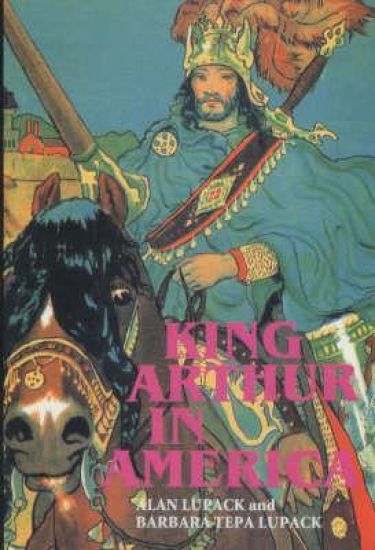
The first full-length study to focus exclusively on American reinterpretations of the Arthurian legends. The Arthurian legends have had an immense and enduring appeal in America, influencing both America's own mythologies and its literature, film, social history, and popular culture. This is the first full-length study to focus exclusively on American re-interpretations of Arthuriana, and it offers detailed treatments of major authors traditionally associated with the legends, including Mark Twain, Edwin Arlington Robinson, T.S. Eliot, and John Steinbeck; italso explores the important use of Arthurian material by authors not usually considered in an Arthurian context, and by lesser-known writers. Among the topics addressed in the chronological survey are the beginnings of American Arthurian literature and the different reactions to Tennyson; satire and parody; the moralising of knighthood and the development of a body of didactic literature for children; and the reinterpretations of Arthurian tradition in theworks of contemporary writers such as Walker Percy and John Updike. A concluding chapter analyses Arthurian themes in American popular fiction and film and demonstrates the extent to which the Arthurian tradition has influenced American popular culture. The volume is completed with a comprehensive bibliography. ALAN LUPACK is Curator of the Rossell Hope Robbins Library at the University of Rochester; BARBARA TEPA LUPACKis former AcademicDean at SUNY and Fulbright Professor of American Literature in Poland and France.
Vision/RE-Vision

Vision/RE-Vision

Barbara Tepa Lupack

Bowling Green University Popular Press,US
1996
nidottu
The essays in Vision/Re-Vision analyze in detail ten popular and important films adapted from contemporary American fiction by women, addressing the ways in which the writers' latent or overt feminist messages are reinterpreted by the filmmakers who bring them to the screen, demonstrating that there is much to praise as well as much to fault in the adaptations and that the process of adaptation itself is instructive rather than destructive, since it enriches understanding about both media.
Take Two

Take Two

Barbara Tepa Lupack

Bowling Green University Popular Press,US
1994
nidottu
From Edwin S. Porter to Mike Nichols, from D. W. Griffith to Steven Spielberg, American filmmakers have looked to the novel for story ideas. Different in its complexities from the classic novels of Dickens, London, and Tolstoy to which earlier filmmakers turned, the contemporary American novel poses a real challenge to the filmmaker, who must translate its occasionally unfilmable essence for a new audience. Take Two closely analyzes the adaptations of ten such works: Catch-22, One Flew over the Cuckoo's Nest, Slaughterhouse-Five, Being There, The World According to Garp, Sophie's Choice, The Color Purple, Ironweed, Tough Guys Don't Dance, and Billy Bathgate.