

Kirjailija
Barrie Trinder
Kirjat ja teokset yhdessä paikassa: 28 kirjaa, julkaisuja vuosilta 1980-2025, suosituimpien joukossa Derby (North) 1913. Vertaile teosten hintoja ja tarkista saatavuus suomalaisista kirjakaupoista.
28 kirjaa
Kirjojen julkaisuhaarukka 1980-2025.
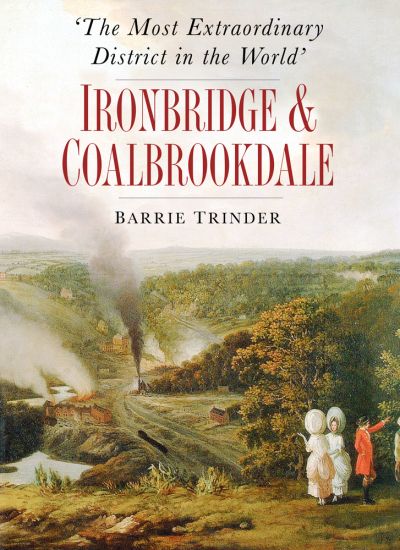
The Ironbridge Gorge, a cradle of the Industrial Revolution, in the late 18th century was a magnet for writers, artists and industrial spies. The latest wonders of engineering and metallurgical technology were to be seen in a spectacular natural setting, where the fast-flowing Severn passed between towering cliffs of limestone, and hillsides honeycombed with mine workings amid the smoke of furnaces and the clanking of engines. Barrie Trinder, the acknowledged authority on the subject, has selected the most interesting descriptions and pictures to provide an invaluable anthology, through contemporary evidence, of the place and the people in that pioneering period, when this corner of Shropshire was changing the world and was indeed, as Charles Hulbert described it in 1837, ‘the most extraordinary district in the world’. This book has become essential reading for anyone with an interest in the history of this fascinating area, or in the Industrial Revolution in general. It brings new understanding of the gorge itself and the industrial monuments preserved there and new insights for the specialist historian, whether concerned with social conditions, popular religion or industrial technology. This edition will continue to serve the same main groups of readers – local historians, educational groups and specialist historians – and, most of all, those general readers who know the area and recognise that something strange and seminal happened there that transformed not only Ironbridge and Coalbrookdale but the whole of our civilisation. The activity that once made the gorge so extraordinary has spread and grown to become a commonplace in modern industrial societies, leaving the place where it began a monument and a museum.
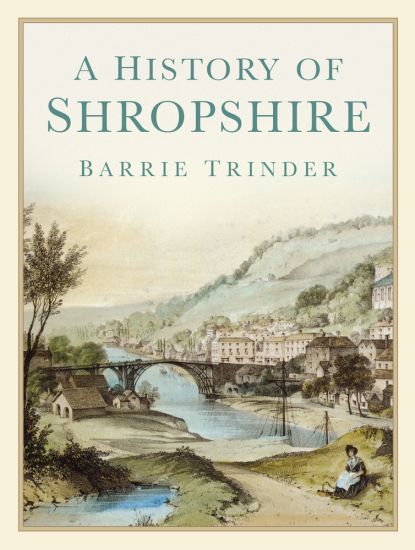
Shropshire is England’s largest inland county, extending from the fringes of the Black Country and the Potteries to the high sheep pastures of Clun Forest and the craggy heights of the Stiperstones. Dr Trinder’s very readable narrative encompasses Shropshire’s entire story, from prehistory to the 1990s. In Roman times, the citizens of Wroxeter enjoyed life in their elegant city beside the Severn, while later centuries of fighting along the Welsh border left a legacy of castles and fortifications, among them Offa’s Dyke, one of the supreme achievements of the Dark Ages. Most of Shropshire’s towns were deliberately planted in the early Middle Ages, among them Ludlow, one of the most beautiful towns in Europe. The development of the Shropshire iron industry, symbolised by the Iron Bridge, ushered in a period of industrialisation which has re-shaped the whole Western world. From 1788 to 1834 Thomas Telford was county surveyor, adding roads, canals and bridges of unfailing elegance to the landscape. During the two World Wars the county housed many military bases, while the most dramatic event of the post-war years has been the transformation of a legacy of industrial dereliction into the new town of Telford. This book is based on more than thirty years of Dr Trinder’s original research and close first-hand acquaintance with the Shropshire landscape. He provides a fascinating framework for further research, a thought-provoking chronicle for Salopians wishing to know more about their history and an informative introduction to Shropshire for its many visitors.
This book examines the industrial monuments of twentieth- century Britain. Each chapter takes a specific theme and examines it in the context of the buildings and structure of the twentieth century. The authors are both leading experts in the field, having written widely on various aspects of the subject. In this new and comprehensive survey they respond to the growing interest in twentieth-century architecture and industrial archaeology. The book is well illustrated with superb and unique illustrations drawn from the archives of the Royal Commission on the Historical Monuments of England. It will mark and celebrate the end of the century with a tribute to its remarkable built industrial heritage.
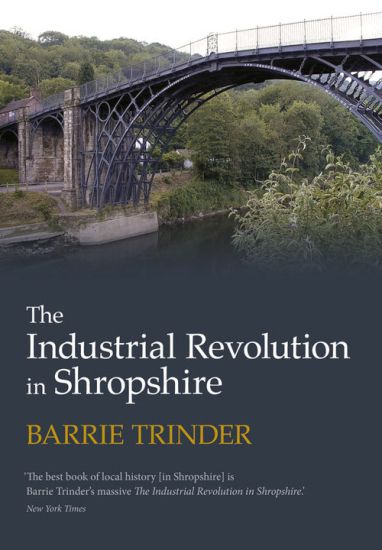
The first edition (1973) was acclaimed and it firmly established the Shropshire Coalfield as the cradle of the Industrial Revolution. After several reprints a new edition appeared in 1981, but since then there has been much further research, and re-examination of interpretations, prompting a completely re-written book with an entirely new structure, and with many more illustrations, all integrated with the relevant text. This is the book that made Ironbridge a place of international pilgrimage, and, in its new edition, provides a 21st-century explanation why!
Stratford on Avon 1885: Warwickshire Sheet 44.06
Barrie Trinder
ALAN GODFREY MAPS
2015
kartta, viikattu
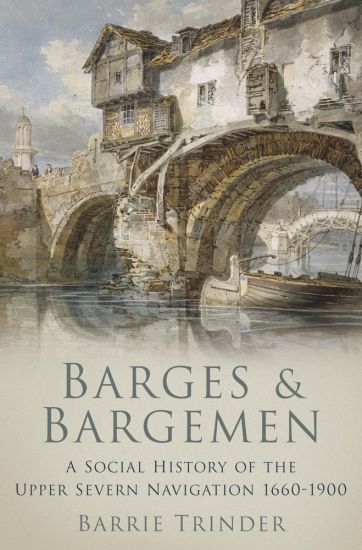
The carriage of goods in river barges was for centuries one of the principal forms of commercial transport in Britain. This book is the result of 40 years’ research into river navigations that have left few paper records. The author focuses on the River Severn between the Worcestershire ports of Bewdley and Stourport, and the medieval weir near Welshpool that marks the uppermost limit of boating, a stretch where the river remained ‘in a state of nature’. Dr Trinder traces the fascinating history of river trade from 1660, through its heyday during the Industrial Revolution, when such key commodities as Manchester textiles, Coalbrookdale iron castings, Birmingham hardware, and Hanley and Burslem pottery were all transported via the Severn, to its gentle decline in the late 19th century as other modes of transport took over. A wide range of documentary, archaeological and pictorial sources combine to create an absorbing picture of the colourful lives of barge owners and watermen, in addition to illustrating how the navigation was devised and operated. Complemented by superb illustrations, this book makes essential reading for both transport historians and those interested in the social and economic history of the West Midlands and the Borderland. Family historians, too, will be delighted by the author’s ground- breaking analysis of the linear riverside community that extended from Gloucestershire, through Worcestershire and Shropshire, into mid-Wales.
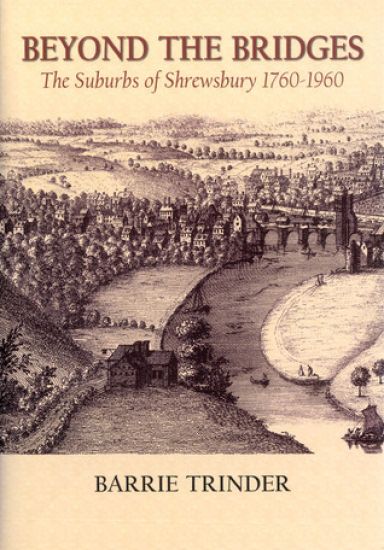
Shrewsbury is an archetypal 'city on a hill', the spires and towers of its churches crowning a sandstone bluff. This study examines the ways in which suburbs were shaped by government, looks at the varying roles of architects and builders, and analyses the extension of utilities, transport networks, sporting facilities, shops and churches.


The first bridge ever to be built of iron, in 1779, is perhaps the most important industrial monument in Britain. The bridge changed the pattern of communications in its area, and attracted thousands of sightseers. The first book with this title marked the bicentenary in 1979, explaining the conception, design and construction of the bridge and its social impact. However, since then, so much new evidence has required a completely new account. Of the iron bridges built in the half century after 1781, this book identifies nearly twice as many as the first edition. The definitive history by the two authors best qualified to write it.
This new book uses often remarkable probate inventories to explore the ways of life of the people who lived in the area between the 1600s and the 1760s ... coal miners, barge owners, ropemakers, tobacco pipe makers and shopkeepers. “ ... a fascinating picture of the lives and living conditions of the boatmen and coal-getters ... a book of immense interest to the keen social historian.” Best of British Magazine