Kirjojen hintavertailu. Mukana 12 166 294 kirjaa ja 12 kauppaa.

Kirjailija

Barry Barnes

Kirjat ja teokset yhdessä paikassa: 15 kirjaa, julkaisuja vuosilta 1991-2018, suosituimpien joukossa The Elements Of Social Theory. Vertaile teosten hintoja ja tarkista saatavuus suomalaisista kirjakaupoista.

15 kirjaa

Kirjojen julkaisuhaarukka 1991-2018.

The Grateful Dead's 100 Essential Songs

The Grateful Dead's 100 Essential Songs

Barry Barnes; Bob Trudeau

Rowman Littlefield
2018
sidottu
In the studio and more than 2,300 concerts between 1965 and 1995, the Grateful Dead performed more than 400 different songs. Their music continues to be tremendously popular as surviving band members and countless tribute bands memorialize the legacy the band left us upon the death of lead guitarist and singer, Jerry Garcia. The Grateful Dead’s 100 Essential Songs examines the band’s remarkable musical journey, pairing song analyses and memories with an online list of recommended recordings. Beyond a mere summary of each song, the descriptions here compare individual performances as they relate to the evolution of the band’s style and the waning health but vibrant spirit of Garcia. Welcoming readers into the unbroken chain of the Dead’s legacy, this book is indispensable for Deadheads, students of popular music, rock musicians, and anyone marveling at how the Dead’s appeal continues today. With linked performances and studio recordings to allow readers to listen along with the book, as well as other song analyses and first-hand narratives of the authors’ experience at hundreds of Dead concerts, the book will appeal to Deadheads, students of popular music, rock musicians, and anyone marveling at how the Dead’s appeal continues today. The online song list may be accessed under the features tab at https://rowman.com/ISBN/9781538110584.

The Elements of Social Theory

The Elements of Social Theory

Barry Barnes

Princeton University Press
2016
sidottu
Over the past quarter century, social theory has moved in diverse and often seemingly incompatible directions, exaggerating differences of approach that existed even in earlier periods. In a strikingly original book, Barry Barnes uses this intellectual diversity not only to identify but also to unify the central ways of looking at the field. Barnes frames his task by addressing the most important problem confronting all students of society today: the apparent conflict between cultural and functional methods of describing the social order, on one hand, and choice-theoretic accounts, on the other. But rather than reviewing in detail the origins and development of these contending views of reality, Barnes conducts a dialogue between the two perspectives, thereby revealing their respective strengths and shortcomings. In the process, he develops a case for a theoretical "third way," an interactionist understanding of the workings of the social order and the emergence of behavioral norms.Barnes successfully applies interactionist analysis, formerly used mostly for micro-social settings, to macro-phenomena like the formation of status groups, the origin of social movements, the politics of class formation, and the dynamics of bureaucratic action. He shows how these phenomena are inexplicable in terms of exclusively cultural- functional or choice-theoretic methods: they can be understood only by showing how norms emerge through interaction. Barnes has constructed a coherent and learned vision of the fundamentals of social theory that will excite not only sociologists but all social scientists and their students. Originally published in 1995. The Princeton Legacy Library uses the latest print-on-demand technology to again make available previously out-of-print books from the distinguished backlist of Princeton University Press. These editions preserve the original texts of these important books while presenting them in durable paperback and hardcover editions. The goal of the Princeton Legacy Library is to vastly increase access to the rich scholarly heritage found in the thousands of books published by Princeton University Press since its founding in 1905.
Interests and the Growth of Knowledge (RLE Social Theory)
Intriguingly different in approach from conventional works in the same area of inquiry, this study deals with the central problems and concerns of the sociology of knowledge as it has traditionally been conceived of. In other words, it is concerned with the relationship of knowledge, social interests and social structure, and with the various attempts which have been made to analyse the relationship.Barry Barnes takes the classic writings in the sociology of knowledge – by Marx, Lukács, Weber, Mannheim, Goldmann, Habermas and others – and uses them as resources in coming to grips with what he regards as the currently most interesting and significant questions in this area. This approach reflects one of the principal themes of the book itself. Knowledge, it is argued, is best treated as a resource available to those possessing it. This is the best perspective from which to understand its relationship to action and its historical significance; it is a perspective which avoids the problems of holding that knowledge is derivative, as well as those generated by the view that knowledge is a strong determinant of consciousness. the result is an unusual textbook, particularly valuable when read in conjunction with the original works it discusses.
Interests and the Growth of Knowledge (RLE Social Theory)
Intriguingly different in approach from conventional works in the same area of inquiry, this study deals with the central problems and concerns of the sociology of knowledge as it has traditionally been conceived of. In other words, it is concerned with the relationship of knowledge, social interests and social structure, and with the various attempts which have been made to analyse the relationship.Barry Barnes takes the classic writings in the sociology of knowledge – by Marx, Lukács, Weber, Mannheim, Goldmann, Habermas and others – and uses them as resources in coming to grips with what he regards as the currently most interesting and significant questions in this area. This approach reflects one of the principal themes of the book itself. Knowledge, it is argued, is best treated as a resource available to those possessing it. This is the best perspective from which to understand its relationship to action and its historical significance; it is a perspective which avoids the problems of holding that knowledge is derivative, as well as those generated by the view that knowledge is a strong determinant of consciousness. the result is an unusual textbook, particularly valuable when read in conjunction with the original works it discusses.
The Elements of Social Theory

The Elements of Social Theory

Barry Barnes

Princeton University Press
2014
pokkari
Over the past quarter century, social theory has moved in diverse and often seemingly incompatible directions, exaggerating differences of approach that existed even in earlier periods. In a strikingly original book, Barry Barnes uses this intellectual diversity not only to identify but also to unify the central ways of looking at the field. Barnes frames his task by addressing the most important problem confronting all students of society today: the apparent conflict between cultural and functional methods of describing the social order, on one hand, and choice-theoretic accounts, on the other. But rather than reviewing in detail the origins and development of these contending views of reality, Barnes conducts a dialogue between the two perspectives, thereby revealing their respective strengths and shortcomings. In the process, he develops a case for a theoretical "third way," an interactionist understanding of the workings of the social order and the emergence of behavioral norms.Barnes successfully applies interactionist analysis, formerly used mostly for micro-social settings, to macro-phenomena like the formation of status groups, the origin of social movements, the politics of class formation, and the dynamics of bureaucratic action. He shows how these phenomena are inexplicable in terms of exclusively cultural- functional or choice-theoretic methods: they can be understood only by showing how norms emerge through interaction. Barnes has constructed a coherent and learned vision of the fundamentals of social theory that will excite not only sociologists but all social scientists and their students. Originally published in 1995. The Princeton Legacy Library uses the latest print-on-demand technology to again make available previously out-of-print books from the distinguished backlist of Princeton University Press. These editions preserve the original texts of these important books while presenting them in durable paperback and hardcover editions. The goal of the Princeton Legacy Library is to vastly increase access to the rich scholarly heritage found in the thousands of books published by Princeton University Press since its founding in 1905.
Genomes and What to Make of Them

Genomes and What to Make of Them

Barry Barnes; John Dupre

University of Chicago Press
2013
nidottu
In 2003 the Human Genome Project announced that it had achieved a stunning scientific breakthrough: the full map of the human genome, and with it our first complete picture of the basic building block of human life. Since then, boasts about the benefits - and warnings of the dangers - of genomics have remained front-page news. For the nonscientist, the claims and counterclaims are dizzying - what does it really mean to understand the genome? Barry Barnes and John Dupre offer an answer to that question and many more in "Genomes and What to Make of Them", a clear and lively account of the genomic revolution and its promise. The book opens with a brief history of the science of genetics and genomics, from Mendel to Watson and Crick and all the way up to Craig Venter; from there the authors delve into the use of genomics in determining evolutionary paths. Barnes and Dupre then consider both the power and risks of genetics, from the economic potential of plant genomes to overblown claims that certain human genes can be directly tied to such traits as intelligence or homosexuality. Ultimately, the authors argue, we are now living with a new knowledge as powerful in its way as nuclear physics, and the stark choices that face us - between biological warfare and gene therapy, a new eugenics or a new agricultural revolution - will demand the full engagement of both scientists and citizens.
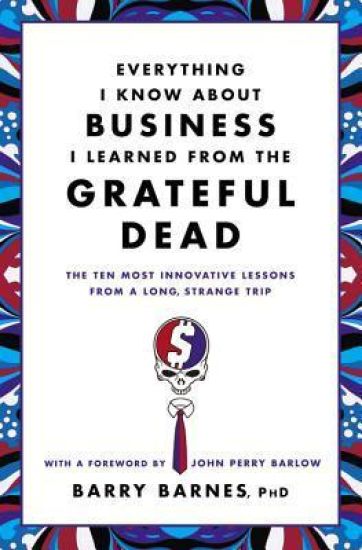
Everything I Know About Business I Learned From The Grateful Dead

Everything I Know About Business I Learned From The Grateful Dead

Barry Barnes; John Perry Barlow

Business Plus
2012
pokkari
The Grateful Dead, one of the most popular bands of all time, still enjoys incredible relevance to this day. But let's admit it, they weren't exactly poster boys for corporate America. Or were they? For an extraordinary 30 years, the Dead improvised a business plan-all while making huge profits and pioneering practices subsequently embraced by the business world. Now, business professor and lifelong Deadhead Barry Barnes shares the 10 most innovative business lessons from the band's illustrious career, including: creating and delivering superior customer value; implementing a flat management structure; sharing your content; and more. Barnes shows how the Dead were masters of "strategic improvisation"-the ability to adapt to changing times and circumstances-and that their success lay in their commitment to relentless variation. EVERYTHING I KNOW ABOUT BUSINESS I LEARNED FROM THE GRATEFUL DEAD teaches readers how they did it-and what any business can learn from their long, strange trip.
Genomes and What to Make of Them

Genomes and What to Make of Them

Barry Barnes; John Dupre

University of Chicago Press
2008
sidottu
The announcement in 2003 that the Human Genome Project had completed its map of the entire human genome was heralded as a stunning scientific breakthrough: our first full picture of the basic building blocks of human life. Since then, boasts about the benefits - and warnings of the dangers - of genomics have remained front-page news, with everyone agreeing that genomics has the potential to radically alter life as we know it.For the nonscientist, the claims and counterclaims are dizzying - what does it really mean to understand the genome? Barry Barnes and John Dupre offer an answer to that question and much more in "Genomes and What to Make of Them", a clear and lively account of the genomic revolution and its promise. The book opens with a brief history of the science of genetics and genomics, from Mendel to Watson and Crick and all the way up to Craig Venter; from there the authors delve into the use of genomics in determining evolutionary paths - and what it can tell us, for example, about how far we really have come from our ape ancestors.Barnes and Dupre then consider both the power and risks of genetics, from the economic potential of plant genomes to overblown claims that certain human genes can be directly tied to such traits as intelligence or homosexuality. Ultimately, the authors argue, we are now living with a new knowledge as powerful in its way as nuclear physics, and the stark choices that face us - between biological warfare and gene therapy, a new eugenics or a new agricultural revolution - will demand the full engagement of both scientists and citizens.Written in straightforward language but without denying the complexity of the issues, "Genomes and What to Make of Them" is an up-to-date primer and a blueprint for the future.
Scientific Knowledge and Sociological Theory
Originally published in 1974. Scientific Knowledge and Sociological Theory centres on the problem of explaining the manifest variety and contrast in the beliefs about nature held in different groups and societies. It maintains that the sociologist should treat all beliefs symmetrically and must investigate and account for allegedly "correct" or "scientific" beliefs just as he would "incorrect" or "unscientific" ones. From this basic position a study of scientific beliefs is constructed. The sociological interest of such beliefs is illustrated and a sociological perspective upon scientific change is developed.
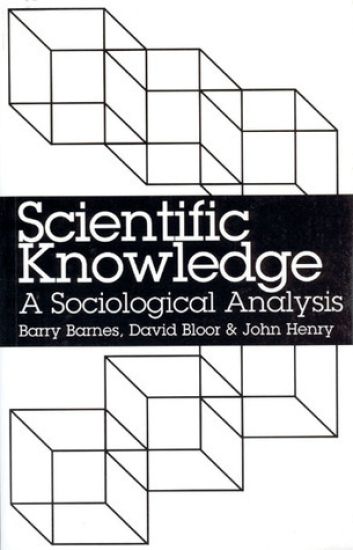
Scientific Knowledge

Scientific Knowledge

Barry Barnes; etc.; David Bloor; John Henry

Continuum International Publishing Group Ltd.
2000
sidottu
A systematic account of the importance of sociology for the understanding of scientific knowledge. Applying sociological analysis to specific historical case studies, the work attempts to show how the sociological approach is an essential complement to interpretations of scientific knowledge from other disciplines, and a necessary contribution to obtaining a scientific understanding of science. This book should be of interest to students in the social sciences and the history and philosophy of science, and to academics interested in knowledge, epistemology, the history of ideas and the "new" sociology of science.
Scientific Knowledge

Scientific Knowledge

Barry Barnes; David Bloor; John Henry

University of Chicago Press
1996
pokkari
This text presents an introduction to social studies of scientific knowledge. Using case studies from cognitive science, physics, and biology to illustrate descriptions and applications of the social study of science, the authors aim to provide a perspective on how science is actually done.
The Elements Of Social Theory

The Elements Of Social Theory

Barry Barnes

Routledge
1995
nidottu
A significant contribution to the development of social theory which provides a comprehensive summary of the various traditions. Barnes offers an accessible introduction for undergraduates which presents his own arguments along the way.; It is intended that this work will be adopted on undergraduate and postgraduate courses on social theory within social and political science. It will also appeal to students of social psychology, social anthropology and social geography.