

Kirjailija
Barry Crocker
Kirjat ja teokset yhdessä paikassa: 9 kirjaa, julkaisuja vuosilta 2006-2023, suosituimpien joukossa Inbound Logistics Management. Vertaile teosten hintoja ja tarkista saatavuus suomalaisista kirjakaupoista.
9 kirjaa
Kirjojen julkaisuhaarukka 2006-2023.

Collaboration in supply chains means managing the chain beyond traditional or transactional methods. It involves rethinking the way your business is managed, both internally and externally, and the ways in which employees and partners relate to each other. Stuart Emmett and Barry Crocker's book explains how a relationship-based approach to supply chain management can transform business; how to organise your business internally for effective supply chain relationships and how to transform your external supply chain using relationship marketing, customer relationship management and supply chain partnerships. One of the key distinguishing characteristics of a high performing supply chain is the presence of strategic trust. With strategic trust, the parties have access to each other's strategic plans; relevant cost information and forecasts are shared; risks and rewards are addressed openly. This book explains how to embed a culture of inter-company trust and to realise the benefits of improved supply chain relationships.
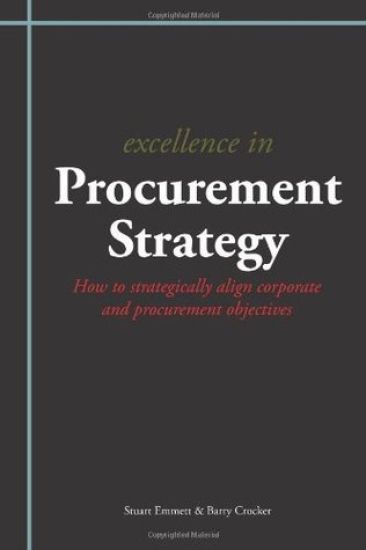
In Excellence in Procurement, we also gave our outline of a vision for procurement. Therefore, in this Procurement Strategy book, we will now take this vision forward, and show how to align an organisational corporate strategy with an organisation's procurement objectives. In doing this, we will take the view that the design and implementation of a Procurement Strategy must consider demand (and the customers), the organisation's processes and the supply (and the suppliers).
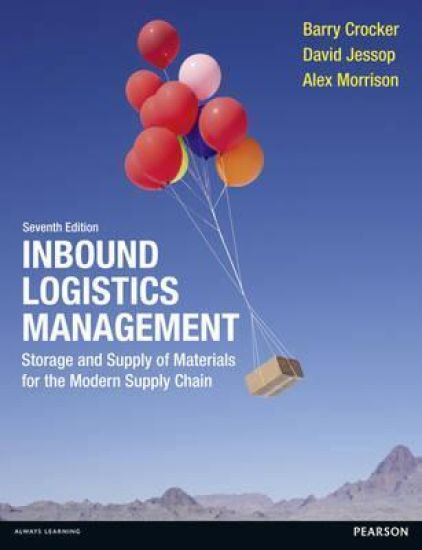
Inbound Logistics Management
Barry Crocker; David Jessop; Alex Morrison
Pearson Education Limited
2011
pokkari
This well-established text provides an authoritative and comprehensive overview of the practice and supporting systems relating to the storage and supply of materials, from elementary principles and simplest methods to the most advanced automated operations. It is an invaluable guide to inbound logistics for both students and practitioners.
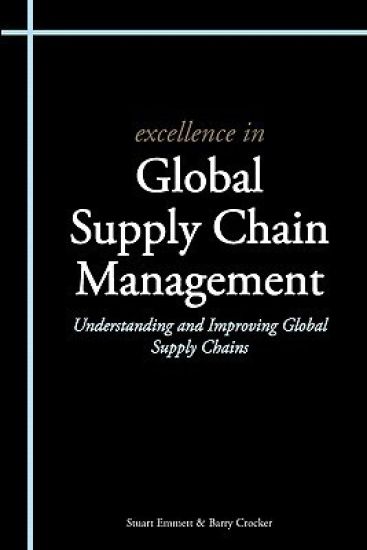
Excellence in Global Supply Chain Management
Stuart Emmett; Barry Crocker
Cambridge Academic
2010
pokkari
This book complements the other Excellence in... titles, for example, in Procurement, in Supplier Management, in Supply Chain Management, in Inventory, in Freight Transport, Services Procurement and in Warehouse Management. The real fact today is that we do actually live "in a global village" where many countries' former self-sufficiency has now moved onto a global stage. We can now find that distance impacts from local sources can soon grow into global problems. Witness for example, the increased price of steel around 2005 and the economic recession that started in the USA in 2008, which by early 2009 had adversely affected most global trade. Managing supply, demand and consumer markets from global perspectives therefore involves dealing with constant change and increased volatility. It also requires a new understanding of culture and different ways of doing things. No longer are organisations able to assume their national values; new processes can be enforced, or are going to be automatically adapted globally. We explore, in this book, how to manage such differences practically.
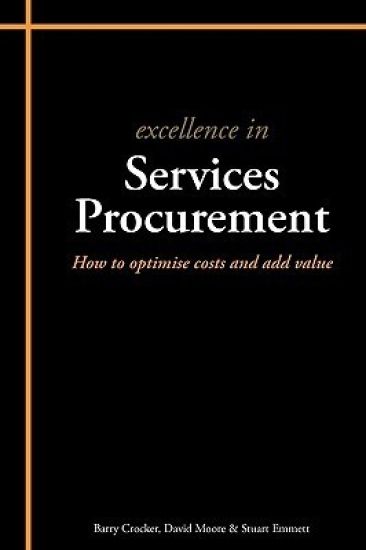
Excellence in Services Procurement
Stuart Emmett; David Moore; Barry Crocker
Cambridge Academic
2010
pokkari
This title covers all aspects of Services Procurement, including procurement objectives, outsourcing, quality maintenance, supplier relationship management and more.
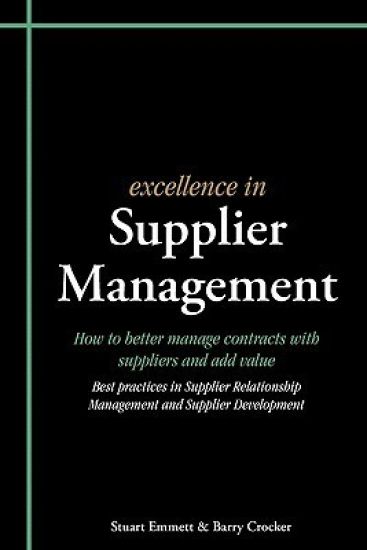
Many organisations often fail, or perhaps stumble, in managing their suppliers. This is because the internal customer, or worse, someone else, is left to manage the selected suppliers, without perhaps realising that they have to. There is, therefore, often little use of best practice regarding how a procurement department relates to, or gets involved with the essential supplier management in the procurement process. This book concentrates on the need for better supplier management, and improving supplier management. It gives guidelines on how to better manage contracts and develop suppliers. The book answers the question: "What kind of relationship do I need with suppliers so I can get the best from them, and therefore the best for me?" The style of the book is direct with little jargon. It covers all of the basics as well as providing detailed and wider discussions to encourage thought and practical application. To facilitate practical application, the book is illustrated by case studies and application checklists. The following main sections are covered: Procurement Strategy, Supplier Management; the Suppliers View, Supplier Relationship Management, Supplier Development, Supplier Management: Making the change and Supplier Management: Conclusion
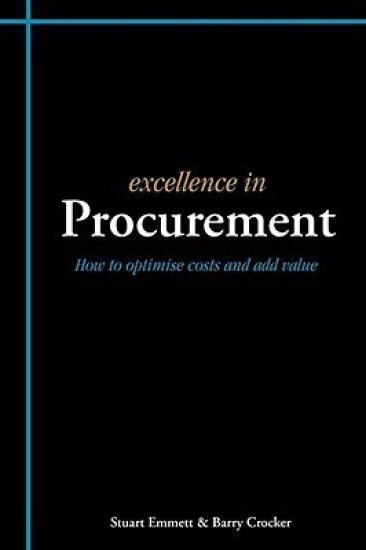

The Relationship-Driven Supply Chain
Stuart Emmett; Barry Crocker
Ashgate Publishing Limited
2006
sidottu
Collaboration in supply chains means managing the chain beyond traditional or transactional methods. It involves rethinking the way your business is managed, both internally and externally, and the ways in which employees and partners relate to each other. Stuart Emmett and Barry Crocker's book explains how a relationship-based approach to supply chain management can transform business; how to organise your business internally for effective supply chain relationships and how to transform your external supply chain using relationship marketing, customer relationship management and supply chain partnerships. One of the key distinguishing characteristics of a high performing supply chain is the presence of strategic trust. With strategic trust, the parties have access to each other's strategic plans; relevant cost information and forecasts are shared; risks and rewards are addressed openly. This book explains how to embed a culture of inter-company trust and to realise the benefits of improved supply chain relationships.