Kirjojen hintavertailu. Mukana 12 459 402 kirjaa ja 12 kauppaa.
Kirjailija
Barry Dalal-Clayton
Kirjat ja teokset yhdessä paikassa: 11 kirjaa, julkaisuja vuosilta 1997-2022, suosituimpien joukossa Rural Planning in Developing Countries. Vertaile teosten hintoja ja tarkista saatavuus suomalaisista kirjakaupoista.
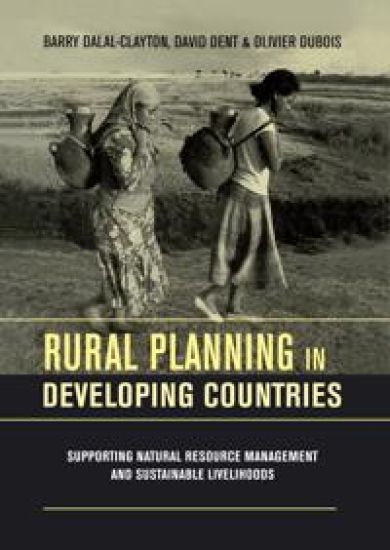
This book provides an international perspective on rural planning, focused on developing countries. It examines conventional development planning and innovative local planning approaches, drawing together lessons from recent experience of rural planning and land use. The authors examine past and current practice and ways that land use planning and management of natural resources can underpin sustainable local livelihoods. They draw on case studies from Africa, Asia and Latin America to present findings relevant throughout the developing world.

Internationally acclaimed environmentalist, Dr Mark Weston, returns for a third time to find himself, yet again, inadvertently drawn into the dangerous world of poaching and smuggling illegal wildlife products - orchestrated by his nemesis, a ruthless Chinese triad. After his son is murdered in Tanzania, the lives of Weston and his girlfriend are threatened by the triad and they travel to Nepal to lay low. Weston helps a Nepali colleague investigate the impacts of a dubious hydropower project, only to discover that the triad is involved behind the scenes. Then his girlfriend is kidnapped whilst Weston is climbing in the Himalayas. His quest to find her takes him on a fast moving chase across Nepal. Follow the plot amongst dramatic mountain landscapes as things reach their climax in the remote, arid, lost Tibetan kingdom of Upper Mustang. Barry Dalal-Clayton is author of Beneath The Roof of Africa and The Wealth of the Thirstlands. He has also written numerous academic books and papers on environmental issues.
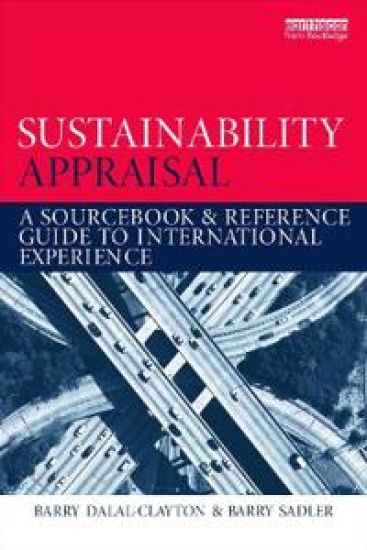
Sustainability Appraisal is a sourcebook of the state-of-the-art of this rapidly emerging and diversifying area. It draws on a wealth of international experiences and approaches to illustrate the status and scope of Sustainability Appraisal/Assessment (SA) This comprehensive guide highlights how SA can be used to analyse and integrate the key environmental, social and economic pillars of sustainability into decision-making at all levels, from policy to project to investment, by government, business and industry, or international organizations. Distilling both published and unpublished materials, and with contributions from a range of leading experts, organizations and agencies, this book will be of significant value to professionals everywhere who are in need of a solid, reference guide to what constitutes SA practice and, more importantly, how and when it can be applied.
The IUCN Strategies for Sustainable Development Handbook Series This handbook is one in a series being produced by IUCN and its partners to assist countries and communities implement Agenda 21, the action programme of the United Nations Conference on Environment and Development. The series will include handbooks on national strategies for sustainable development, local strategies, assessing progress towards sustainability, biodiversity action plans, .involving indigenous peoples, and on integrating population and resource use planning; and regular companion volumes of case studies addressing the key issues of concern to strategy implementation. Many international agreements and action plans now call for countries to undertake national strategies. These strategies seek to involve communities in united approaches to sustainable development. Some are sectoral, such as tropical forest strategies, others are thematic, covering topics such as biodiversity, education or climate change. Still others, such as national conservation strategies and national environment action plans, are evolving to become more comprehensive processes, drawing together economic, social and environmental development actions. This handbook is for people involved in strategies. It draws on experiences in different regions of the world to present options and examples of the role of strategies in sustainable development. Originally published in 1995
One of the more significant recommendations to emerge from UNCED in 1992 was the call in Agenda 21 for countries to develop and implement national sustainable development strategies. Most countries have responded to this challenge. However many countries also have a long history of drawing up planning exercises at this level to deal with environmental problems. 'Green planning' is now used as a shorthand term for a range of such national-level planning initiatives covering both sustainable development and environmental concerns, and countries from the North and the South can benefit from a pooling of knowledge. Getting to Grips with Greens Plans presents a cogent analysis of industrial countries' experiences in this area, drawing out lessons and observations from broad empirical experience. Part 1 provides an overview of national green planning, reviewing its origins and scope, identifying popular approaches and common processes, highlighting important issues such as participation, the influence of domestic politics, and the track record of more ambitious regional plans, and comparing approaches in developed and developing countries. Part 2 goes on to present a series of detailed case studies, drawn largely from interviews with key individuals responsible for coordinating national green planning processes. These cases come from a range of Western and Eastern European countries, the US and Canada, and Australia and New Zealand. Some of these case studies show impressive records of achievement, whilst others demonstrate potential stumbling blocks. All demonstrate the difficulty of putting the concept of sustainable development into practice Barry Dalal-Clayton is director of the Environmental Planning Group at the International Institute for Environment and Development, London. In recent years, Dr Dalal Clayton has been deeply involved in analyzing approaches to national sustainable development strategies and environmental action plans in many countries, and in advising governments and international agencies in this field. His other current research interests include environmental impact assessment, community-based wildlife management and land use planning. Originally published in 1996
The IUCN Strategies for Sustainable Development Handbook Series This handbook is one in a series being produced by IUCN and its partners to assist countries and communities implement Agenda 21, the action programme of the United Nations Conference on Environment and Development. The series will include handbooks on national strategies for sustainable development, local strategies, assessing progress towards sustainability, biodiversity action plans, .involving indigenous peoples, and on integrating population and resource use planning; and regular companion volumes of case studies addressing the key issues of concern to strategy implementation. Many international agreements and action plans now call for countries to undertake national strategies. These strategies seek to involve communities in united approaches to sustainable development. Some are sectoral, such as tropical forest strategies, others are thematic, covering topics such as biodiversity, education or climate change. Still others, such as national conservation strategies and national environment action plans, are evolving to become more comprehensive processes, drawing together economic, social and environmental development actions. This handbook is for people involved in strategies. It draws on experiences in different regions of the world to present options and examples of the role of strategies in sustainable development. Originally published in 1995
This unique sourcebook provides a global, state-of-the-art review of the rapidly evolving field of strategic environmental assessment (SEA) that is intended to serve as a baseline for the work of an OECD Task Team on SEA and a UNEP initiative on integrated planning and assessment. It describes trends in application and experience in different contexts worldwide, providing in-depth coverage of the status of SEA systems, and practice in developed, transitional and developing countries by a range of development agencies. The book draws on a large body of published and unpublished material, and contributions from a wide range of individual experts, organizations and agencies. It provides an unparalleled and invaluable understanding of the emerging scope and potential of SEA and describes how, when and where it is being used. The sourcebook includes a probing review of concepts, terminology, approaches and tools of SEA, and a comparative analysis of the different types of existing SEA systems. The volume also contains many case examples illustrating SEA practice in different countries and contexts, a full set of references and a number of appendices containing source materials.
Planners and decision-makers today need to be in command of a broader range of tools and information than ever before. Knowledge of the Land aims to show what is available in the way of natural resources information, and how it has been used (or not used) in planning and policy making. For both methods and applications, the authors have tried to provide enough detail for the reader to judge what data, skills, and procedures are required to meet their particular needs, and the ample references give guidance on where to find further information. There has been a notable shift in planning and rural development over the past decade. Technocratic, top-down approaches are still very much in evidence, but there has been an explosion of participatory initiatives. Many institutions cling to sectoral thinking. There is, however, growing recognition that sustainable development involves balancing environmental, social, and economic considerations, Such a balance requires an interdisciplinary approach, both to the the survey of natural resources, and to the use of the information acquired in land evaluation, planning, environmental impact assessment, and the preparation of coherent strategies and policies for sustainable development. The old ways and the new bring insights crucial to meeting these challenges. Both provide invaluable methods of work. By bringing together the standard methods of resource assessment and planning, and new thinking and emerging techniques, this book will help all practitioners to bridge the gap between the two.
One of the more significant recommendations to emerge from UNCED in 1992 was the call in Agenda 21 for countries to develop and implement national sustainable development strategies. Most countries have responded to this challenge. However many countries also have a long history of drawing up planning exercises at this level to deal with environmental problems. 'Green planning' is now used as a shorthand term for a range of such national-level planning initiatives covering both sustainable development and environmental concerns, and countries from the North and the South can benefit from a pooling of knowledge. Getting to Grips with Greens Plans presents a cogent analysis of industrial countries' experiences in this area, drawing out lessons and observations from broad empirical experience. Part 1 provides an overview of national green planning, reviewing its origins and scope, identifying popular approaches and common processes, highlighting important issues such as participation, the influence of domestic politics, and the track record of more ambitious regional plans, and comparing approaches in developed and developing countries. Part 2 goes on to present a series of detailed case studies, drawn largely from interviews with key individuals responsible for coordinating national green planning processes. These cases come from a range of Western and Eastern European countries, the US and Canada, and Australia and New Zealand. Some of these case studies show impressive records of achievement, whilst others demonstrate potential stumbling blocks. All demonstrate the difficulty of putting the concept of sustainable development into practice Barry Dalal-Clayton is director of the Environmental Planning Group at the International Institute for Environment and Development, London. In recent years, Dr Dalal Clayton has been deeply involved in analyzing approaches to national sustainable development strategies and environmental action plans in many countries, and in advising governments and international agencies in this field. His other current research interests include environmental impact assessment, community-based wildlife management and land use planning. Originally published in 1996