Kirjojen hintavertailu. Mukana 12 390 323 kirjaa ja 12 kauppaa.

Kirjailija

Barry Day

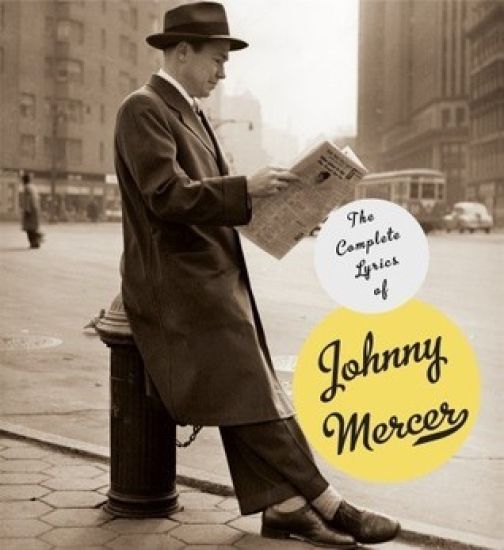
Kirjat ja teokset yhdessä paikassa: 5 kirjaa, julkaisuja vuosilta 2004-2016, suosituimpien joukossa The Complete Lyrics of Johnny Mercer. Vertaile teosten hintoja ja tarkista saatavuus suomalaisista kirjakaupoista.

5 kirjaa

Kirjojen julkaisuhaarukka 2004-2016.

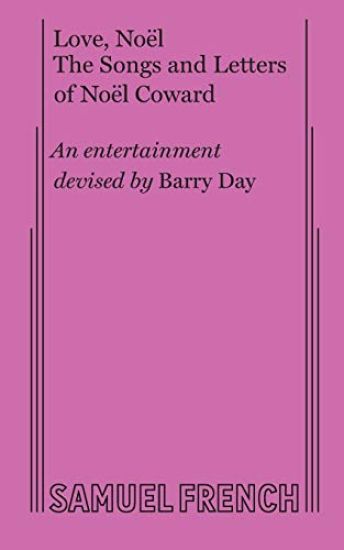
Love, Noel: The Letters and Songs of Noel Coward
Based on Barry Day's book, Love, Noel: The Letters and Songs of Noel Coward is the dramatic staging of the letters and correspondence of the playwright, director, actor, composer, and singer. Coward's letters span several decades and give you insight to some of his closest relationships with everyone from George Bernard Shaw to Edna Ferber, from the Queen Mother to his own mother, and of course, his constant collaborator, Gertrude Lawrence. A loving portrait of one
Coward on Film

Coward on Film

Barry Day; Sir John Mills

Scarecrow Press
2004
sidottu
There were few true giants in 20th century theatre, but Noël Coward was indisputably one of them. Playwright, director, actor, he defined all those roles. But the stage could never contain his many talents, or indeed, his plays. Many of the earlier ones were adapted for the screen, including Easy Virtue, The Vortex, Private Lives, Design for Living, and Cavalcade. In the forties he took more direct control of his films by acting as writer, producer, director - and sometimes all three. His historical collaboration with David Lean, Ronald Neame and Anthony Havelock-Allan resulted in the classic quartet of In Which We Serve, Blithe Spirit, This Happy Breed, and Brief Encounter. As a film actor, his career spanned 50 years, from an uncredited walk-on in D.W. Griffith's Hearts of the World (1917) to his final role in the 1968 Michael Caine thriller,The Italian Job. In between he proceeded to steal—with what he called "petty larceny"—such films as The Scoundrel, Around the World in Eighty Days, and Our Man In Havana. Significant as his film successes were, they have somehow been obscured by his many other achievements. In Coward on Film: The Cinema of Noël Coward, author Barry Day restores the balance by documenting every film based on Coward's work and/or in which he appeared. The result is an astounding list of film credits, including—on occasion—that of composer. Judged on his contribution to cinema alone, Coward would have left a legacy matched by very few. With this detailed chronicle—which includes quotes from Coward himself and a complete filmography—Coward on Film stands as a fitting tribute to that legacy. This lavishly illustrated book is a key work of reference for both Coward fans and film enthusiasts, and will be a necessary addition to any library.
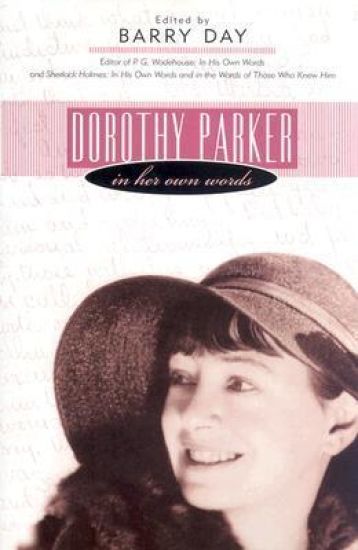
Dorothy Parker

Dorothy Parker

Barry Day

Taylor Trade Publishing
2004
sidottu
Despite her prolific output, ageless writer and wit Dorothy Parker (1893-1967) never penned an autobiography (although if she had, she said that it would have been titled Mongrel). Combing through her stories, poems, articles, reviews, correspondence, and even her rare journalism and song lyrics, editor Barry Day has selected and arranged passages that describe her life and its preoccupations-urban living, the theater and cinema, the battle of the sexes, and death by dissipation. Best known for her scathing pieces for the New Yorker and her membership in the Algonquin Round Table ("The greatest collection of unsaleable wit in America."), Parker filled her work with a unique mix of fearlessness, melancholy, savvy, and hope. In Dorothy Parker, the irrepressible writer addresses: her early career writing for magazines; her championing of social causes such as integration; and the obsession with suicide that became another drama ("Scratch an actor...and you'll find an actress."), literature ("This is not a novel to be tossed aside lightly. It should be thrown with great force.") and much more.
The Complete Lyrics of P. G. Wodehouse
Although he wrote hundreds of songs and was a key figure in the birth of the American stage musical, P. G. Wodehouse's (1881-1975) long and influential career as a lyricist has been almost completely forgotten and unheralded - until now. Highly regarded by literati for his rich, sardonic Wooster and Jeeves books (among his more than ninety novels and volumes of short stories), Wodehouse broke new ground by writing songs that were cohesively integrated into the narrative action of musicals rather than presented as a string of unrelated tunes, which was the then-standard format. Particularly in the shows he wrote with Guy Bolton and Jerome Kern, Wodehouse transformed the musical from a poor man's Gilbert and Sullivan-style operetta into a more idiomatic and respectable form based on contemporary life. This book sets the lyrics from his nearly forty theatrical productions within the context of each individual show, providing incisive and informative commentary for each. Lavishly illustrated with photos and memorabilia, Barry Day establishes why, throughout the 1920s and 1930s, Wodehouse was considered a top-tier theatrical figure on both sides of the Atlantic.