Kirjojen hintavertailu. Mukana 12 390 323 kirjaa ja 12 kauppaa.

Kirjailija

Barry Gifford

Kirjat ja teokset yhdessä paikassa: 36 kirjaa, julkaisuja vuosilta 1994-2026, suosituimpien joukossa Jack's Book: An Oral Biography of Jack Kerouac. Vertaile teosten hintoja ja tarkista saatavuus suomalaisista kirjakaupoista.

36 kirjaa

Kirjojen julkaisuhaarukka 1994-2026.

Jack's Book: An Oral Biography of Jack Kerouac

Jack's Book: An Oral Biography of Jack Kerouac

Barry Gifford; Lawrence Lee

PENGUIN BOOKS
2012
nidottu
"A fascinating literary and historical document, the most insightful look at the Beat Generation." Dan Wakefield, author of New York in the Fifties and Going All the WayFirst published in 1978, Jack's Book gives us an intimate look into the life and times of the "King of the Beats." Through the words of the close friends, lovers, artists, and drinking buddies who survived him, writers Barry Gifford and Lawrence Lee recount Jack Kerouac's story, from his childhood in Lowell, Massachusetts, to his tragic end in Florida at the age of forty-seven. Including anecdotes from an eclectic list of well-known figures such as Allen Ginsberg, William S. Burroughs, and Gore Vidal, as well as Kerouac's ordinary acquaintances, this groundbreaking oral biography the first of its kind presents us with a remarkably insightful portrait of an American legend and the spirit of a generation."
The Exception

The Exception

Barry Gifford

SEVEN STORIES PRESS,U.S.
2026
nidottu
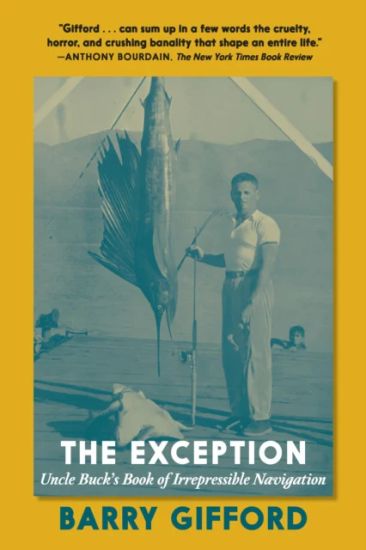
From the award-winning author and screenwriter comes a collection that brings together all of Barry Gifford's Uncle Buck stories, many written in 2024 and 2025 with others dating back to the early 2000s. "Gifford . . . can sum up in a few words the cruelty, horror, and crushing banality that shape an entire life." --Anthony Bourdain, The New York Times Book Review These stories feature hard lessons in adulthood marred by betrayals, murders and madness, while also evoking the innocence of the boy and, hauntingly, the world-weary innocence, too, of Uncle Buck. The novelist Jim Harrison believed Uncle Buck to be one of Gifford's most enduring creations. Just as readers were introduced to the immortal characters of Sailor and Lula in Gifford's Wild at Heart in 1990--brought to cinematic life that same year by Nicholas Cage and Laura Dern in David Lynch's Palme d'Or-winning film--Uncle Buck and Roy come to life in The Exception as indelible American characters, restoring a sense of family out of the broken pieces left behind after death and divorce. Set in the '50s and early '60s in Tampa, Florida; Chicago; Cocoa Beach, Florida; Havana, Cuba; Cuernavaca and Acapulco, Mexico; Parris Island, South Carolina; Belfast, Ireland; and returning in the end to Tampa when Uncle Buck is approaching death at the age of 93, these stories are epic in scope, and at the same time disarmingly intimate. We feel the breath of these everyday warriors on our faces in every story. In this world, cars are Eldorados and Cadillac Coupe Devilles, men smoke cigars, own construction businesses and nightclubs, fish for marlin, women smoke Chesterfields, and children look on in awe. Gifford's world is alive and eternal, returning us to this time and these places that exist no longer, except here.
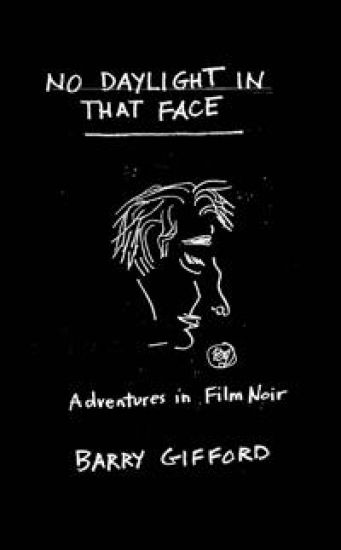
No Daylight in That Face

No Daylight in That Face

Barry Gifford; Edward Gorman; Dow Mossman

Rare Bird Books
2025
sidottu
Out of print for years and newly retitled and expanded, this deluxe new edition of Gifford's celebrated handbook unlocks the secrets of noir movies and their relevance todayFor a tour of noir cinema, No Daylight in That Face is the perfect companion, and Barry Gifford is an ideal guide. His choice selection of films exposes the menacing, moody, and oftentimes violent underbelly of this dark movie genre that occupies a favorite niche in American popular culture.Some are classics, some are little known and seldom seen, but all, once viewed, are deeply remembered by aficionados of noir. Gifford's roll call of unforgettables includes these, and more: The Asphalt Jungle, Body and Soul, Body Heat, Charley Varrick, Chinatown, The Devil Thumbs a Ride, D.O.A., Double Indemnity, High Sierra, Key Largo, Kiss of Death, Mean Streets, Mildred Pierce, Mr. Majestyk, Out of the Past, The Strange Love of Martha Ivers, Strangers on a Train, White Heat, along with several noir classics from Europe-Repulsion, The Hidden Room, Shoot the Piano Player, The 400 Blows, Odd Man Out.Gifford identifies the directors and names the many noir stars, the greats and not-so-greats who were cast in the indelible roles of hoods, B-girls, psychopaths, grifters, gumshoes, waifs, tarts, femme fatales, mobsters, molls, and ex-cons.In an introduction, novelists Edward Gorman and Dow Mossman collaboratively applaud Gifford's selections and his insights: “The movies discussed here range from the lowest of the B's to the biggest of the A's, and this book is going to make you want to run out and locate every one of them (and good luck to you; finding The Devil Thumbs a Ride could take you a lifetime). Through Barry Gifford's eyes, we begin to see their similarities and their value. What Andrew Sarris did for the mainstream film in The American Cinema, Barry does here for the crime film.”With a connoisseur's insight and an offbeat sensitivity perfectly tailored to his subjects, Gifford's brief essays cover a hundred of the noir buff's favorites. His highly polished impressions take the reader through five decades of noir to find both the heart and the art of the plotline.
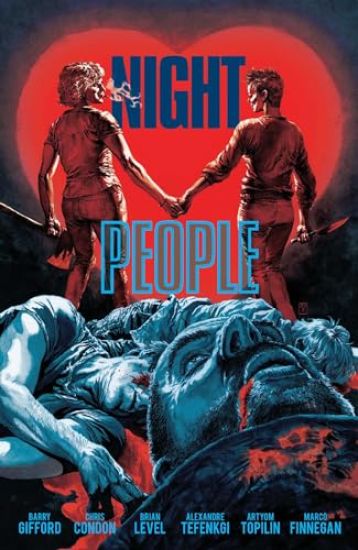
Night People

Night People

Barry Gifford; Chris Condon

ONI PRESS,US
2025
sidottu
FOR SOME PEOPLE, IT’S ALWAYS MIDNIGHT . . . From the mind of writer Barry Gifford (Wild at Heart, Lost Highway), adapted by That Texas Blood's Chris Condon and a rotating cast of visionary artists—including Brian Level (Poison Ivy), Alexandre Tefenkgi (The Good Asian), Artyom Topilin (I Hate This Place) and Marco Finnegan (The Keeper)—come four interconnected stories of convicts, lost souls, and human monsters journeying through a labyrinth of perversion, religious dogma, and murder in the Deep South. A pair of murderous lovers in Florida carrying out a bloody agenda. A perverse political and religious power struggle between a brother and a sister. An easygoing drifter who suddenly finds himself a fugitive on the run. And a bright-eyed young girl discovering her place in the cold dark world. At the end of the twentieth century, chaos and horror were the American dream. Collecting Night People #1–4.
Hotel Room Trilogy

Hotel Room Trilogy

Barry Gifford

SEVEN STORIES PRESS,U.S.
2024
nidottu
From the award-winning author and screenplay writer, a trio of one-act plays depicting the spooky, strange, and tragic passage of guests through the same New York City hotel room (number 603). "The dialogue has the evocative spareness of Pinter, and the] control of mood is] menacing, mesmerizing." --TIME The tangible mystery of these stories is grounded in the peculiar relationships that unfold slowly, producing an unrelenting uncanny atmosphere. In each play, a family member has recently died and the survivors are left to deal with the consequences. In "Tricks" Gifford approaches the psychological territory of Kafka. We meet two men looking for something more than just sex from a prostitute. Are the men two halves of a severed personality? In "Blackout" Danny and Diane, an Oklahoma couple of the 1930s, cannot move beyond the grief of a personal tragedy. Refusing to accept the death of her son, Diane seeks refuge in low-level deliriums. In "Mrs. Kashfi" a young boy experiences a spooky visitation while his mother voyages into the sea of clairvoyance with a fortune teller.Written for David Lynch's 1993 drama Hotel Room for HBO, two of these stories, "Tricks" and "Blackout" were nominated for the Cable Ace Award. "Gifford's night people are a strange mix of utter weirdness and bedrock humanity, rampant eccentricity, and absolute individuality. Some things in life are beyond analysis, and Barry Gifford is one of them. --Booklist
Ghost Years

Ghost Years

Barry Gifford

SEVEN STORIES PRESS,U.S.
2024
nidottu
A tribute to the author's mother Kitty, the gritty Chicago landscape of his youth, and the "ghost years, that time in your life you don't know won't never come again." Barry Gifford has been writing the story of America in acclaimed novel after acclaimed novel for the last half-century. Almost all of the stories in Ghost Years takes place in the 1950s, examining the lives of women in that period--the suppression, the lack of opportunities, the dependency on men. Following his story collection, Roy's World, which inspired the documentary directed by Rob Christopher, narrated by Lili Taylor, Matt Dillon and Willem Dafoe, these stories show a childhood in mid-century America filled with innocence, grief, joy and wonder in equal measure.
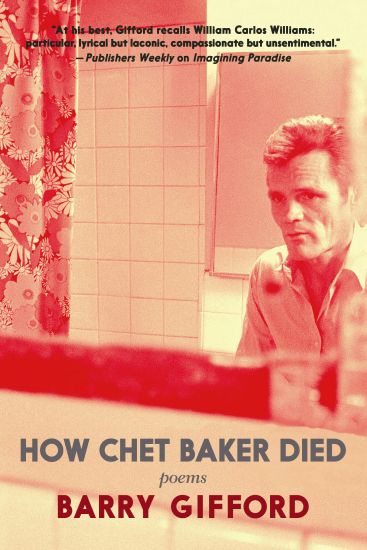
How Chet Baker Died

How Chet Baker Died

Barry Gifford

SEVEN STORIES PRESS,U.S.
2022
sidottu
Poems from the acclaimed author of Roy's World, Wild at Heart, and many other works The first words in Barry Gifford's new poetry collection say it all--"Here I am wasting time again / writing poems to keep myself company" -- doing what he has ever done, surprising his readers in kaleidoscopic prisms of color, turning every breath into a story, and himself into his most colorful character. She stood and walked across the lawnpast the cottage and into the big house.He stayed to watch the last of the sunset, waiting for the flash of green.When it was finally dark and there wasno moon and the fireflies appeared, he got up and began walking toward the house.He loved the Italian word for firefly, lucciola. She was like that, flickeringon and off from moment to moment.As he approached the house, he could hearher singing: Vogliatemi bene, un bene piccolino. It's so strange, he thought, life's so fast and time's too slow.He stopped and watched the fireflies. Or this: In my dream someone asked me ifI remembered Frank JacksonHearing this name brought tearsto my eyes though I've neverknown anyone by that name The mystery in these poems lives just beyond the province of words. In a strange way, Barry Gifford's poems tell a wordless story, freed of the writer's art. "It's dangerous to remember / so much, especially for a writer / The temptation to make sense / of it is always there / where you and I / are no longer." Daily life, family and friends, are much more important here than books. The beauty and elusiveness of women and music are of utmost importance, far more so than literature. As he attests: "I prefer music to poems, words don'tlive the same way--so, listen."
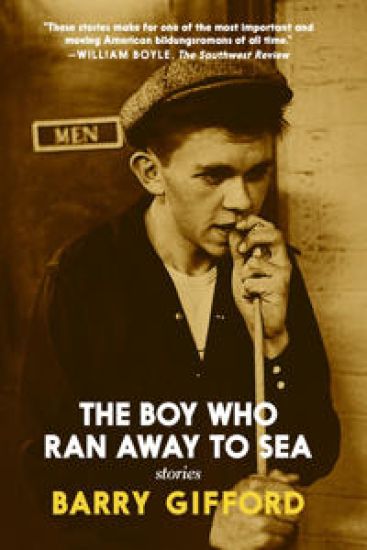
The Boy Who Ran Away To Sea

The Boy Who Ran Away To Sea

Barry Gifford

SEVEN STORIES PRESS,U.S.
2022
nidottu
A childhood in the 1950s and '60s among grifters, show girls, and mob enforcers who embraced the boy and made him who he is. "These stories make for one of the most important and moving American bildungsromans of all time." --William Boyle, The Southwest Review Roy tells it the way he sees it, shuttled between Chicago to Key West and Tampa, Havana and Jackson MS, usually with his mother Kitty, often in the company of lip-sticked women and fast men. Roy is the muse of Gifford's hardboiled style, a precocious child, watching the grown-ups try hard to save themselves, only to screw up again and again. He takes it all in, every waft of perfume and cigar smoke, every missed opportunity to do the right thing. And then there are the good things too. A fishing trip with Uncle Buck, a mother's love, advice from Rudy, Roy's father: "Roy means king. Be the king of your own country. Don't depend on anyone to do your thinking for you." The stories in The Boy Who Ran Away to Sea are together a love letter and a tribute to the childhood experiences that ground a life. In the Author's note, Gifford writes, "I have often been asked if I were interested in writing my memoirs or an autobiography. Given that the Roy stories come as close as I care to come regarding certain circumstances, I remain comfortable with their verisimilitude. They all dwell within the boundary of fiction. As I have explained elsewhere, these are stories, I made them up. Roy ages from about five years old to late adolescence. After that, with the exception of a sighting in Veracruz, I have no idea what happened to him." "The way Barry Gifford lets people talk articulates everything about their unfamiliar inner lives, and ours. --Boston Globe
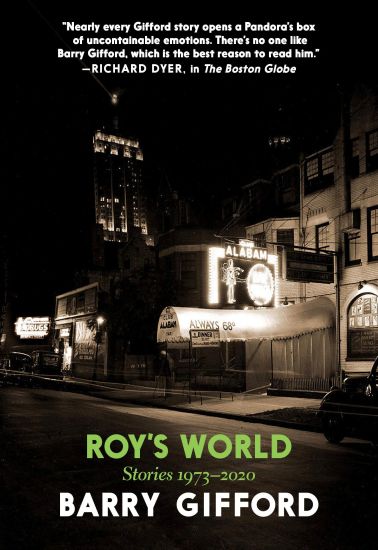
Roy's World

Roy's World

Barry Gifford

Seven Stories Press,U.S.
2020
nidottu
A tie-in to the new documentary, Roy's World, directed by Rob Christopher narrated by Lili Taylor, Matt Dillon and Willem Dafoe, these stories comprise one of Barry Gifford's most enduring works, his homage to the gritty Chicago landscape of his youth Barry Gifford has been writing the story of America in acclaimed novel after acclaimed novel for the last half-century. At the same time, he's been writing short stories, his "Roy stories," that show America from a different vantage point, a certain mix of innocence and worldliness. Reminiscent of Mark Twain's Huckleberry Finn and Ernest Hemingway's Nick Adams stories, Gifford's Roy stories amount to the coming-of-age novel he never wrote, and are one of his most important literary achievements--time-pieces that preserve the lost worlds of 1950s Chicago and the American South, the landscape of postwar America seen through the lens of a boy's steady gaze. The twists and tragedies of the adult world seem to float by like curious flotsam, like the show girls from the burlesque house next door to Roy's father's pharmacy who stop by when they need a little help, or Roy's mom and the husbands she weds and then sheds after Roy's Jewish mobster father's early death. Life throws Roy more than the usual curves, but his intelligence and curiosity shape them into something unforeseen, while Roy's complete lack of self-pity allow the stories to seem to tell themselves.
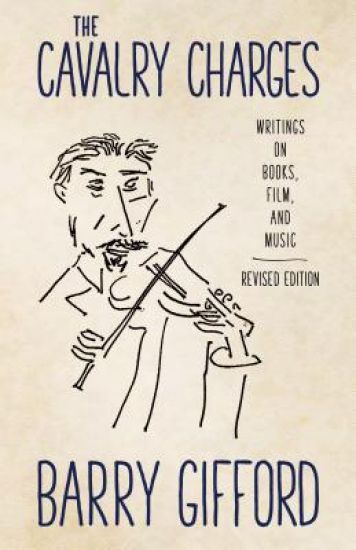
The Cavalry Charges

The Cavalry Charges

Barry Gifford

University Press of Mississippi
2019
pokkari
The Cavalry Charges: Writings on Books, Film, and Music, Revised Edition is a collection of anecdotal reflections that relate many of the experiences that shaped Barry Gifford as a writer. Representative of Gifford’s body of work, this volume is divided into three sections: books, film and television, and music. Within these sections, Gifford’s best work is showcased, including a nine-part dossier on Marlon Brando’s One-Eyed Jacks, in which Gifford examines the public and private lives of those involved in the film, producing an innovative framework for the movie. New to the collection are four previously published essays: a brief look at the novels of Álvaro Mutis; a reflection on Gifford’s schooling under Nebraska poet John Neihardt; an essay on Elliot Chaze and his novel, Black Wings Has My Angel; and a short piece on Sailor and Lula.
The Cavalry Charges

The Cavalry Charges

Barry Gifford

University Press of Mississippi
2019
sidottu
The Cavalry Charges: Writings on Books, Film, and Music, Revised Edition is a collection of anecdotal reflections that relate many of the experiences that shaped Barry Gifford as a writer. Representative of Gifford’s body of work, this volume is divided into three sections: books, film and television, and music. Within these sections, Gifford’s best work is showcased, including a nine-part dossier on Marlon Brando’s One-Eyed Jacks, in which Gifford examines the public and private lives of those involved in the film, producing an innovative framework for the movie. New to the collection are four previously published essays: a brief look at the novels of Álvaro Mutis; a reflection on Gifford’s schooling under Nebraska poet John Neihardt; an essay on Elliot Chaze and his novel, Black Wings Has My Angel; and a short piece on Sailor and Lula.
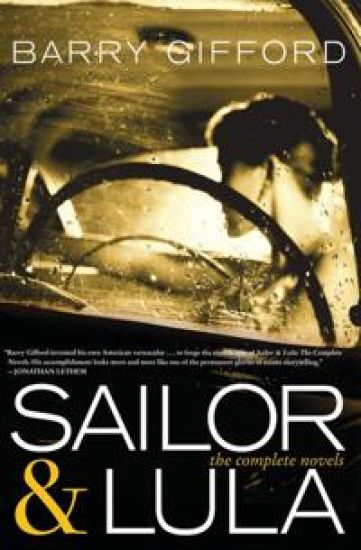
Sailor & Lula Expanded Edition

Sailor & Lula Expanded Edition

Barry Gifford

Seven Stories Press,U.S.
2019
nidottu
"The Romeo and Juliet of the South" are back in this new edition of the internationally best-selling Sailor and Lula novels, now including for the first time the culminating novel, The Up-Down, by American master Barry Gifford. "Barry Gifford invented his own American vernacular--William Faulkner by way of B-movie film noir, porn paperbacks, and Sun Records rockabilly--to forge the stealth-epic of Sailor & Lula"--Jonathan Lethem Here for the first time in print together are all eight of the books that comprise the saga of Sailor Ripley and Lula Pace Fortune, "the Romeo and Juliet of the South": Wild at Heart, Perdita Durango, Sailor's Holiday, Sultans of Africa, Consuelo's Kiss, Bad Day for the Leopard Man, The Imagination of the Heart, and The Up-Down.
Southern Nights

Southern Nights

Barry Gifford

Seven Stories Press,U.S.
2019
nidottu
arry Gifford's three Southern Gothic novels, Night People, Arise and Walk, and Baby Cat-Face, may be among the weirdest and best of Gifford's novels for their sheer velocity--the copious, raw violence; the invented religions and gods that make people do things; and how the horrors somehow cohabit--affably--with the genuine pathos and loveliness of the unforgettable characters that live in these books and the things they say so easily that we've never heard anyone say before. God in these Southern Nights is only another possibly deranged near relative, cast in the only nonspeaking part in this human drama. Everyone else talks and talks. And it's the dialogue in these novels that make them some of Gifford's best, reminders of the author's seemingly unlimited range and versatility, a comic-tragic genius for our time. As a character in Night People says, "Safety first ain't never been my motto."
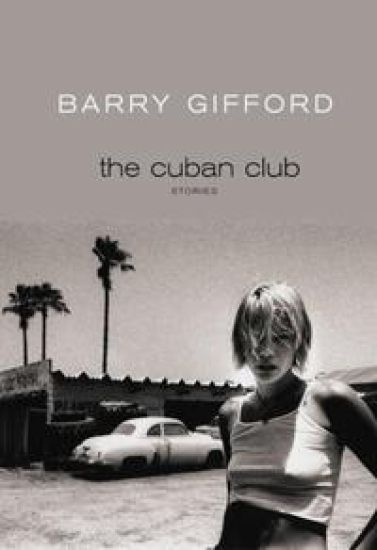
The Cuban Club

The Cuban Club

Barry Gifford

Seven Stories Press,U.S.
2018
nidottu
A masterpiece of mood and setting, character and remembrance, The Cuban Club is Barry Gifford's ultimate coming-of-age story told as sixty-seven linked tales, a creation myth of the Fall as seen through the eyes of an innocent boy on the cusp of becoming an innocent man. Set in Chicago in the 1950s and early 1960s against the backdrop of small-time hoodlums in the Chicago mob and the girls and women attached to them, there is the nearness of heinous crimes, and the price to be paid for them. To Roy and his friends, these twists and tragedies drift by like curious flotsam. The tales themselves are koan-like, often ending in questions, with rarely a conclusion. The story that closes the book is in the form of a letter from Roy to his father four years after his father's death, but written as if he were still alive. Indeed, throughout The Cuban Club Roy is in some doubt whether divorce or even death really exists in a world where everything seems so alive and connected. Barry Gifford has been writing his Roy stories on and off for over thirty years, and earlier Roy stories have been published in Wyoming, Memories from a Sinking Ship, and The Roy Stories. But it is in The Cuban Club that he brings the form he has created in these stories to its crystallization. Indeed, to find precedents for The Cuban Club, we must look not to other story collections, but to other creation myths--to Gilgamesh, or the Old Testament, or Eduardo Galeano's Memory of Fire trilogy. Roy's age here wends back and forth between six and nineteen and back to twelve. He sees with the eyes of a seer who doesn't seem to age, and knows not to judge the good or the bad in circumstances or people, or even to question why things are as they are, instead filled with the romance of the world teetering on catastrophe always, but abounding in saving graces.
The Cuban Club

The Cuban Club

Barry Gifford

Seven Stories Press,U.S.
2017
sidottu
A masterpiece of mood and setting, character and remembrance, The Cuban Club is Barry Gifford's ultimate coming-of-age story told as sixty-seven linked tales, a creation myth of the Fall as seen through the eyes of an innocent boy on the cusp of becoming an innocent man. Set in Chicago in the 1950s and early 1960s against the backdrop of small-time hoodlums in the Chicago mob and the girls and women attached to them, there is the nearness of heinous crimes, and the price to be paid for them. To Roy and his friends, these twists and tragedies drift by like curious flotsam. The tales themselves are koan-like, often ending in questions, with rarely a conclusion. The story that closes the book is in the form of a letter from Roy to his father four years after his father's death, but written as if he were still alive. Indeed, throughout The Cuban Club Roy is in some doubt whether divorce or even death really exists in a world where everything seems so alive and connected. Barry Gifford has been writing his Roy stories on and off for over thirty years, and earlier Roy stories have been published in Wyoming, Memories from a Sinking Ship, and The Roy Stories. But it is in The Cuban Club that he brings the form he has created in these stories to its crystallization. Indeed, to find precedents for The Cuban Club, we must look not to other story collections, but to other creation myths--to Gilgamesh, or the Old Testament, or Eduardo Galeano's Memory of Fire trilogy. Roy's age here wends back and forth between six and nineteen and back to twelve. He sees with the eyes of a seer who doesn't seem to age, and knows not to judge the good or the bad in circumstances or people, or even to question why things are as they are, instead filled with the romance of the world teetering on catastrophe always, but abounding in saving graces.
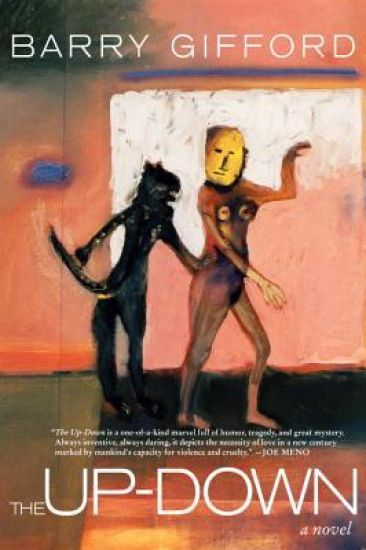
The Up-down

The Up-down

Barry Gifford

Seven Stories Press,U.S.
2016
nidottu
A novel of violence, of love, and introspection, The Up-Down follows a man who leaves home and all that s familiar, finds true love, loses it, and finds it again. Pace s voyage is outward, among strangers, and inward into the fifth direction that is the up-down, in a sweeping, voracious human tale that takes no prisoners, witnesses extreme brutalities and expresses a childlike amazement. Here the route goes from New Orleans, to Chicago to Wyoming to Bay St. Clement, North Carolina, but the geography he is charting is always first and foremost unchartable."
The Up-down

The Up-down

Barry Gifford

Seven Stories Press,U.S.
2015
sidottu
A novel of violence, of love, and introspection, " The Up-Down" follows a man who leaves home and all that's familiar, finds true love, loses it, and finds it again. Pace's voyage is outward, among strangers, and inward into the fifth direction that is the up-down, in a sweeping, voracious human tale that takes no prisoners, witnesses extreme brutalities and expresses a childlike amazement. Here the route goes from New Orleans, to Chicago to Wyoming to Bay St. Clement, North Carolina, but the geography he is charting is always first and foremost unchartable.