Kirjojen hintavertailu. Mukana 12 390 323 kirjaa ja 12 kauppaa.

Kirjailija

Barry Godfrey

Kirjat ja teokset yhdessä paikassa: 17 kirjaa, julkaisuja vuosilta 2007-2024, suosituimpien joukossa Penal Servitude. Vertaile teosten hintoja ja tarkista saatavuus suomalaisista kirjakaupoista.

17 kirjaa

Kirjojen julkaisuhaarukka 2007-2024.

Penal Servitude

Penal Servitude

Helen Johnston; Barry Godfrey; David J. Cox

McGill-Queen's University Press
2022
nidottu
Established in 1853, after the end of penal transportation to Australia, the convict prison system and the sentence of penal servitude offered the most severe form of punishment – short of death – in the criminal justice system, and they remained in place for nearly a century.Penal Servitude is the first comprehensive study to examine the convict prison system that housed all those who were sentenced to penal servitude during this time. Helen Johnston, Barry Godfrey, and David Cox detail the administration and evolution of the system, from its creation in the 1850s and the building of the prison estate to the classification of prisoners within it. Exploring life in the convict prison through the experiences of the people who were subjected to it, the authors shed light on various details such as prison diet, education, and labour. What they find reveals the internal regimes; the everyday endurances, conformity, resistance, and rule breaking of convicts; and the interactions with the warders, medical officers, and governors that shaped daily life in the system.Reconstructing the life histories of hundreds of convict prisoners from detailed prison records, criminal registers, census data, and personal correspondence, Penal Servitude illuminates the lives of those who experienced long-term imprisonment in the nineteenth and twentieth centuries.
The Criminal Classes

The Criminal Classes

Barry Godfrey; Alexandra Godfrey

PEN SWORD BOOKS LTD
2024
sidottu
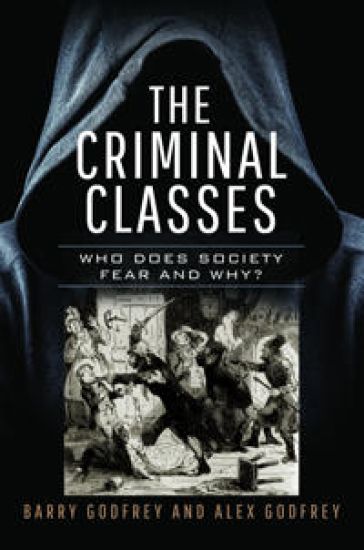
We explore why the idea of the criminal class came into being. Starting with garrotters lurking in dark Victorian alleyways, the fiend Jack the Ripper stalking London’s streets to the menace of violent gangs, the ‘Scuttlers’, Peaky Blinders, and Liverpool’s High Rip, all the way through to 1970s joyriders, 1990s ravers, and the modern drug trade that brings guns and knives to our streets. It describes the actions taken to control the hard-core group – increasingly harsh punishments, executions, floggings, long prison sentences and the ways that society learns about crime, dangerous areas, and the people who habitually offend against society. How do we know what dangers apparently lurk in the inner cities? What part did the newspapers, authors and social investigators play in sensationalising some crimes, and were they right to do so? The book compares real-life criminals (and their lives) with fictional accounts, such as the Artful Dodger, Pinkie in Brighton Rock, and the scenes that social investigators such as Henry Mayhew dragged back from the criminal rookeries to entertain and frighten respectable people. Perhaps most importantly, the book shows which groups have been targeted as the criminal classes, particularly the young, as well as ethnic and racial minorities, and concludes by asking, “Who are the new criminal classes likely to be?“
Penal Servitude

Penal Servitude

Helen Johnston; Barry Godfrey; David J. Cox

McGill-Queen's University Press
2022
sidottu
Established in 1853, after the end of penal transportation to Australia, the convict prison system and the sentence of penal servitude offered the most severe form of punishment – short of death – in the criminal justice system, and they remained in place for nearly a century.Penal Servitude is the first comprehensive study to examine the convict prison system that housed all those who were sentenced to penal servitude during this time. Helen Johnston, Barry Godfrey, and David Cox detail the administration and evolution of the system, from its creation in the 1850s and the building of the prison estate to the classification of prisoners within it. Exploring life in the convict prison through the experiences of the people who were subjected to it, the authors shed light on various details such as prison diet, education, and labour. What they find reveals the internal regimes; the everyday endurances, conformity, resistance, and rule breaking of convicts; and the interactions with the warders, medical officers, and governors that shaped daily life in the system.Reconstructing the life histories of hundreds of convict prisoners from detailed prison records, criminal registers, census data, and personal correspondence, Penal Servitude illuminates the lives of those who experienced long-term imprisonment in the nineteenth and twentieth centuries.
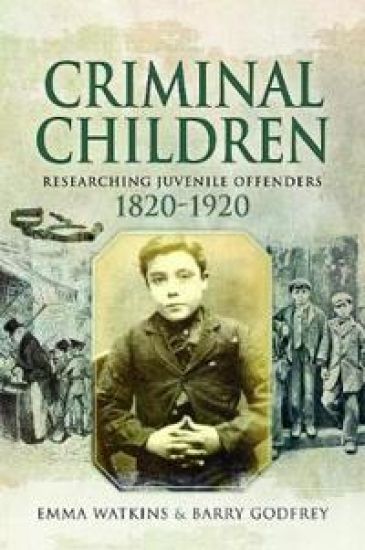
Criminal Children

Criminal Children

Emma Watkins; Barry Godfrey

Pen Sword Family History
2018
nidottu
How were criminal children dealt with in the nineteenth and early twentieth centuries? Over this hundred-year period, ideas about the way children should behave - and how they should be corrected when they misbehaved - changed dramatically, and Emma Watkins and Barry Godfrey, in this accessible and expert guide, provide a fascinating introduction to this neglected subject. They describe a time in which 'juvenile delinquency' was 'invented', when the problem of youth crime and youth gangs developed, and society began to think about how to stop criminal children from developing into criminal adults. Through a selection of short biographies of child criminals, they give readers a direct view of the experience of children who spent time in prisons, reformatory schools, industrial schools and borstals, and those who were transported to Australia. They also include a section showing how researchers can carry out their own research on child offenders, the records they will need and how to use them, so the book is a rare combination of academic guide and how-to-do-it manual. It offers readers cutting-edge scholarship by experts in the field and explains how they can explore the subject and find out about the lives of offending children.
Criminal Women 1850-1920

Criminal Women 1850-1920

Lucy Williams; Barry Godfrey

Pen Sword Books Ltd
2018
nidottu
Women are among the hardest individuals to trace through the historical record and this is especially true of female offenders who had a vested interest in not wanting to be found. That is why this thought-provoking and accessible handbook by Lucy Williams and Barry Godfrey is of such value. It looks beyond the crimes and the newspaper reports of women criminals in the Victorian era in order to reveal the reality of their personal and penal journeys, and it provides a guide for researchers who are keen to explore this intriguing and neglected subject. The book is split into three sections. There is an introduction outlining the historical context for the study of female crime and punishment, then a series of real-life case studies which show in a vivid way the complexity of female offenders' lives and follows them through the penal system. The third section is a detailed guide to archival and online sources that readers can consult in order to explore the life-histories of criminal women. The result is a rare combination of academic guide and how-to-do-it manual. It introduces readers to the latest research in the field and it gives them all the information they need to carry out their own research.
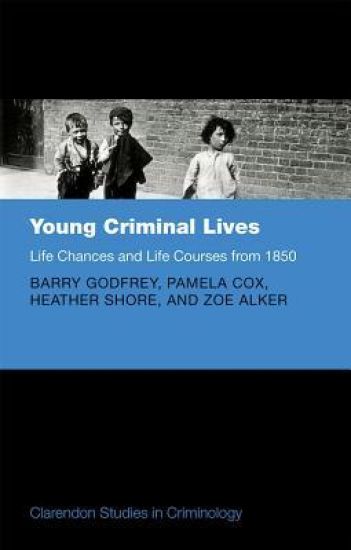
Young Criminal Lives: Life Courses and Life Chances from 1850

Young Criminal Lives: Life Courses and Life Chances from 1850

Barry Godfrey; Pamela Cox; Heather Shore; Zoe Alker

Oxford University Press
2017
sidottu
Young Criminal Lives is the first cradle-to-grave study of the experiences of some of the thousands of delinquent, difficult and destitute children passing through the early English juvenile reformatory system. The book breaks new ground in crime research, speaking to pressing present-day concerns around child poverty and youth justice, and resonating with a powerful public fascination for family history. Using innovative digital methods to unlock the Victorian life course, the authors have reconstructed the lives, families and neighbourhoods of 500 children living within, or at the margins of, the early English juvenile reformatory system. Four hundred of them were sent to reformatory and industrial schools in the north west of England from courts around the UK over a fifty-year period from the 1860s onwards. Young Criminal Lives is based on one of the most comprehensive sets of official and personal data ever assembled for a historical study of this kind. For the first time, these children can be followed on their journey in and out of reform and then though their adulthood and old age. The book centres on institutions celebrated in this period for their pioneering new approaches to child welfare and others that were investigated for cruelty and scandal. Both were typical of the new kind of state-certified provision offered, from the 1850s on, to children who had committed criminal acts, or who were considered 'vulnerable' to predation, poverty and the 'inheritance' of criminal dispositions. The notion that interventions can and must be evaluated in order to determine 'what works' now dominates public policy. But how did Victorian and Edwardian policy-makers and practitioners deal with this question? By what criteria, and on the basis of what kinds of evidence, did they judge their own successes and failures? Young Criminal Lives ends with a critical review of the historical rise of evidence-based policy-making within criminal justice. It will appeal to scholars and students of crime and penal policy, criminologists, sociologists, and social policy researchers and practitioners in youth justice and child protection.
Crime, Regulation and Control During the Blitz

Crime, Regulation and Control During the Blitz

Peter Adey; David J. Cox; Barry Godfrey

Bloomsbury Academic
2017
nidottu
Crime, Regulation and Control during the Blitz looks at the social effect of bombing on urban centres like Liverpool, Coventry and London, critically examining how the wartime authorities struggled to regulate and control crime and offending during the Blitz. Focusing predominantly on Liverpool, it investigates how the authorities and citizens anticipated the aerial war, and how the State and local authorities proposed to contain and protect a population made unruly, potentially deviant and drawn into a new landscape of criminal regulation.Drawing on a range of contemporary sources, the book throws into relief today's experiences of war and terror, the response in crime and deviancy, and the experience and practices of preparedness in anticipation of terrible threats. The authors reveal how everyday activities became criminalised through wartime regulations and explore how other forms of crime such as looting, theft and drunkenness took on a new and frightening aspect. Crime, Regulation and Control during the Blitz offers a critical contribution to how we understand crime, security, and regulation in both the past and the present.
Crime, Regulation and Control During the Blitz

Crime, Regulation and Control During the Blitz

Peter Adey; David J. Cox; Barry Godfrey

Bloomsbury Academic USA
2016
sidottu
Crime, Regulation and Control during the Blitz looks at the social effect of bombing on urban centres like Liverpool, Coventry and London, critically examining how the wartime authorities struggled to regulate and control crime and offending during the Blitz. Focusing predominantly on Liverpool, it investigates how the authorities and citizens anticipated the aerial war, and how the State and local authorities proposed to contain and protect a population made unruly, potentially deviant and drawn into a new landscape of criminal regulation.Drawing on a range of contemporary sources, the book throws into relief today's experiences of war and terror, the response in crime and deviancy, and the experience and practices of preparedness in anticipation of terrible threats. The authors reveal how everyday activities became criminalised through wartime regulations and explore how other forms of crime such as looting, theft and drunkenness took on a new and frightening aspect. Crime, Regulation and Control during the Blitz offers a critical contribution to how we understand crime, security, and regulation in both the past and the present.
Crime and Justice since 1750

Crime and Justice since 1750

Barry Godfrey; Paul Lawrence

Routledge
2014
sidottu
This book provides a comprehensive, introductory text for students taking courses in crime and criminal justice history. It covers all of the key historical topics central to an understanding of the current criminal justice system, including the development of the police, the courts and the mechanisms of punishment (from the gallows to the prison). The role of the victim in the criminal justice system, changing perceptions of criminals, long-term trends in violent crime, and the rise of surveillance society also receive detailed analysis. In addressing each of these issues and developments, the authors draw on the latest research in this rapidly expanding field to explore a range of historiographical and criminological debates. This new edition continues its exploration of criminal justice history right through to the present day and discusses recent events in the criminal justice world. Each chapter now ends with a ‘Modern parallels’ section - a detailed case study providing historical analysis pertinent to a specific contemporary issue in the field of criminal justice and drawing parallels between historical context and modern phenomenon. Each chapter also includes a ‘Key questions’ section, which guides the reader towards appropriate sources for further study.The authors draw on their in-depth knowledge and provide an accessible and lively guide for those approaching the subject for the first time, or those wishing to deepen their knowledge. This makes the book essential reading for those teaching or studying modules on criminal justice, policing and youth justice.
Crime and Justice since 1750

Crime and Justice since 1750

Barry Godfrey; Paul Lawrence

Routledge
2014
nidottu
This book provides a comprehensive, introductory text for students taking courses in crime and criminal justice history. It covers all of the key historical topics central to an understanding of the current criminal justice system, including the development of the police, the courts and the mechanisms of punishment (from the gallows to the prison). The role of the victim in the criminal justice system, changing perceptions of criminals, long-term trends in violent crime, and the rise of surveillance society also receive detailed analysis. In addressing each of these issues and developments, the authors draw on the latest research in this rapidly expanding field to explore a range of historiographical and criminological debates. This new edition continues its exploration of criminal justice history right through to the present day and discusses recent events in the criminal justice world. Each chapter now ends with a ‘Modern parallels’ section - a detailed case study providing historical analysis pertinent to a specific contemporary issue in the field of criminal justice and drawing parallels between historical context and modern phenomenon. Each chapter also includes a ‘Key questions’ section, which guides the reader towards appropriate sources for further study.The authors draw on their in-depth knowledge and provide an accessible and lively guide for those approaching the subject for the first time, or those wishing to deepen their knowledge. This makes the book essential reading for those teaching or studying modules on criminal justice, policing and youth justice.
Policing the Factory

Policing the Factory

Barry Godfrey; David J. Cox

Bloomsbury Academic
2014
nidottu
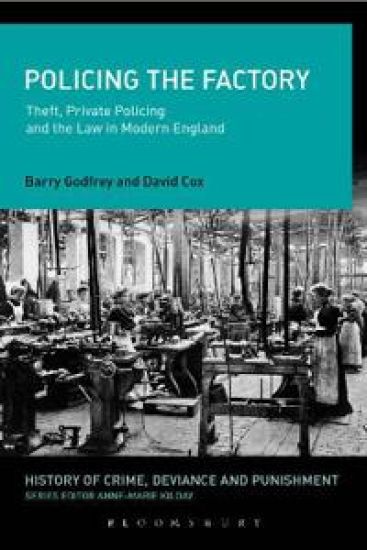
Policing the Factory describes the operation of various private policing agencies, employed to track down and prosecute workplace offenders. The authors focus in particular on the Worsted Committee and their Inspectors, who, between 1777 and 1968, prosecuted thousands of workers in the north of England for taking home workplace scraps, or wasting their employer's time. Most of the workers prosecuted spent a month in prison upon conviction, and many more were dismissed from employment without any formal legal action taking place. This book explores how, and under what legislative basis, the criminal law could be brought into private spaces in this period and goes on suggest that the activities of the Inspectorate inhibited the development of public policing in Yorkshire. The book presents case studies, newspaper comment, memoirs, and statistics based on detailed archival analysis of court records, to create a richly textured story which will inform and challenge contemporary debates on policing and police history.
Crime in England 1880-1945

Crime in England 1880-1945

Barry Godfrey

Willan Publishing
2013
sidottu
This book is an ambitious attempt to map the main changes in the criminal justice system in the Victorian period through to the twentieth century. Chapters include an examination of the growth and experience of imprisonment, policing, and probation services; the recording of crime in official statistics and in public memory; and the possibilities of research created by new electronic and on-line sources; an exploration of time, space and place, on crime, and the growth internationalisation and science-led approach of crime control methods in this period.Unusually, the book presents these issues in a way which illustrates the sources of data that informs modern crime history and discusses how criminologists and historians produce theories of crime history. Consequently, there are a series of interesting and lively debates of a thematic nature which will engage historians, criminologists, and research methods specialists, as well as the undergraduates and school students that, like the author, are fascinated by crime history.
Crime in England 1880-1945

Crime in England 1880-1945

Barry Godfrey

Willan Publishing
2013
nidottu
This book is an ambitious attempt to map the main changes in the criminal justice system in the Victorian period through to the twentieth century. Chapters include an examination of the growth and experience of imprisonment, policing, and probation services; the recording of crime in official statistics and in public memory; and the possibilities of research created by new electronic and on-line sources; an exploration of time, space and place, on crime, and the growth internationalisation and science-led approach of crime control methods in this period.Unusually, the book presents these issues in a way which illustrates the sources of data that informs modern crime history and discusses how criminologists and historians produce theories of crime history. Consequently, there are a series of interesting and lively debates of a thematic nature which will engage historians, criminologists, and research methods specialists, as well as the undergraduates and school students that, like the author, are fascinated by crime history.
Policing the Factory

Policing the Factory

Barry Godfrey; David J. Cox

Bloomsbury Academic USA
2013
sidottu
Policing the Factory describes the operation of various private policing agencies, employed to track down and prosecute workplace offenders. The authors focus in particular on the Worsted Committee and their Inspectors, who, between 1777 and 1968, prosecuted thousands of workers in the north of England for taking home workplace scraps, or wasting their employer's time. Most of the workers prosecuted spent a month in prison upon conviction, and many more were dismissed from employment without any formal legal action taking place. This book explores how, and under what legislative basis, the criminal law could be brought into private spaces in this period and goes on suggest that the activities of the Inspectorate inhibited the development of public policing in Yorkshire. The book presents case studies, newspaper comment, memoirs, and statistics based on detailed archival analysis of court records, to create a richly textured story which will inform and challenge contemporary debates on policing and police history.
Serious Offenders

Serious Offenders

Barry Godfrey; David Cox; Stephen Farrall

Oxford University Press
2010
sidottu
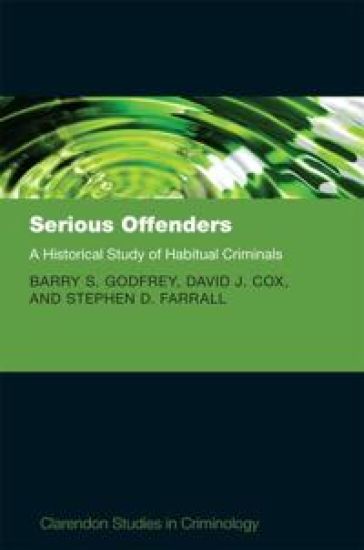
Serious Offenders: A Historical Study of Habitual Criminals examines the persistent offending careers of men and women operating in northwest England between the 1840s and 1940s. The book focuses on a group of serious and persistent offenders who as well as offending in the region, had lengthy offending careers spanning several decades in various other locations. These were highly mobile persistent serious offenders who appear not to have been so closely bound in to the processes and structures which aided desistence from offending for the vast majority of the petty offenders. The authors discuss questions such as: Why did some people remain minor offenders, whilst others developed into serious offenders? What were the triggers which propelled previously minor offenders towards persistent serious criminality? What part did changes in criminal legislation play in these processes? They conclude by drawing on the lessons to be learnt for today's debates about the regulation and surveillance of serious habitual offenders.
History and Crime

History and Crime

Barry Godfrey; Paul M. Lawrence; Chris A Williams

SAGE Publications Inc
2007
nidottu
This lively and accessible text provides an introduction to the history of crime and crime control. It explains the historical background that is essential for an understanding of contemporary criminal justice, and examines the historical context for contemporary criminological debates. Topics covered include: Crime statisticsConstructions of criminalityPolicing PrisonsSurveillanceGovernanceWhite-collar crimeImmigration and crime For each topic, the book provides an overview of current research, comment on current arguments and links to wider debates. The Key Approaches to Criminology series celebrates the removal of traditional barriers between disciplines and, specifically, reflects criminology’s interdisciplinary nature and focus. It brings together some of the leading scholars working at the intersections of criminology and related subjects. Each book in the series helps readers to make intellectual connections between criminology and other discourses, and to understand the importance of studying crime and criminal justice within the context of broader debates. The series is intended to have appeal across the entire range of undergraduate and postgraduate studies and beyond, comprising books which offer introductions to the fields as well as advancing ideas and knowledge in their subject areas.
History and Crime

History and Crime

Barry Godfrey; Paul M. Lawrence; Chris A Williams

SAGE Publications Inc
2007
sidottu
This lively and accessible text provides an introduction to the history of crime and crime control. It explains the historical background that is essential for an understanding of contemporary criminal justice, and examines the historical context for contemporary criminological debates. Topics covered include: Crime statisticsConstructions of criminalityPolicing PrisonsSurveillanceGovernanceWhite-collar crimeImmigration and crime For each topic, the book provides an overview of current research, comment on current arguments and links to wider debates. The Key Approaches to Criminology series celebrates the removal of traditional barriers between disciplines and, specifically, reflects criminology’s interdisciplinary nature and focus. It brings together some of the leading scholars working at the intersections of criminology and related subjects. Each book in the series helps readers to make intellectual connections between criminology and other discourses, and to understand the importance of studying crime and criminal justice within the context of broader debates. The series is intended to have appeal across the entire range of undergraduate and postgraduate studies and beyond, comprising books which offer introductions to the fields as well as advancing ideas and knowledge in their subject areas.