Kirjojen hintavertailu. Mukana 12 390 323 kirjaa ja 12 kauppaa.
Kirjailija
Barry Rubin
Kirjat ja teokset yhdessä paikassa: 20 kirjaa, julkaisuja vuosilta 1981-2016, suosituimpien joukossa From War to Peace. Vertaile teosten hintoja ja tarkista saatavuus suomalaisista kirjakaupoista.
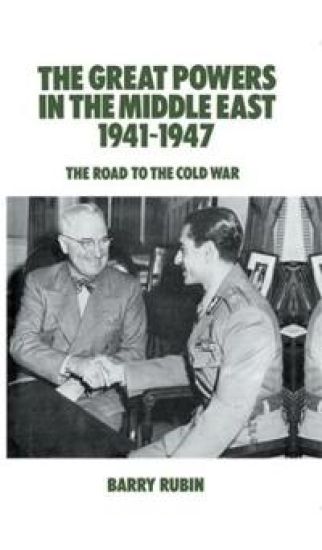
First Published in 1981. The objective of this study is to reconstruct the difficulty faced by American and British policy-makers in ‘determining the capabilities and intentions’ of their two main wartime allies regarding the Middle East. Specifically, it seeks to explore the role of great power relations in the Middle East in the breakdown of the wartime alliance and in the origins of the Cold War.
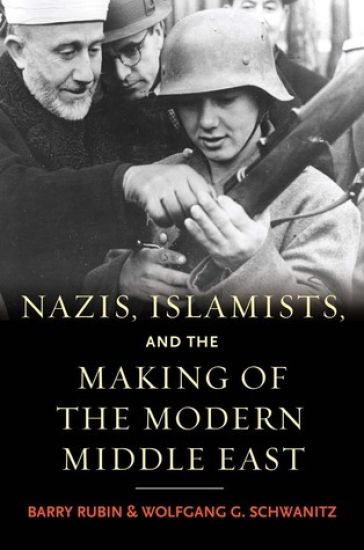
A groundbreaking account of the Nazi-Islamist alliance that changed the course of World War II and influences the Arab world to this day During the 1930s and 1940s, a unique and lasting political alliance was forged among Third Reich leaders, Arab nationalists, and Muslim religious authorities. From this relationship sprang a series of dramatic events that, despite their profound impact on the course of World War II, remained secret until now. In this groundbreaking book, esteemed Middle East scholars Barry Rubin and Wolfgang G. Schwanitz uncover the complete story of this dangerous alliance and explore its continuing impact on Arab politics in the twenty-first century. Rubin and Schwanitz reveal, for example, the full scope of Palestinian leader Amin al-Husaini’s support of Hitler’s genocidal plans against European and Middle Eastern Jews. In addition, they expose the extent of Germany’s long-term promotion of Islamism and jihad. Drawing on unprecedented research in European, American, and Middle East archives, many never before written about, the authors offer new insight on the intertwined development of Nazism and Islamism and its impact on the modern Middle East.
The Middle East is an area of great importance globally, yet misperceptions abound. Events have made it a region of special interest to the West and so the search for understanding gains momentum. This publication is intended to clarify the region’s complex history and issues. In developing this project, the contributors’ set out to explore seven significant themes that are usually not found in other sources. While many books focus on political history and conflicts, this two-volume work deals specifically with culture, religion, women, economics, governance, and media, as well as the role that the region’s modern history has played in shaping its society and worldview.
Concise yet comprehensive, this one-volume reference examines the history of terrorism in the modern world, including its origins and development, and terrorist acts by groups and individuals from the French Revolution to today. Organized thematically and regionally, it outlines major developments in conflicts that involved terrorism, the history of terrorist groups, key aspects of counterterrorist policy, and specific terrorist incidents.Initial chapters explore terrorism as a social force, and analyze the use of terrorism as a political tool, both historically and in the contemporary world. Subsequent chapters focus on different parts of the world and consider terrorism as a part of larger disputes. Each chapter begins with a historical introduction and analysis of the topic or region, followed by one or more chronologies that trace events within political and social contexts. A glossary, selected bibliography, and detailed index are also included.
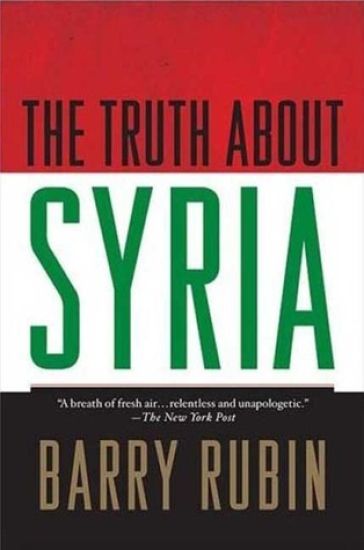
Syria has long presented a serious problem for the Middle East region and U.S. policy. With its mix of competing religious and ethnic groups, radical ideologies, and political repression, it is a 72,000-square-mile time bomb waiting to go off. Yet surprisingly, very little is known about this country and the role it has played in shaping the destiny of the Middle East. In The Truth about Syria, Middle East expert Barry Rubin looks at the critical issues that have made the country the powderkeg of the Middle East and offers an insightful analysis of the effects of recent developments.
In the early twenty-first century, the world has been seized by one of the most intense periods of anti-Americanism in history. Reviled as an imperialist power, an exporter of destructive capitalism, an arrogant crusader against Islam, and a rapacious over-consumer casually destroying the planet, it seems that the United States of America has rarely been less esteemed in the eyes of the world. In such an environment, one can easily overlook the fact that people from other countries have, in fact, been hating America for centuries. Going back to the day of Thomas Jefferson and Ben Franklin, Americans have long been on the defensive. Barry Rubin and Judith Colp Rubin here draw on sources from a wide range of countries to track the entire trajectory of anti-Americanism. Most significantly, they identify how anti-Americanism evolved over time. In the 18th century, the newfound land was considered too wild and barbaric to support human society. No one, the argument went, could actually live there. Animals brought from Europe, one French commentator claimed, shrunk in size and power. Native Americans too were "small and feeble," lacking "body hair, beard and ardor for his female." The very land itself was "permeated with moist and poisonous vapors, unable to give proper nourishment except to snakes and insects." This opinion prevailed through most of the 19th century, with Keats even invoking the lack of nightingales as symptomatic of just how unlovely and unlivable a place this America was. As the young nation came together at the beginning of the twentieth century and could no longer be easily dismissed as a failure, its very success became cause for suspicion. The American model of populist democracy, the rise of mass culture, the spread of industrialization-all confirmed that America was now a viral threat that could destabilize the established order in Europe. After the paroxysm of World War II, the worst fears of anti-Americanists were realized as the United States became one of the two most powerful nations in the world. Then, with the collapse of the Soviet Union, America became the sole superpower it is today, and the object of global suspicion and scorn. With this powerful work, the Rubins trace the paradox that is America, a country that is both the most reviled and most envied land on earth. In the end, they demonstrate, anti-Americanism has often been a visceral response to the very idea-as well as both the ideals and policies--of America itself, its aggressive innovation, its self-confidence, and the challenge it poses to alternative ideologies.
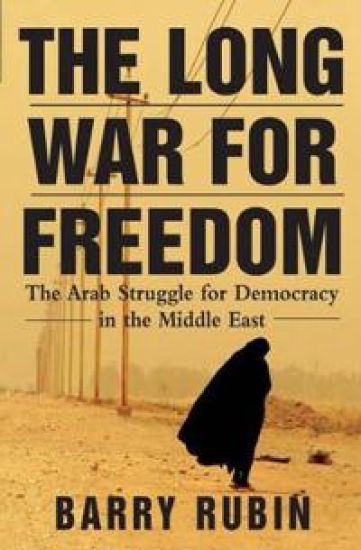
Praise for The Long War for Freedom ""An extremely important book. The Long War for Freedom finally presents to the Western world an in-depth portrait of those 'small voices' in the Arab world waging the most critical battle of the twenty-first century--the battle for the soul of the Middle East. No one with any interest in the struggle for economic and political reform in the Arab world can afford to neglect this penetrating and provocative work, which lays bare both the importance and the great difficulty of helping the Arab world to transform itself.""--Kenneth Pollack, author of The Threatening Storm and The Persian Puzzle
The Middle East has changed clearly, substantially, and dramatically during the last decade. Yet scholarly and public understanding lags far behind these events. This book explains why the previous era came to end, giving an historical and political summation of the region. Three interlinked themes are crucial to the book. First, a reinterpretation of the era of upheaval the Middle East has just passed through. During that period, many Arabs believed that some leader, country, or radical movement would unite the region, solving all its problems. Second, an evaluation of how the historical experience of the period between the 1940s and the 1990s undermined the old system, making change necessary. Third, an analysis of the region today that helps explain future developments, in what the author terms the Era of Reluctant Pragmatism, as the Middle Eastern societies decide their relationships to the West.
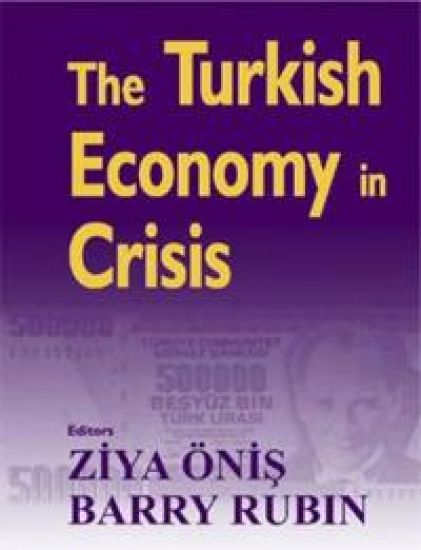
This book provides a set of critical perspectives on the economic crises of 2000 and 2001 focusing on both the origins and consequences of the crises. Attention is drawn to the role of domestic actors as well as key external actors such as the International Monetary Fund in precipitating the twin crises.
The Middle East has changed dramatically during the last decade, yet scholarly and public understanding lags far behind recent events. Barry Rubin, Director of the Global Research in International Affairs Center and editor of the Middle East Review of International Affairs, reveals how historical and political events and ideas have both shaped the character of the region. "Powerful."—The Washington Post
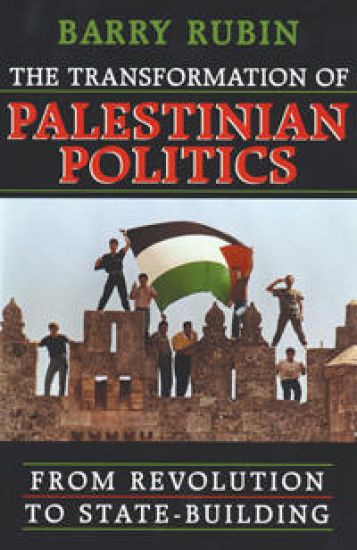
This book is a comprehensive overview and analysis of the Palestinians’ travail as they move from revolutionary movement to state. Barry Rubin outlines the difficulties in the transition now underway arising from Palestinian history, society, and diplomatic agreements. He writes about the search for a national identity, the choice of an economic system, and the structure of government.Rubin finds the political system interestingly distinctive—it appears to be a pluralist dictatorship. There are free elections, multiple parties, and some latitude in civil liberties. Yet there is a relatively unrestrained chief executive and arbitrariness in applying the law because of restraints on freedom. The new ruling elite is a complex mixture of veteran revolutionaries, heirs to large and wealthy families, professional soldiers, technocrats, and Islamic clerics. Beyond explaining how the executive and legislative branches work, Rubin factors in the role of public opinion in the peace process, the place of nongovernmental institutions, opposition movements, and the Palestinian Authority’s foreign relations—including Palestinian views and interactions with the Arab world, Israel, and the United States.This book is drawn from documents in Arabic, Hebrew, and English, as well as interviews and direct observations. Rubin finds that, overall, the positive aspects of the Palestinian Authority outweigh the negative, and he foresees the establishment of a Palestinian state. His charting of the triumphs and difficulties of this state-in-the-making helps predict and explain future dramatic developments in the Middle East.
This book is an antidote for civic apathy and disillusionment. It takes the reader step-by-step through the process of successful action for change -- from the germ of an idea to finding allies, getting the word out, and building the critical mass of people, energy, and support to accomplish the desired result. Filled with abundant practical examples and guidelines for success, the book covers all the bases: how to recognize that it's time for action; how to lobby decision makers; how to go to court; how to use information; how to use the internet effectively; how to get media attention; how to influence public opinion; how to mobilize grassroots support; how to form coalitions; how to organize an initiative or referendum; and more.
This book is an antidote for civic apathy and disillusionment. It takes the reader step-by-step through the process of successful action for change -- from the germ of an idea to finding allies, getting the word out, and building the critical mass of people, energy, and support to accomplish the desired result. Filled with abundant practical examples and guidelines for success, the book covers all the bases: how to recognize that it's time for action; how to lobby decision makers; how to go to court; how to use information; how to use the internet effectively; how to get media attention; how to influence public opinion; how to mobilize grassroots support; how to form coalitions; how to organize an initiative or referendum; and more.
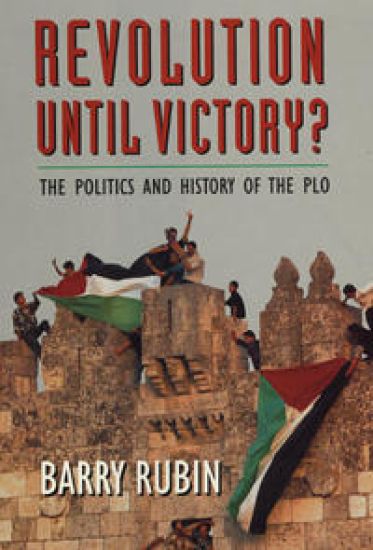
The Palestine Liberation Organization is now almost a government in Gaza and the West Bank. In this in-depth account of its ideology, strategy, and tactics, its relationship to other Arab states, and its confrontations with Israel, Barry Rubin documents how the PLO was transformed from revolutionary organization into the administrator of its own territory.
A survey of Arab-Israeli relations from the Yom Kippur War to the present day. This book reveals new first-hand material based on personal involvement at a high political level, and analysis by top Middle East experts. The volume deals with two pivotal events, in 1973 and 1993, leading the Middle East from War to Peace, as well as the dramatic changes connecting these years and events over time, incorporating Israeli, Palestinian and American scholars and participants in the fighting, diplomacy and secret contacts which moved towards resolving the world's longest ongoing conflict.
Guides you through the traditional Passover Seder dinner, step-by-step. This observance remind us of our rescue from Egyptian bondage and of Messiah's last supper, a Passover Seder on his last night in the upper room. The theme of redemption is seen throughout the evening.
First Published in 1981. The objective of this study is to reconstruct the difficulty faced by American and British policy-makers in ‘determining the capabilities and intentions’ of their two main wartime allies regarding the Middle East. Specifically, it seeks to explore the role of great power relations in the Middle East in the breakdown of the wartime alliance and in the origins of the Cold War.