Kirjojen hintavertailu. Mukana 12 390 323 kirjaa ja 12 kauppaa.

Kirjailija

Barry Schwabsky

Kirjat ja teokset yhdessä paikassa: 22 kirjaa, julkaisuja vuosilta 1997-2025, suosituimpien joukossa Lisa Yuskavage. Vertaile teosten hintoja ja tarkista saatavuus suomalaisista kirjakaupoista.

22 kirjaa

Kirjojen julkaisuhaarukka 1997-2025.

Lisa Yuskavage

Lisa Yuskavage

Ariel Levy; Barry Schwabsky; Lena Dunham

PHAIDON PRESS LTD
2025
nidottu
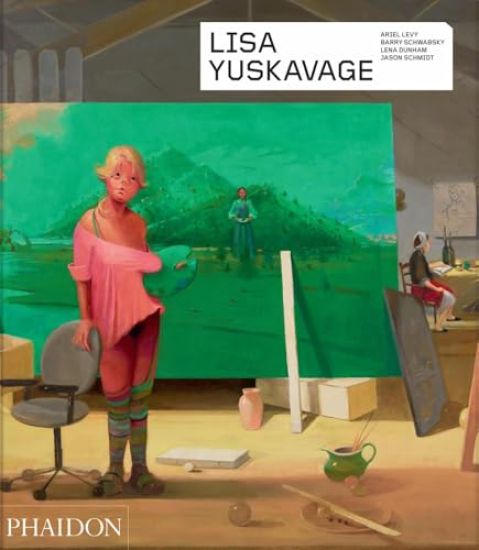
The definitive monograph on innovative American painter Lisa Yuskavage Lisa Yuskavage is one of the most acclaimed living painters. Known for her highly original approach to figurative painting, Yuskavage challenges conventional understandings of the genre. At times playful and at other times rueful, her bold, eccentric, exhibitionist, and introspective characters inhabit fantastical and vivid compositions, assuming the dual role of subject and object. Although inspired by popular culture, the artist’s technique is deeply rooted in the history of painting, establishing an underlying tension between polar opposites such as high and low, sacred and profane, harmony and dissonance. Yuskavage’s first proper monograph features more than 150 color images, including never-before-seen photographs of her studio, along with insightful text contributions from Barry Schwabsky, Lena Dunham, and Ariel Levy.
Clare Woods

Clare Woods

Barry Schwabsky; Simon Wallis

Buchhandlung Walther Konig GmbH Co. KG. Abt. Verlag
2006
sidottu
This book contains essays by Barry Schwabsky and Simon Wallis. The English countryside offers a fascinatingly malleable subject allowing deeply embedded primal stories, desires and experiences to unfold: a significant aspect of Clare Woods' paintings. These are often derived from the photographs Woods takes of rural life, including supernaturally charged places, sometimes obscured by snow or nightfall. Her locations, devoid of any particular focus, are symbolic landscapes, humanized through palpable emotions and unseen presences. This publication accompanies the exhibition, "Clare Woods: Deaf Man's House" at Chisenhale Gallery, London.
Mark Hadjipateras, HOMEWARD

Mark Hadjipateras, HOMEWARD

Alexandra Koroxenidis; Barry Schwabsky; Christopher Hudson

ABRAMS
2025
nidottu
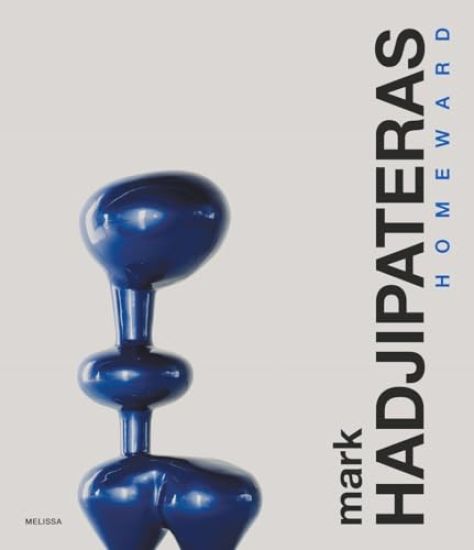
Mark Hadjipateras’s remarkable range of works, including monotypes, prints, drawings, paintings, sculpture, photosculpture, and numerous installations throughout the yearsMark Hadjipateras, Homeward presents the richly varied, fifty-year-long career of an international artist who has a deep understanding of our common roots in nature and the universal human need for belonging. His work explores nature as our shared “home” in a transhistorical exploration of prehistoric, modern, and futuristic habitats and their inhabitants. Mark Hadjipateras revisits major 20th -century movements such as surrealism, modernism, minimalism, and pop art, honoring them through his own distinct style to produce new, thought-provoking interpretations. Rendered in a remarkable range of media such as paintings, sculptures, assemblages, and site-specific installations, his forms harmoniously blend opposite qualities: movement with static form, weightlessness with volume, abstraction with figuration.
Bonnard

Bonnard

Barry Schwabsky; Sarah Whitfield

RIZZOLI INTERNATIONAL PUBLICATIONS
2023
sidottu
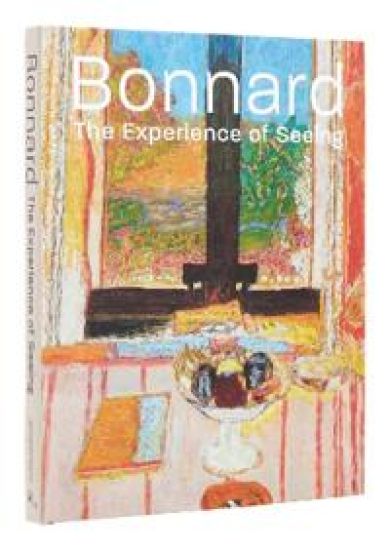
A new monograph brings together 30 important paintings by Pierre Bonnard (1867 1947) on loan from museums and private collections, including still lifes, nudes, interior scenes, and landscapes, many never seen together before and published here for the first time. The book reveals how Bonnard s modern compositions transformed paintings in the first half of the twentieth century, while celebrating his unparalleled ability to capture fleeting moments, memories, and emotions on canvas. Rather than focus on a particular time period or subject, Bonnard: The Experience of Seeing aims to present Bonnard s modernity and concentrate on his influence on contemporary painters working today. The book draws attention to how Bonnard translated the experience of perception with his shifting spaces, camouflaged and dissolving figures going in and out of focus, and forms hidden at the periphery and how we as viewers experience his paintings, with his works slowly revealing themselves to us over time.
Rumors to Wake Up To

Rumors to Wake Up To

Barry Schwabsky; T Thilleman

Spuyten Duyvil
2023
pokkari
Haiku by Schwabsky accompanied by new pastels by t thilleman. These poems are charactrerized as "Fat Haiku" because they stretch the usual line length as well as the purported moment of thought involved in their creation.
Art and Posthistory

Art and Posthistory

Arthur C. Danto; Demetrio Paparoni; Barry Schwabsky

Columbia University Press
2022
pokkari
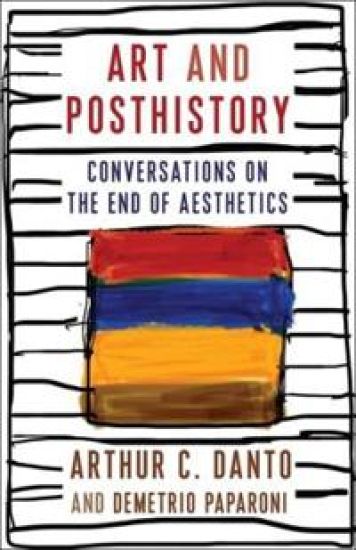
From the 1990s until just before his death, the legendary art critic and philosopher Arthur C. Danto carried out extended conversations about contemporary art with the prominent Italian critic Demetrio Paparoni. Their discussions ranged widely over a vast range of topics, from American pop art and minimalism to abstraction and appropriationism. Yet they continually returned to the concepts at the core of Danto’s thinking—posthistory and the end of aesthetics—provocative notions that to this day shape questions about the meaning and future of contemporary art.Art and Posthistory presents these rich dialogues and correspondence, testifying to the ongoing importance of Danto’s ideas. It offers readers the opportunity to experience the intellectual excitement of Danto in person, speculating in a freewheeling yet erudite style. Danto and Paparoni discuss figures such as Andy Warhol, Marcel Duchamp, Franz Kline, Sean Scully, Clement Greenberg, Cindy Sherman, and Wang Guangyi, offering both insightful comments on individual works and sweeping observations about wider issues. On occasion, the artist Mimmo Paladino and the philosopher Mario Perniola join the conversation, enlivening the discussion and adding their own perspectives.The book also features an introductory essay by Paparoni that provides lucid analysis of Danto’s thinking, emphasizing where the two disagree as well as what they learned from each other.
Art and Posthistory

Art and Posthistory

Arthur C. Danto; Demetrio Paparoni; Barry Schwabsky

Columbia University Press
2022
sidottu
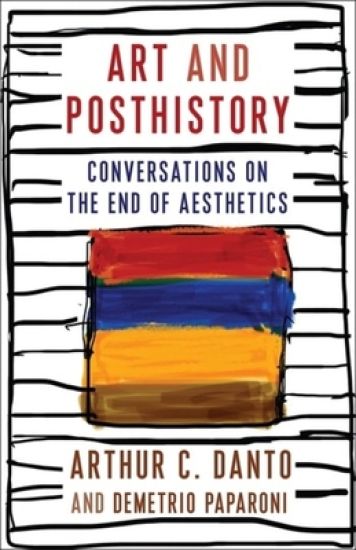
From the 1990s until just before his death, the legendary art critic and philosopher Arthur C. Danto carried out extended conversations about contemporary art with the prominent Italian critic Demetrio Paparoni. Their discussions ranged widely over a vast range of topics, from American pop art and minimalism to abstraction and appropriationism. Yet they continually returned to the concepts at the core of Danto’s thinking—posthistory and the end of aesthetics—provocative notions that to this day shape questions about the meaning and future of contemporary art.Art and Posthistory presents these rich dialogues and correspondence, testifying to the ongoing importance of Danto’s ideas. It offers readers the opportunity to experience the intellectual excitement of Danto in person, speculating in a freewheeling yet erudite style. Danto and Paparoni discuss figures such as Andy Warhol, Marcel Duchamp, Franz Kline, Sean Scully, Clement Greenberg, Cindy Sherman, and Wang Guangyi, offering both insightful comments on individual works and sweeping observations about wider issues. On occasion, the artist Mimmo Paladino and the philosopher Mario Perniola join the conversation, enlivening the discussion and adding their own perspectives.The book also features an introductory essay by Paparoni that provides lucid analysis of Danto’s thinking, emphasizing where the two disagree as well as what they learned from each other.
Lucas Arruda: Deserto-Modelo

Lucas Arruda: Deserto-Modelo

Lucas Arruda; Will Chancellor; Barry Schwabsky

David Zwirner
2020
sidottu
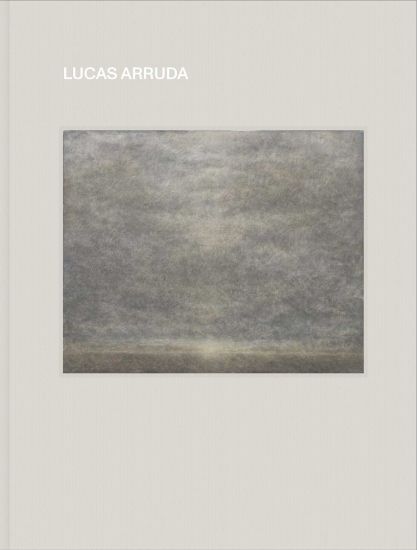
The first comprehensive monograph on the work of Brazilian painter Lucas Arruda elucidates the artist’s intricate, meditative compositions.Arruda has gained critical acclaim for atmospheric paintings that fluctuate between abstraction and figuration, imagination and reality. This monograph presents three groups of works loosely characterized as seascapes, jungles, and monochromes. Collectively titled Deserto-Modelo, they have an ephemeral, transient quality.Arruda’s intimately sized paintings of seascapes and junglescapes are characterized by their subtle rendition of light. Painted from memory, they are devoid of specific reference points, instead achieving their variety through the depiction of atmospheric conditions. Verging on abstraction, the compositions are grounded by an ever-present, if sometimes faint, horizon line that offers a perception of distance. They appear at once familiar and imaginary. Through his often evocative and textured brushstrokes, Arruda foregrounds the materiality and physicality of paint, while also recalling his genres’ historical associations with the notion of the romantic sublime.Alongside meticulous color plates and powerful details, author Will Chancellor offers a close reading of the work, raising questions about artifice, thresholds, and perception. Critic Barry Schwabsky unpacks the challenges posed by Arruda’s mysterious painted surfaces. As a whole, this book provides a detailed introduction to the work of a uniquely thoughtful and inventive artist.
Gillian Carnegie

Gillian Carnegie

Barry Schwabsky

Lund Humphries Publishers Ltd
2020
sidottu
The singular paintings of British artist Gillian Carnegie (b.1971) have been exhibited and discussed extensively for nearly two decades but this is the first substantial publication on her work.Carnegie’s work is explicitly analytical, systematic yet oblique in its reexamination of traditional painting genres such as still life, landscape, portraits, and the nude – all of them 'genres without a subject', as they have sometimes been called. Yet she makes clear that her impulse to resuscitate these categories is not simply an exercise in formalism, historicism, academic reverence, postmodern pastiche, or nostalgia. And far from being without a subject, far from having no story to tell, Carnegie’s paintings insistently suggest that there is a subject, that there is a story, but that the painting exists not to communicate it but to conceal it, to hold it incommunicado. In contemporary painting Gillian Carnegie's work stands apart, quietly, calmly and insistently uncanny, with an emotional tenor unlike anything else in art today.
Bernar Venet

Bernar Venet

Florence Derieux; Barry Schwabsky; Clare Lilley

Phaidon Press Ltd
2020
nidottu
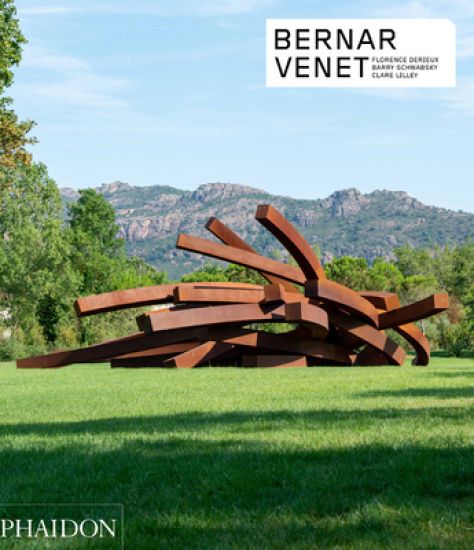
The first true monograph on the work of celebrated French conceptual artist and sculptor Bernar Venet Bernar Venet is one of France's most celebrated living artists. Having emerged from the late 1960s avant-garde scene in New York, Venet developed a personal aesthetic based on an innovative use of mathematics and science, where control, chance, and chaos converge to form a fine equilibrium while investigating their relationship with the environment. Conversant in many media, Venet is mostly known for his monumental outdoor sculptures in major cities worldwide and, in fall 19, his Arc Majeur is due for completion at a site in Belgium - at almost 200 feet in height (60 meters), Venet's sculpture will be taller than New York's Statue of Liberty.
Landscape Painting Now: From Pop Abstraction to New Romanticism

Landscape Painting Now: From Pop Abstraction to New Romanticism

Barry Schwabsky

Distributed Art Publishers (DAP)
2019
sidottu
From fantastical worlds to political topologies: a global survey of landscape painting in the 21st centuryAlthough the fact may be surprising to some, landscape painting is positively thriving in the 21st century--indeed, the genre has arguably never felt as vital as it does today. The reasons why, if speculative, surely include our imminent environmental collapse and increasingly digitally mediated existence. Landscape Painting Now is the first book of its kind to take a global view of its subject, featuring more than eighty outstanding contemporary artists--both established and emerging--whose ages span seven decades and who hail from twenty-five different countries. Through its thematic organization into six chapters--Realism and Beyond, Post-Pop Landscapes, New Romanticism, Constructed Realities, Abstracted Topographies, and Complicated Vistas--the book affords a generous window into the very best of contemporary landscape painting, from Cecily Brown's sensual, fleshy landscapes to Peter Doig's magic realist renderings of Trinidad, Maureen Gallace's serene views of beach cottages and the foaming ocean, David Hockney's radiant capturings of seasonal change in the English countryside, Julie Mehretu's dynamically cartographic abstractions, Alexis Rockman's mural-sized, postapocalyptic dioramas, and far beyond. Landscape Painting Now features an extensive essay by Barry Schwabsky, art critic for The Nation. Schwabsky's text weaves throughout the book, tracing the history of landscape painting from its origins in Eastern and Western art, through its transformation in the 20th century, to its present flourishing. Shorter texts by art historians Robert R. Shane, Louise S rensen, and Susan A. Van Scoy introduce each artist, situating the importance of landscape within their practice and addressing key works. With over 400 color reproductions, including many details, this ambitious survey makes a compelling case for the continued relevance of landscape painting in our time. Featured artists are Etel Adnan, Francis Alÿs, Hurvin Anderson, Mamma Andersson, Alfredo and Isabel Aquilizan, Lucas Arruda, Ayman Baalbaki, Jules de Balincourt, Ali Banisadr, Hernan Bas, John Beerman, Amy Bennett, Cecily Brown, Gillian Carnegie, Noa Charuvi, Nigel Cooke, Will Cotton, Cynthia Daignault, Verne Dawson, Vincent Desiderio, Lois Dodd, Peter Doig, Rackstraw Downes, Tim Eitel, Andreas Eriksson, Inka Essenhigh, Richard Estes, Genieve Figgis, Jane Freilicher, Barnaby Furnas, Maureen Gallace, Tim Gardner, Franz Gertsch, Adrian Ghenie, April Gornik, Isca Greenfield-Sanders, Pat de Groot, Daniel Heidkamp, Barkley L. Hendricks, Israel Hershberg, David Hockney, Shara Hughes, Yvonne Jacquette, Merlin James, Yishai Jusidman, Alex Kanevsky, Alex Katz, Anselm Kiefer, Per Kirkeby, Makiko Kudo, Matvey Levenstein, Li Dafang, Liu Xiaodong, Damian Loeb, Antonio L pez Garc a, Enrique Martinez Celaya, Julie Mehretu, Justin Mortimer, Maki Na Kamura, Jordan Nassar, Silke Otto-Knapp, Celia Paul, Eggert P tursson, Sylvia Plimack Mangold, Neo Rauch, Alexis Rockman, Jean-Pierre Roy, Tom s S nchez, Lisa Sanditz, Serban Savu, George Shaw, Mark Tansey, Alison Elizabeth Taylor, Wayne Thiebaud, Luc Tuymans, Cinta Vidal, Kay WalkingStick, Corinne Wasmuht, Matthew Wong, Jonas Wood, Lisa Yuskavage and Luiz Zerbini
Jessica Stockholder

Jessica Stockholder

Lynne Tillman; Barry Schwabsky; Lynne Cooke; Germano Celant

Phaidon Press Ltd
2018
sidottu
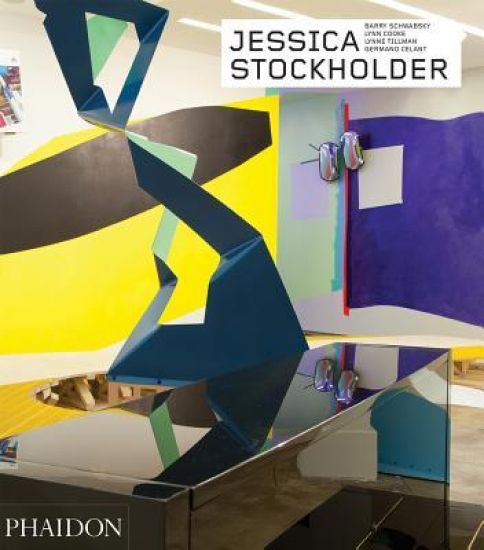
The definitive book on a creative force who continues to influence sculpture and installation art Jessica Stockholder has long broken down the boundaries between painting, sculpture, and architecture to explore the body in social and cultural space - using found objects intertwined with profusions of vivid colours. This revised, updated edition spotlights the extraordinary evolution of her career, and examines the pivotal role she has played in shaping some of the most fundamental ideas around which contemporary sculpture and painting revolve today.
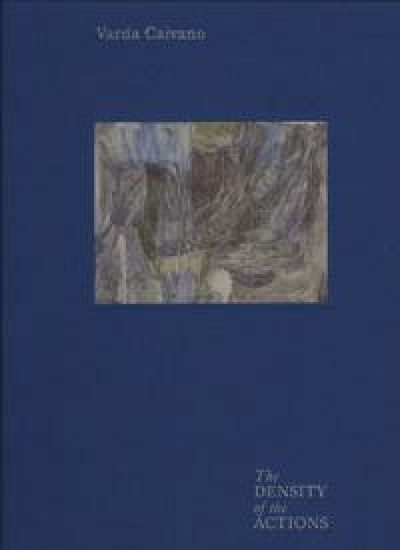
Varda Caivano – The Density of the Actions

Varda Caivano – The Density of the Actions

Paula Van Den Bosch; Myers Terry R.; Barry Schwabsky; St. John Peter

Victoria Miro Gallery
2018
sidottu
This catalogue was published on the occasion of Varda Caivano's exhibition The Density of the Actions, February 22–April 19, 2015 at the Renaissance Society at the University of Chicago. The book features texts by Barry Schwabsky, Paula van den Bosch, Terry R. Myers, Peter St John, Georges Perec, and Solveig Øvstebø, as well as 43 color and 6 black and white images of Caivano’s paintings and the Renaissance Society installation.
Juan Usle

Juan Usle

Barry Schwabsky

Ediciones Poligrafa
2017
sidottu
The hypersensitivity Usle describes is a kind of visionary state, but it is one that is painful - and memorable precisely because it is painful. When we see certain paintings of Usle's that use bright, intense, searing colours, shouldn't we think of this early encounter with one of those states of being that suddenly and dramatically remove us from our everyday mode of perception - one of those events that teach us that everything we perceive might be perceived entirely differently, given even a small modification of the perceptual apparatus we normally take for granted? There are certain paintings by Usle, very complicated ones, that might well remind us of the experience of peering into a kaleidoscope, and while this is not to say that we are therefore to imagine that we should also find the sight of these paintings painful - far from it! no more than, not having suffered sunstroke, we would find looking through a kaleidoscope painful - it is helpful to be reminded that such experiences, in which there is a visual clamour beyond what we are used to being subject to, may not be easy or comfortable ones, and therefore they are only a step away, albeit a crucial step, from being painful. They are a little too much, and therefore they put pressure on our aesthetic expectations. This is Usle's pictorial equivalent of Rimbaud's famous "dereglement de tous les sens."
The Perpetual Guest

The Perpetual Guest

Barry Schwabsky

Verso Books
2016
nidottu
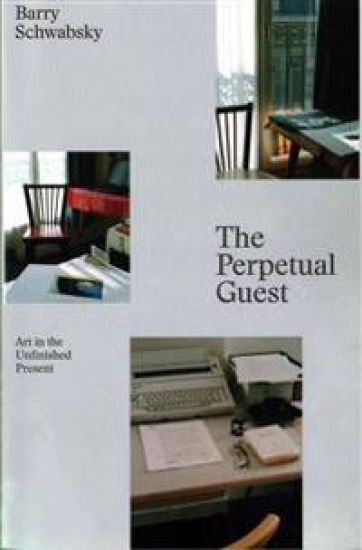
The idea of contemporary art sometimes allows us to pretend we have made a clean break with the past. In The Perpetual Guest, poet and critic Barry Schwabsky demonstrates that any robust understanding of art's present must also account for the ongoing life and changing fortunes of its past.In surveying the art world of this past decade, Schwabsky attends not only to its most significant newer faces-among them, Kara Walker, Thomas Hirschhorn, Ai Weiwei, Chris Ofili, and Lorna Simpson-but their forebears, both recent (Jeff Wall, Nancy Spero, Dan Graham, Cindy Sherman) and more distant (Veláquez, Manet, Matisse, and the portraitists of the Renaissance)."The art critic," Schwabsky writes, "formalizes and deliberately exemplifies the role of the spectator who realizes the artist's work, not by leaving it just as it is, but by adding something to it, making a personal contribution."Despite the hysterical pronouncements of criticism's demise, Schwabsky's rich and subtle considerations of art's complexly intertwined traditions are an indispensable contribution to understanding our present moment.
Alex Katz

Alex Katz

Robert Storr; Carter Ratcliff; Iwona Blazwick; Barry Schwabsky

Phaidon Press Ltd
2014
sidottu
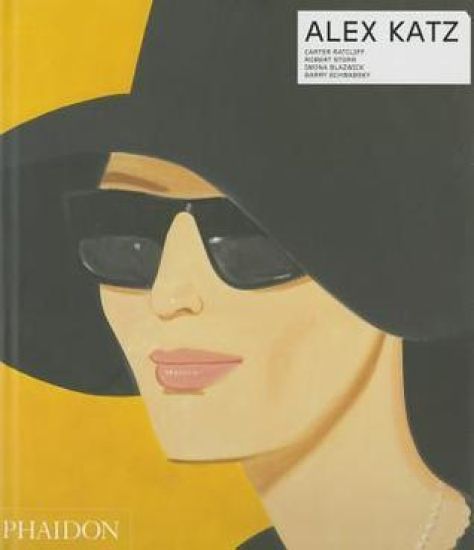
Alex Katz is a towering figure in contemporary painting, a key New York-based artist since the early 1960s. Katz is best known for his distinct portraits of sophisticated, irresistible women, masterfully painted using precise, broad areas of colour Alex Katz first emerged on the New York art scene during the heyday of Abstract Expressionism and before the birth of Pop art, but always worked independently of these movements. Katz is best known for his distinctive portraits of sophisticated, irresistible women, masterfully painted using precise, broad areas of colour. Alongside these unmistakably ‘Katzian’ female portraits are pictures of men, groups, landscapes and interiors, rendered in paint on canvas or metal cut-outs as well as drawing and collage. All attest to the artist’s attention to detail, economy of means and consummate technique. Larger-than-life paintings such as The Black Dress (1960), Blue Umbrella (1972), Red Coat (1982) and White Visor (2003) have entered the collective consciousness as the epitome of a particular, late twentieth-century feminine ideal. A major touring retrospective was organized by New York’s Whitney Museum of American Art in 1986, and Katz has exhibited widely all over the world. His works are in the collections of The Museum of Modern Art, New York; Tate, London; the Musée National d’Art Moderne, Paris; and the Nationalgalerie, Berlin, among many others. A leading world expert on Katz, distinguished New York art critic Carter Ratcliff writes the definitive, comprehensive Survey, following Katz’s work from the 1950s to the present. In the Interview New York-based curator and critic Robert Storr discusses in detail with the artist his practice and technique in the context of a changing art world. Curator Iwona Blazwick enters in her Focus the silent world of Sylvia (1962-63), a classic Katz portrait that resonates with the urban landscape occupied by both artist and sitter. For Artist’s Choice Katz has selected nine works by New York School Poets, all of whom share a particular, often personal connection to his work. Artist’s Writings range from an early text from 1959 on Katz’s dislike of the term ‘academy’ to a recent text that reflects on his beginnings as an artist. Key interviews with some of the of the twentieth century’s most prestigious art figures – including critic David Sylvester and artists Francesco Clemente, Jane Freilicher and Richard Prince – are also included.
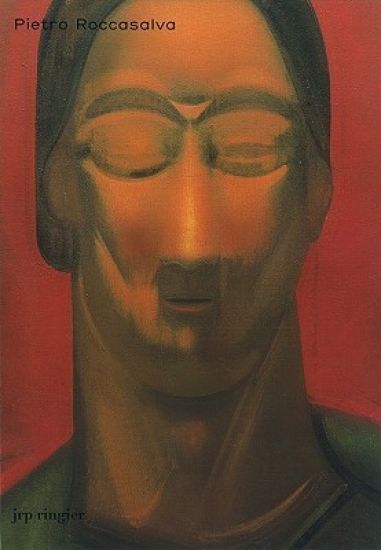
Pietro Roccasalva

Pietro Roccasalva

Barry Schwabsky

JRP Ringier
2008
sidottu
Pietro Roccasalva (born 1970 in Modica, lives and works in Milan) is one of the most singular and promising Italian artists in the post-Cattelan generation in Italy. His work is a visionary and erudite mix of conceptual rigour and hallucinatory extravaganza: starting from painting as his main medium of expression and ranging from sculpture to installation, from "tableaux vivants" to drawing and film, Roccasalva's creative world is an unceasing investigation into the meaning of images and how we relate to them. His iconic obsessions are always set in complex installations in which the different elements act like characters on a stage, performing an erratic script that probes a wide range of historical references, from art history to philosophy, music, and literature.