Kirjojen hintavertailu. Mukana 12 595 353 kirjaa ja 12 kauppaa.
Kirjailija
Bartholomew Ryan
Kirjat ja teokset yhdessä paikassa: 3 kirjaa, julkaisuja vuosilta 2014-2024, suosituimpien joukossa Kierkegaard’s Indirect Politics. Vertaile teosten hintoja ja tarkista saatavuus suomalaisista kirjakaupoista.
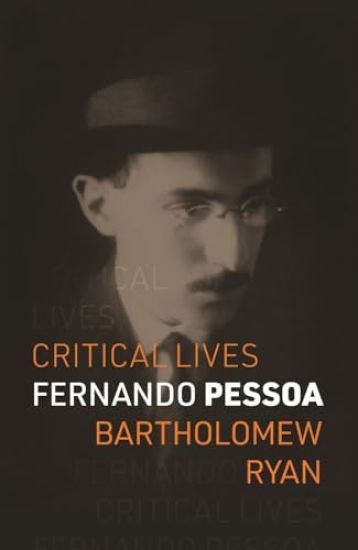
As a young man, Fernando Pessoa wrote ‘be plural like the universe.’ Staying true to this, he went on to invent more than one hundred fictional alter-egos, which he called heteronyms. This biography, probing Pessoa’s experience and imagination of reality, navigates the poet’s early days in Lisbon and South Africa, reveals a philosopher-poet and pioneer of Portuguese modernism, and delves into the birth of Pessoa’s heteronymic universe. Bartholomew Ryan traverses Pessoa’s writings on evolving radical politics and his messianic dream of an empire of poets, his ventures into esoteric realms and his expertise in astrology. The book unravels Pessoa’s real and imaginary relationships, and explores his unfinished prose masterpiece, The Book of Disquiet. This is a compelling, timely exploration of Pessoa’s profound and innovative ideas, including his revolutionary concepts of identity and self-multiplicity.
This dynamic new volume is the first major survey to chronicle the emergence and migration of Pop art from an international perspective, focusing on the period from the 1950s through the early 1970s. Including original texts from a diverse roster of contributors, this catalogue provides important new scholarship on the period, examining production by artists across the globe who were simultaneously confronting radical cultural and political developments that would lay the foundation for the emergence of an art form embracing figuration, media strategies and mechanical processes with a new spirit of urgency and/or exuberance. International Pop amplifies the scope and tenor of what we understand to be `Pop', exposing the tremendous variety and complexity of this pivotal period and subject matter, and revealing how artists alternatively celebrated, cannibalized, rejected or assimilated some of the presumed qualities of Pop advanced in the US and Britain. Anchored by an expansive 48-page visual chronology, the book features in-depth essays by a range of scholars examining developments in Britain, Japan, Brazil, Argentina, Italy and Hungary as well as Western Europe and the US. The volume includes some 320 illustrations, including full-color plates of each work in the exhibition, which integrates many classics of Pop art with numerous rarely seen works. Among the artists included are Evelyne Axel, Peter Blake, Raymond Colares, Antonio Dias, Rosalyn Drexler, Erro, Leon Ferrari, Richard Hamilton, David Hockney, Jasper Johns, Tanaami Keiichi, Yves Klein, Jiri Kolar, Yayoi Kusama, Nelson Leirner, Ana Maria Maiolino, Antonio Manuel, Marisol, Marta Minujin, Claes Oldenburg, Wanda Pimentel, Michaelangelo Pistoletto, Sigmar Polke, Gerhard Richter, Mimmo Rotella, Ed Ruscha, Niki de Saint Phalle, Okamoto Shinjiro, Yokoo Tadanori, Wayne Thiebaud, Jean Tinguely, Shinohara Ushio and Andy Warhol.
This book argues that a radical political gesture can be found in Søren Kierkegaard’s writings. The chapters navigate an interdisciplinary landscape by placing Kierkegaard’s passionate thought in conversation with the writings of Georg Lukács, Carl Schmitt, Walter Benjamin and Theodor Adorno. At the heart of the book’s argument is the concept of “indirect politics,” which names a negative space between methods, concepts, and intellectual acts in the work of Kierkegaard, as well as marking the dynamic relations between Kierkegaard and the aforementioned thinkers. Kierkegaard’s indirect politics is a set of masks that displaces identities from one field to the next: theology masks politics; law masks theology; political theory masks philosophy; and psychology masks literary approaches to truth. As reflected in Lukács, Schmitt, Benjamin, and Adorno, this book examines how Kierkegaard’s indirect politics sets into relief three significant motifs: intellectual non-conformism, indirect communication in and through ambiguous identities, and negative dialectics.