Kirjojen hintavertailu. Mukana 12 595 353 kirjaa ja 12 kauppaa.

Kirjailija

Baruch A. Brody

Kirjat ja teokset yhdessä paikassa: 6 kirjaa, julkaisuja vuosilta 1988-2016, suosituimpien joukossa Taking Issue. Vertaile teosten hintoja ja tarkista saatavuus suomalaisista kirjakaupoista.

6 kirjaa

Kirjojen julkaisuhaarukka 1988-2016.

Identity and Essence

Identity and Essence

Baruch A. Brody

Princeton University Press
2016
sidottu
Baruch Brody contends that the fundamental assumption on which the tradition is based is erroneous and that once this assumption is shown to be in error, all philosophical problems in this area have to be rethought. Originally published in 1980. The Princeton Legacy Library uses the latest print-on-demand technology to again make available previously out-of-print books from the distinguished backlist of Princeton University Press. These editions preserve the original texts of these important books while presenting them in durable paperback and hardcover editions. The goal of the Princeton Legacy Library is to vastly increase access to the rich scholarly heritage found in the thousands of books published by Princeton University Press since its founding in 1905.
Identity and Essence

Identity and Essence

Baruch A. Brody

Princeton University Press
2014
pokkari
Baruch Brody contends that the fundamental assumption on which the tradition is based is erroneous and that once this assumption is shown to be in error, all philosophical problems in this area have to be rethought. Originally published in 1980. The Princeton Legacy Library uses the latest print-on-demand technology to again make available previously out-of-print books from the distinguished backlist of Princeton University Press. These editions preserve the original texts of these important books while presenting them in durable paperback and hardcover editions. The goal of the Princeton Legacy Library is to vastly increase access to the rich scholarly heritage found in the thousands of books published by Princeton University Press since its founding in 1905.
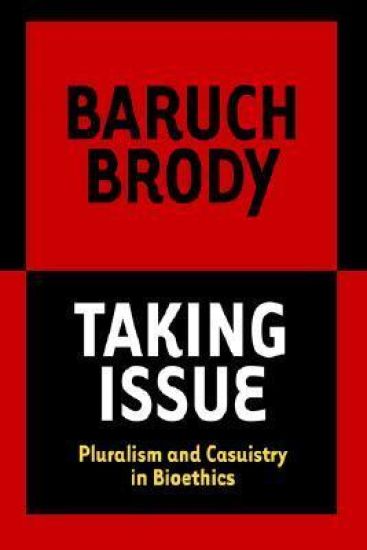
Taking Issue

Taking Issue

Baruch A. Brody

Georgetown University Press
2004
pokkari
A pioneer in the theory of pluralistic casuistry, the idea that there are almost as many facets to moral choices as there are cases that call for choices, Baruch Brody takes issue with conventional bioethical wisdom and challenges the rigid principalism of contemporary bioethics. His views have been seen as controversial, but they are firmly held, and convincingly argued - all of which have led him to be one of the most widely discussed and highly admired bioethicists of our time. He argues for the fundamental distinction between active and passive euthanasia, for a need to reconceptualize approaches to brain death, and for the right of providers to unilaterally discontinue life support. He shows support for the waiving of the requirement of informed consent for some research, for the widespread use of animals in research, and for the use of placebos in many international clinical trials. When it comes to morality as it is practiced in medicine, Brody makes clear that the ethical issues are never as simple as black and white - that there are myriad factors and fine nuances that can and should challenge decision making as it is commonly practiced in difficult medical cases. In this collection, delving thoughtfully and systematically into methodology, research ethics, clinical ethics, and Jewish medical ethics, he tackles thorny life-and-death questions head-on and fearlessly. He casts a light into all the corners of end-of-life decisions - a field in which he has exemplary credentials - while illuminating a new understanding of morality and ethics. The introduction outlines Brody's approach, defines the terminology used, and contrasts his ethical positions with much of the competing literature. "Taking Issue" will be invaluable to students and scholars in medical ethics, bioethics, and philosophy of medicine.
Taking Issue

Taking Issue

Baruch A. Brody

Georgetown University Press
2003
sidottu
A pioneer in the theory of pluralistic casuistry, the idea that there are almost as many facets to moral choices as there are cases that call for choices, Baruch Brody takes issue with conventional bioethical wisdom and challenges the rigid principalism of contemporary bioethics. His views have been seen as controversial, but they are firmly held, and convincingly argued—all of which have led him to be one of the most widely discussed and highly admired bioethicists of our time. He argues for the fundamental distinction between active and passive euthanasia, for a need to reconceptualize approaches to brain death, and for the right of providers to unilaterally discontinue life support. He shows support for the waiving of the requirement of informed consent for some research, for the widespread use of animals in research, and for the use of placebos in many international clinical trials. When it comes to morality as it is practiced in medicine, Brody makes clear that the ethical issues are never as simple as black and white—that there are myriad factors and fine nuances that can and should challenge decision making as it is commonly practiced in difficult medical cases. In this collection, delving thoughtfully and systematically into methodology, research ethics, clinical ethics, and Jewish medical ethics, he tackles thorny life-and-death questions head-on and fearlessly. He casts a light into all the corners of end-of-life decisions—a field in which he has exemplary credentials—while illuminating a new understanding of morality and ethics. The introduction outlines Brody's approach, defines the terminology used, and contrasts his ethical positions with much of the competing literature. Taking Issue will be invaluable to students and scholars in medical ethics, bioethics, and philosophy of medicine.

The Ethics of Biomedical Research

The Ethics of Biomedical Research

Baruch A. Brody

Oxford University Press Inc
1998
sidottu
This book analyses the major issues of research ethics through a careful review of the treatment in official policies on research ethics developed throughout the world (especially North America, Western Europe, and the Pacific Rim). Among the issues covered are animal research, research on human subjects, epidemiological research, genetic research, reproductive research, research on vulnerable subjects, clinical trials, drug approval and the reserch process, and research on women and minorities. Brody also evaluates the content and the methods of developing these policies in light of his philosophical position of pluralistic casuistry. This is the only book that analyses all the major issues in research ethics. It is the only book which deals with these issues from an international perspective rather than just a US perspective. Major official policies from important research-intensive countries are reprinted in the appendix (close to 200 plates of otherwise difficult material).
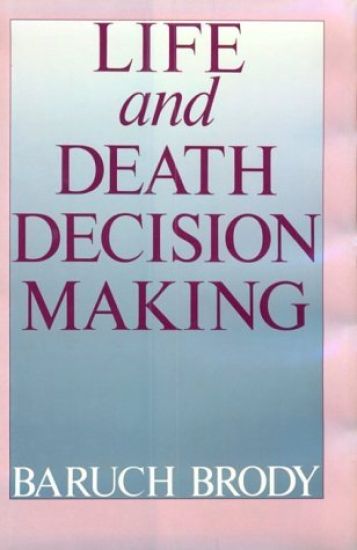
Life and Death Decision-Making

Life and Death Decision-Making

Baruch A. Brody

Oxford University Press Inc
1988
sidottu
This book demonstrates that moral reasoning can provide practical help in making judgements about how to handle particular clinical cases. It clearly explains the way in which conflicting moral considerations must be taken into account in medical decision-making and how their weight can be increased or decreased by specific factors. One of the book's greatest strengths is the cases - forty, all based on actual cases the author has encountered - which are constructed to convey the complexities of real-life support cases. They are difficult cases whose presentation and discussion will challenge readers, clarify the ethical issues involved, and indicate how theory and practice can be integrated. The first four chapters deal with moral theory, the last three chapters present cases and apply theory to their resolution. The author's approach is pluralistic in that it supposes that there are many different moral appeals that are irreducible to each other, often in conflict with each other, and yet necessary to complement each other. It is casuistical in that it attends to the range of differences between particular cases and attempts to apply appropriately the different moral appeals to particular cases in different ways.