Kirjojen hintavertailu. Mukana 12 595 353 kirjaa ja 12 kauppaa.

Kirjailija

Bassam Tibi

Kirjat ja teokset yhdessä paikassa: 27 kirjaa, julkaisuja vuosilta 1998-2025, suosituimpien joukossa Von Damaskus in die deutsche Diaspora. Vertaile teosten hintoja ja tarkista saatavuus suomalaisista kirjakaupoista.

27 kirjaa

Kirjojen julkaisuhaarukka 1998-2025.

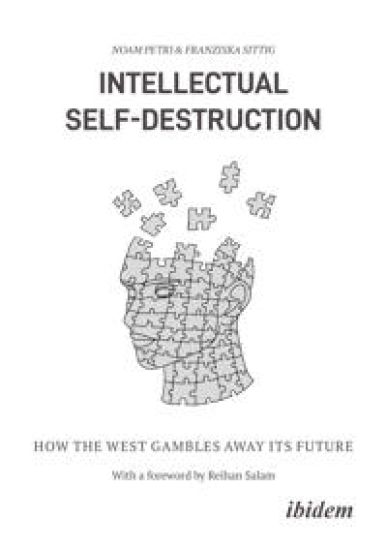
Intellectual Self-Destruction

Intellectual Self-Destruction

Franziska Sittig; Noam Petri; Bassam Tibi; Reiham Salam

ibidem-Verlag, Jessica Haunschild u Christian Schon
2025
nidottu
Dive into the unsettling rise of a radical anti-Western coalition within the sanctuaries of scholarship, where Islamist and far-left ideologies converge. What began as a fringe student movement has now permeated elite academic institutions, subtly dictating the narratives in politics and media. Through meticulous case studies from the US and Germany, this research uncovers the dark underbelly of ideological extremism, institutional betrayal, and the surge in antisemitic violence. It draws chilling parallels to historical academic dalliances with totalitarianism, revealing how today’s universities are legitimizing Islamism and radical leftist thought. This study is a clarion call, exposing how Western academia is at a tipping point, with Europe on the brink of following America’s path of radicalization. It’s an urgent plea to safeguard our cultural and intellectual heritage from the encroaching shadows of ideological subversion.
Islamische Zuwanderung und ihre Folgen
Die Zuwanderung nach Deutschland hat seit der Grenzöffnung im September 2015 eine neue Dimension erreicht. Aus in Auflösung begriffenen Staaten kommen überwiegend muslimische Migranten als "neue Deutsche" in die Gesellschaft derer, "die schon länger hier leben" (Angela Merkel). Die Politik bietet Rhetorik und Durchhalteparolen – von der "Willkommenskultur" über "Wir schaffen das" bis zu "Fluchtursachen bekämpfen" –, hat aber weder ein schlüssiges Konzept für den Umgang mit den Flüchtlingsströmen noch für eine echte Integration der Zuwanderer. Bassam Tibi, selbst syrischer Migrant, analysiert sachorientiert und kundig die Faktenlage. Integration, so zeigt er auf, ist etwas anderes als ein Zurschaustellen von Fremdenliebe, verbunden mit Unterbringung, Alimentierung und Sprachkursen. Integration erfordert vor allem das Angebot einer inklusiven Bürgeridentität des Aufnahmelandes und einer Annahme dieses Angebots durch Neuankömmlinge – nur so kann sich ein sense of belonging einstellen, ein Zugehörigkeitsgefühl und eine Identifizierung mit der Aufnahmegesellschaft und ihren Werten. Doch spätestens an diesem essentiellen Punkt versagt die deutsche Migrationspolitik vollständig und mit katastrophalen Konsequenzen, und das nicht erst seit 2015. Viele hier lebende Muslime haben ein akutes Identitätsproblem – eine der Hauptursachen für religiöse Radikalisierung und Ablehnung der Aufnahmegesellschaft bis hin zu einer offen feindseligen Haltung ihr gegenüber. Tibi arbeitet eindringlich die Gefahren und Folgen heraus, die mit einem Scheitern des aktuell stattfindenden Großexperiments Zuwanderung verbunden sind, und bietet gleichzeitig eine scharfsinnige Analyse der Situation in den derzeit besonders problematischen Herkunftsstaaten.
Islamische Geschichte und deutsche Islamwissenschaft
Fragen zum Islam sind in der politischen Debatte und im europäischen Alltag gegenwärtiger und drängender denn je. Zwar erfreut sich die deutsche Islamwissenschaft mitsamt ihren Untergliederungen in Arabistik, Turkologie, Iranistik etc. unter dem politischen Einfluss der islamischen Migration nach Europa einer zunehmenden Bedeutung durch die Gewährung immenser Drittmittel; sie ist jedoch seit ihren Anfängen in ideologischen Sichtweisen gefangen, aus denen sie sich bis heute nicht befreit hat. Die deutsche Islamwissenschaft ging vom Stereotyp des homo islamicus aus, einem starren kulturellen Image des Anderen, des Fremden, der in den rassistischen Anfängen unter Carl Heinrich Becker als unterlegener Untermensch gezeichnet und im gegenwärtigen anderen Extrem als ausschließlich positiv und in einer sogenannten Kultur der Ambiguität lebend betrachtet wird. Beide Sichtweisen, Verteufelung wie Verherrlichung des vermeintlichen homo islamicus, sind Schöpfungen der deutschen Islamwissenschaft, die mehr mit den deutschen Wissenschaftlern als mit ihrem Forschungsgegenstand zu tun haben und in der Folge wenig zu einem wirklichen Verständnis der islamischen Zivilisation beitragen. Ein solches erfordert neben einer ideologiefreien Herangehensweise insbesondere auch die Betrachtung der islamischen Geschichte im Rahmen einer historischen Sozialwissenschaft. Islamforschung muss mehr sein als eine Auseinandersetzung mit Theologie und Philologie, und kolonialistische Sichtweisen auf Muslime – gleich, ob negativ oder positiv – sind weder wissenschaftlich noch sinnvoll. Tibi fordert daher nicht weniger als einen Paradigmenwechsel in der Auseinandersetzung mit der islamischen Zivilisation: Zum einen eine vollständige Entkolonialisierung, zum anderen methodisch und inhaltlich das Anwenden historisch-sozialwissenschaftlicher und religionskritischer Analysen, die nicht den Anderen unzulässig auf sein ewigwährendes Anderssein festlegen, sondern Wandel miteinbeziehen. Tibis augenöffnende Analyse ist aktueller denn je und taucht viele Ereignisse des Tagesgeschehens in ein ganz anderes Licht. So betrachtet er in einem ausführlichen Schlusskapitel auch die gegenwärtigen Migrationsbewegungen aus dem islamischen Raum in einem welthistorischen Kontext.
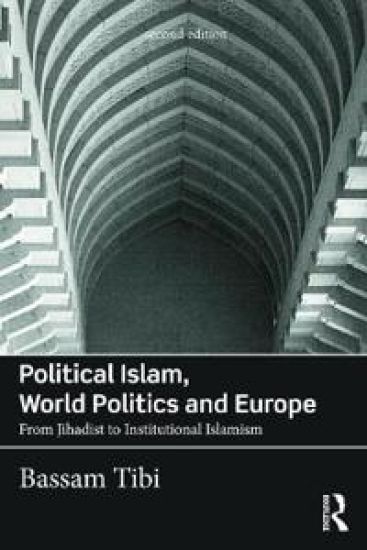
Political Islam, World Politics and Europe
The new and updated edition of Political Islam, World Politics and Europe focusses on the shift within political Islam, in light of 9/11 and the events of the Arab Spring, from a jihadist struggle, to institutional Islamism. Refuting what has often been referred to by commentators as the ‘moderation,’ of Islamism, the second edition of this book introduces the concept of ‘institutional,’ Islamism, a process which Tibi argues was accelerated in the aftermath of the Arab Spring. Both jihadist and institutional Islamism pursue the same goal of an Islamist state, but disagree fundamentally on the strategy for achieving it. Whilst jihadism is committed to the idea of a (violent) Islamic world revolution, institutional Islamism embraces political institutions as a means to an end.Turning to the events of the Arab Spring in Tunisia, Libya and Egypt this book attempts to determine whether an abandonment of violence is enough to underpin a shift to genuine democracy. Analysing the fall of Morsi in particular, Tibi questions what lessons can be learnt from his presidency, and argues that this event will not change the overall trend of development from jihadism to institutional Islamism A timely addition to existing literature, this book will be of interest to students and scholars studying Middle Eastern and European Politics, Political Islam and International Relations.
Political Islam, World Politics and Europe
The new and updated edition of Political Islam, World Politics and Europe focusses on the shift within political Islam, in light of 9/11 and the events of the Arab Spring, from a jihadist struggle, to institutional Islamism. Refuting what has often been referred to by commentators as the ‘moderation,’ of Islamism, the second edition of this book introduces the concept of ‘institutional,’ Islamism, a process which Tibi argues was accelerated in the aftermath of the Arab Spring. Both jihadist and institutional Islamism pursue the same goal of an Islamist state, but disagree fundamentally on the strategy for achieving it. Whilst jihadism is committed to the idea of a (violent) Islamic world revolution, institutional Islamism embraces political institutions as a means to an end.Turning to the events of the Arab Spring in Tunisia, Libya and Egypt this book attempts to determine whether an abandonment of violence is enough to underpin a shift to genuine democracy. Analysing the fall of Morsi in particular, Tibi questions what lessons can be learnt from his presidency, and argues that this event will not change the overall trend of development from jihadism to institutional Islamism A timely addition to existing literature, this book will be of interest to students and scholars studying Middle Eastern and European Politics, Political Islam and International Relations.
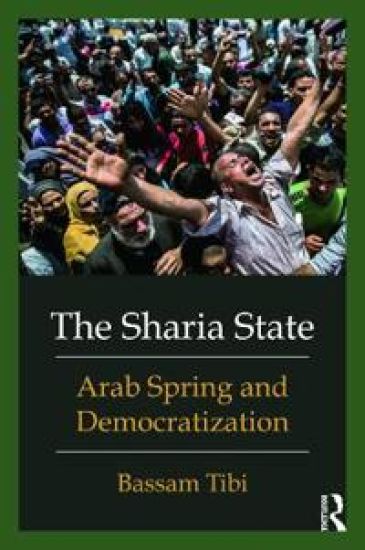
The Sharia State

The Sharia State

Bassam Tibi

Routledge
2013
nidottu
Set against the backdrop of the Arab Spring, The Sharia State examines the Islamist concept of political order. This order is based on a new interpretation of sharia and has been dubbed "the Islamic state" by Islamists. The concept of "the Islamic state," has been elevated to a political agenda and it is this agenda that is examined here.In contrast to the prevailing view which sees the Arab Spring as a revolution, this book argues that the phenomenon has been neither a Spring, nor a revolution. The term 'Arab Spring,' connotes a just rebellion that led to toppling dictators and authoritarian rulers, yet in The Sharia State, Bassam Tibi challenges the unchecked assumption that the seizure of leadership by Islamists is a part of the democratization of the Middle East. Providing a new perspective on the relationship between the Arab Spring and democratization, this book is an essential read for students and scholars of Middle Eastern Studies, Islamic Studies and Politics.
The Sharia State

The Sharia State

Bassam Tibi

Routledge
2013
sidottu
Set against the backdrop of the Arab Spring, The Sharia State examines the Islamist concept of political order. This order is based on a new interpretation of sharia and has been dubbed "the Islamic state" by Islamists. The concept of "the Islamic state," has been elevated to a political agenda and it is this agenda that is examined here.In contrast to the prevailing view which sees the Arab Spring as a revolution, this book argues that the phenomenon has been neither a Spring, nor a revolution. The term 'Arab Spring,' connotes a just rebellion that led to toppling dictators and authoritarian rulers, yet in The Sharia State, Bassam Tibi challenges the unchecked assumption that the seizure of leadership by Islamists is a part of the democratization of the Middle East. Providing a new perspective on the relationship between the Arab Spring and democratization, this book is an essential read for students and scholars of Middle Eastern Studies, Islamic Studies and Politics.
Islamism and Islam

Islamism and Islam

Bassam Tibi

Yale University Press
2012
sidottu
A distinguished scholar of international politics clarifies what is widely misunderstood in the West: Islam and Islamism are not two words for the same thing Despite the intense media focus on Muslims and their religion since the tragedy of 9/11, few Western scholars or policymakers today have a clear idea of the distinctions between Islam and the politically based fundamentalist movement known as Islamism. In this important and illuminating book, Bassam Tibi, a senior scholar of Islamic politics, provides a corrective to this dangerous gap in our understanding. He explores the true nature of contemporary Islamism and the essential ways in which it differs from the religious faith of Islam. Drawing on research in twenty Islamic countries over three decades, Tibi describes Islamism as a political ideology based on a reinvented version of Islamic law. In separate chapters devoted to the major features of Islamism, he discusses the Islamist vision of state order, the centrality of antisemitism in Islamist ideology, Islamism's incompatibility with democracy, the reinvention of jihadism as terrorism, the invented tradition of shari'a law as constitutional order, and the Islamists' confusion of the concepts of authenticity and cultural purity. Tibi's concluding chapter applies elements of Hannah Arendt's theory to identify Islamism as a totalitarian ideology.
Islam in Global Politics

Islam in Global Politics

Bassam Tibi

Routledge
2012
sidottu
Reaching beyond traditionally politicised scholarship to provide a unique perspective on the place of religion and culture in global and local politics, this book examines the impact of Islam on 'civilizational' relations between different groups and polities. Bassam Tibi takes a highly original approach to the topic of religion in world politics, exploring the place of Islam in society and its frequent distortion in world politics to the more radical Islamism. Looking at how this becomes an immediate source of tension and conflict between the secular and the religious, Tibi rejects the 'clash of civilizations' theory and argues for the revival of Islamic humanism to help bridge the gap. Chapters expand on: inter-civilizational conflict in global politics dialogue between religious and secular, East and West western concepts of Islamism euro-Islam and the Islamic diaspora in Europe Islamic humanism as a tool for bridging civilizations.Shedding new light on the highly topical subject of Islam in politics and society, this book is an essential read for scholars and students of international politics, Islamic studies and conflict resolution.
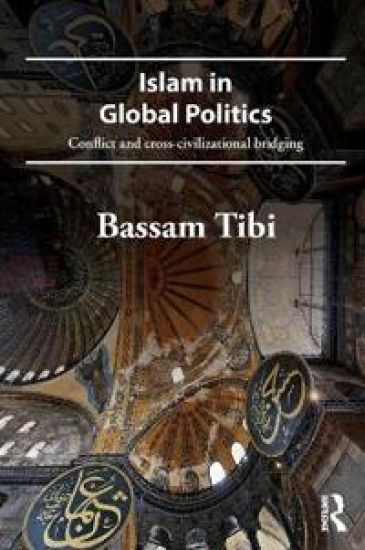
Islam in Global Politics

Islam in Global Politics

Bassam Tibi

Routledge
2012
nidottu
Reaching beyond traditionally politicised scholarship to provide a unique perspective on the place of religion and culture in global and local politics, this book examines the impact of Islam on 'civilizational' relations between different groups and polities. Bassam Tibi takes a highly original approach to the topic of religion in world politics, exploring the place of Islam in society and its frequent distortion in world politics to the more radical Islamism. Looking at how this becomes an immediate source of tension and conflict between the secular and the religious, Tibi rejects the 'clash of civilizations' theory and argues for the revival of Islamic humanism to help bridge the gap. Chapters expand on: inter-civilizational conflict in global politics dialogue between religious and secular, East and West western concepts of Islamism euro-Islam and the Islamic diaspora in Europe Islamic humanism as a tool for bridging civilizations.Shedding new light on the highly topical subject of Islam in politics and society, this book is an essential read for scholars and students of international politics, Islamic studies and conflict resolution.
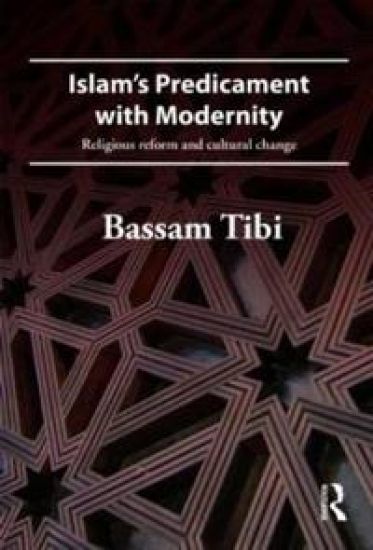
Islam's Predicament with Modernity
Islam's Predicament with Modernity presents an in-depth cultural and political analysis of the issue of political Islam as a potential source of tensions and conflict, and how this might be peacefully resolved.Looking at the issue of modernity from an Islamic point of view, the author examines the role of culture and religion in Muslim society under conditions of globalisation, and analyses issues such as law, knowledge and human rights. He engages a number of significant studies on political Islam and draws on detailed case studies, rejecting the approaches of both Orientalists and apologists and calling instead for a genuine Islamic pluralism that accepts the equality of others. Situating modernity as a Western product at the crux of his argument, he argues that a separation of religion and politics is required, which presents a challenge to the Islamic worldview. This critical analysis of value conflicts, tensions and change in the Islamic world will be of interest to scholars and advanced students of international relations, social theory, political science, religion, Islamic studies and Middle Eastern studies.
Islam's Predicament with Modernity
Islam's Predicament with Modernity presents an in-depth cultural and political analysis of the issue of political Islam as a potential source of tensions and conflict, and how this might be peacefully resolved.Looking at the issue of modernity from an Islamic point of view, the author examines the role of culture and religion in Muslim society under conditions of globalisation, and analyses issues such as law, knowledge and human rights. He engages a number of significant studies on political Islam and draws on detailed case studies, rejecting the approaches of both Orientalists and apologists and calling instead for a genuine Islamic pluralism that accepts the equality of others. Situating modernity as a Western product at the crux of his argument, he argues that a separation of religion and politics is required, which presents a challenge to the Islamic worldview. This critical analysis of value conflicts, tensions and change in the Islamic world will be of interest to scholars and advanced students of international relations, social theory, political science, religion, Islamic studies and Middle Eastern studies.