Kirjojen hintavertailu. Mukana 12 512 332 kirjaa ja 12 kauppaa.

Kirjailija

Batya Friedman

Kirjat ja teokset yhdessä paikassa: 5 kirjaa, julkaisuja vuosilta 2004-2026, suosituimpien joukossa Human-Computer Interaction and International Public Policymaking. Vertaile teosten hintoja ja tarkista saatavuus suomalaisista kirjakaupoista.

5 kirjaa

Kirjojen julkaisuhaarukka 2004-2026.

Human-Computer Interaction and International Public Policymaking

Human-Computer Interaction and International Public Policymaking

Jonathan Lazar; Julio Abascal; Simone Barbosa; Jeremy Barksdale; Batya Friedman; Jens Grossklags; Jan Gulliksen; Jeff Johnson; Tom McEwan; Loïc Martínez-Normand; Wibke Michalk; Janice Tsai; Gerrit van der Veer; Hans von Axelson; Ake Walldius; Gill Whitney; Marco Winckler; Volker Wulf; Elizabeth F. Churchill; Lorrie Cranor; Janet Davis; Alan Hedge; Harry Hochheiser; Juan Pablo Hourcade; Clayton Lewis; Lisa Nathan; Fabio Paterno; Blake Reid; Whitney Quesenbery; Ted Selker; Brian Wentz

now publishers Inc
2016
nidottu
This monograph lays out a discussion framework for understanding the role of human-computer interaction (HCI) in public policymaking. It takes an international view, discussing potential areas for research and application and their potential for impact. The aim is to provide a solid foundation for discussion, cooperation and collaborative interaction, and to outline future programs of activity.It starts with an introduction to HCI and public policy and goes on to discuss how HCI research and practices already inform public policy, providing representative examples. It then discusses how public policy influences HCI and provides representative public policy areas that are relevant to HCI, and where HCI could have even more impact in the future. It concludes by laying out a framework for involvement and suggested actions by the HCI community in public policy internationally.This monograph summarizes the observations and recommendations from a daylong workshop at the CHI 2013 conference in Paris, France. The workshop invited the community’s perspectives regarding the intersection of governmental policies, international and domestic standards, recent HCI research discoveries, and emergent considerations and challenges. It also incorporates contributions made after the workshop by workshop participants and by individuals who were unable to participate in the workshop but whose work and interests were highly related and relevant.

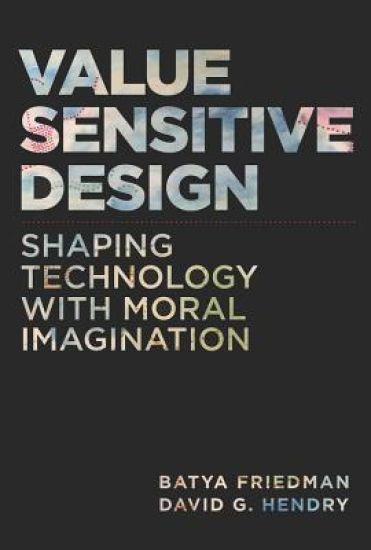
Value Sensitive Design, second edition

Value Sensitive Design, second edition

Batya Friedman; David G. Hendry

MIT PRESS LTD
2026
nidottu
A new edition of the definitive guide to value sensitive design--chock full of theory, design methods, and hands-on studios and applications for practice. In the midst of technological, environmental, and social turmoil, engineers, policymakers, and designers of all kinds seek approaches to responsible innovation, approaches that foreground human values. How do we make good on responsible AI and social media? On sustainable agriculture, energy, healthcare, and transportation systems? How do we develop inclusive and constructive tech policy? Value sensitive design offers a comprehensive approach for making progress on society's toughest engineering and technical design problems, including practical methods for catalyzing and strengthening designers' moral and technical imaginations. The second edition of Value Sensitive Design: Shaping Technology with Moral Imagination by Batya Friedman and David Hendry expands upon the first and includes 40% new material, including: 8 new hands-on instructional studios: for professional development and classroom use that provide practical experience with value sensitive design methods and skills 16 Envisioning Cards from the full toolkit: used throughout the instructional studios 5 new methods: Data statements; Diverse voices; Values hierarchy; Metaphor Cards; and Security Cards (22 total methods) 3 new application domains: Bias in computing and information systems; Materials and imagination; and Tech policy (13 total application domains) New theory about value sensitive design as a formative theory and new explication of the tripartite methodology in terms of robots in healthcare
Value Sensitive Design

Value Sensitive Design

Batya Friedman; David G. Hendry

MIT Press
2019
sidottu
Using our moral and technical imaginations to create responsible innovations: theory, method, and applications for value sensitive design.Implantable medical devices and human dignity. Private and secure access to information. Engineering projects that transform the Earth. Multigenerational information systems for international justice. How should designers, engineers, architects, policy makers, and others design such technology? Who should be involved and what values are implicated? In Value Sensitive Design, Batya Friedman and David Hendry describe how both moral and technical imagination can be brought to bear on the design of technology. With value sensitive design, under development for more than two decades, Friedman and Hendry bring together theory, methods, and applications for a design process that engages human values at every stage.After presenting the theoretical foundations of value sensitive design, which lead to a deep rethinking of technical design, Friedman and Hendry explain seventeen methods, including stakeholder analysis, value scenarios, and multilifespan timelines. Following this, experts from ten application domains report on value sensitive design practice. Finally, Friedman and Hendry explore such open questions as the need for deeper investigation of indirect stakeholders and further method development.This definitive account of the state of the art in value sensitive design is an essential resource for designers and researchers working in academia and industry, students in design and computer science, and anyone working at the intersection of technology and society.
A Survey of Value Sensitive Design Methods

A Survey of Value Sensitive Design Methods

Batya Friedman; David G. Hendry; Alan Borning

now publishers Inc
2017
nidottu
Value sensitive design is a theoretically grounded approach to the design of technology that accounts for human values in a principled and systematic manner throughout the design process. A Survey of Value Sensitive Design Methods looks at 14 value sensitive design methods, each of which is honed to the investigation of values in technology, serving such purposes as stakeholder identification and legitimation, value representation and elicitation, and values analysis. While presented individually, the methods are intended to be integrated in a robust value sensitive design process. A Survey of Value Sensitive Design Methods begins with a summary of value sensitive design methodology and theoretical constructs. Having introduced the 14 methods, it turns to a broader discussion of value sensitive design practice, focusing on some methodological strategies and heuristics to support skillful value sensitive design practice. Following the broad discussion of practice, it illustrates one method in action—value scenarios—providing details on its range of purposes and contexts. It concludes with reflections on core characteristics of value sensitive design methods, and heuristics for methodological innovation.
Human Values and the Design of Computer Technology

Human Values and the Design of Computer Technology

Batya Friedman

Cambridge University Press
2004
sidottu
Human values - including accountability, privacy, autonomy, and respect for person - emerge from the computer systems that we build and how we choose to use them. Yet, important questions on human values and system design have remained largely unexplored. If human values are controversial, then on what basis do some values override others in the design of, for example, hardware, algorithms, and databases? Do users interact with computer systems as social actors? If so, should designers of computer persona and agents seek to build on such human tendencies, or check them? How have design decisions in hospitals, research labs, and computer corporations protected or degraded such values? This volume brings together leading researchers and system designers who take up these questions, and more.