Kirjojen hintavertailu. Mukana 12 459 402 kirjaa ja 12 kauppaa.

Kirjailija

Beatriz Colomina

Kirjat ja teokset yhdessä paikassa: 12 kirjaa, julkaisuja vuosilta 1996-2025, suosituimpien joukossa Domesticity at War. Vertaile teosten hintoja ja tarkista saatavuus suomalaisista kirjakaupoista.

12 kirjaa

Kirjojen julkaisuhaarukka 1996-2025.

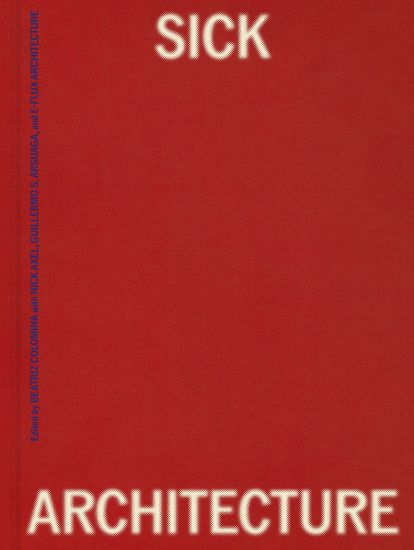
Sick Architecture

Sick Architecture

Beatriz Colomina; Nick Axel

MIT PRESS LTD
2025
sidottu
A thought-provoking essay collection about how architecture and sickness are surprisingly interwoven--from Ancient Greece to present-day New York City. Illnesses, wellness, and architecture are inseparable. Medical professionals and architects have always been in a kind of dance, often influencing one another, though the dance is not always synchronized. Drawing from a wide range of historical and contemporary case studies from ancient Greece to twentieth-century India to present-day New York City, Sick Architecture highlights a topic that has shaped our lives from the very beginnings of architecture to the outbreak of the Covid-19 pandemic and beyond. Sick Architecture goes beyond the sicknesses recognized by the medical profession to ask: What aspects of society may be ill, in need of care, or subject to pathologization? Similarly the book goes beyond physical buildings and cities to interrogate architecture's policy protocols and spatial logics. Its thirty-five diverse essays explore moments in global history when shifting notions of health became vectors for the development of architectural practice and discourse--as well as the reverse, when architecture acted as a reservoir and vector for illness.
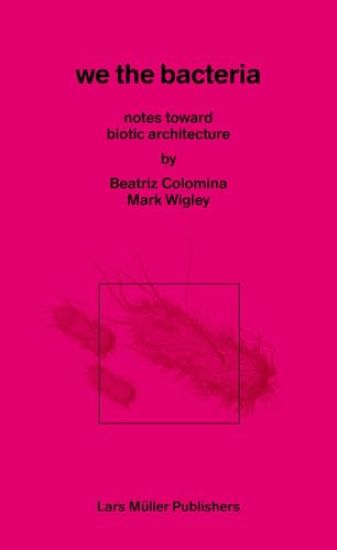
In Praise of Bacteria

In Praise of Bacteria

Beatriz Colomina; Mark Wigley

LARS MULLER PUBLISHERS
2025
nidottu
The sequel to the authors’ Are We Human?, this provocative book is an urgent manifesto for an alternative architectural philosophy. It treats bacteria as the real architects, construction workers, maintenance crews and inhabitants of buildings. Colomina and Wigley draw on the latest research into microbes to rethink the past and possible futures of the built environment. The book explores the intimate entanglements of the microbes within bodies and buildings over the last 10,000 years, culminating in the antibiotic philosophy of contemporary architecture. The diseases of our time are diseases of the built environment. The deadly combination of rapidly declining microbial diversity and rising antibiotic-resistant bacteria is as great a threat as climate change. Hostility to bacteria has to give way to new forms of hospitality from a more symbiotic architecture that learns from bacteria, embracing them and reconnecting with soil, plants and other species. Buildings based on fear of bacteria, which is to say fear of life itself, must give way to buildings learning from models of coexistence based on bacteria themselves.The main goal of the book is to rethink the very idea of shelter in terms of forms of inclusion rather than prophylactic forms of exclusion.
Speculation – Discourse, A Series on Architecture

Speculation – Discourse, A Series on Architecture

Monica Ponce De Leon; Kunle Adeyemi; Kelly Bair; Kristy Balliet; Beatriz Colomina

Princeton University Press
2024
nidottu
Architecture’s relationship with cultural production is complex. As a creative discipline, architecture has historically been free to speculate; as a material practice, however, it must contend with everyday realities. Buildings are produced in tension with tangible happenstances that have little to do with the discipline of architecture, yet everything to do with building, such as ever-changing zoning ordinances, inconsistent budgets, uneven access to materials, the peculiarities of a client, or economic interests, among others. This myriad of contingencies has a significant impact on the architectural object, obfuscating the status of the discipline as a creative practice. Speculation explores architecture as a form of cultural production that has traditionally been underestimated or undervalued and that has a unique ability to envision and materialize alternatives to the world around us.Discourse is a biannual publication series that presents timely themes on and around architecture. A selective compilation of essays, interviews, roundtable discussions, featured exhibitions, photo-essays and collateral materials—such as architectural models, sketches, and built works—highlight architectural culture, practice, and theory.
World of Variation

World of Variation

Mary Otis Stevens; Thomas McNulty; Beatriz Colomina

Weiss Publications
2023
nidottu
An imaginative reenvisioning of spatial and social relations from America's 1960s urbanist movement In World of Variation (1970), American architects Mary Otis Stevens (born 1928) and Thomas McNulty (1919–84) outlined a radical reenvisioning of socio-spatial relationships, informed by their background in philosophy and commitment to decentralizing hierarchies. Writing in the context of the Cold War and the political activism of 1960s America, they identified possible design solutions to then-current social issues. In striking abstract drawings, Stevens visualized aspects of the urban environment, proposing a design philosophy she termed “free flow.” These diagrams give expression to both the “flow” of movement and points of “hesitations.” This volume is a facsimile of World of Variation, accompanying the MIT Museum’s exhibition on the work of Mary Otis Stevens. Born in New York in 1928, Mary Otis Stevens is considered one of the most important female American postwar architects. She is best known for Lincoln House (1965), designed with her then-husband Thomas McNulty, the first exposed-concrete and glass house in the US. Thomas McNulty (1919–84) taught on MIT’s faculty from 1949 to 1956, before leaving to open a firm with his then wife, Mary Otis Stevens. In 1978, the couple divorced and McNulty moved to Saudi Arabia, where he taught at the University of Riyadh.
Lina Bo Bardi – Material Ideologies

Lina Bo Bardi – Material Ideologies

Monica Ponce De Leon; Sol Camacho; Beatriz Colomina; Mike Cooter; Joana França

PRINCETON UNIVERSITY PRESS
2022
nidottu
Leading art historians, architects, designers, artists, and urbanists share new perspectives on this visionary architect’s material legacyLina Bo Bardi (1914–1992) is renowned for her boldly modernist designs like the São Paulo Museum of Art and the culture and leisure center SESC Pompéia. An artist, architect, designer, writer, and activist, she was a tireless champion for local craft and materials. Her democratic designs were inclusive and stood as an open invitation to those typically excluded from elitist institutions, embodying an aesthetic that stood out among the modernist movement in Brazil and abroad. This collection of essays presents new perspectives on Bo Bardi from leading contemporary artists, architects, curators, and scholars. Contributors engage with the conceptual, social, and political philosophies latent in the architectural materials she chose—from her application of concrete to her implementation of nature and her reuse of vernacular materials.Beautifully illustrated and featuring seven gatefolds, Lina Bo Bardi: Material Ideologies sheds vital new light on the ideological strategies inherent in Bo Bardi’s iconic projects and lesser-known work.Distributed for the Princeton University School of Architecture
Radical Pedagogies

Radical Pedagogies

Beatriz Colomina; Ignacio Gonzalez Galan

MIT PRESS LTD
2022
nidottu
Experiments in architectural education in the post–World War II era that challenged and transformed architectural discourse and practice. In the decades after World War II, new forms of learning transformed architectural education. These radical experiments sought to upend disciplinary foundations and conventional assumptions about the nature of architecture as much as they challenged modernist and colonial norms, decentered building, imagined new roles for the architect, and envisioned participatory forms of practice. Although many of the experimental programs were subsequently abandoned, terminated, or assimilated, they nevertheless helped shape and in some sense define architectural discourse and practice. This book explores and documents these radical pedagogies and efforts to defy architecture’s status quo. The experiments include the adaptation of Bauhaus pedagogy as a means of “unlearning” under the conditions of decolonization in Africa; a movement to design for “every body,” including the disabled, by architecture students and faculty at the University of California, Berkeley; the founding of a support network for women interested in the built environment, regardless of their academic backgrounds; and a design studio in the USSR that offered an alternative to the widespread functionalist approach in Soviet design. Viewed through their dissolution and afterlife as well as through their founding stories, these projects from the last century raise provocative questions about architecture’s role in the new century.
X-Ray Architecture

X-Ray Architecture

Beatriz Colomina

Lars Muller Publishers
2018
sidottu
This book explores the impact of medical discourse and diagnostic technologies on the formation, representation, and reception of modern architecture. It challenges the normal understanding of modern architecture by proposing that the architecture of the early twentieth century was shaped by the dominant medical obsession of its time: tuberculosis and its primary diagnostic tool, the X-ray.If architectural discourse has from its beginning associated building and body, the body that it describes is the medical body, reconstructed by each new theory of health. Modern architects pre- sented their architecture as a kind of medical instrument for protecting and enhancing the body. X-ray technology and modern architecture were born around the same time and evolved in parallel. While the X-ray exposed the inside of the body to the public eye, the modern building unveiled its interior, inverting the relationship between private and public.Colomina suggests that if we want to talk about the state of the art in buildings, we should look to the dominant obsessions about illness and the latest techniques of imaging the body-and ask what effects they may have on the way we conceive architecture.
Mies Van Der Rohe: Barcelona-1929

Mies Van Der Rohe: Barcelona-1929

Remei Capdevila-Werning; Beatriz Colomina; Juan Jose Lahuerta; Laura Martinez de Guerenu; Dietrich Neumann; Fritz Neumeyer; Spyros Papapetros; Lutz Robbers; Carmen Rodriguez Pedret

Editorial Tenov S.L.
2018
sidottu
The expert contributors to this lavishly illustrated volume, devoted entirely to Mies van der Rohe's Barcelona Pavilion of 1929, address here for the first time the forgotten contexts of the Pavilion's genesis. Habitually thought of as an abstract, unpolluted, and splendidly isolated building--a precursor of Mies's American period--the Pavilion is revealed here as a thoroughly European work, perhaps less pristine but more authentic. Mies and Lilly Reich were commissioned to design not only the Pavilion but also more than one hundred thousand square feet of German stands spread throughout the Exposition. By examining that work in addition to the Pavilion itself, the contributors present a farreaching reinterpretation of the whole. They also explore connections with the mass media, highlight the work's antecedents and meaning in the history of architecture, and analyze the current pavilion, a reconstruction of the original built in 1986. No other critical study offers a comparable overview of Mies's work in Barcelona.
Are We Human?

Are We Human?

Beatriz Colomina; Mark Wigley

Lars Muller Publishers
2016
nidottu
Are We Human? rethinks the philosophy of design in a multi-dimensional exploration from the very first tools and ornaments to the constant buzz of social media. The average day involves the experience of thousands of layers of design that reach to outside space but also reach deep into our bodies and brains. Even the planet itself has been completely encrusted by design as a geological layer. There is no longer an outside to the world of design. Design has become the world. Design is what makes the human. It is the very basis of social life. But design also engineers inequalities and new forms of neglect, such as lawlessness, poverty, and the climate at the same time as the human genome and the weather are being actively redesigned. We can no longer reassure ourselves with the idea of "good design." Design itself needs to be redesigned.
Cristina Iglesias: Tres Aguas

Cristina Iglesias: Tres Aguas

Beatriz Colomina; James Lingwood; Maria Warner

Turner Publicaciones, S.L.
2015
sidottu
This book showcases the sculptural project by Cristina Iglesias entitled Tres aguas, a trilogy spanning all of Toledo to highlight the relationship between the city and its river, the Tagus. Beginning on the river banks at the Torre del Agua, then going up as far as the Plaza del Ayuntamiento, the project reached the highest point in the city, where the third installation was put in place at the Santa Clara convent. These are three works in which the artist developed sculptures featuring the appearance and disappearance of the river's waters, creating a dialogue between the work, the water and a reflection of their surroundings. The book shows one of the largest works of contemporary sculpture, a major expression of architecture and sculpture along with riveting texts by Beatriz Colomina, James Lingwood and Maria Warner, and amazing photographs by Attilio Maranzano.
Domesticity at War

Domesticity at War

Beatriz Colomina

MIT Press
2007
sidottu
In the years immediately following World War II, America embraced modern architecture--not as something imported from Europe, but as an entirely new mode of operation, with original and captivating designs made in the USA. In Domesticity at War, Beatriz Colomina shows how postwar American architecture adapted the techniques and materials that were developed for military applications to domestic use. Just as manufacturers were turning wartime industry to peacetime productivity--going from missiles to washing machines--American architects and cultural institutions were, in Buckminster Fuller's words, turning "weaponry into livingry."This new form of domesticity itself turned out to be a powerful weapon. Images of American domestic bliss--suburban homes, manicured lawns, kitchen accessories--went around the world as an effective propaganda campaign. Cold War anxieties were masked by endlessly repeated images of a picture-perfect domestic environment. Even the popular conception of the architect became domesticated, changing from that of an austere modernist to a plaid-shirt wearing homebody.Colomina examines, with interlocking case studies and an army of images, the embattled and obsessive domesticity of postwar America.She reports on, among other things, MOMA's exhibition of a Dymaxion Deployment Unit (DDU), a corrugated steel house suitable for use as a bomb shelter, barracks, or housing; Charles and Ray Eames's vigorous domestic life and their idea of architecture as a flexible stage for the theatrical spectacle of everyday life; and the American lawn as patriotic site and inalienable right.Domesticity at War itself has a distinctive architecture. Housed within the case are two units: one book of text, and one book of illustrations--most of them in color, including advertisements, newspaper and magazine articles, architectural photographs, and more.
Privacy and Publicity

Privacy and Publicity

Beatriz Colomina

MIT Press
1996
pokkari
Through a series of close readings of two major figures of the modern movement, Adolf Loos and Le Corbusier, Beatriz Colomina argues that architecture only becomes modern in its engagement with the mass media, and that in so doing it radically displaces the traditional sense of space and subjectivity. Privacy and Publicity boldly questions certain ideological assumptions underlying the received view of modern architecture and reconsiders the methodology of architectural criticism itself. Where conventional criticism portrays modern architecture as a high artistic practice in opposition to mass culture, Colomina sees the emerging systems of communication that have come to define twentieth-century culture-the mass media-as the true site within which modern architecture was produced. She considers architectural discourse as the intersection of a number of systems of representation such as drawings, models, photographs, books, films, and advertisements. This does not mean abandoning the architectural object, the building, but rather looking at it in a different way. The building is understood here in the same way as all the media that frame it, as a mechanism of representation in its own right. With modernity, the site of architectural production literally moved from the street into photographs, films, publications, and exhibitions-a displacement that presupposes a new sense of space, one defined by images rather than walls. This age of publicity corresponds to a transformation in the status of the private, Colomina argues; modernity is actually the publicity of the private. Modern architecture renegotiates the traditional relationship between public and private in a way that profoundly alters the experience of space. In a fascinating intellectual journey, Colomina tracks this shift through the modern incarnations of the archive, the city, fashion, war, sexuality, advertising, the window, and the museum, finally concentrating on the domestic interior that constructs the modern subject it appears merely to house.