
Kirjailija
Bei Dao
Kirjat ja teokset yhdessä paikassa: 19 kirjaa, julkaisuja vuosilta 1990-2026, suosituimpien joukossa Someone Must Rewrite Love. Vertaile teosten hintoja ja tarkista saatavuus suomalaisista kirjakaupoista.
19 kirjaa
Kirjojen julkaisuhaarukka 1990-2026.
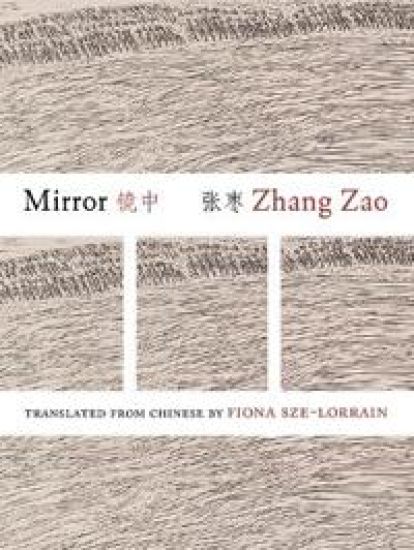
Dark and dazzling experiments from a poet who died too young, but who wrote to "transform one's self and life."This bilingual posthumous collection in Fiona Sze-Lorrain's inspired translation is a detailed, retrospective look at Zhang Zao, one of the more brilliant poetic minds from China of the late 20th and early 21st centuries. He moved to Germany in 1986. After returning briefly to China in 2004, he taught in Beijing as of 2007. These poems span Zhang Zao's short career, beginning with "Mirror," one of his earliest and best known works, and ending with "Lantern Town," written less than two months before his death in Germany at 47 in 2010. As Bei Dao writes in his afterword, Zhang "possessed both a thorough grasp of European literature and culture and an introspective understanding of the broad, profound Asian aesthetics: between the two philosophies, he sought a new tension and melting point." Mirror is his first book translated into English, bilingual in Chinese and English on facing pages.
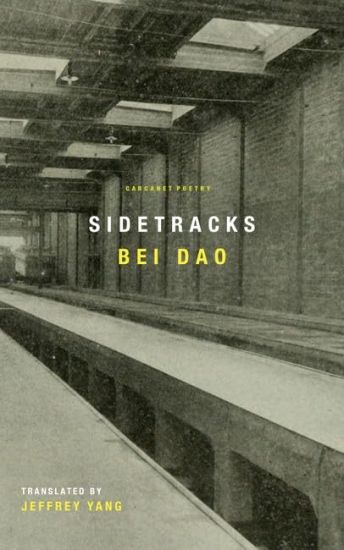
A Financial Times Poetry Book of the Year 2024Sidetracks, Bei Dao's first new collection in fifteen years, is also his first long poem and undoubtedly his magnum opus - the artistic culmination of a lifetime devoted to the renewal and reinvention of language. 'As a poet, I am always lost,' he once declared. Opening Sidetracks with a prologue of heavenly questions and following on with thirty-four cantos, the poem travels forward and backward along the divergent paths of the poet's wandering life. From his time as a Young Pioneer in Beijing, the poem roves through the years of exile living in six countries, back to the rural construction site where he worked during the Cultural Revolution, to the 'sunshine tablecloth' in his kitchen in Davis, California, and his emotional visit home after a thirteen-year separation ('the mother tongue has deepened my foreignness'). The various currents of our times rush into his lifelines, reconfigured through the 'vortex of experience' and the poet's encounters with friends, strangers and with other artists living and dead. He moves from place to place unable to return home.As the poet Michael Palmer noted: 'Bei Dao's work, in its rapid transitions, abrupt juxtapositions and frequent recurrence to open syntax evokes the un-speakability of the exile's condition. It is a poetry of explosive convergences, of submersions and unfixed boundaries, "amid languages".'
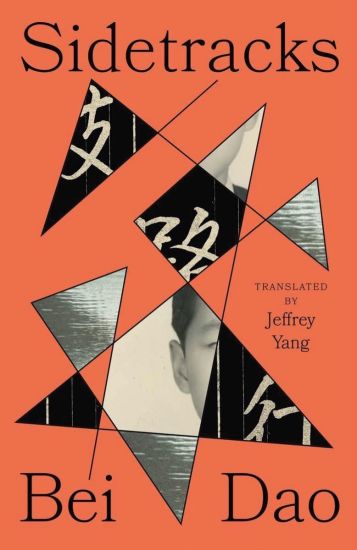
A TIME MUST-READ BOOK OF 2024 A 2024 NPR BOOK WE LOVE A NEW YORKER BEST BOOK OF 2024 LONGLISTED FOR THE 2025 GRIFFIN POETRY PRIZE Sidetracks, Bei Dao's first new collection in almost fifteen years, is also the poet's first long poem and his magnum opus--the artistic culmination of a lifetime devoted to the renewal and reinvention of language. "As a poet, I am always lost," Bei Dao once said. Opening with a prologue of heavenly questions and followed by thirty-four cantos, Sidetracks travels forward and backward along the divergent paths of the poet's wandering life--from his time as a Young Pioneer in Beijing, through the years of exile living in six countries, back to the rural construction site where he worked during the Cultural Revolution, to the "sunshine tablecloth" in his kitchen in Davis, California, and his emotional visit home after a thirteen-year separation ("the mother tongue has deepened my foreignness"). All the various currents of our times rush into his lifelines, reconfigured through the "vortex of experience" and the poet's encounters with friends and strangers, artists and ghosts, as he moves from place to place, unable to return home. As the poet Michael Palmer has noted, "Bei Dao's work, in its rapid transitions, abrupt juxtapositions, and frequent recurrence to open syntax evokes the un-speakability of the exile's condition. It is a poetry of explosive convergences, of submersions and unfixed boundaries, 'amid languages.'"
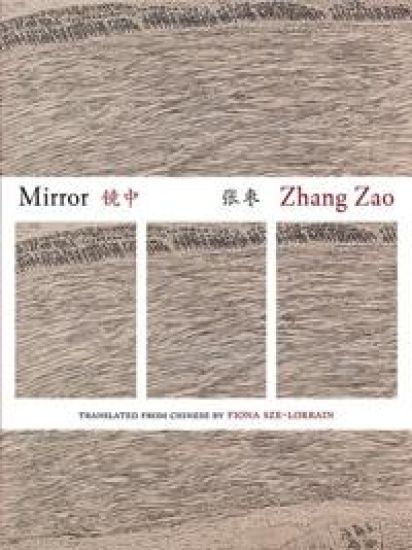
This bilingual posthumous collection is a detailed, retrospective look at one of the more brilliant poetic minds of the twenty-first century, and includes an introduction by Bai Hua and afterword by Bei Dao. Zhang Zao left China in 1986 and lived in Germany until his death at 48 in 2010; only about 90 of his poems survive. A dark humor vivifies Zhang Zao’s later work as he eroticizes the harrowing: doubt, finality, and then nothingness. The choice of these poems span his short career: "Mirror," one of his earliest and best known works starts the collection, while "Lantern Town" was written less than two months before his death.
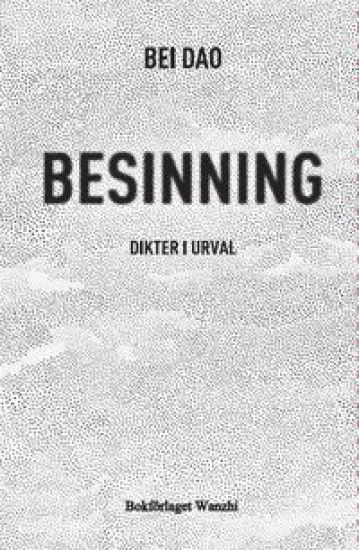
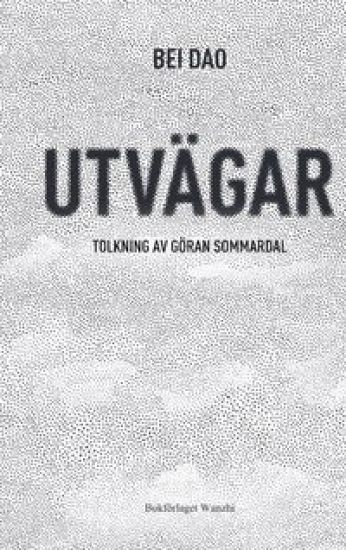
Bei Dao är en av de främsta diktarna under tiden efter Mao, känd som ledande inom den grupp som kallas "de dunkla" poeterna. Nu publiceras ett urval av hans dikter i nyöversättning av Göran Sommardal.
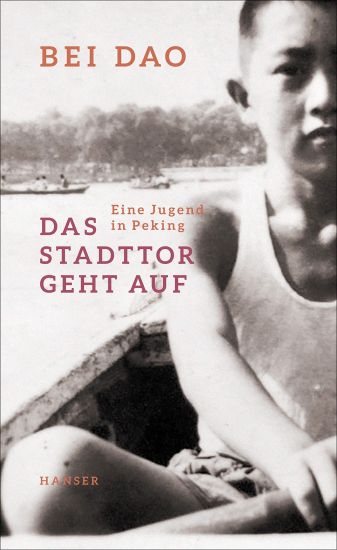
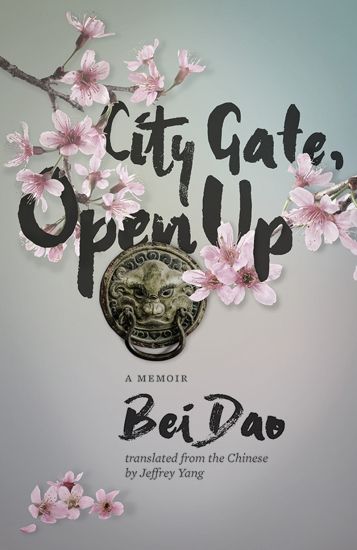
In 2001, to visit his sick father, the exiled poet Bei Dao returned to his homeland for the first time in over twenty years. The city of his birth was totally unrecognizable. "My city that once was had vanished," he writes: "I was a foreigner in my hometown." The shock of this experience released a flood of memories and emotions that sparked Open Up, City Gate. In this lyrical autobiography of growing up--from the birth of the People's Republic, through the chaotic years of the Great Leap Forward, and on into the Cultural Revolution--Bei Dao uses his extraordinary gifts as a poet and storyteller to create another Beijing, a beautiful memory palace of endless alleyways and corridors, where personal narrative mixes with the momentous history he lived through. At the center of the book are his parents and siblings, and their everyday life together through famine and festival. Open Up, City Gate is told in an episodic, fluid style that moves back and forth through the poet's childhood, recreating the smells and sounds, the laughter and the danger, of a boy's coming of age during a time of enormous change and upheaval.
Section of poems by Bei Dao translated by National Book Award winning translator Clayton Eshleman with Lucas Klein. Bei Dao, one of China's foremost modern poets, has been translated into 30 languages and several times candidate for the Nobel Prize. Bei Dao is currently Professor of Humanities at the Chinese University in Hong Kong.
in the mirror there is always this momentthis moment leads to the door of rebirththe door opens to the seathe rose of time Bei Dao The Rose of Time: New & Selected Poems presents a glowing selection of poetry by contemporary China s most celebrated poet, Bei Dao. From his earliest work, Bei Dao developed a wholly original poetic language composed of mysterious and arresting images tuned to a distinctive musical key. This collection spans Bei Dao s entire writing life, from his first book to appear in English, The August Sleepwalker, published a year after the Tiananmen tragedy, to the increasingly interior and complex poems of Landscape Over Zero and Unlock, to new never-before-published work. This bilingual edition also includes a prefatory note by the poet, and a brief afterword by the editor Eliot Weinberger. A must-read book from a seminal poet who has been translated into over thirty languages.

BEI DAO (født i Peking i 1949) har levd i eksil siden hendelsene på Den himmelske freds plass i 1989. Hans poesi er gjendiktet til en rekke språk, og hans regnes i dag som Kinas fremste poet. Bei Daos diktning minner om de gamle kinesiske mestre, med klare bilder satt opp mot hverandre i skarpe kontraster. Men hans klarhet er moderene, med resonans i vår tids fryktelige historiske krefter. Etter at han forlot Kina, har Bei Dao oppholdt seg i mange land, bl.a. Norge, og bor i dag i USA.

First published in the US in 1990, the year after the uprising of Chinese students at Tiananmen Square, The August Sleepwalker collects all the early poetry of Bei Dao, China's premier poet, now living in exile. The August Sleepwalker is an extremely popular book (30,000 copies sold in China in one month) which was quickly banned by the Chinese government. The collection includes all of the poems Bei Dao published between 1970 and 1986. Bei Dao has lived in exile since the Tiananmen Incident. He is widely esteemed as one of contemporary China's most significant writers. His work is experimental, and subjective, while remaining passionately engaged in the individual's response to a disordered world.
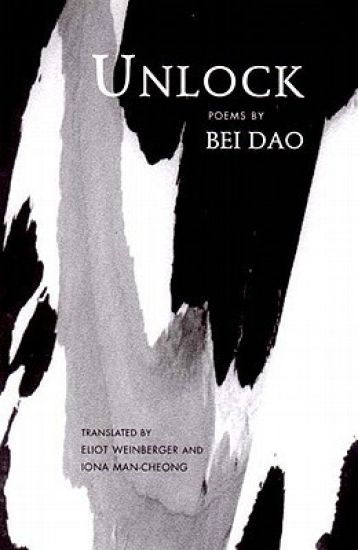
New poetry by the internationally acclaimed Chinese poet-in-exile. Bei Dao, the internationally acclaimed Chinese poet, has been the poetic conscience of the dissident movements in his country for over twenty years. He has been in exile since the Tiananmen Square massacre of 1989. Unlock presents forty-nine new poems written in the United States, and may well be Bei Dao's most powerful work to date. Complex, full of startling and sometimes surreal imagery, sudden transitions, and oblique political references, and often embedding bits of bureaucratic speech and unexpected slang, his poetry has been compared to that of Paul Celan and Cesar Vallejo: poets who invented a new poetry and a new language in the attempt to speak of the enormity of their times. The sixth book of Bei Dao's work published by New Directions, Unlock has been translated by Eliot Weinberger, the distinguished essayist and critically acclaimed translator of Octavio Paz and Jorge Luis Borges, in collaboration with the historian Iona Man-Cheong and the poet himself.
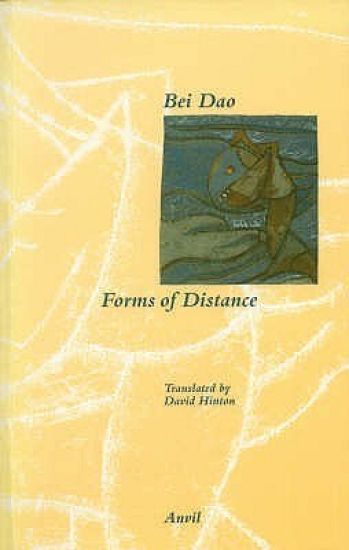
This work is a Poetry Book Society recommended translation. "Forms of Distance" is Bei Dao's second bilingual collection since his enforced exile from China in 1989. Michael Hofmann described the first, "Old Snow", as 'the work of one of the great poets of our time', and John Cayley wrote in the "Times Literary Supplement" that 'in a sense he is the only contemporary Chinese poet who is knowable for the non-specialist...we can hear the maturing poetic voice of a highly talented, individual Chinese writer.'
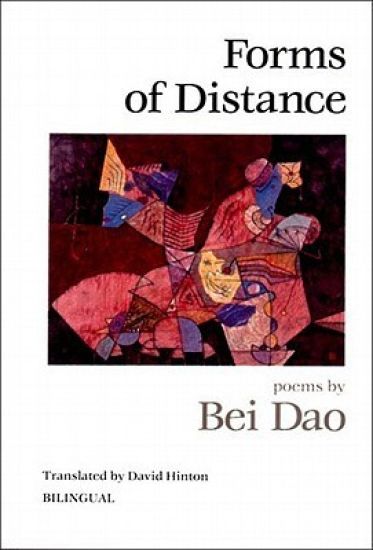
An exile in the West since the events of Tiananmen Square, Bei Dao is widely considered China's most distinguished poet. In this new collection, he goes beyond the poetry of exile and reaches a new level of maturity and synthesis in a series of kaleidoscopic images of the end of the twentieth century. These poems, a conflation of history and personal happenstance, are explorations of individual, emotional, physical, and cultural distance that speak to an international readership in an ever more divided world. Bei Dao's poems are translated with new sharpness and intensity by David Hinton, highly regarded for his versions of the chinese classics (The Selected Poems of Tu Fu, The Selected Poems of T'ao Ch'ien), who comments in his Translator's Note: "Bei Dao's work recalls China's ancient masters: clear resonant images set in sharp juxtapositions. But his are decidedly modern clarities, adrift on the terrible mystery of today's world-historical forces."
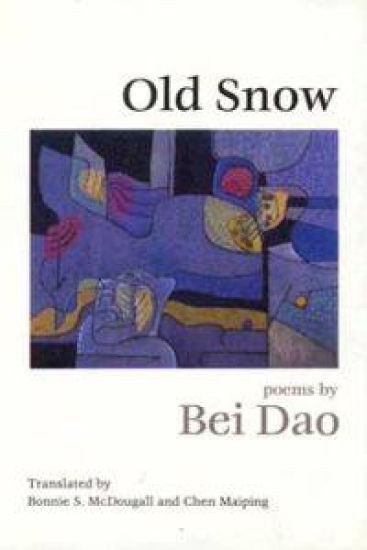
The three sections of Bei Dao's affecting new book of poems, Old Snow--"Berlin," "Oslo," "Stockholm"--are poignant reminders of the restless and rootless life of the exile. All the poems in the present bilingual volume were written post-Tiananmen Square (June 4, 1989), and the poet refers back to this watershed both overtly ("Not your bodies but your souls/ shall share a common birthday') and in dense images of loss and betrayal ("old snow comes constantly, new snow comes not at all/ the art of creation is lost"). As renowned China scholar, Jonathan Spence commented on Bei Dao's earlier book, The August Sleepwalker: "The poet was obliged to create a new poetic idiom that was simultaneously a protective camouflage and an appropriate vehicle for 'unreality.'" Bonnie S. McDougall, whose translations of Bei Dao have been called "a major achievement in themselves," is Professor of Chinese at the University of Edinburgh. Working with Chinese writer in exile Chen Maiping (now residing in Oslo), she once again renders Bei Dao's poems into fluid and musical English.
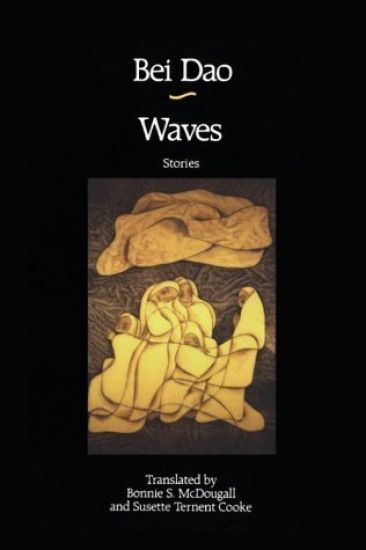
In Waves, Bei Dao--China's foremost modern poet--turns to fiction, recording the painful years of the Cultural Revolution and its aftermath. Avoiding polemics, his attention is on individuals--intellectuals and factory workers, drifters and thieves--swept up in the turbulent political tides of contemporary China. Bei Dao himself has been a victim of the censors, and he wrote the title novella clandestinely in a makeshift darkroom while ostensibly developing photographs. The author now lives in exile.