Kirjojen hintavertailu. Mukana 12 407 469 kirjaa ja 12 kauppaa.

Kirjailija

Béla Szabados

Kirjat ja teokset yhdessä paikassa: 2 kirjaa, julkaisuja vuosilta 2014-2026, suosituimpien joukossa Philosophical Embarrassment. Vertaile teosten hintoja ja tarkista saatavuus suomalaisista kirjakaupoista.

2 kirjaa

Kirjojen julkaisuhaarukka 2014-2026.

Philosophical Embarrassment

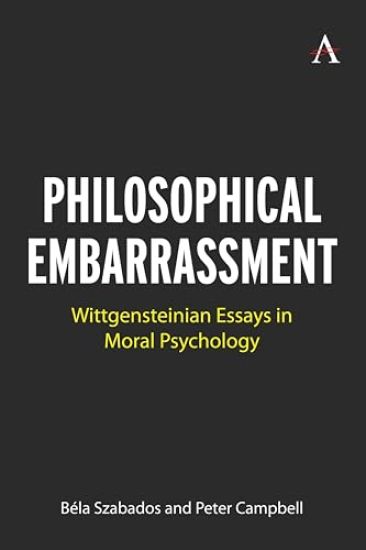
Philosophical Embarrassment

Béla Szabados; Peter Campbell

ANTHEM PRESS
2026
sidottu
Should philosophers, on occasion, be embarrassed in their work? Were they? We look at some cases in the history of modern philosophy and study the grounds for embarrassment and the way philosophers have dealt with it. Hume and Wittgenstein are our prime examples of philosophers who were aware that through their work, they had undermined the very possibility of doing such work—that the aims of traditional philosophy are out of reach—and thus have been thoroughly embarrassed. What are the upshots, they ask, for philosophers and their subject? One way of responding was to give up the traditional aims so as to protect oneself from further embarrassment. This was the strategy we find in the early Wittgenstein, the Vienna Circle, and in Quine who, in their own ways, tried to reconceive the aims and subject matter of philosophy in a narrow fashion that took science as its model. This move, however, comes with its own embarrassments, as we illustrate with the later Wittgenstein’s cautionary remarks about the embarrassments of scientism and his warnings about the related inclination to self-deception.
Wittgenstein as Philosophical Tone-Poet

Wittgenstein as Philosophical Tone-Poet

Béla Szabados

Editions Rodopi B.V.
2014
nidottu
This book provides the first in-depth exploration of the importance of music for Ludwig Wittgenstein’s life and work. Wittgenstein’s remarks on music are essential for understanding his philosophy: they are on the nature of musical understanding, the relation of music to language, the concepts of representation and expression, on melody, irony and aspect-perception, and, on the great composers belonging to the Austrian-German tradition. Biography and philosophy, this work suggests that Wittgenstein was a composer of philosophy who used the musical form as a blueprint for his own writing and thought. For Wittgenstein music is not alone, but connects and resonates with our cultural forms of life. His relation to composers, especially to Richard Wagner and Gustav Mahler, enables Wittgenstein to address the question of how to do philosophy and compose music in the breakdown of tradition. Unlike his conservative musical sensibility, Wittgenstein’s philosophy is open to musical experiments. Reflecting on his remarks on music makes it possible to compare the therapeutic aim of his philosophical activity with that of music, and thus notice affinities between Wittgenstein and John Cage.