Kirjojen hintavertailu. Mukana 12 657 676 kirjaa ja 12 kauppaa.

Kirjailija

Bella Dicks

Kirjat ja teokset yhdessä paikassa: 5 kirjaa, julkaisuja vuosilta 2000-2006, suosituimpien joukossa Heritage, Place and Community. Vertaile teosten hintoja ja tarkista saatavuus suomalaisista kirjakaupoista.

5 kirjaa

Kirjojen julkaisuhaarukka 2000-2006.

Children, Place and Identity

Children, Place and Identity

Jonathan Scourfield; Bella Dicks; Mark Drakeford; Andrew Davies

Routledge
2006
nidottu
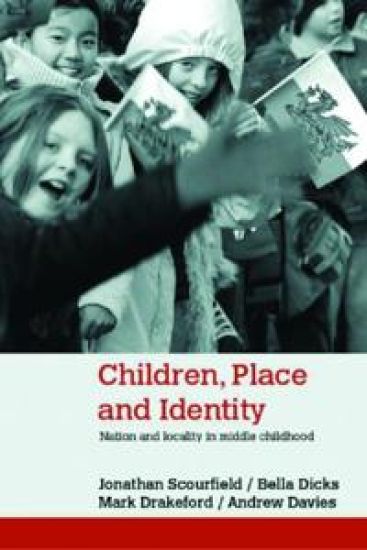
In this, the first sociology book to consider the important issue of how children identify with place and nation, the authors use original research and international case studies to explore this topic in depth. The book is rooted in original qualitative research the authors conducted with a diverse sample of children (aged eight to eleven) across Wales, but this data is also located in the context of existing international research on place identity.The book features analysis of lively exchanges between children on their local, national and global identities, politics, language and race. It engages with important social and political questions such as whether cultural distinctiveness can be preserved in a context of globalization, whether we are destined to passively receive dominant representations of the nation or can creatively construct our own versions; and whether national identities are necessarily exclusive. Most importantly, the book focuses on what local and national identities mean to children in an era of cultural and economic globalization. Including material on racialization, language, politics, class and gender, Children, Place and Identity will be a valuable resource to students and researchers of childhood studies and the sociology of childhood.

Children, Place and Identity

Children, Place and Identity

Jonathan Scourfield; Bella Dicks; Mark Drakeford; Andrew Davies

Routledge
2006
sidottu
In this, the first sociology book to consider the important issue of how children identify with place and nation, the authors use original research and international case studies to explore this topic in depth. The book is rooted in original qualitative research the authors conducted with a diverse sample of children (aged eight to eleven) across Wales, but this data is also located in the context of existing international research on place identity.The book features analysis of lively exchanges between children on their local, national and global identities, politics, language and race. It engages with important social and political questions such as whether cultural distinctiveness can be preserved in a context of globalization, whether we are destined to passively receive dominant representations of the nation or can creatively construct our own versions; and whether national identities are necessarily exclusive. Most importantly, the book focuses on what local and national identities mean to children in an era of cultural and economic globalization. Including material on racialization, language, politics, class and gender, Children, Place and Identity will be a valuable resource to students and researchers of childhood studies and the sociology of childhood.
Qualitative Research and Hypermedia

Qualitative Research and Hypermedia

Bella Dicks; Bruce Mason; Amanda Coffey; Paul Atkinson

SAGE Publications Inc
2005
sidottu
Digital culture and digital technologies have rapidly become unavoidable and essential forms of social experience and communication in our emerging globalised society. If we want to attempt to analyse and understand our technology-saturated society, and all its new media, then we must also develop research methods and forms of analysis that can accommodate and exploit digital culture and digital technologies. This important new methods text sets out to equip qualitative researchers with the tools necessary to conduct ethnography in the age of email and the internet. It will investigate how digital technologies potentially transform the ways in which we do research. This text also introduces the reader to new emerging methods that utilise new technologies and explains how to conduct data collection, analysis and representation using new technologies and `hypermedia'. Essential reading for any student or researcher interested in qualitative research in an age of hypermedia, this text: - explains how digital technology impacts on social research; - investigates how digital technology has reshaped the field of social research; - consider the implications of bringing multimedia into the forefront of qualitative research; - suggests new ways of observing and documenting a `technologised' and design-rich society; - enables the reader to use new technologies to handle and represent qualitative data; - unpacks the theoretical implications of writing and researching for the electronic screen
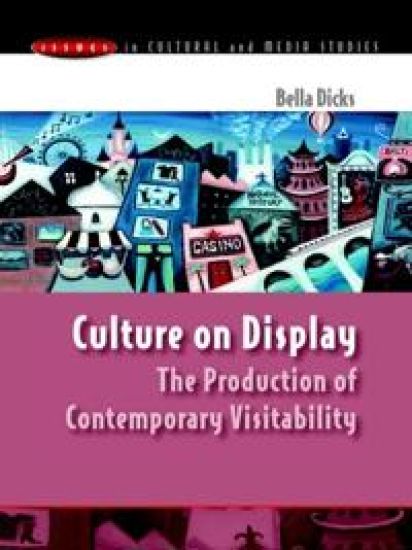
Culture on Display

Culture on Display

Bella Dicks

Open University Press
2004
nidottu
“a welcome addition to a growing body of scholarly writing… a comprehensive critical survey of the literature on cultural heritage and tourism and associated issues in the fields of cultural and media studies over the previous decade. These concepts and issues are clearly presented and exemplified in the case studies of numerous sites of cultural display…” Southern ReviewWhy is culture so widely on display?What are the major characteristics of contemporary cultural display?What is the relationship between cultural display and key features of contemporary society: the rise of consumerism; tourism; ‘identity-speak’; globalization?What can cultural display tell us about current relations of self and other, here and there, now and then?Culture on Display invites the reader to visit culture. Reflecting on the contemporary proliferation of sites displaying culture in visitable form, it offers fresh ways of thinking about tourism, leisure and heritage. Bella Dicks locates diverse exhibitionary locations within wider social, economic and cultural transformations, including contemporary practices of tourism and travel, strategies of economic development, the staging of identities, globalization, interactivity and relations of consumerism. In particular, she critically examines how culture becomes transformed when it is put on display within these contexts. In each chapter, key theoretical issues of debate, such as authenticity, commodification and representation, are discussed in a lively and accessible manner.This is an important book for undergraduate and postgraduate students of cultural policy, cultural and media studies and sociology, as well as academic researchers in this field. It will also be of considerable value to students of sociology of culture, cultural politics, arts administration and cultural management.
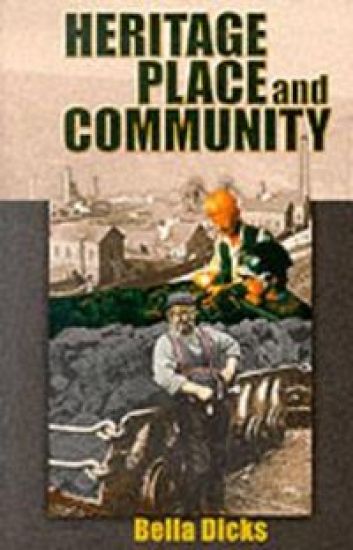
Heritage, Place and Community

Heritage, Place and Community

Bella Dicks

University of Wales Press
2000
nidottu
The Rhondda Heritage Park is the only colliery building left in a valley which at one time supported sixty-six deep mines. As the only significant public memorial the Rhondda has to its mining industry, it demonstrates the potential of heritage to offer a thought-provoking and accessible representation of local identity and community. However, critics of heritage point out its pretensions, banalities and failures, and its tainted, entrepreneurial character. In Heritage, Place and Community, Bella Dicks explores these contradictions in the concept and practice of heritage, shows how heritage has come to be adopted as an attempt to regenerate the cultural and economic identity of former industrial areas and discusses the role of heritage in the formation and negotiation of social identity. This ground-breaking book is more than just a study of the development of the Rhondda Heritage Park. Using an innovative theoretical framework, Heritage, Place and Community brings together the economic, cultural, social and political dimensions of heritage production and consumption and seeks to trace the ways in which the study of heritage opens up wider questions of representation and politics.