Kirjojen hintavertailu. Mukana 12 390 323 kirjaa ja 12 kauppaa.

Kirjailija

Ben Cohen

Kirjat ja teokset yhdessä paikassa: 19 kirjaa, julkaisuja vuosilta 1987-2021, suosituimpien joukossa Ben Jerry's Double Dip. Vertaile teosten hintoja ja tarkista saatavuus suomalaisista kirjakaupoista.

19 kirjaa

Kirjojen julkaisuhaarukka 1987-2021.

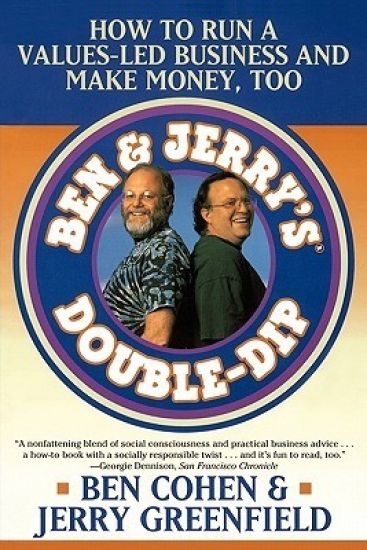
Ben Jerry's Double Dip

Ben Jerry's Double Dip

Jerry Greenfield; Ben Cohen

Simon Schuster
1999
pokkari
Commercial success need not come at the cost of human value. Just ask Ben and Jerry, whose first ice cream shop in an abandoned Vermont gas station grew into a $160 million business. Yet Ben & Jerry continue to use the power of business to change the world. With its seemingly wacky antics, controversial social and political stands, and iconoclastic corporate policies, the company that's come to embody socially responsible business has drawn the scepticism of business analysts, the criticism of media cynics - and the amazement- and ultimately, the respect- of the business world and the people in it. As Ben and Jerry explain in DOUBLE-DIP, they haven't always known exactly what they were doing, but they've always known why they were doing it. There's a method to their madness; that method is what they call 'values-led business.' BEN & JERRY'S DOUBLE-DIP explains what values-led business is, why it's the best model for business today, and how anyone who owns, works for, invests in, or shops with a company can help make it a socially responsible business.
Above the Law

Above the Law

Ben Cohen; Michael "Killer Mike" Render

OR Books
2021
pokkari
• A police officer kills a twelve-year-old boy. It’s caught on video. The officer gets off.• A police officer strangles a man selling cigarettes. It’s caught on video. The officer gets off.• A police officer shoots a man in his car. It’s live-streamed. The officer gets off. It happens over and over again. The culprit here, alongside the cops, is Qualified Immunity (QI), a legal principle which Reuters describes as “a nearly failsafe tool to let police brutality go unpunished and deny victims their constitutional rights.” Originally intended to protect cops from being sued over good faith mistakes, courts have interpreted QI so broadly that police are shielded from accountability in all but the rarest of circumstances. Only when the exact same abusive behavior was already deemed unconstitutional by a court in the exact same jurisdiction can victims succeed in a prosecution. Above the Law recounts 12 cases in which justice was denied because of QI. The stories are accompanied by infographics, timelines, and contextualizing background to create a concise and compelling indictment of an outrageously unjust legal principle that must be changed.
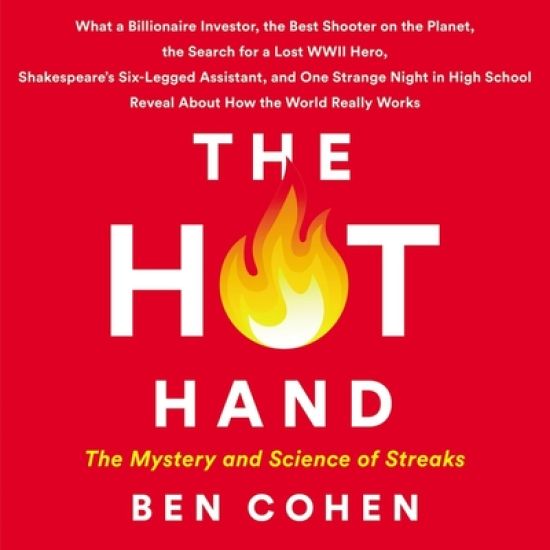
The Hot Hand

The Hot Hand

Ben Cohen

Mariner Books
2021
nidottu
How can you maximize success--and limit failure? Wall Street Journal reporter Ben Cohen brilliantly investigates the mystery and science of streaks, from basketball to business. "A feast for anyone interested in the secrets of excellence." --Andre AgassiFor decades, statisticians, social scientists, psychologists, and economists (among them Nobel Prize winners) have spent massive amounts of precious time thinking about whether streaks actually exist. After all, a substantial number of decisions that we make in our everyday lives are quietly rooted in this one question: If something happened before, will it happen again? Is there such a thing as being in the zone? Can someone have a "hot hand"? Or is it simply a case of seeing patterns in randomness? Or, if streaks are possible, where can they be found?In The Hot Hand, Wall Street Journal reporter Ben Cohen offers an unfailingly entertaining and provocative investigation into these questions. He begins with how a $35,000 fine and a wild night in New York revived a debate about the existence of streaks that was several generations in the making. We learn how the ability to recognize and then bet against streaks turned a business school dropout named David Booth into a billionaire, and how the subconscious nature of streak-related bias can make the difference between life and death for asylum seekers. We see how previously unrecognized streaks hidden amidst archival data helped solve one of the most haunting mysteries of the twentieth century, the disappearance of Raoul Wallenberg. Cohen also exposes how streak-related incentives can be manipulated, from the five-syllable word that helped break arcade profit records to an arc of black paint that allowed Stephen Curry to transform from future junior high coach into the greatest three-point shooter in NBA history. Crucially, Cohen also explores why false recognition of nonexistent streaks can have cataclysmic results, particularly if you are a sugar beet farmer or the sort of gambler who likes to switch to black on the ninth spin of the roulette wheel.
Hot Hand

Hot Hand

Ben Cohen

HARPERCOLLINS PUBLISHERS
2020
nidottu
'A feast for anyone interested in the secrets of excellence.' Andre Agassi, winner of eight Grand Slam titles and bestselling author of OpenFor fans of Charles Duhig, Malcolm Gladwell and Nate Silver, a brilliant and buoyant investigation into the existence (or not) of hot streaks.
The Hot Hand: The Mystery and Science of Streaks
Fascinating, eye-opening and consistently entertaining, The Hot Hand asks a big question: how do we determine when one success will likely follow another? The answer is not only surprising, but instructive." -- Charles Duhigg, New York Times bestselling author of The Power of Habit and Smarter Faster Better A brilliant investigation into when streaks exist and how they can be taken advantage of, The Hot Hand is essential reading for anyone who thinks they've got a shot.For decades, statisticians, social scientists, psychologists, and economists (among them Nobel Prize winners) have spent massive amounts of precious time thinking about whether streaks actually exist. After all, a substantial number of decisions that we make in our everyday lives are quietly rooted in this one question: If something happened before, will it happen again? Is there such a thing as being in the zone? Can someone have a "hot hand"? Or is it simply a case of seeing patterns in randomness? Or, if streaks are possible, where can they be found?In The Hot Hand, Wall Street Journal reporter Ben Cohen offers an unfailingly entertaining and provocative investigation into these questions. He begins with how a $35,000 fine and a wild night in New York revived a debate about the existence of streaks that was several generations in the making. We learn how the ability to recognize and then bet against streaks turned a business school dropout named David Booth into a billionaire, and how the subconscious nature of streak-related bias can make the difference between life and death for asylum seekers. We see how previously unrecognized streaks hidden amidst archival data helped solve one of the most haunting mysteries of the twentieth century, the disappearance of Raoul Wallenberg. Cohen also exposes how streak-related incentives can be manipulated, from the five-syllable word that helped break arcade profit records to an arc of black paint that allowed Stephen Curry to transform from future junior high coach into the greatest three-point shooter in NBA history. Crucially, Cohen also explores why false recognition of nonexistent streaks can have cataclysmic results, particularly if you are a sugar beet farmer or the sort of gambler who likes to switch to black on the ninth spin of the roulette wheel.Supplemental enhancement PDF accompanies the audiobook.
The Hot Hand: The Mystery and Science of Streaks
Fascinating, eye-opening and consistently entertaining, The Hot Hand asks a big question: how do we determine when one success will likely follow another? The answer is not only surprising, but instructive." -- Charles Duhigg, New York Times bestselling author of The Power of Habit and Smarter Faster Better A brilliant investigation into when streaks exist and how they can be taken advantage of, The Hot Hand is essential reading for anyone who thinks they've got a shot.For decades, statisticians, social scientists, psychologists, and economists (among them Nobel Prize winners) have spent massive amounts of precious time thinking about whether streaks actually exist. After all, a substantial number of decisions that we make in our everyday lives are quietly rooted in this one question: If something happened before, will it happen again? Is there such a thing as being in the zone? Can someone have a "hot hand"? Or is it simply a case of seeing patterns in randomness? Or, if streaks are possible, where can they be found?In The Hot Hand, Wall Street Journal reporter Ben Cohen offers an unfailingly entertaining and provocative investigation into these questions. He begins with how a $35,000 fine and a wild night in New York revived a debate about the existence of streaks that was several generations in the making. We learn how the ability to recognize and then bet against streaks turned a business school dropout named David Booth into a billionaire, and how the subconscious nature of streak-related bias can make the difference between life and death for asylum seekers. We see how previously unrecognized streaks hidden amidst archival data helped solve one of the most haunting mysteries of the twentieth century, the disappearance of Raoul Wallenberg. Cohen also exposes how streak-related incentives can be manipulated, from the five-syllable word that helped break arcade profit records to an arc of black paint that allowed Stephen Curry to transform from future junior high coach into the greatest three-point shooter in NBA history. Crucially, Cohen also explores why false recognition of nonexistent streaks can have cataclysmic results, particularly if you are a sugar beet farmer or the sort of gambler who likes to switch to black on the ninth spin of the roulette wheel.Supplemental enhancement PDF accompanies the audiobook.
The Hot Hand: The Mystery and Science of Streaks
How can you maximize success--and limit failure? Wall Street Journal reporter Ben Cohen brilliantly investigates the mystery and science of streaks, from basketball to business. "A feast for anyone interested in the secrets of excellence." --Andre AgassiFor decades, statisticians, social scientists, psychologists, and economists (among them Nobel Prize winners) have spent massive amounts of precious time thinking about whether streaks actually exist. After all, a substantial number of decisions that we make in our everyday lives are quietly rooted in this one question: If something happened before, will it happen again? Is there such a thing as being in the zone? Can someone have a "hot hand"? Or is it simply a case of seeing patterns in randomness? Or, if streaks are possible, where can they be found?In The Hot Hand, Wall Street Journal reporter Ben Cohen offers an unfailingly entertaining and provocative investigation into these questions. He begins with how a $35,000 fine and a wild night in New York revived a debate about the existence of streaks that was several generations in the making. We learn how the ability to recognize and then bet against streaks turned a business school dropout named David Booth into a billionaire, and how the subconscious nature of streak-related bias can make the difference between life and death for asylum seekers. We see how previously unrecognized streaks hidden amidst archival data helped solve one of the most haunting mysteries of the twentieth century, the disappearance of Raoul Wallenberg. Cohen also exposes how streak-related incentives can be manipulated, from the five-syllable word that helped break arcade profit records to an arc of black paint that allowed Stephen Curry to transform from future junior high coach into the greatest three-point shooter in NBA history. Crucially, Cohen also explores why false recognition of nonexistent streaks can have cataclysmic results, particularly if you are a sugar beet farmer or the sort of gambler who likes to switch to black on the ninth spin of the roulette wheel.
Carry Me Home

Carry Me Home

Ben Cohen

Ebury Press
2016
pokkari
Ben Cohen’s dad didn’t know anything about the sport his young son had taken up, but he was happy to drive him to practice, and was soon helping out at the club. When his business went bankrupt money was tight, but Ben’s hard working parents inspired their son to put his all into rugby.Then, when Ben was 20, his father intervened in a fight in the nightclub where he worked. He was viciously beaten and one month later he died in hospital. Ben was doing an England press conference at the time, and it was down to coach Clive Woodward to deliver the devastating news. But the ordeal was far from over. The inquest lasted five months before the funeral could be held, and it was a year before the family were in court, facing Peter’s assailants.Ben put all of the anger and pain from his father’s death into his rugby. Fast and powerful on the wing, he was soon the best in the world in his position and a cornerstone of the England team, culminating in the legendary World Cup win in Sydney in 2003. And yet he always felt like an outsider. Most people didn’t know that Ben is clinically deaf. His sixth sense for the game got him through on the pitch, but off it his poor hearing was often taken for arrogance.This is an inspirational story of passion and pain; of the highs of achieving your goals, and the grief of losing something you can never get back.
VHDL Coding Styles and Methodologies

VHDL Coding Styles and Methodologies

Ben Cohen

Springer-Verlag New York Inc.
2013
nidottu
VHDL Coding Styles and Methodologies, Edition is a follow up book to the first edition of same book and to VHDL Answers to Frequently Asked Questions, first and second editions. This book was originally written as a teaching tool for a VHDL training course. The author began writing the book because he could not find a practical and easy to read book that gave in depth coverage of both, the language and coding methodologies. This edition provides practical information on reusable software methodologies for the design of bus functional models for testbenches. It also provides guidelines in the use of VHDL for synthesis. All VHDL code described in the book is on a companion CD. The CD also includes the GNU toolsuite with EMACS language sensitive editor (with VHDL, Verilog, and other language templates), and TSHELL tools that emulate a Unix shell. Model Technology graciously included a timed evaluation version of ModelSim, a recognized industry standard VHDL/Verilog compiler and simulator that supports easy viewing of the models under analysis, along with many debug features. In addition, Synplicity included a timed version of Synplify, a very efficient, user friendly and easy to use FPGA synthesis tool. Synplify provides a user both the RTL and gate level views of the synthesized model, and a performance report of the design. Optimization mechanisms are provided in the tool.
VHDL Coding Styles and Methodologies

VHDL Coding Styles and Methodologies

Ben Cohen

Springer-Verlag New York Inc.
2013
nidottu
VHDL Coding Styles and Methodologies was originally written as a teaching tool for a VHDL training course. The author began writing the book because he could not find a practical and easy to read book that gave in depth coverage of both, the language and coding methodologies. This book is intended for: 1. College students. It is organized in 13 chapters, each covering a separate aspect of the language, with complete examples. All VHDL code described in the book is on a companion 3.5" PC disk. Students can compile and simulate the examples to get a greater understanding of the language. Each chapter includes a series of exercises to reinforce the concepts. 2. Engineers. It is written by an aerospace engineer who has 26 years of hardware, software, computer architecture and simulation experience. It covers practical applications ofVHDL with coding styles and methodologies that represent what is current in the industry. VHDL synthesizable constructs are identified. Guidelines for testbench designs are provided. Also included is a project for the design of a synthesizable Universal Asynchronous Receiver Transmitter (UART), and a testbench to verify proper operation of the UART in a realistic environment, with CPU interfaces and transmission line jitter. An introduction to VHDL Initiative Toward ASIC Libraries (VITAL) is also provided. The book emphasizes VHDL 1987 standard but provides guidelines for features implemented in VHDL 1993.
VHDL Answers to Frequently Asked Questions

VHDL Answers to Frequently Asked Questions

Ben Cohen

Springer-Verlag New York Inc.
2013
nidottu
VHDL Answers to Frequently asked Questions is a follow-up to the author's book VHDL Coding Styles and Methodologies (ISBN 0-7923-9598-0). On completion of his first book, the author continued teaching VHDL and actively participated in the comp. lang. vhdl newsgroup. During his experiences, he was enlightened by the many interesting issues and questions relating to VHDL and synthesis. These pertained to: misinterpretations in the use of the language; methods for writing error free, and simulation efficient, code for testbench designs and for synthesis; and general principles and guidelines for design verification. As a result of this wealth of public knowledge contributed by a large VHDL community, the author decided to act as a facilitator of this information by collecting different classes of VHDL issues, and by elaborating on these topics through complete simulatable examples. This book is intended for those who are seeking an enhanced proficiency in VHDL. Its target audience includes: 1. Engineers. The book addresses a set of problems commonly experienced by real users of VHDL. It provides practical explanations to the questions, and suggests practical solutions to the raised issues. It also includes packages to achieve common utilities, useful in the generation of debug code aDd testbench designs. These packages include conversions to strings (the IMAGE package), generation of Linear Feedback Shift Registers (LFSR), Multiple Input Shift Register (MISR), and random number generators.
VHDL Answers to Frequently Asked Questions

VHDL Answers to Frequently Asked Questions

Ben Cohen

Springer-Verlag New York Inc.
2012
nidottu
VHDL Answers to Frequently asked Questions is a follow-up to the author's book VHDL Coding Styles and Methodologies (ISBN 0-7923-9598-0). On completion of his first book, the author continued teaching VHDL and actively participated in the comp. lang. vhdl newsgroup. During his experiences, he was enlightened by the many interesting issues and questions relating to VHDL and synthesis. These pertained to: misinterpretations in the use of the language; methods for writing error free, and simulation efficient, code for testbench designs and for synthesis; and general principles and guidelines for design verification. As a result of this wealth of public knowledge contributed by a large VHDL community, the author decided to act as a facilitator of this information by collecting different classes of VHDL issues, and by elaborating on these topics through complete simulatable examples. TItis book is intended for those who are seeking an enhanced proficiency in VHDL. Its target audience includes: 1. Engineers. The book addresses a set of problems commonly experienced by real users of VHDL. It provides practical explanations to the questions, and suggests practical solutions to the raised issues. It also includes packages of common utilities that are useful in the generation of debug code and testbench designs. These packages include conversions to strings (the IMAGE package), generation of Linear Feedback Shift Registers (LFSR), Multiple Input Shift Register (MISR), and random number generators.
An Illustrated History of Duke Basketball

An Illustrated History of Duke Basketball

Bill Brill; Ben Cohen

Sports Publishing LLC
2012
sidottu
With a Foreword by Coach K himself, the full history of Duke Blue Devils basketball from Dick Groat and Art Heyman to Grant Hill and J.J. Redick. No college in America has dominated the basketball scene the way Duke has. From the first game in 1906 to the modern ears, no team has generated more thrills and excitement to NCAA basketball than the Duke Blue Devils. Chapters included: The Players Gerard, Groat, and Bradley Return to Glory Spell it K Starting a Dynasty And much more! Through the NCAA National Championship following the 2009–10 season, 100 Seasons of Duke Basketball provides fans with an insider’s look at Duke basketball and the people who have made it a national legend—Vic Bubas, Eddie Cameron, Art Heyman, Mike Krzyzewski, and many others.
VHDL Coding Styles and Methodologies
VHDL Coding Styles and Methodologies, Edition is a follow up book to the first edition of same book and to VHDL Answers to Frequently Asked Questions, first and second editions. This book was originally written as a teaching tool for a VHDL training course. The author began writing the book because he could not find a practical and easy to read book that gave in depth coverage of both, the language and coding methodologies. This edition provides practical information on reusable software methodologies for the design of bus functional models for testbenches. It also provides guidelines in the use of VHDL for synthesis. All VHDL code described in the book is on a companion CD. The CD also includes the GNU toolsuite with EMACS language sensitive editor (with VHDL, Verilog, and other language templates), and TSHELL tools that emulate a Unix shell. Model Technology graciously included a timed evaluation version of ModelSim, a recognized industry standard VHDL/Verilog compiler and simulator that supports easy viewing of the models under analysis, along with many debug features. In addition, Synplicity included a timed version of Synplify, a very efficient, user friendly and easy to use FPGA synthesis tool. Synplify provides a user both the RTL and gate level views of the synthesized model, and a performance report of the design. Optimization mechanisms are provided in the tool.
VHDL Answers to Frequently Asked Questions
VHDL Answers to Frequently asked Questions is a follow-up to the author's book VHDL Coding Styles and Methodologies (ISBN 0-7923-9598-0). On completion of his first book, the author continued teaching VHDL and actively participated in the comp. lang. vhdl newsgroup. During his experiences, he was enlightened by the many interesting issues and questions relating to VHDL and synthesis. These pertained to: misinterpretations in the use of the language; methods for writing error free, and simulation efficient, code for testbench designs and for synthesis; and general principles and guidelines for design verification. As a result of this wealth of public knowledge contributed by a large VHDL community, the author decided to act as a facilitator of this information by collecting different classes of VHDL issues, and by elaborating on these topics through complete simulatable examples. TItis book is intended for those who are seeking an enhanced proficiency in VHDL. Its target audience includes: 1. Engineers. The book addresses a set of problems commonly experienced by real users of VHDL. It provides practical explanations to the questions, and suggests practical solutions to the raised issues. It also includes packages of common utilities that are useful in the generation of debug code and testbench designs. These packages include conversions to strings (the IMAGE package), generation of Linear Feedback Shift Registers (LFSR), Multiple Input Shift Register (MISR), and random number generators.
VHDL Coding Styles and Methodologies

VHDL Coding Styles and Methodologies

Ben Cohen

Kluwer Academic Publishers
1995
sidottu
This text offers an in-depth study of the VHDL language rules, coding styles and methodologies. It distinguishes good from poor coding methodologies using a symbology notation along with a rationale for each guideline. The VHDL concepts, rules and styles are demonstrated using complete compilable and simulatable examples which are also supplied on the accompanying disk. The book offers practical applications of VHDL and techniques that are current in the industry. It explains how to apply the VHDL guidelines using several complete examples. The "learning by example" teaching approach along with an in-depth presentation of the language rules application methodology provides the necessary knowledge to create digital hardware designs and models that are readable, maintainable, predictable, and efficient. It is intended for both college students and design engineers, and provides a practical approach to learning VHDL.