Kirjojen hintavertailu. Mukana 12 290 406 kirjaa ja 12 kauppaa.

Kirjailija

Ben Dibley

Kirjat ja teokset yhdessä paikassa: 4 kirjaa, julkaisuja vuosilta 2017-2024, suosituimpien joukossa Collecting, Ordering, Governing. Vertaile teosten hintoja ja tarkista saatavuus suomalaisista kirjakaupoista.

4 kirjaa

Kirjojen julkaisuhaarukka 2017-2024.

Collecting, Ordering, Governing

Collecting, Ordering, Governing

Tony Bennett; Fiona Cameron; Nélia Dias; Ben Dibley; Rodney Harrison; Ira Jacknis; Conal McCarthy

Duke University Press
2017
sidottu
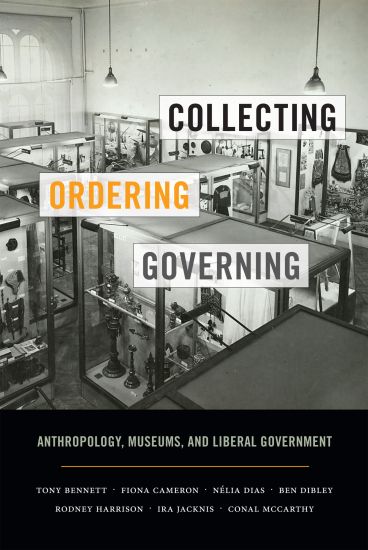
The coauthors of this theoretically innovative work explore the relationships among anthropological fieldwork, museum collecting and display, and social governance in the early twentieth century in Australia, Britain, France, New Zealand, and the United States. With case studies ranging from the Musée de l'Homme's 1930s fieldwork missions in French Indo-China to the influence of Franz Boas's culture concept on the development of American museums, the authors illuminate recent debates about postwar forms of multicultural governance, cultural conceptions of difference, and postcolonial policy and practice in museums. Collecting, Ordering, Governing is essential reading for scholars and students of anthropology, museum studies, cultural studies, and indigenous studies as well as museum and heritage professionals.
Collecting, Ordering, Governing

Collecting, Ordering, Governing

Tony Bennett; Fiona Cameron; Nélia Dias; Ben Dibley; Rodney Harrison; Ira Jacknis; Conal McCarthy

Duke University Press
2017
pokkari
The coauthors of this theoretically innovative work explore the relationships among anthropological fieldwork, museum collecting and display, and social governance in the early twentieth century in Australia, Britain, France, New Zealand, and the United States. With case studies ranging from the Musée de l'Homme's 1930s fieldwork missions in French Indo-China to the influence of Franz Boas's culture concept on the development of American museums, the authors illuminate recent debates about postwar forms of multicultural governance, cultural conceptions of difference, and postcolonial policy and practice in museums. Collecting, Ordering, Governing is essential reading for scholars and students of anthropology, museum studies, cultural studies, and indigenous studies as well as museum and heritage professionals.
Making Animals Public

Making Animals Public

Gay Hawkins; Ben Dibley

Sydney University Press
2024
nidottu
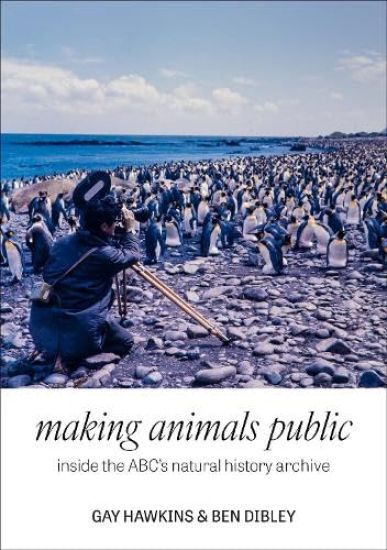
Natural history television on the ABC has been one of the public broadcaster’s most popular formats. For many viewers, TV has been an important contact zone for engaging with animals they would never encounter in everyday life. These animals have also played a critical role in developing environmental awareness. But how did animals get to be on the small screen and what happened to them when they got there?Making Animals Public: Inside the ABC’s Natural History Archive traces the cultural and political evolution of the natural history animal on the ABC. It explores different modes of capture from cages to cameras; what has come to count as a natural history animal over time; and the various sites they have inhabited – from nature, to the nation, to the environment, to the planet.In early natural history programs audiences were invited to watch as sovereign humans there to learn or be entertained by animals that were exotic or aesthetic or scientifically interesting. Whatever the framing, these animals were resolutely other. In recent times, natural history animals have become more assertive. They are now posing uncomfortable questions to human viewers about exploitation, extinction and mutual implication in catastrophic whole earth processes like climate change.Using a wide range of screen examples ranging from the 1950s to the 2020s, Making Animals Public focuses on shifting cultural and sociotechnical practices in ABC natural history television. Combining science and technology studies, screen studies and critical animal studies, this book develops an innovative interdisciplinary analysis of how televisual animality is crafted and made believable.Making Animals Public analyses the significant role public television has played in filming and circulating a vast array of animals and habitats that had never been seen before. How these animals were visualised and accounted for has continually evolved. What has remined constant is the fact that natural history television has been a hugely important site for exploring the various politics of human-animal relations – good and bad – and for nurturing environmental awareness in audiences.
Making Animals Public

Making Animals Public

Gay Hawkins; Ben Dibley

Sydney University Press
2024
sidottu
Natural history television on the ABC has been one of the public broadcaster’s most popular formats. For many viewers, TV has been an important contact zone for engaging with animals they would never encounter in everyday life. These animals have also played a critical role in developing environmental awareness. But how did animals get to be on the small screen and what happened to them when they got there? Making Animals Public: Inside the ABC’s Natural History Archive traces the cultural and political evolution of the natural history animal on the ABC. It explores different modes of capture from cages to cameras; what has come to count as a natural history animal over time; and the various sites they have inhabited – from nature, to the nation, to the environment, to the planet. In early natural history programs audiences were invited to watch as sovereign humans there to learn or be entertained by animals that were exotic or aesthetic or scientifically interesting. Whatever the framing, these animals were resolutely other. In recent times, natural history animals have become more assertive. They are now posing uncomfortable questions to human viewers about exploitation, extinction and mutual implication in catastrophic whole earth processes like climate change. Using a wide range of screen examples ranging from the 1950s to the 2020s, Making Animals Public focuses on shifting cultural and sociotechnical practices in ABC natural history television. Combining science and technology studies, screen studies and critical animal studies, this book develops an innovative interdisciplinary analysis of how televisual animality is crafted and made believable. Making Animals Public analyses the significant role public television has played in filming and circulating a vast array of animals and habitats that had never been seen before. How these animals were visualised and accounted for has continually evolved. What has remined constant is the fact that natural history television has been a hugely important site for exploring the various politics of human-animal relations – good and bad – and for nurturing environmental awareness in audiences.